
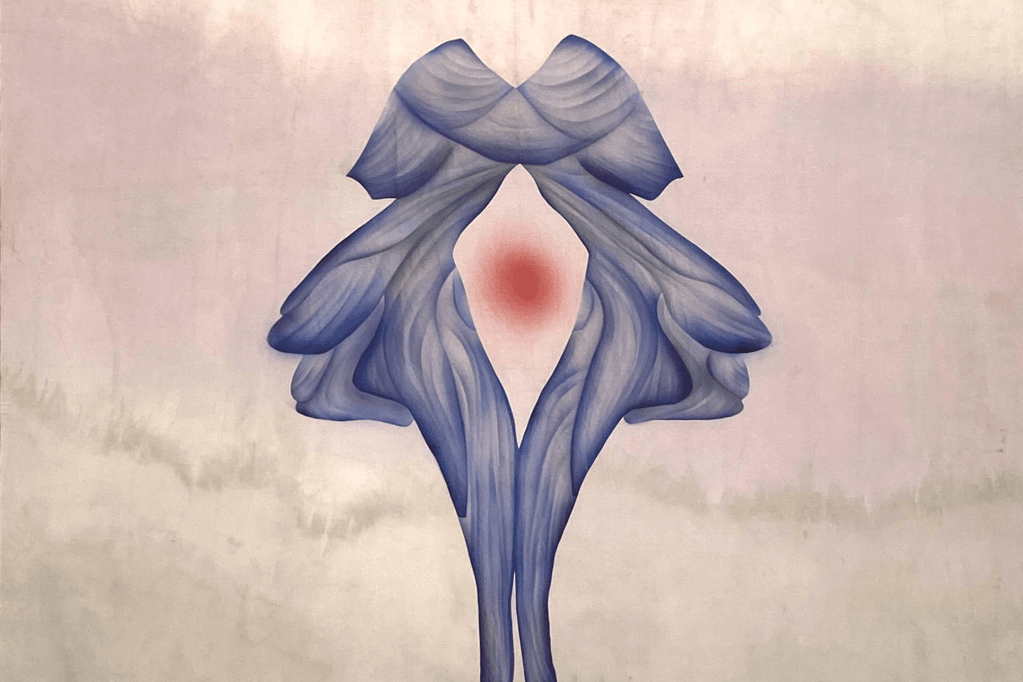
Ewelina Skowronska, a Polish artist whose creativity thrives in the vibrant city of Tokyo. Ewelina’s diverse body of work, encompassing painting, printmaking, and more, reflects a profound exploration of our connection to nature and the unseen forces that shape our world. Her commitment to using natural plant dyes and exploring their historical and philosophical properties adds a unique depth to her art.
As a co-founder of the ONA project room, she also developed a supporting female artists initiative in Japan. Delve into her artistic journey, her inspirations, and the creation process.
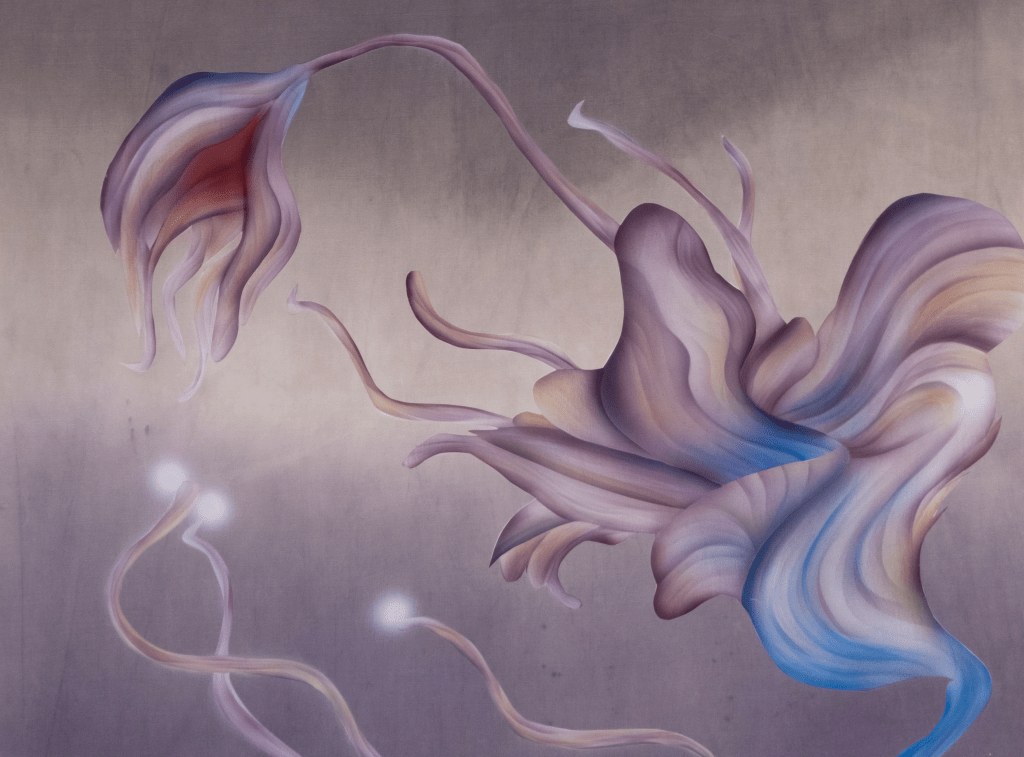
Your artistic practice is varied, but you predominantly work with silk and organic materials. Can you tell us a little about your creative journey since the beginning?
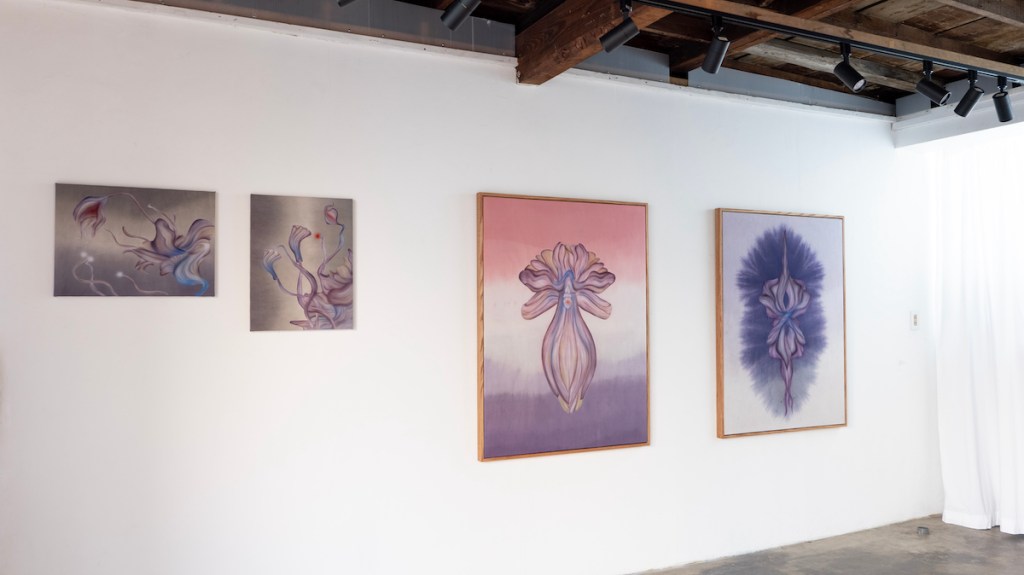
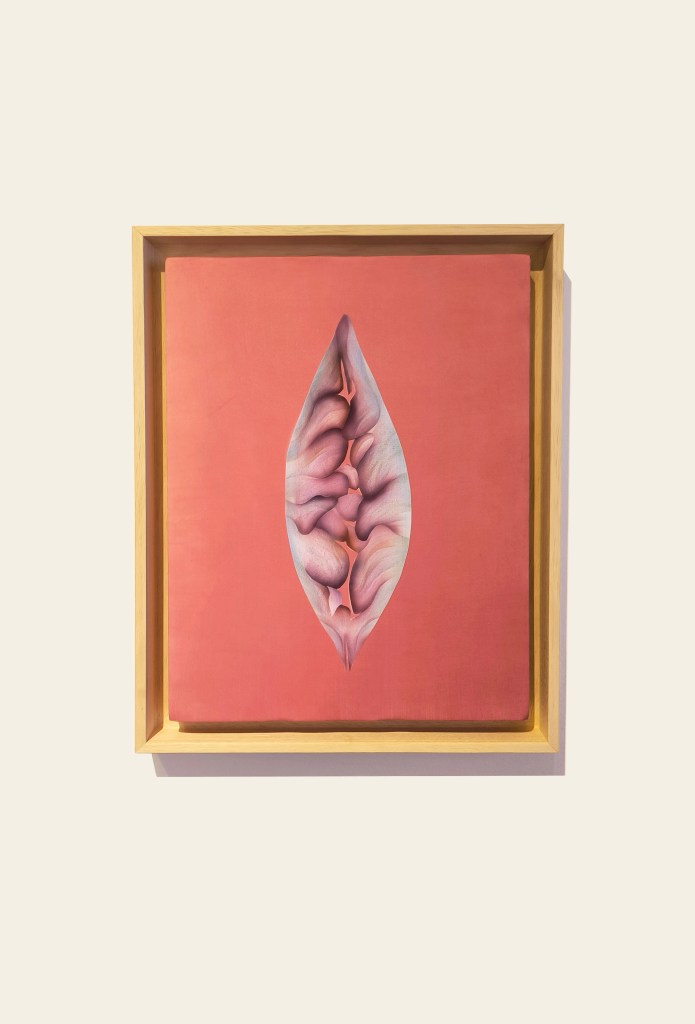
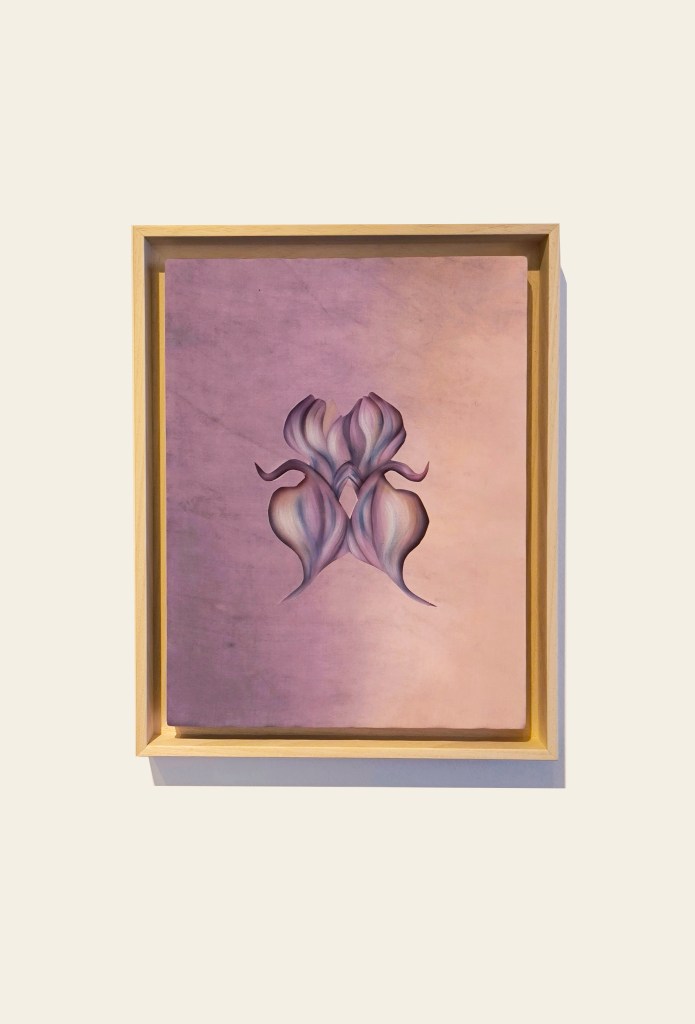
Starting from the beginning, I’m from Poland, but at the moment, I’m based in Tokyo, Japan. I would say that my work lies at the edge of creative figuration and abstraction, leaning more towards organic abstraction. I use different media and like to change them as my practice evolves. My work is definitely process-based, which is a very important aspect for me. My background is in printmaking, but now I work with natural plant dyes, which I believe still carries the mindset of printmaking.
For the past few years I have been reflecting on ways we perceive ourself in the world and our connection to nature, and everything that surround us. I believe that it’s time to see the world not only as a collection of separated being but to acknowledge modes of existence grounded in mutual relations and constant metamorphosis.
Our bodies everyday proves that we are an integral part of nature, and we are an equal part of this vast system, that we are coming from the same source of life.
I’ve been shifting my perspective from a human-centred view to seeing life as a continuous, interconnected entity. These are some of the subjects and topics I’ve been exploring for some time. Recently, since last year, I’ve been exploring the potential of plant dyes. Working with these materials is a significant part of my research.
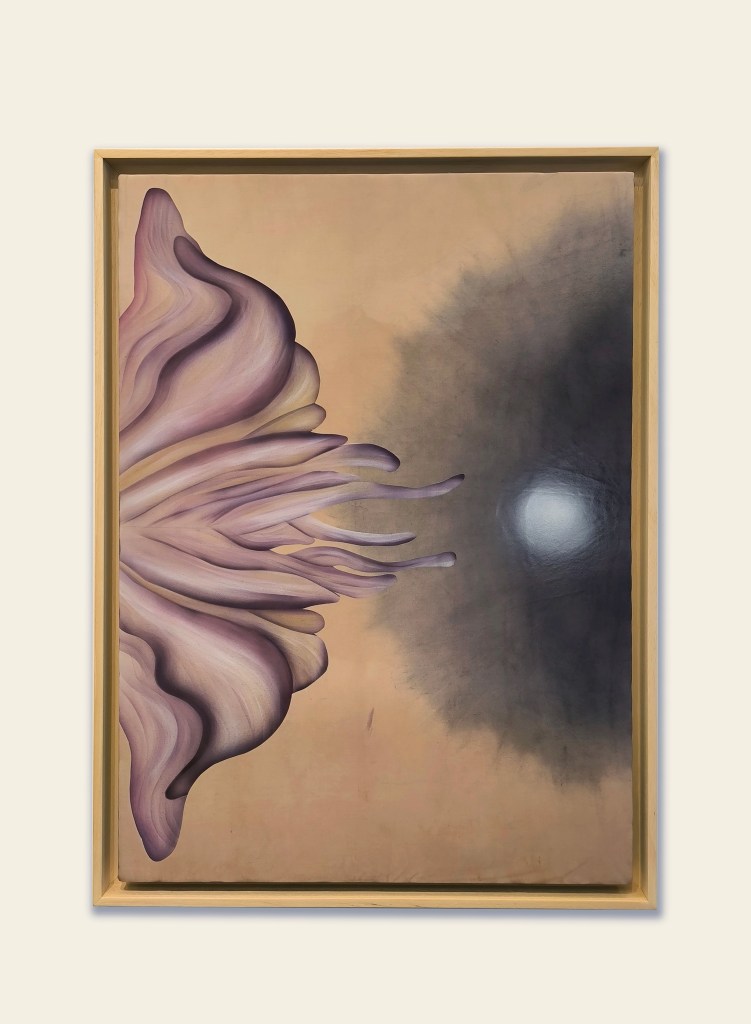
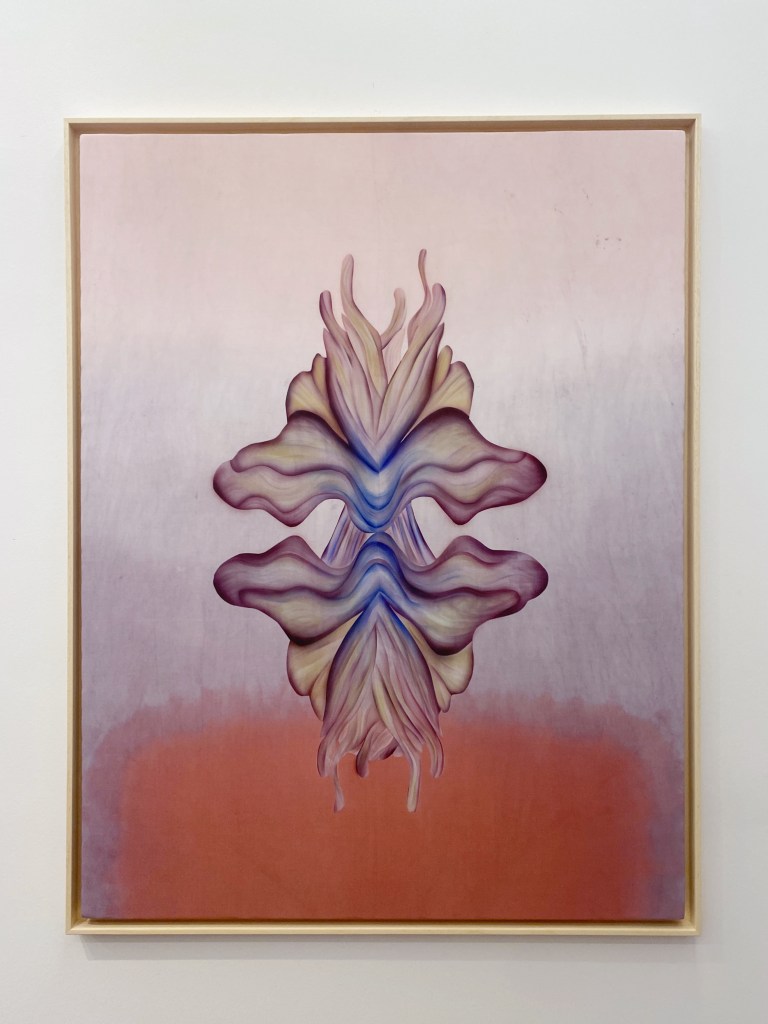
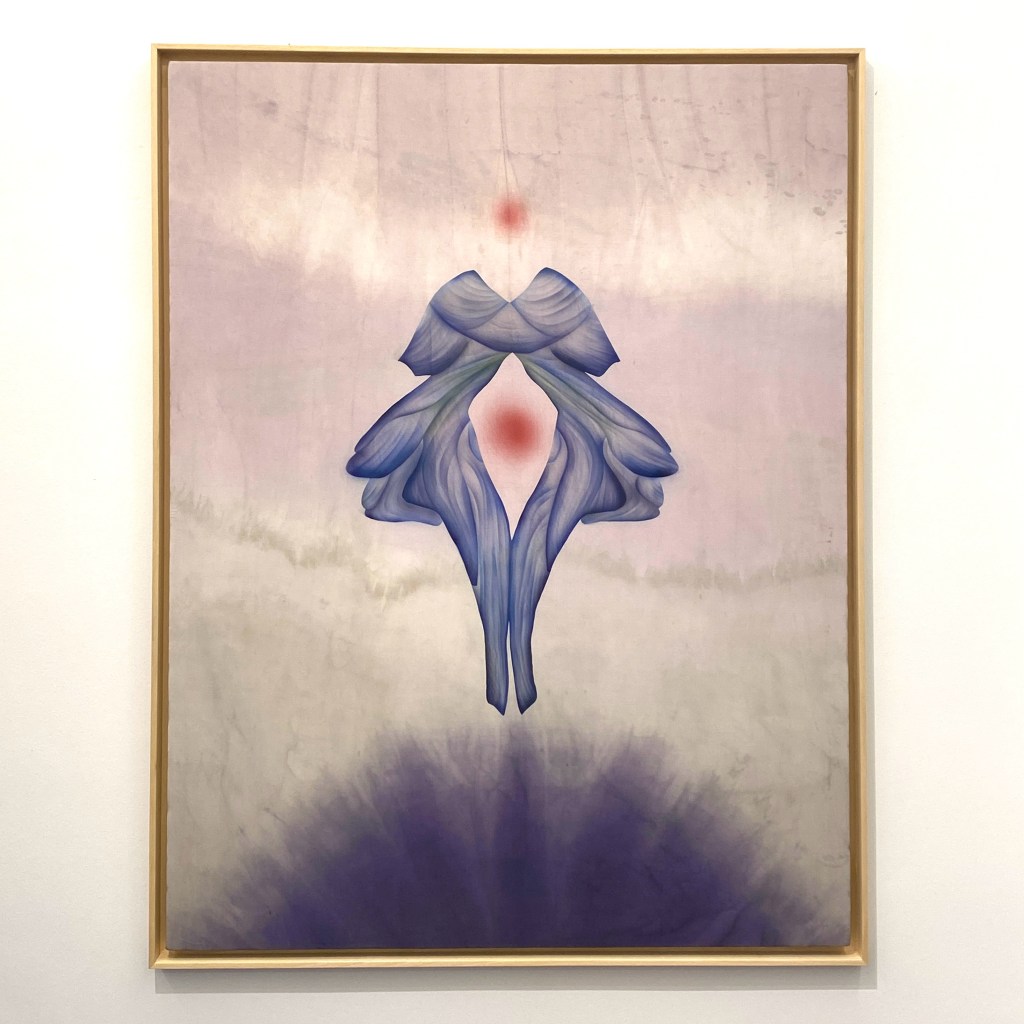
It looks very natural, very organic, and even a combination of materials. The environment can enrich or change the art. You have lived in several countries. Have you noticed that the places you live influence your art?
I’ve experienced some changes due to my location, having been based in Tokyo, Japan for eight years. Tokyo, a vast urban city, lacks much natural environment, reflecting a human-centric atmosphere similar to other major cities like London or Paris.
In Japan, there’s a profound appreciation for the seasons and changes, partly due to Japan’s geographical position, which brings frequent natural disasters like earthquakes, typhoons, and tsunamis. This leads to a strong awareness of impermanence. In Japanese culture, the seasons are significant, evident in food, colours, calligraphy, and various art forms. This appreciation and observation extend to life’s cyclical nature, like eagerly awaiting the cherry blossoms’ bloom, only to see them fade quickly. I guess you could say that being immersed in this environment, I’ve developed a sensitivity or awareness of these cycles.
Additionally Japan has a long tradition of fabric dyeing with the use of natural colorant for kimonos and more. Japanese indigo is famous around the world, so I think being here for eight years has undoubtedly shaped me, and my work.
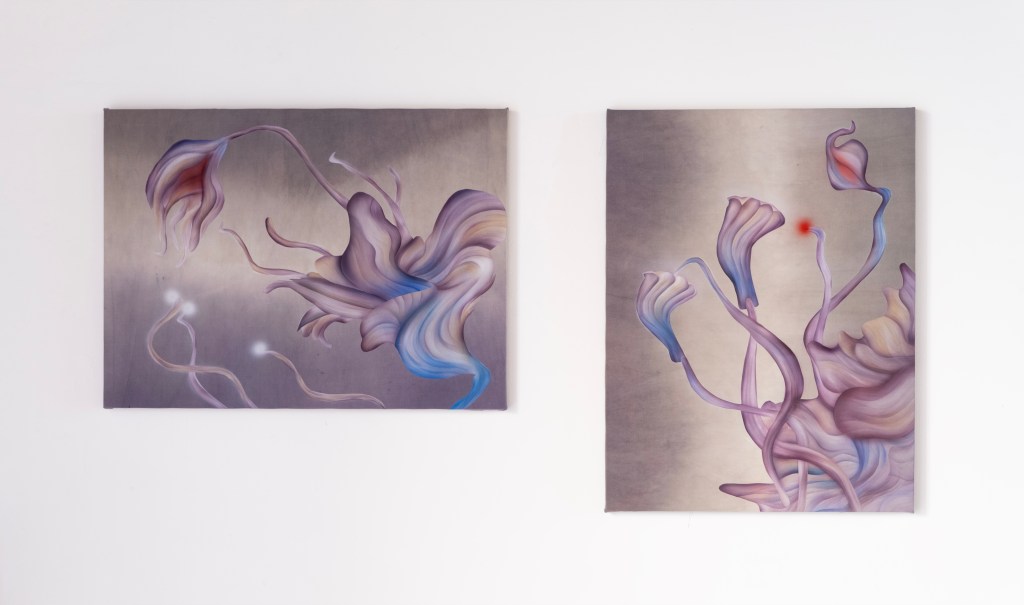
Could you elaborate on your work process? As you mentioned it being process-based, it’s more intuitive or if you start with sketches. What typically comes first in your projects: a visual or texture idea, or perhaps a philosophical concept?
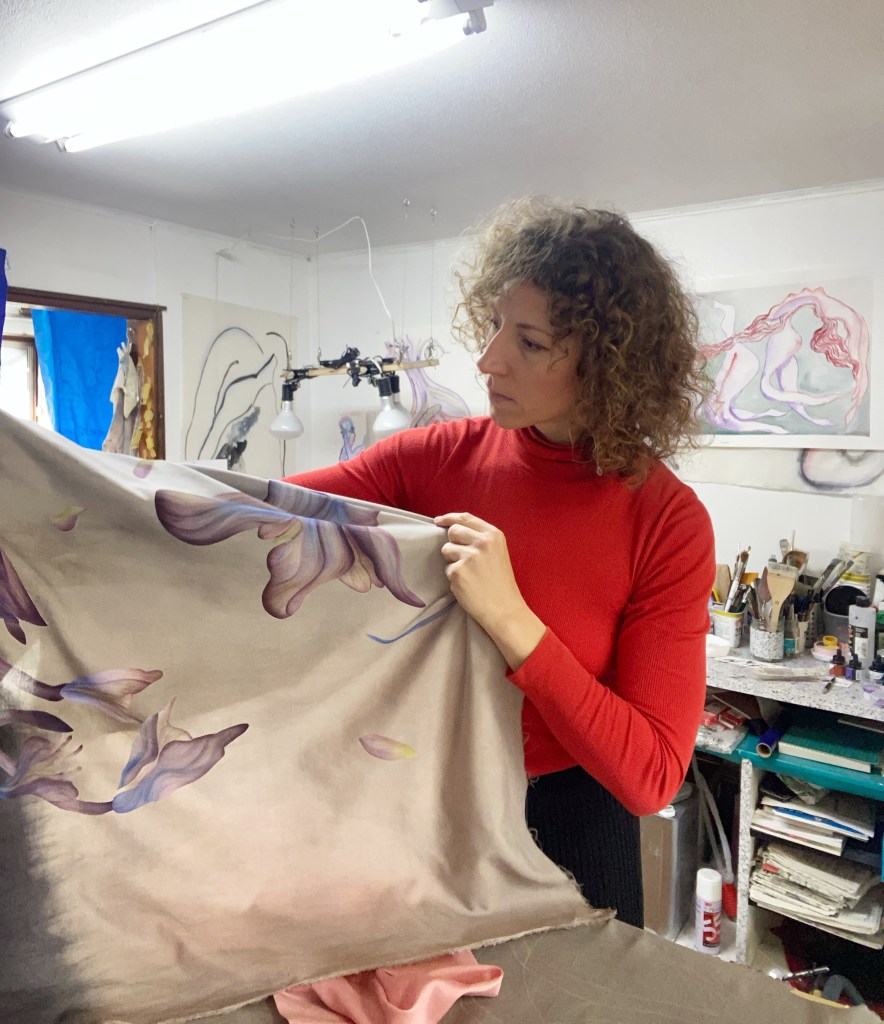
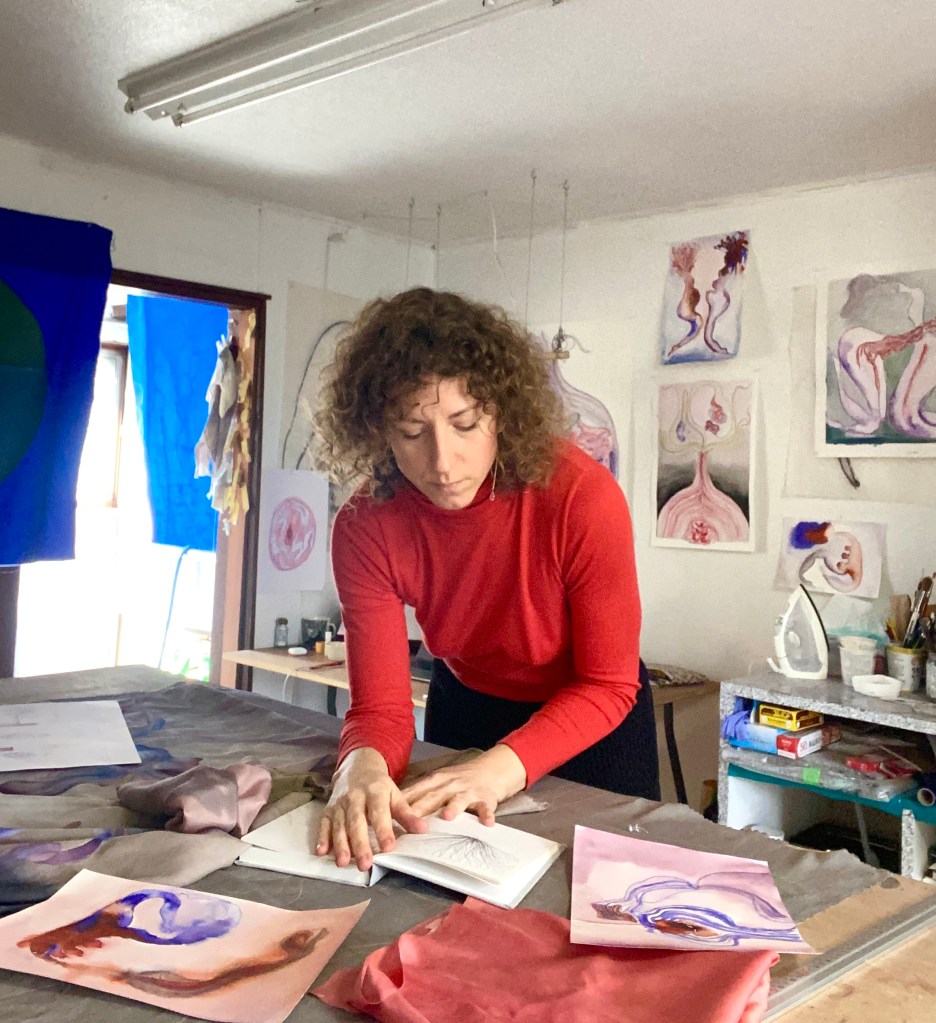
I think my process develops organically, involving two kinds of elements. One is the things I read, such as philosophy, poetry, and science fiction. These readings, coming from similar thematic roots, inspire me both intellectually and in my studio work. In the studio, this inspiration is less direct, but still influential. I usually start with sketches or ideas to evoke certain emotions. When working with plant dyes, the process is focusing on letting the materials and colours speak for themselves. I start with an idea of what I want to achieve, but the materials guide me more than rigid plans. When I think the silk is finished, I reflect on what it evokes in me and what I’d like to add to it.
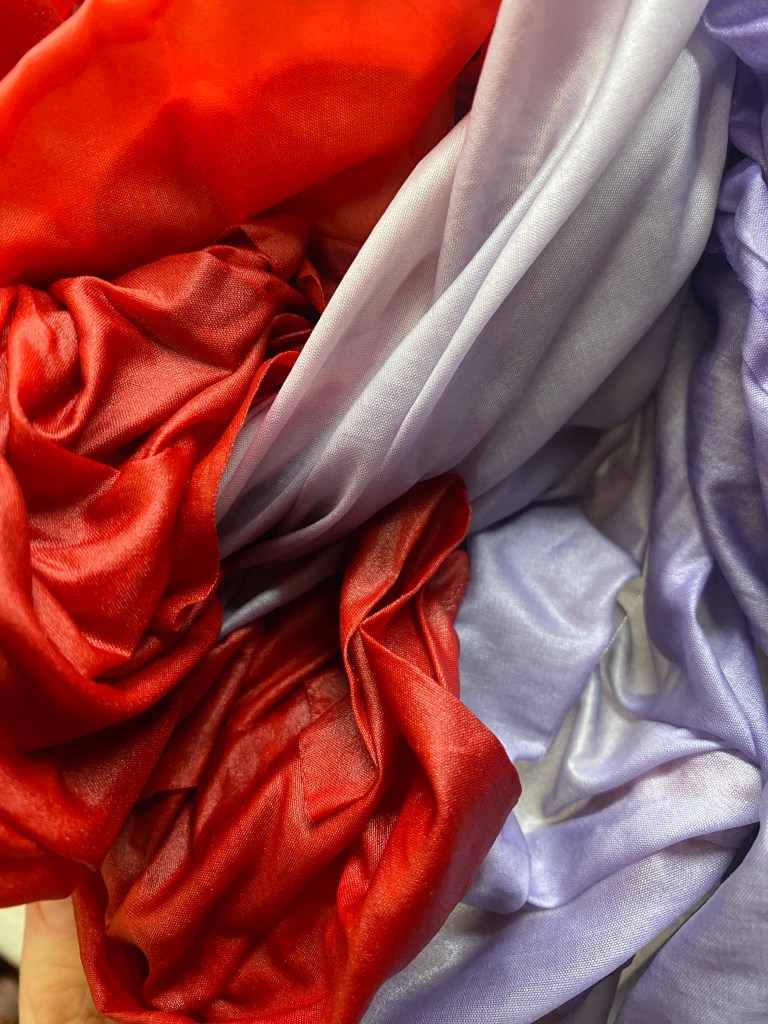
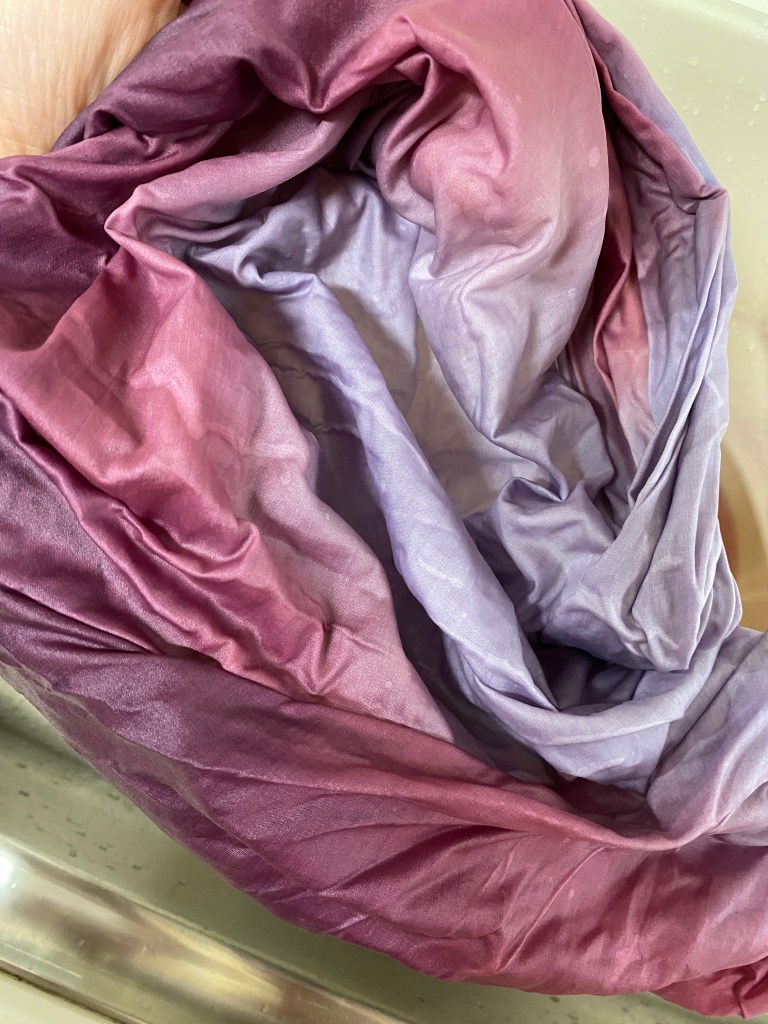
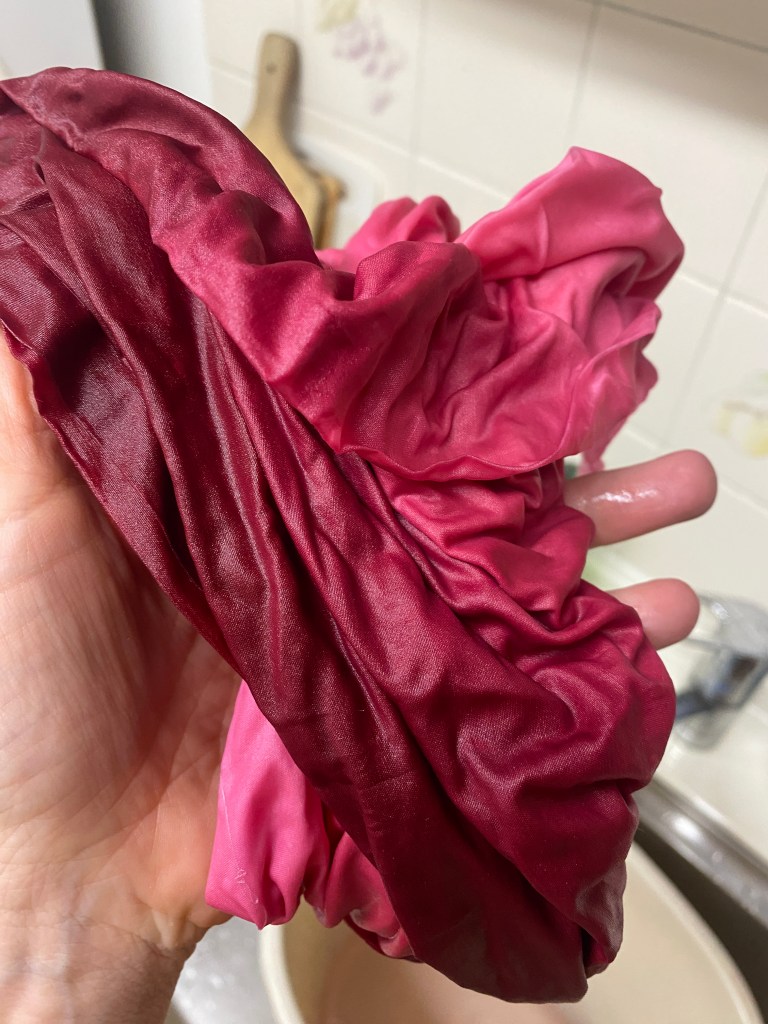
My process is a blend of many elements and varies in spontaneity. Sometimes it starts with a sketch, thinking about how to dye the fabric to complement it, or I dye the fabric first and then decide what to add. While my approach is free, the dyeing process, involving natural plant dyes, imposes a structure. I prepare the dyes from dry flowers or wood, soaking them in water to extract the essence, and then proceed with the lengthy dyeing process. This gives me freedom within the confines of the dyeing formula I need to follow.
That’s an interesting perspective. What are your thoughts on the connection between art and social or ecological themes? Do you see your work as being linked to ecological issues?
Art can certainly be political, as it often reflects the artist’s perspectives, beliefs, and commentary on society and its issues. Throughout history, many artists have used their work as a platform to express political messages, advocate for environmental change, or critique existing power structures. I believe there’s a vast space for diverse art forms, including those that engage socially or lean towards activism, which are crucial forms of expression.
The fact is that in 2023, we finally became much more aware of the changes and challenges around us, and you can definitely see the focus on those themes in the exhibitions and programming of many museums and galleries. However, my work stems from a personal sense of connection, and its roots are not purely ecological or environmental, even though there is certainly such an aspect in my practice. And I will be definitely very happy if someone will think more about those issues by experiencing my work.
Regarding your involvement with the ONA project as a co-founder. Could you tell me about this project and its focus on supporting women in the arts?
The ONA project room is an initiative I created while setting up a shared studio space in Tokyo together with two friends. Our primary aim was to have a studio for ourselves. However, we found a space with an extra room which we decided to utilise for various activities, like micro-residencies, exhibitions, and pop-up events. Realising the potential of this space, I wanted to share it with other artists, offering opportunities that were scarce for me when I arrived in Japan. The art scene in Tokyo, differing from places like London or Berlin, has fewer spaces for artists. My goal was to create a space for experimentation and dialogue, free from commercial pressures. Unlike typical galleries in Tokyo, which are restrictive, our space allows artists to freely modify it, encouraging creativity. This pro-bono project, supported by volunteer work and some government funding, aims to foster an artistic community, something I greatly missed in Tokyo after studying in London.
It’s great to hear that you’re creating opportunities for artists. How has this initiative enriched your personal practice?
I felt the need for a creative community, so having artists around more often was invaluable. It wasn’t just about working with artists whose practices were similar to mine. Instead, I chose artists whose work I found interesting, regardless of their style. This approach led to diverse exhibitions, including paintings, installations, photography, and performances. These weren’t just displays of final products but more like a laboratory of ideas, showcasing research and process. Learning from those with different practices is always fascinating, and I’ve been able to connect on many levels. Working and developing this project has been a rewarding experience.
What do you think is the primary idea or goal of art in general? If there is a specific goal, what would it be?
I would say art is almost like life because it’s a way to communicate and express. For me, it’s a different language, a way of expression that goes beyond vocabulary, reaching many layers of our consciousness. Art brings different spheres of our existence to light, offering experiences beyond our daily routine. Of course, art operates in a market, and there’s an economy behind it which can influence it. But at its core, away from these external factors, art is about communication, building dialogues, and fostering conversations. It’s interesting when art, even if disliked, triggers strong emotions like hopelessness, disgust, or unease, because it touches something within us. You might not like the artist or the artwork itself, but its impact on you is undeniable. These powerful moments are important experiences to seek, as they can profoundly affect us.

ARTIST OF THE MONTH
INTERVIEW’24
 PAI_32 platform