

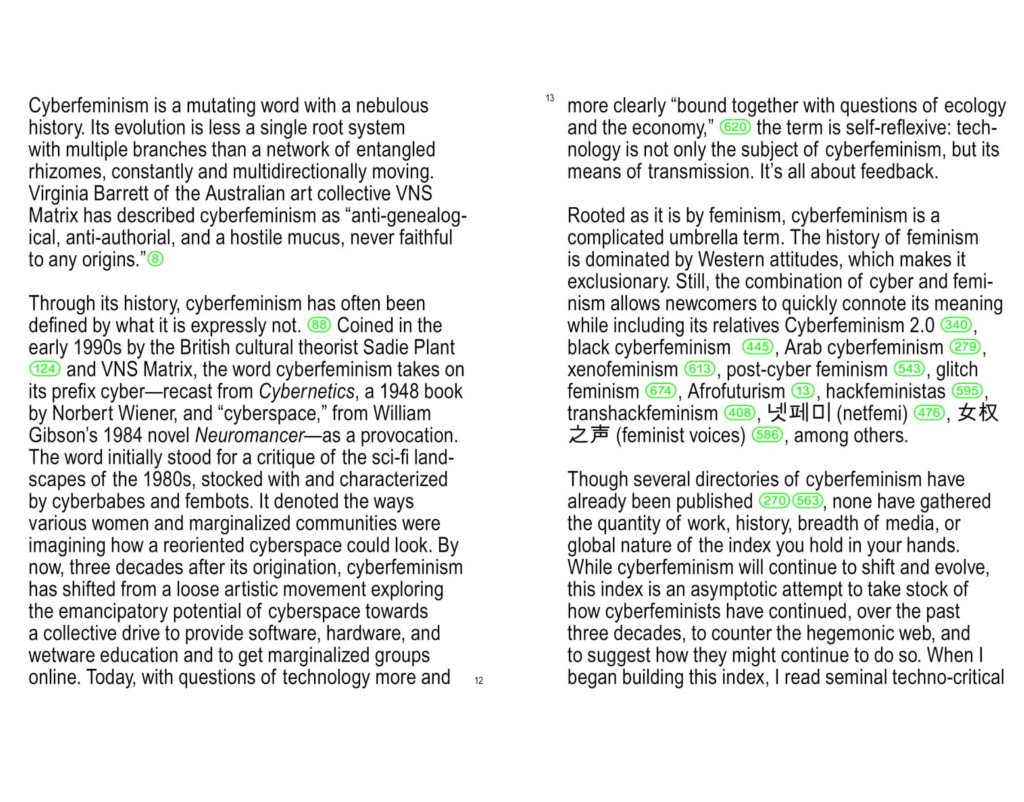
Cyberfeminism represents a pivotal movement at the intersection of feminist theory and the digital world, aiming to dissect, critique, and reimagine the ways in which technology impacts gender dynamics. This movement, evolving since the early 1990s, advocates for a digital landscape where traditional gender roles are dismantled, and individuals, regardless of gender, are empowered to explore, create, and influence. This article delves into the foundational principles of cyberfeminism, its evolution, the core themes it encompasses, and highlights the significant contribution of Mindy Seu’s “Cyberfeminism Index” as a seminal work that aggregates and illuminates the vast scope of cyberfeminist practices and theories.
The Origins and Evolution of Cyberfeminism
Emerging amidst the digital culture boom of the early 1990s, cyberfeminism was born out of a need to address the male dominance in the burgeoning tech industry and the internet. Early cyberfeminists were visionaries who recognized the potential of the internet as a transformative space for feminist activism, community building, and the exploration of gender identity beyond the binary confines. They embarked on a quest to assert a female presence in digital spaces, advocating for a more inclusive and equitable digital world.
As we delve deeper into the intricate tapestry of cyberfeminism, it’s essential to illuminate the historical milestones and the trailblazing figures who have shaped its evolution. Cyberfeminism, with its roots deeply embedded in the early 1990s, emerged as a critical response to the burgeoning influence of digital technology on society and gender dynamics. This exploration into cyberfeminism not only sheds light on its foundational principles and contemporary themes but also pays homage to its pioneering spirits, culminating in the monumental work of Mindy Seu’s “Cyberfeminism Index,” a treasure trove of cyberfeminist thought and activism.
The Pioneers of Cyberfeminism
Cyberfeminism’s inception can be traced back to the visionary works and actions of several key figures and collectives who recognized the transformative potential of the internet for feminist activism and discourse:
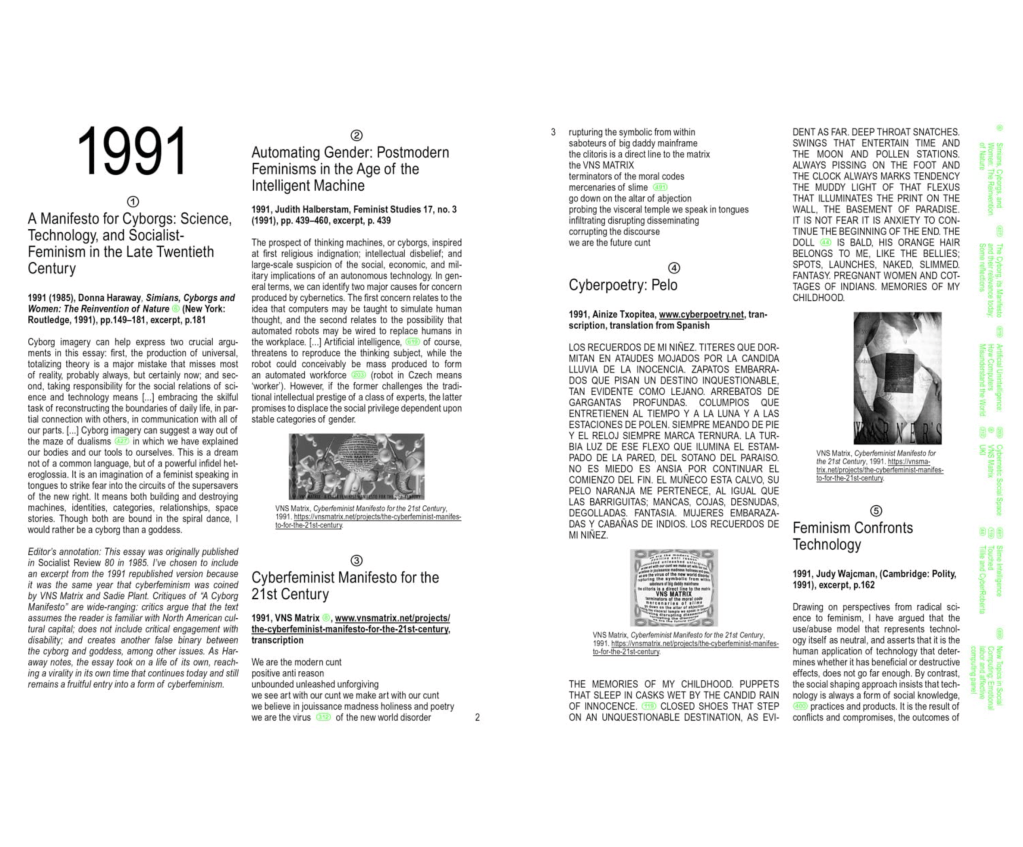
- VNS Matrix: This Australian artist collective, formed in 1991, is often credited with coining the term “cyberfeminism.” Their seminal work, “A Cyberfeminist Manifesto for the 21st Century,” laid the groundwork for the movement, calling for the overthrow of the patriarchal narratives dominating the digital space.
- Sadie Plant: A British author and philosopher, Plant’s writings in the mid-1990s, particularly “Zeros + Ones,” explored the intersections of feminism, technology, and society, positing that the digital revolution could facilitate a radical shift in gender dynamics.
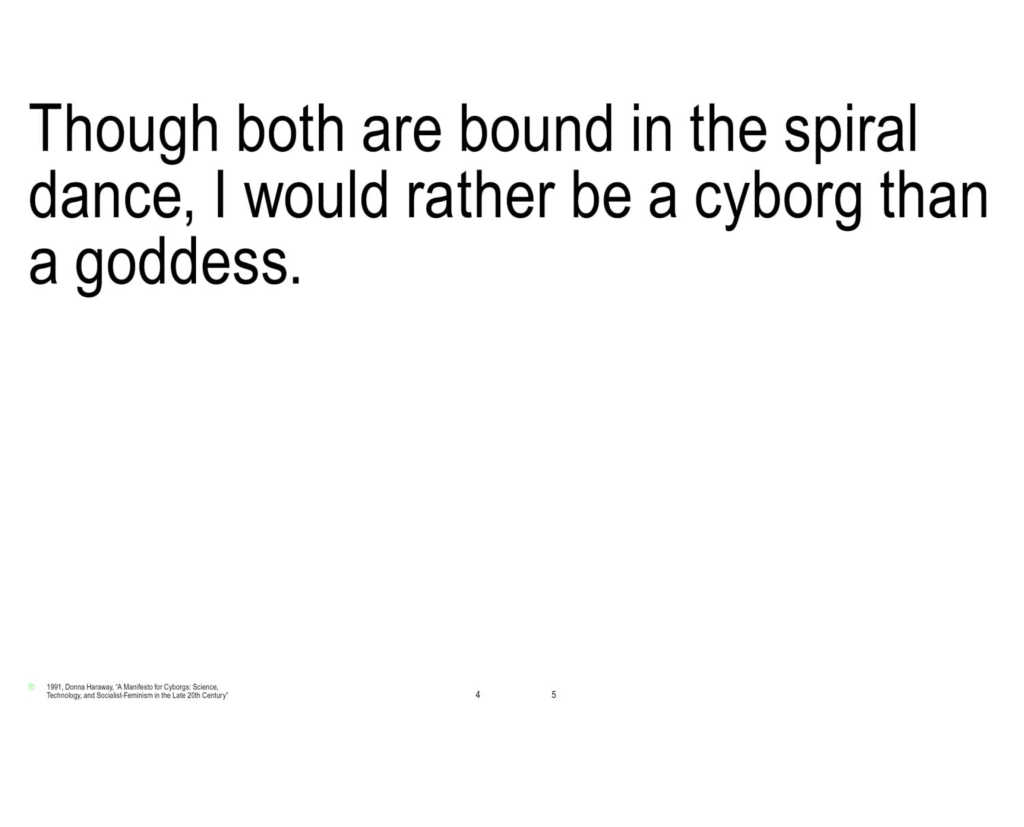
- Donna Haraway: Though not exclusively tied to the cyberfeminism label, Haraway’s 1985 essay, “A Cyborg Manifesto,” has been immensely influential in cyberfeminist thought. Her concept of the cyborg as a rejection of rigid boundaries between human and machine, nature and culture, provided a theoretical foundation that resonates with cyberfeminist ideologies.
- Old Boys Network: Established in the late 1990s, this was the first international cyberfeminist alliance, which aimed to connect various strands of cyberfeminist thought and practice through conferences, publications, and online platforms.
Core Themes of Cyberfeminism
Cyberfeminism is a multifaceted movement, addressing a range of issues including:
- Digital Identity and Expression: It explores the construction and fluidity of gender identity within virtual spaces, offering new avenues for self-expression and identity exploration.
- Activism in the Digital Age: Cyberfeminism harnesses digital platforms to amplify feminist voices, mobilize support, and create resilient communities advocating for gender equality.
- Access and Education: It emphasizes the importance of equitable access to technology and STEM education for women and marginalized genders, aiming to close the digital divide.
- Critique of the Digital Patriarchy: The movement critically examines how digital platforms and media perpetuate gender stereotypes and biases, advocating for a more inclusive digital culture.


Mindy Seu’s Cyberfeminism Index: A Cornerstone of Cyberfeminist Thought
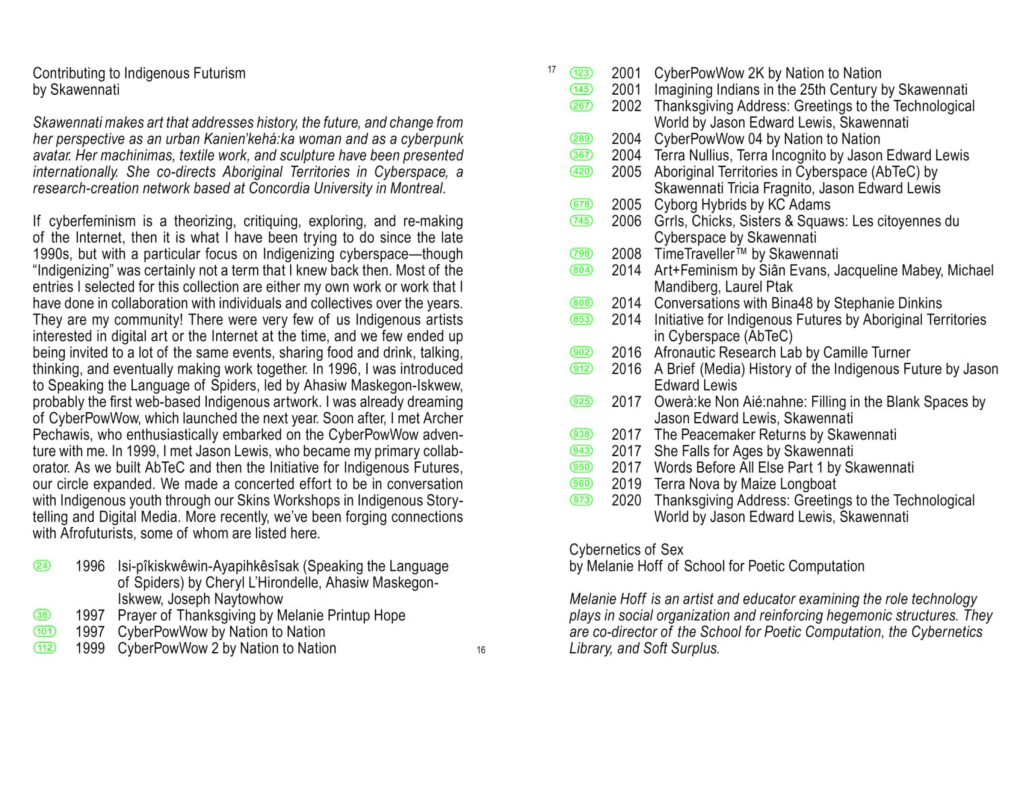
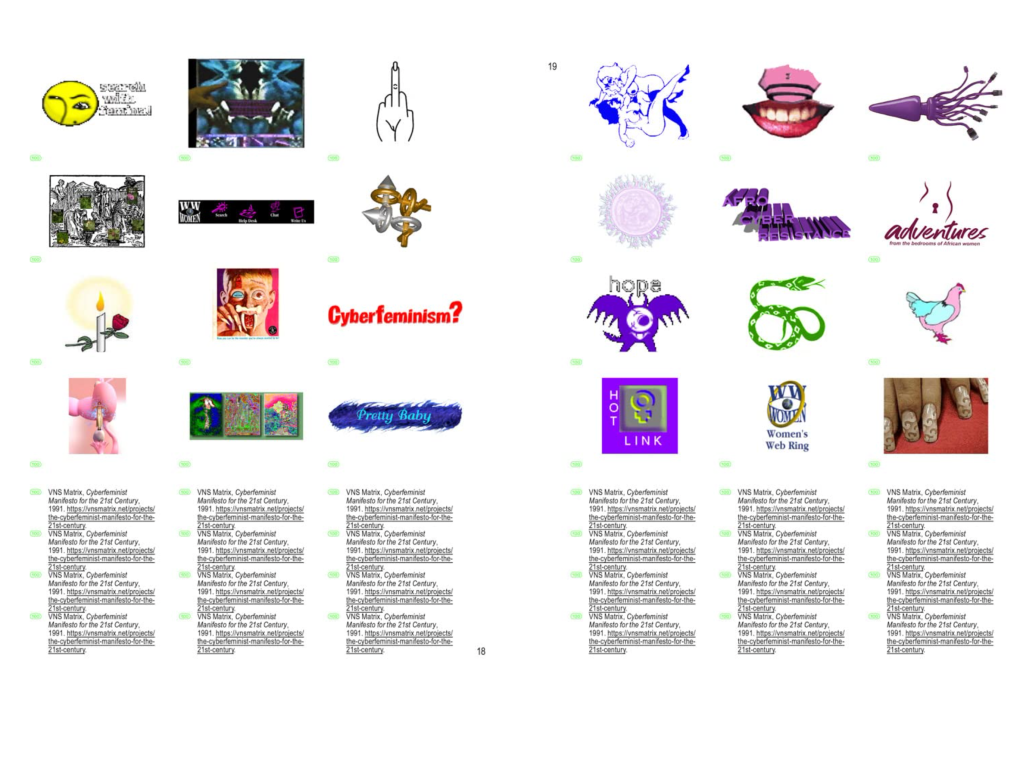
Mindy Seu’s “Cyberfeminism Index” is a monumental work that compiles essays, artworks, digital projects, and manifestos that have shaped the cyberfeminist movement. This comprehensive collection serves multiple purposes:
- A Scholarly and Educational Resource: It offers an exhaustive overview of cyberfeminist theory and practice, making it an essential tool for academics, students, and anyone interested in the intersection of technology and feminism.
- A Source of Inspiration: Highlighting diverse cyberfeminist actions and creative works, the index inspires new and continued engagement with cyberfeminist ideologies.
- Preservation of Cyberfeminist History: Acting as a digital archive, the index safeguards the legacy and achievements of the cyberfeminist movement, ensuring its accessibility for future generations.
Expanding the Digital Feminist Dialogue
Mindy Seu’s contribution through the “Cyberfeminism Index” has significantly enriched the cyberfeminist dialogue, offering a foundation upon which future explorations of digital feminism can be built. As the digital landscape evolves, cyberfeminism remains a crucial lens through which to analyze and influence the development of digital technologies and cultures. It champions a digital future that is inclusive, equitable, and empowering for all, guided by the pioneering work of figures like Mindy Seu and the collective efforts of the cyberfeminist community.
The Legacy and Future of Cyberfeminism
The historical context of cyberfeminism, enriched by the contributions of its early heroes and documented in works like Seu’s “Cyberfeminism Index,” offers invaluable insights into the movement’s potential to reshape our digital futures. As we move forward, the principles of cyberfeminism continue to inspire a new generation of thinkers, activists, and creators to envision and build digital spaces that are inclusive, equitable, and reflective of diverse gender experiences.
The legacy of cyberfeminism, rooted in its history and propelled by contemporary works, challenges us to rethink the intersection of technology and gender. It beckons us to continue the work of its pioneers, ensuring that the digital realm serves as a space of empowerment and transformation for all, free from the constraints of traditional gender norms.
Book is available here.
 PAI_32 platform