
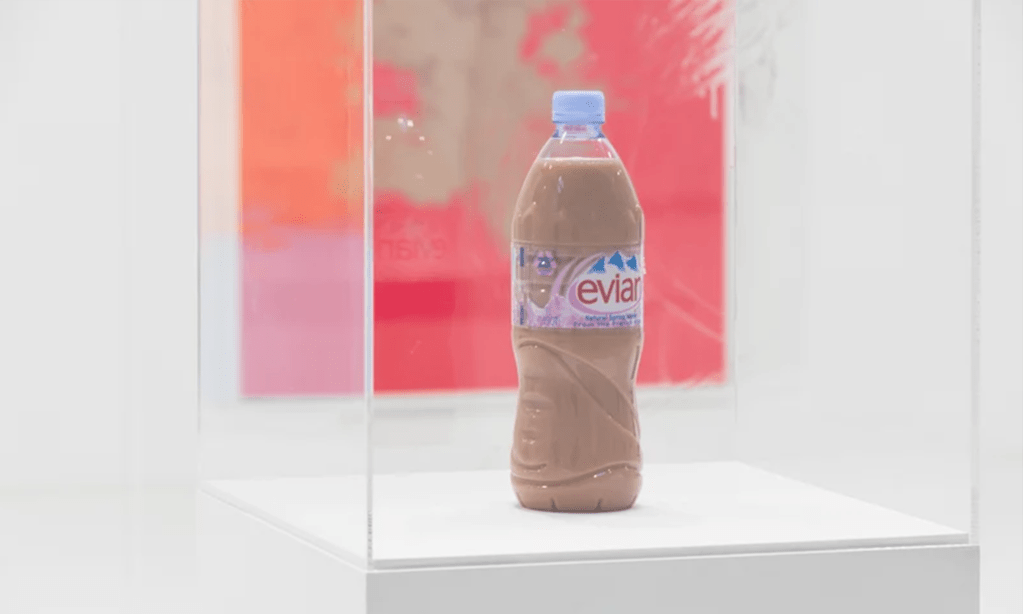
↑ Pamela Rosenkranz, The most important Body of Water is Yours, PET bottle, silicone, pigments, plexi-hood, pedestal 32.4 × 8.9 × 8.9 cm 12 3/4 × 3 1/2 × 3 1/2 inches”. All rights reserved. Link
In the contemporary art world, few artists probe the intricate web of nature, technology, and human identity as provocatively as Swiss artist Pamela Rosenkranz. Her work, characterized by a unique blend of conceptual depth and sensory immediacy, invites viewers to reconsider their place within the natural world and the digital age. Through installations, sculptures, and mixed-media works, Rosenkranz delves into themes of artificiality, consumer culture, and the biological underpinnings of human experience. Here, we explore several key works that exemplify her approach to art.
Our Product (2015)
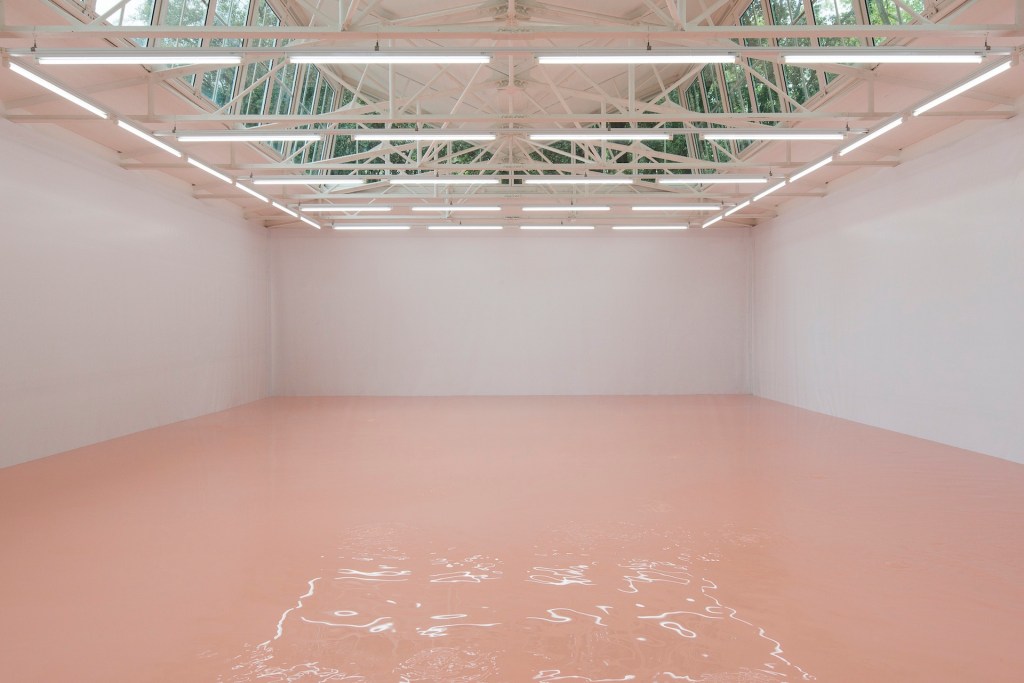
Perhaps one of Rosenkranz’s most recognized installations, “Our Product” took center stage at the Swiss Pavilion during the 56th Venice Biennale. This immersive work filled the pavilion with a monochromatic pink light, simulating the average skin tone of northern Europeans, set against a vast pool of silicone liquid that mirrored the chemical composition of the human body. The installation confronted visitors with the artificial boundaries of identity and nationality, wrapped in an unsettlingly organic ambiance. “Our Product” stands as a powerful statement on the fluidity of identity in a globalized world, challenging the viewer to question the very foundations of self and otherness.

Because They Try to Bore Holes (2012)
Turning her critical eye towards the pharmaceutical industry, “Because They Try to Bore Holes” is a direct commentary on the commodification of human emotions. By filling antidepressant capsules with neon pigments, Rosenkranz highlights the allure of pharmaceutical solutions to emotional and psychological distress. This work interrogates the boundaries between natural human states and the artificial pathways to happiness engineered by corporate interests, provoking a dialogue about the nature of well-being in the modern age.

Alien Culture (2013)
With “Alien Culture,” Rosenkranz explores the theme of alienation through the lens of an invasive species of algae. This work serves as a metaphor for cultural and biological invasions, reflecting on globalization’s impact on local ecosystems and cultures. It raises poignant questions about what constitutes ‘natural’ in a world where ecological and cultural boundaries are increasingly blurred by human activity.
Engaging with the Evian Bottle
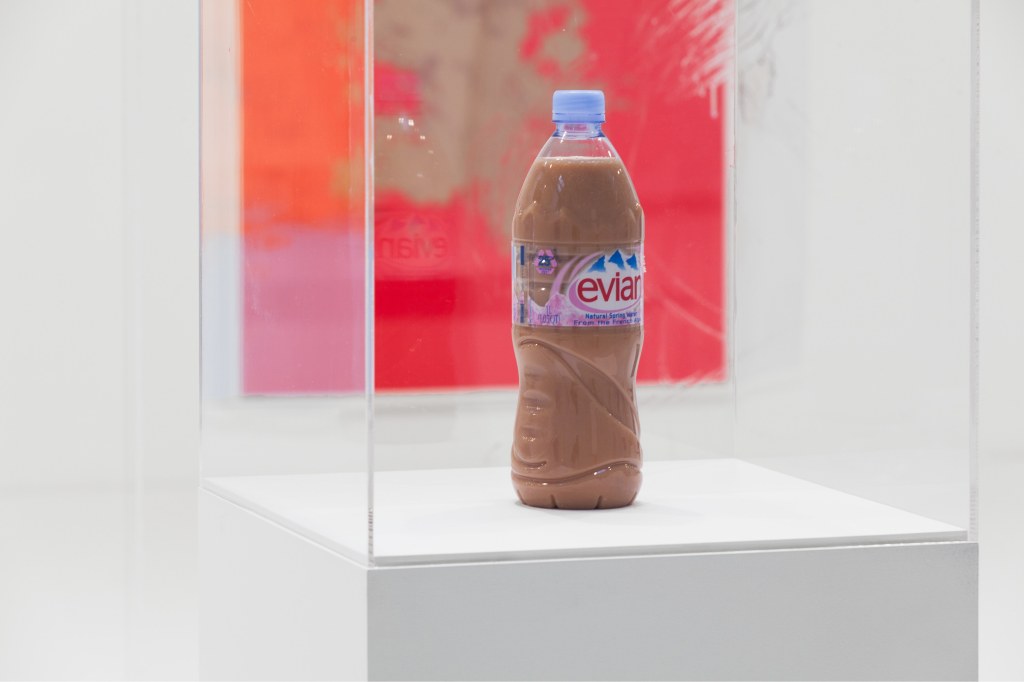
Rosenkranz’s engagement with the Evian water bottle, repurposing it as a critique of consumer culture and environmental commodification, exemplifies her knack for transforming mundane objects into vehicles for profound commentary. This work, among others, highlights her ability to navigate the complex interplay between commercialism, nature, and identity.
Pamela Rosenkranz’s art is a testament to the power of contemporary art to challenge and expand our understanding of the world. Through her innovative use of materials and concepts, she invites us to ponder the future of human identity in an increasingly artificial and interconnected world. Her works serve as a mirror, reflecting the complexities of the 21st-century human experience, marked by an ever-evolving relationship with nature, technology, and ourselves.
 PAI_32 platform