

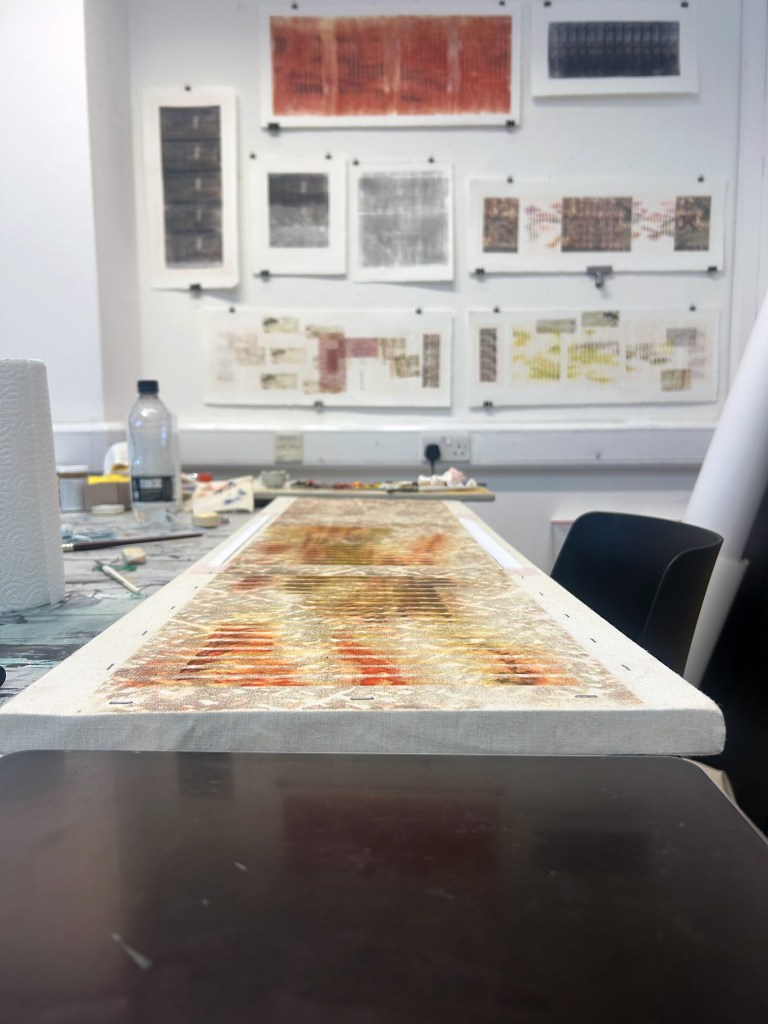
↑ Ben Grosse-Johannboecke/Grid Piece/ 2023/ oil, graphite and screen print on canvas panels/ 108 x 191 cm.
Ben Grosse-Johannboecke, a visionary artist whose work realms of sociopolitical imagery and abstract art. Ben’s unique approach involves exploring the concept of the “exhausted image,” where images lose their original impact through endless circulation and modification. His creative process transforms these images into abstract paintings, which are then scanned, digitally manipulated, and re-painted, blurring the lines between their origins and their new, abstract forms.
In this conversation, Ben shares insights into his artistic process, the inspiration behind his distinctive techniques, and his views on how art can engage with and comment on sociopolitical contexts. We also delve into the interplay of various images and texts in his work, and how he sees his art fitting within the broader narrative of art history. Join us as we explore the fascinating world of Ben Grosse-Johannboecke and his artworks.
Ben Grosse-Johannboecke website.
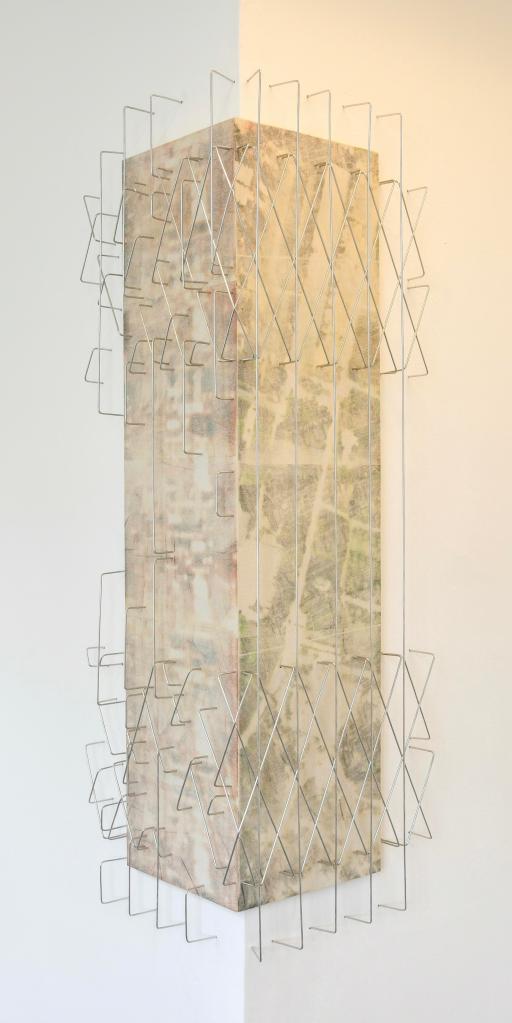
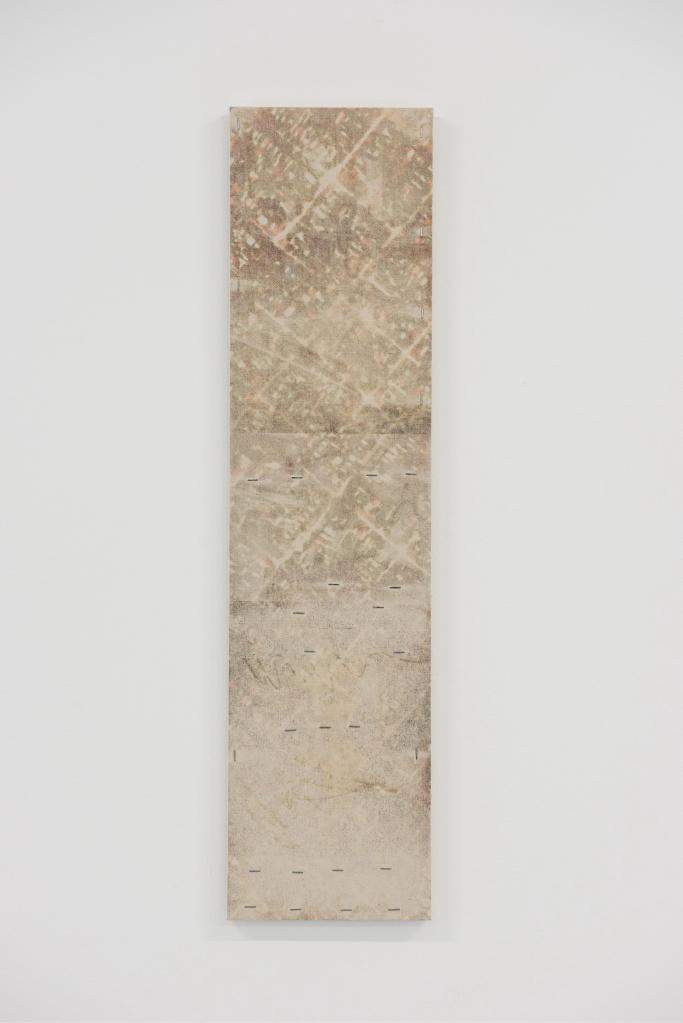
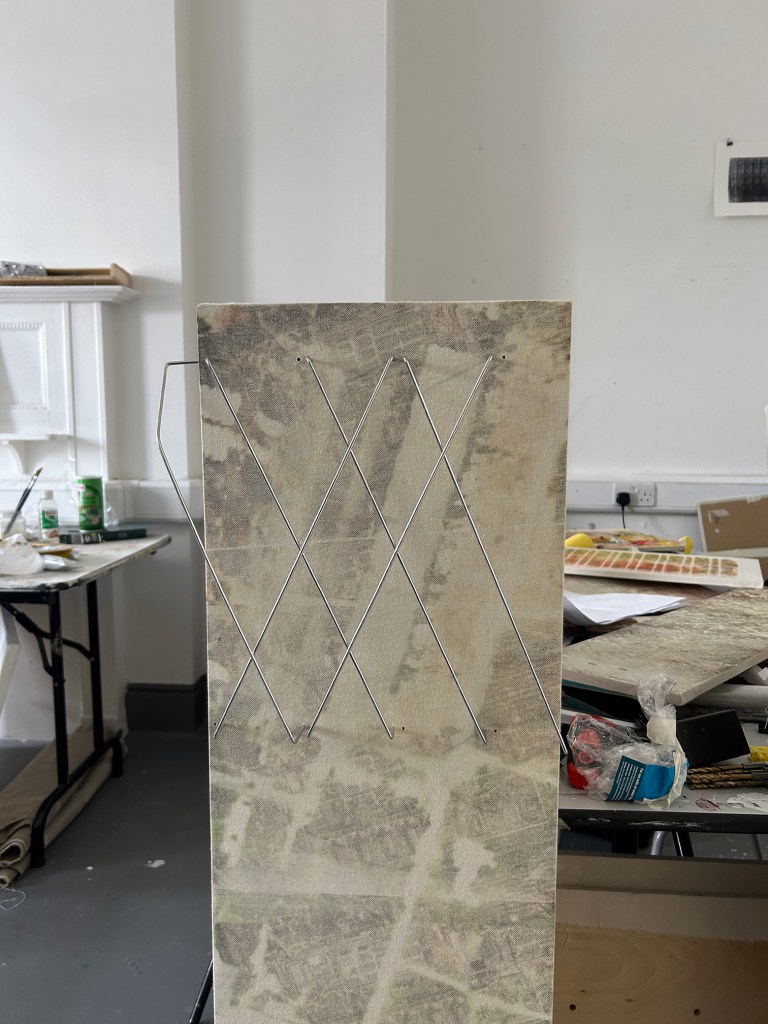
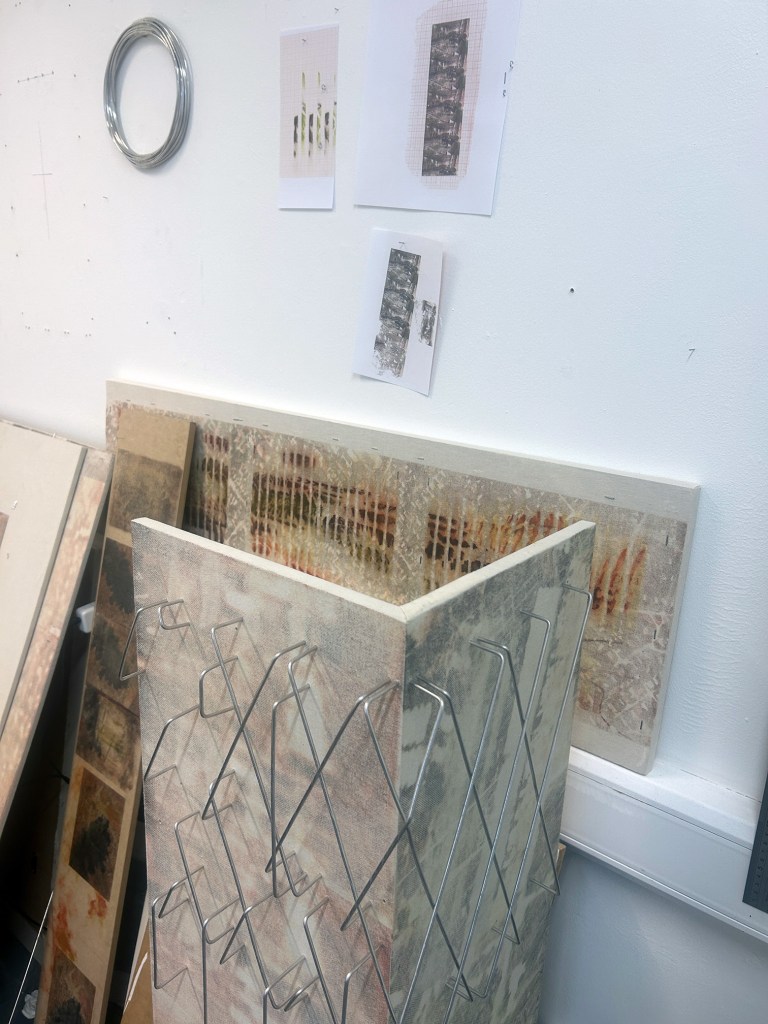
Zaporizhzhia, Still, 2024, image transfer on canvas panel with aluminium wire, 133 x 45 x 45 cm
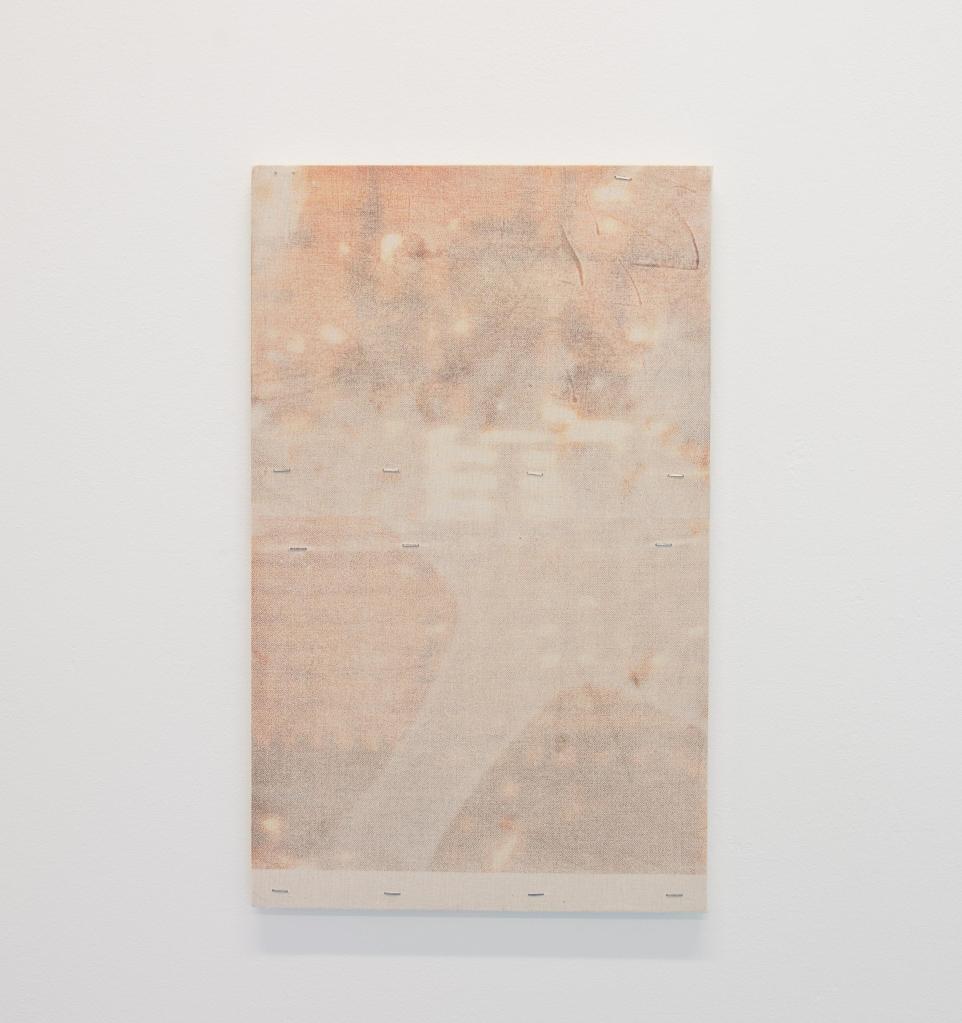
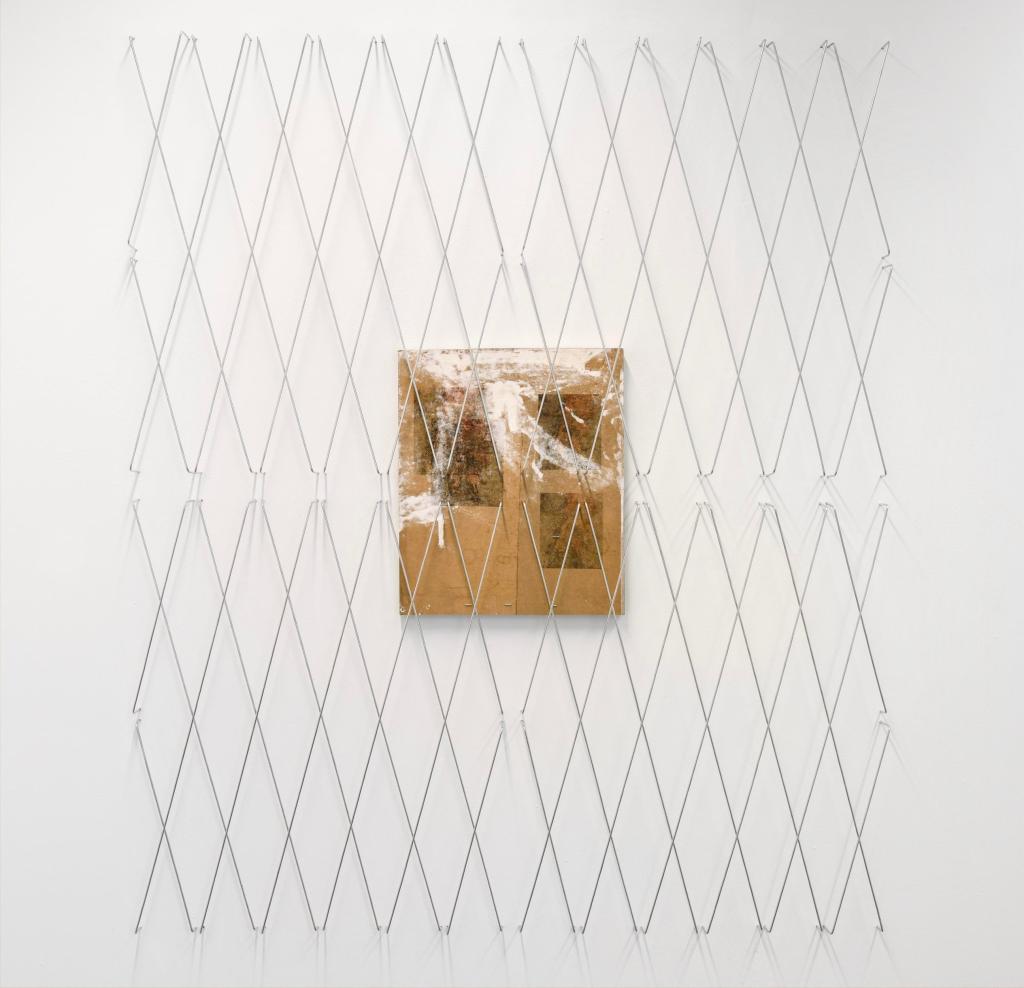
Your work centers on the idea of the “exhausted image,” where sociopolitical images lose their impact through repeated circulation and modification. Can you elaborate on how this concept influences your artistic process and the themes you aim to convey through your art?
The exhausted image is closely connected to the concept of the “poor image” introduced by Hito Steyerl. It illustrates how, due to digital distribution, images become less readable and approach abstraction mainly through loss of resolution. Steyerl explains how they begin to speak more about their journey and how we as a society interact with them than about what they depict.
In a way, most of my paintings could be categorized as “poor paintings”. My work starts from sociopolitical imagery and is then printed, painted, repainted, reused so many times that it challenges the idea of still being connected to the sociopolitical context they started with. It is about the ability or inability of both images and painting to store information, just as it is about exploring how we try to access that information and sometimes fail to do so.
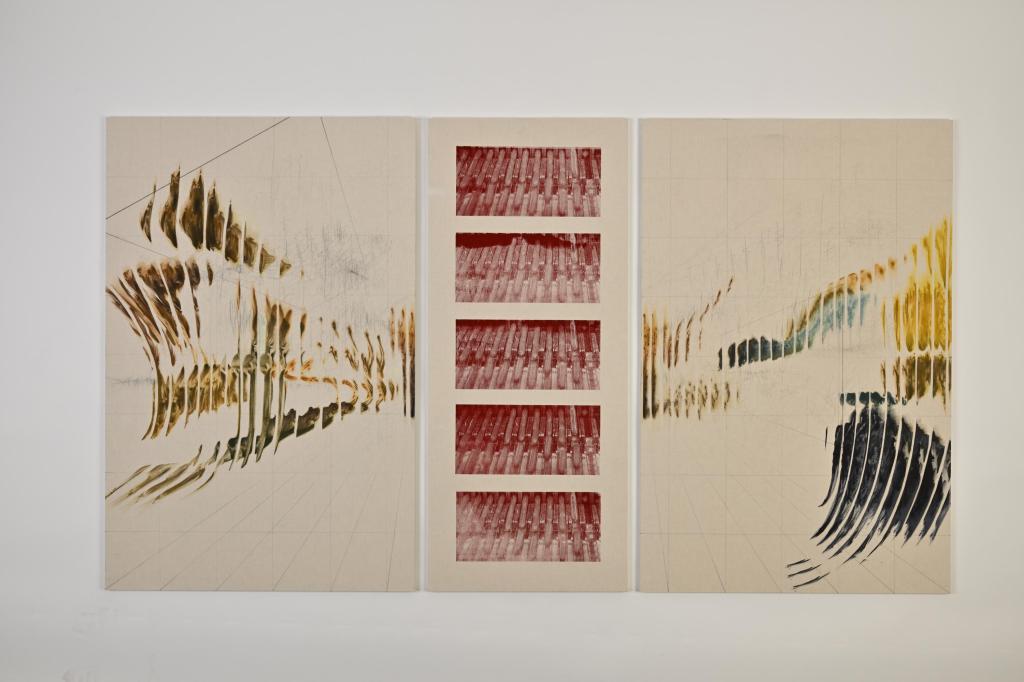
You mention that your stripes come from scanned and digitally manipulated abstract paintings of political events. Can you describe the process of transforming these images into your final works and how this technique helps explore the connection (or disconnection) between the original sociopolitical context and the resulting abstraction?
The paintings you are referring to are from early 2023 and were based on images from that time documenting the Russian invasion of Ukraine. I was not particularly interested in depicting the image in those paintings but rather abstracting it to agree that it becomes unclear what exactly it derived from, embedding the sociopolitical context rather than depicting it.
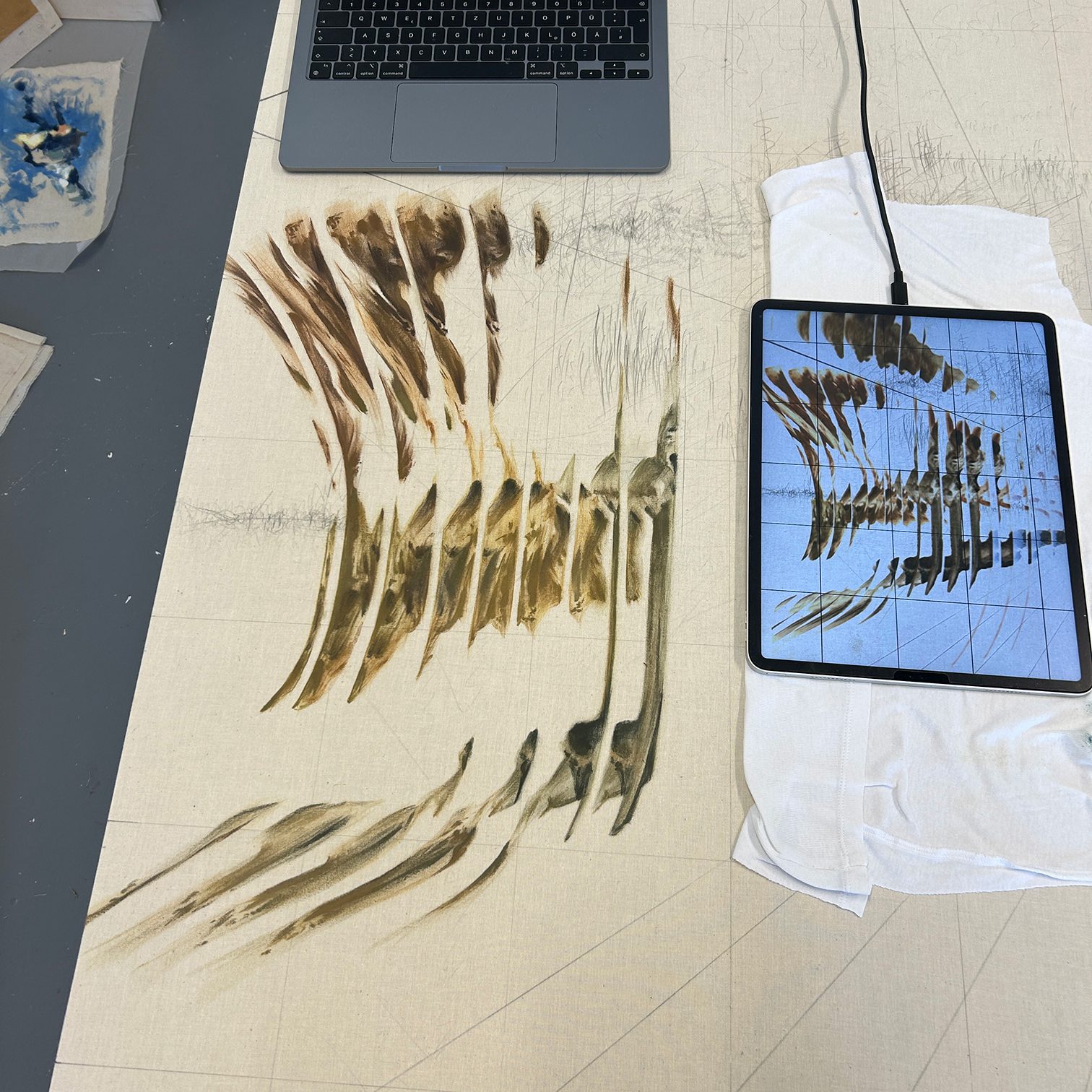
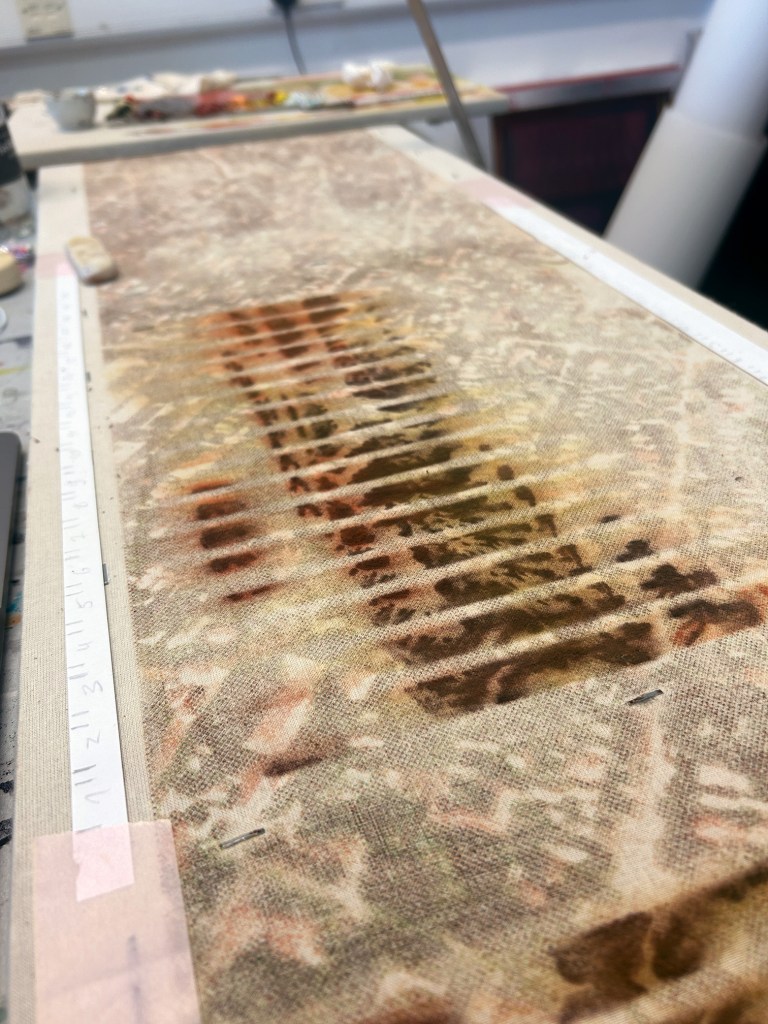
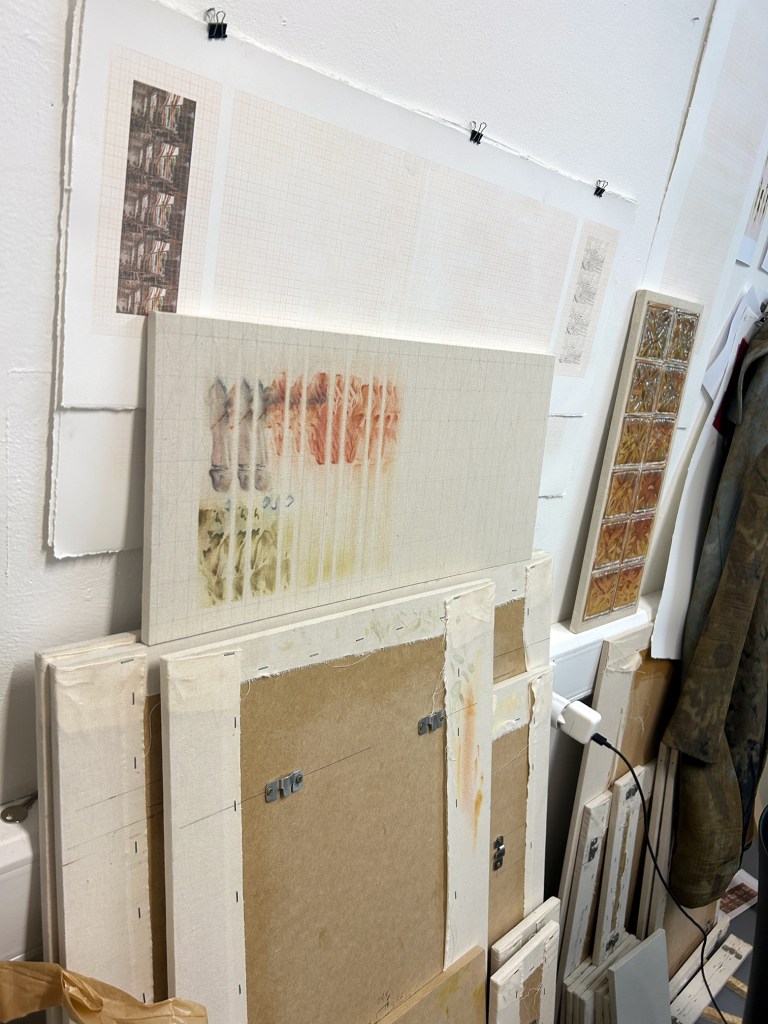
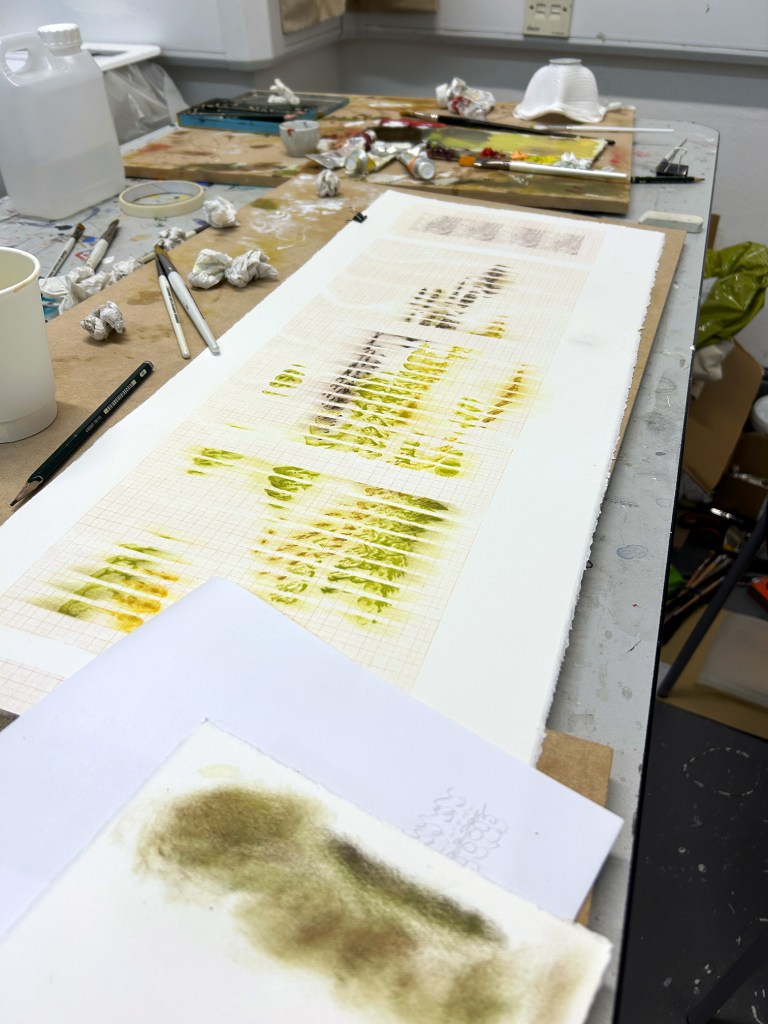
For the current work, I am taking multiple copies of the initial painting and cut them into vertical stripes on my iPad, each copy slightly offset from the previous. I then sort all the stripes and space them out, which results in the same mark repeating in multiple stripes or pulses as if looking through corrugated glass.
I then take that resulting image as a reference for the new painting, repainting it as if I were copying a photo, slowly rendering each detail of the marks that were once largely intuitive.
I only work from that body of paintings from early 2023 and have decided against making more to work from. I use the same painting and marks multiple times, pushing the repetition even further.
Through this process, I am increasing the distance between the painting and its source, exhausting it in a way. I am posing the question of when the work stops being about the image embedded in it and whether it still is a distant abstraction of that image or has become an autonomous painting.
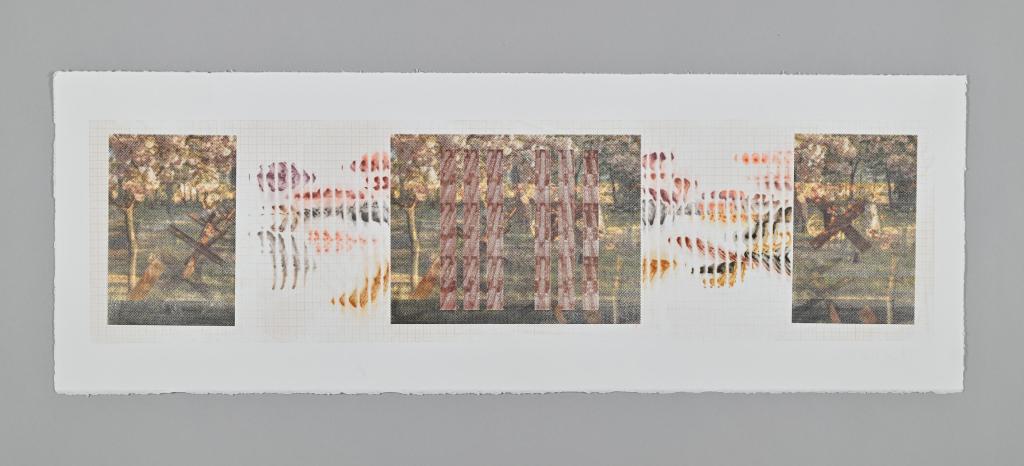
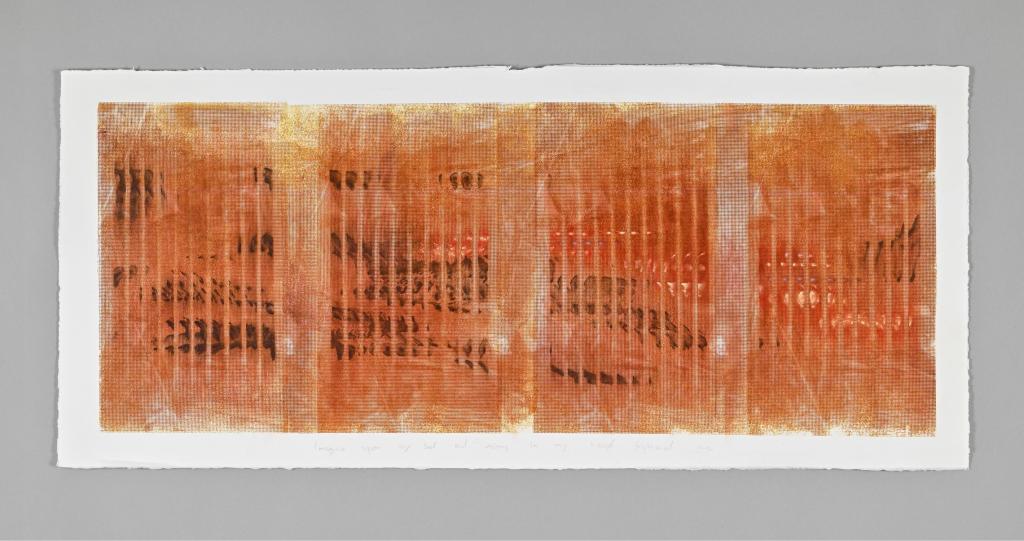
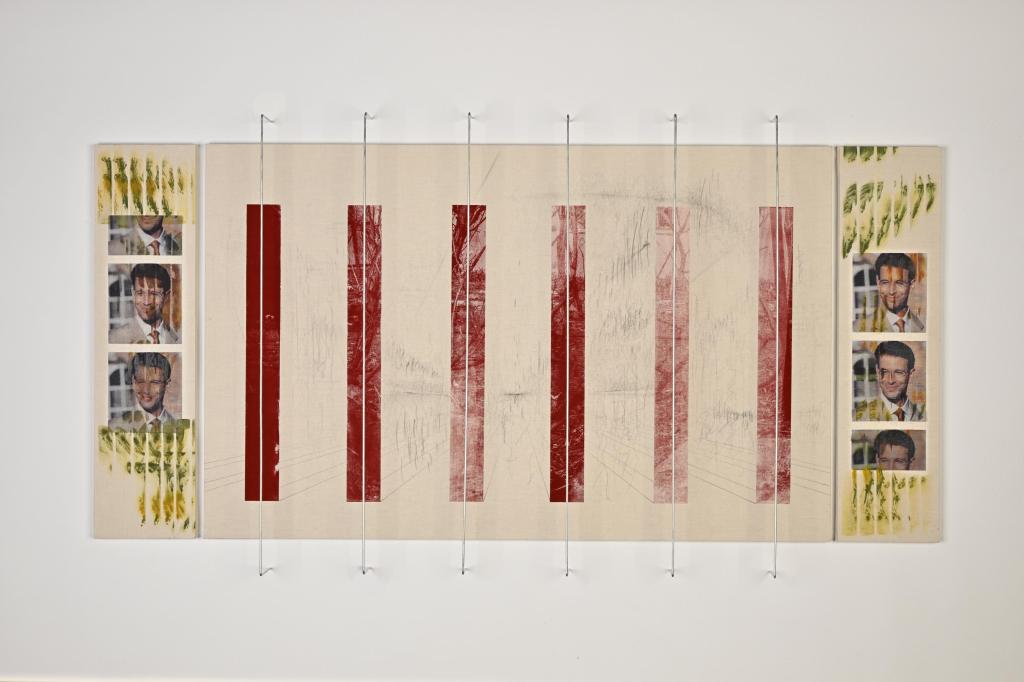
Various images and texts surrounding you, from initial reference images to musical and abstract elements, are incorporated into your work. How do you select these elements, and what role do they play in the overall narrative or message you seek to present to your audience?
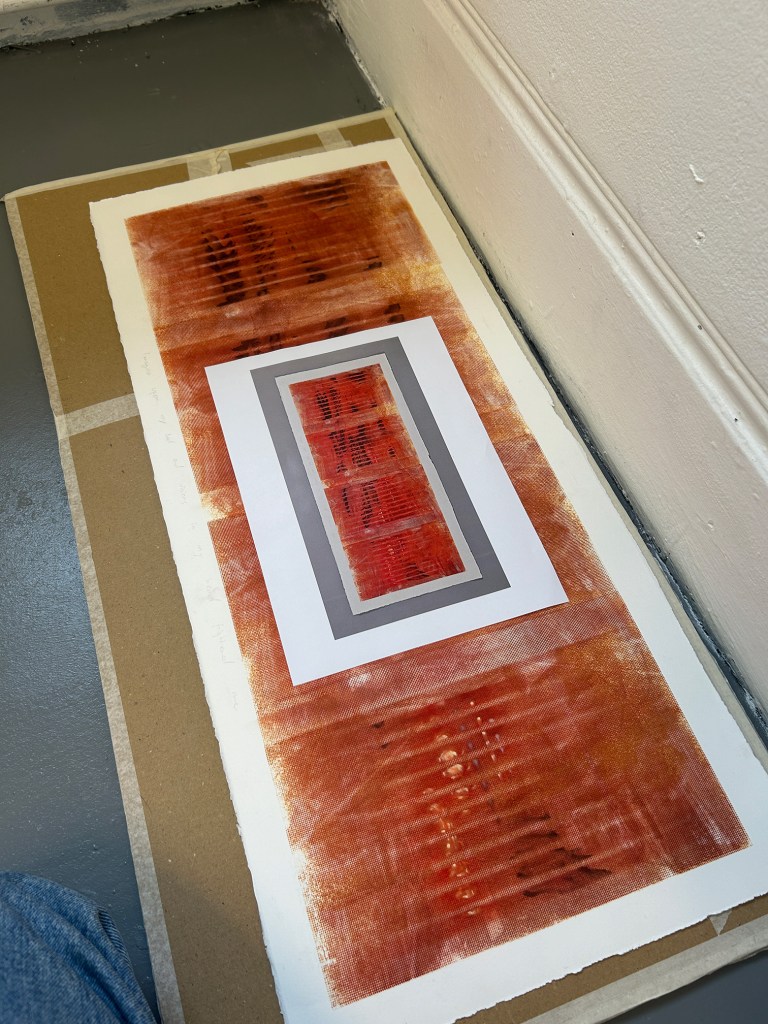
Most images that can be found in the work are from that same group of photos from 2023 that the initial paintings were based on. Sometimes, I like to use different images that have been on my mind but are not necessarily related to the sociopolitical context of the others. Some have their own but separate sociopolitical importance, and others are film stills or satellite images of areas shown in the photographs. I choose these images and sometimes quotes through their emotinal value, as opposed to the logical approach in the rest of the work.
I like printing these images into the work, sometimes more abstracted, sometimes unchanged, to challenge the viewer to recognize their political importance or lack thereof. Oftentimes, the raw image is as hard to comprehend as the pulses that have passed through many stages of abstraction.
Your work moves into the space of art-historical abstraction, distancing itself from its origin. How do you see your work fitting within the broader context of art history, and what conversations or reflections do you hope to spark regarding the evolution and interpretation of sociopolitical imagery in contemporary art?
I am thinking a lot about people like Julie Mehretu and Mark Bradford. Both artists’ practices revolve around sociopolitical themes but refuse to be “about” them. Mehretu, for example, takes her source imagery, blurs them to a degree that they become unrecognizable, and then prints them as the base layer of her paintings, responding with abstract mark-making on top. Bradford has several works, starting with maps of areas with sociopolitical importance; I am thinking of “Tulsa Gottdamn” especially. He then, like Mehretu, adds to the image, overlaying and covering the map to the extent that the average viewer would fail to uncover the embedded context.
There are many interesting questions around legibility in this approach that I would categorize my own work in. Legibility of painting, legibility of images once detached from their context, and also questions around the artist’s responsibility when working with sensitive and political imagery.
It is, in many ways, a departure from how we used to look at abstraction. It is no longer purely subconscious or intuitive, as we have known from the abstract expressionists, but much more systematic, logical and restricted. It is grounded in events of our time but refuses to end there.
What do you think is the primary idea or goal of art in general? If there is a specific goal, what would it be?
I think art is too broad an area to have a unified goal. Even just looking at the ultra-contemporary, there are so many different things going on in painting alone. I guess we all try to make an educated guess of what art now could become based on what we have learned from the ones before and around us. That, however, looks completely different from one artist to the next.

ARTIST OF THE MONTH
PAI32 EDITION’24
 PAI_32 platform