

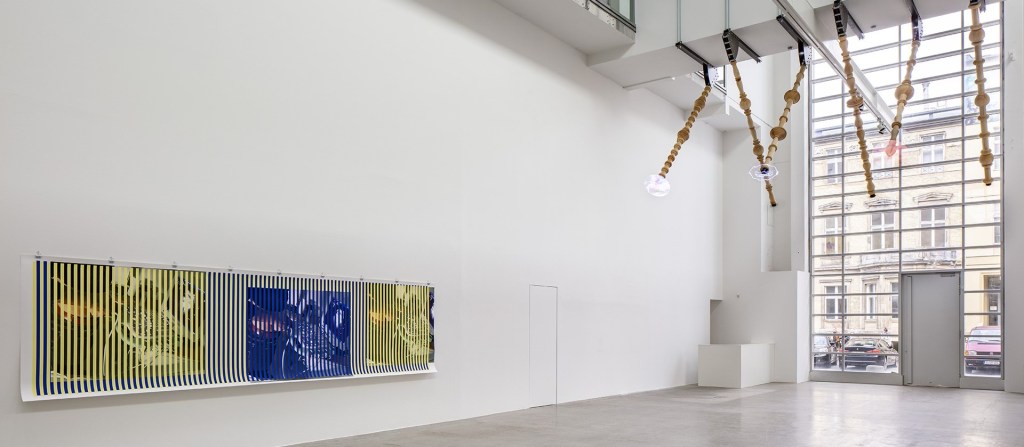
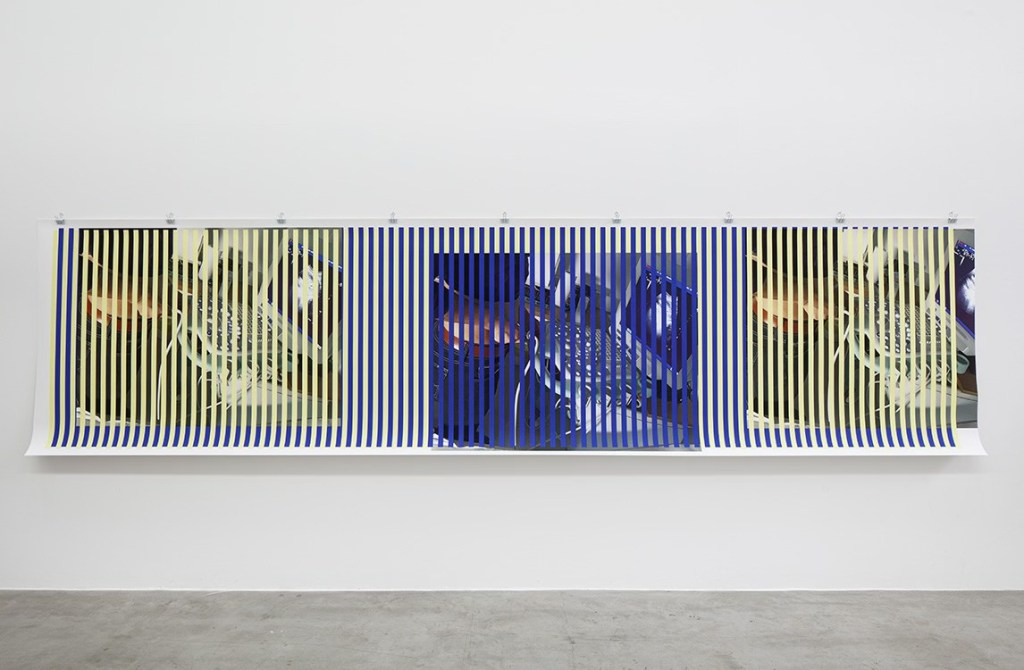
↑ Aleksandra Domanović, Sueño de una Tarde, 2014. Courtesy of the artist and Tanya Leighton, Berlin and Los Angeles. Photo: Gunter Lepkowski.
Aleksandra Domanović is not just an artist; she is a chronicler of transformation. Born in 1981 in Novi Sad, in the former Yugoslavia, and now based in Berlin, Domanović’s work occupies a distinctive space where art, technology, and history converge. Her practice, spanning sculpture, video, and digital media, has earned her recognition as a critical voice in contemporary art, celebrated for her thoughtful interrogation of how identity and innovation intertwine.
Raised in Slovenia after her family relocated in 1984, Domanović’s academic background in architecture at the University of Applied Arts in Vienna provided her with a structural lens to explore the evolving landscape of images, objects, and cultural memory. Since settling in Berlin, she has become a key figure in engaging with narratives that frequently go overlooked—particularly those involving women’s contributions to science and technology, and the gendered tropes in science fiction.
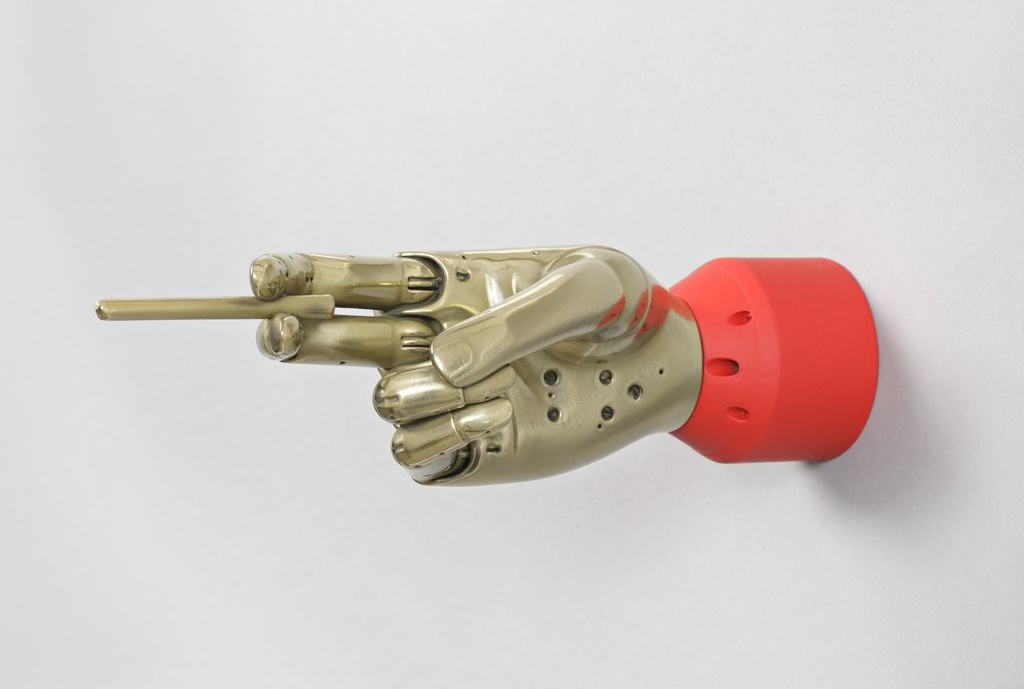
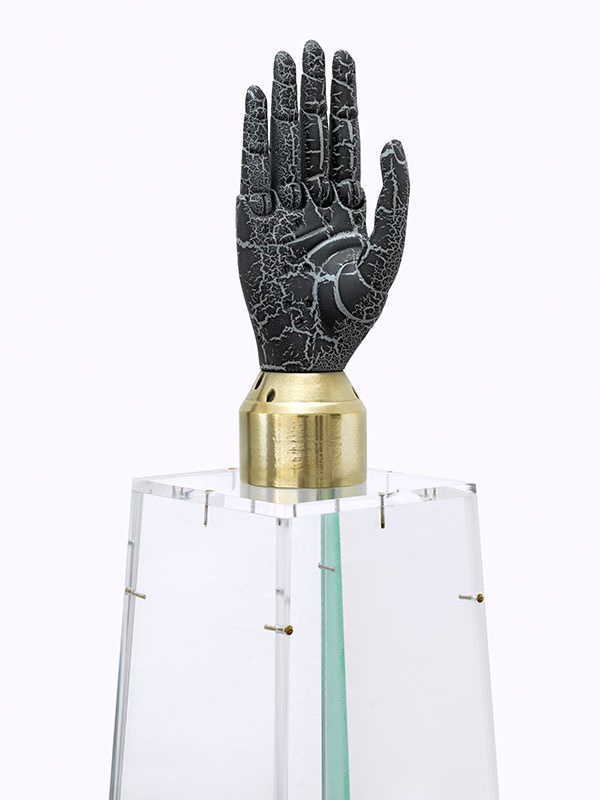
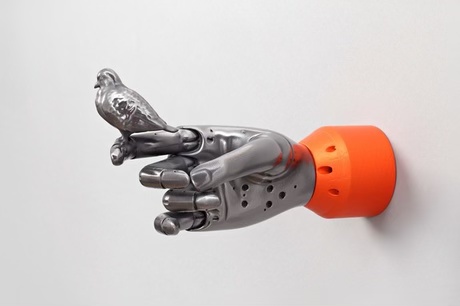
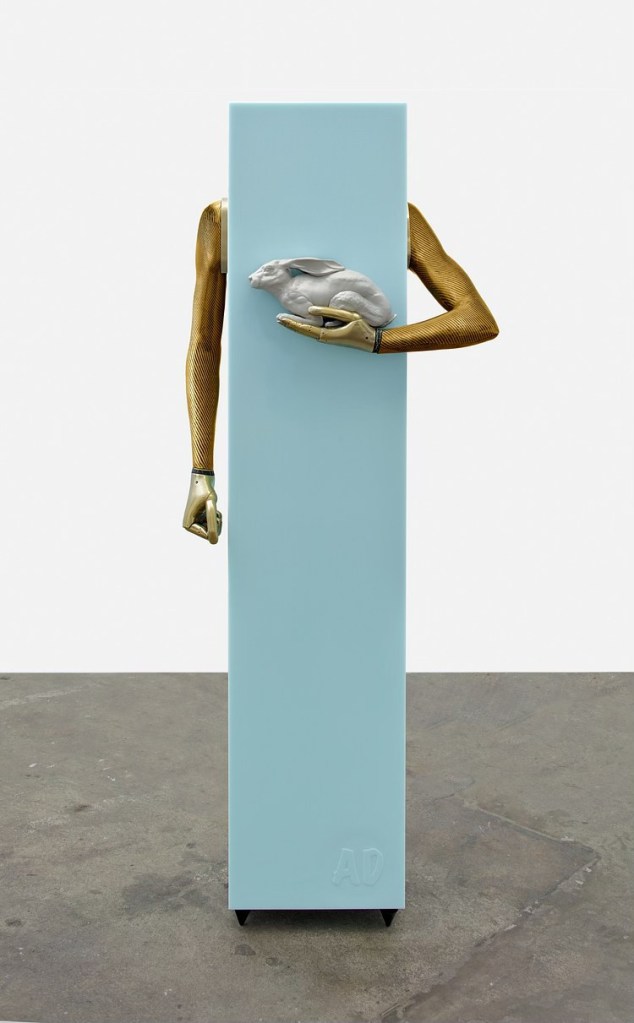
↑ Aleksandra Domanovic, ‘Fatima’, 2013–14, Laser sintered PA plastic, polyurethane, Soft-Touch & brass finish, acrylic glass, 157 x 30 x 30 cm, Courtesy Galerie Tanya Leighton
Art as Narrative Rebuilding
Domanović’s work stands out for its ability to weave together disparate threads of history and culture into cohesive, thought-provoking statements. One of her most compelling explorations is her investigation of the “Belgrade Hand,” a groundbreaking prosthetic developed in 1963. This technological marvel becomes, in Domanović’s hands, a vehicle to discuss cyberfeminism and the role of the cyborg as a feminist figure. Through her sculptures and digital interventions, she frames technology not as an isolated phenomenon but as deeply intertwined with human identity, gender politics, and societal structures.

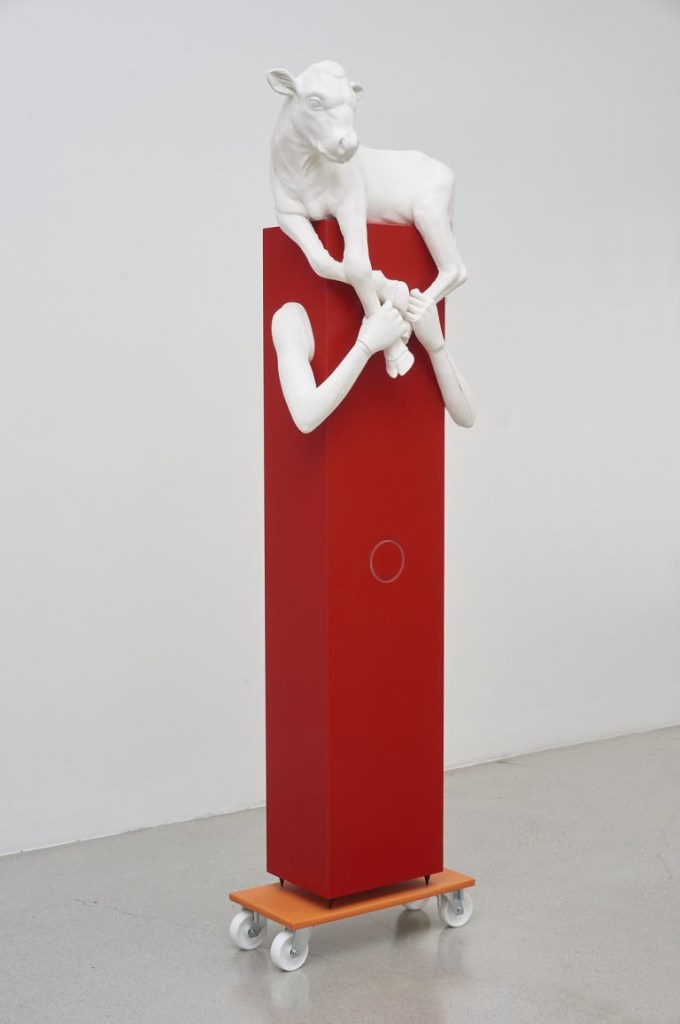
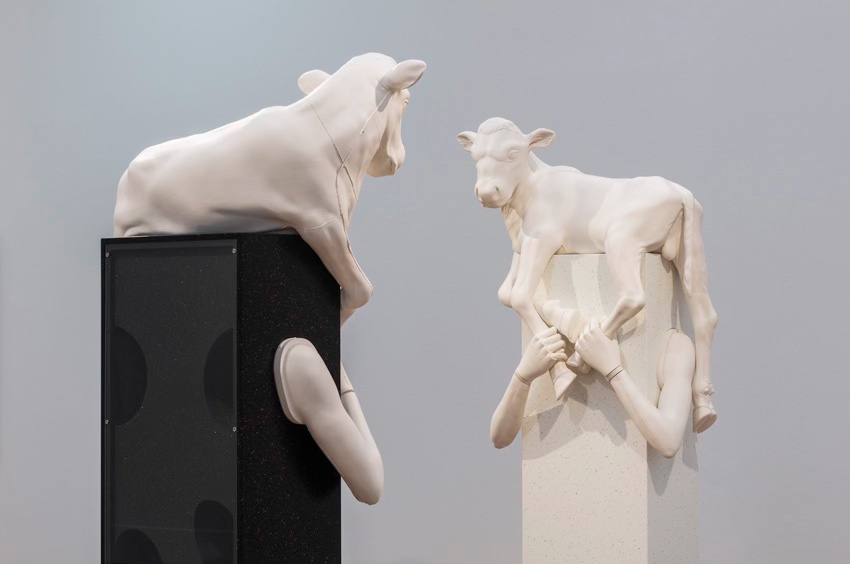
↑ Aleksandra Domanović, Votiv: Kalbträgerin, 2017. © the artist. Laser sintered PA plastic, polyurethane, Soft-Touch, aluminium, copper and Kevlar-carbon fibre coating, Corian and foam, 175.5×63×38 cm, 69¼×24¾×15 in. Courtesy of the artist and Tanya Leighton, Berlin.
Her approach transforms objects into carriers of meaning, whether it’s a prosthetic hand, a historical document, or an everyday artefact. She uses these elements to question what is remembered, what is forgotten, and how narratives of innovation are shaped—and often skewed—by power dynamics.
Exhibitions That Shape the Discourse
Domanović’s impact extends through an impressive roster of solo exhibitions that have garnered critical acclaim:
- “The Falseness of Holes” at Galleria d’Arte Moderna in Milan (2019) explored the ruptures and continuities in historical narratives.
- “Untitled (In My Feelings)” at the Museum of Contemporary Art Cleveland (2018) offered a deeply personal yet universal exploration of emotional and cultural identity.
- “Kalbträgerin” at Bundeskunsthalle in Bonn (2017) juxtaposed ancient myths with modern technological narratives, creating a dialogue between past and future.
In addition to her solo ventures, Domanović has been featured in group exhibitions and biennials, including the 58th Venice Biennale (2019), the Belgrade Biennial (2018), and Manifesta 11 in Zurich (2016). Her participation in these prestigious events underscores her status as an artist whose work resonates globally.
A Recognition of Innovation
Domanović’s contributions have not gone unnoticed. Her innovative practice has been recognised with accolades such as the 5th Arnaldo Pomodoro Sculpture Prize in Milan (2018). These honours highlight her ability to challenge conventions and push the boundaries of contemporary art, particularly in her nuanced approach to blending personal, historical, and technological narratives.
Shining Light on the Overlooked
What sets Aleksandra Domanović apart is her commitment to shedding light on stories that have been sidelined or erased. By delving into the intersection of technology and identity, she offers a fresh perspective on how humanity navigates the complexities of its own inventions. Her work speaks not only to the art world but also to a broader cultural discourse, reminding us that the past, present, and future are more interconnected than we often realise.
For those looking to explore art that challenges, provokes, and inspires, Aleksandra Domanović’s work is an essential encounter. Her practice reminds us that the stories we tell—and the ones we omit—shape the world we create.
We invite you to stay connected with our platform SUBSCRIBE.
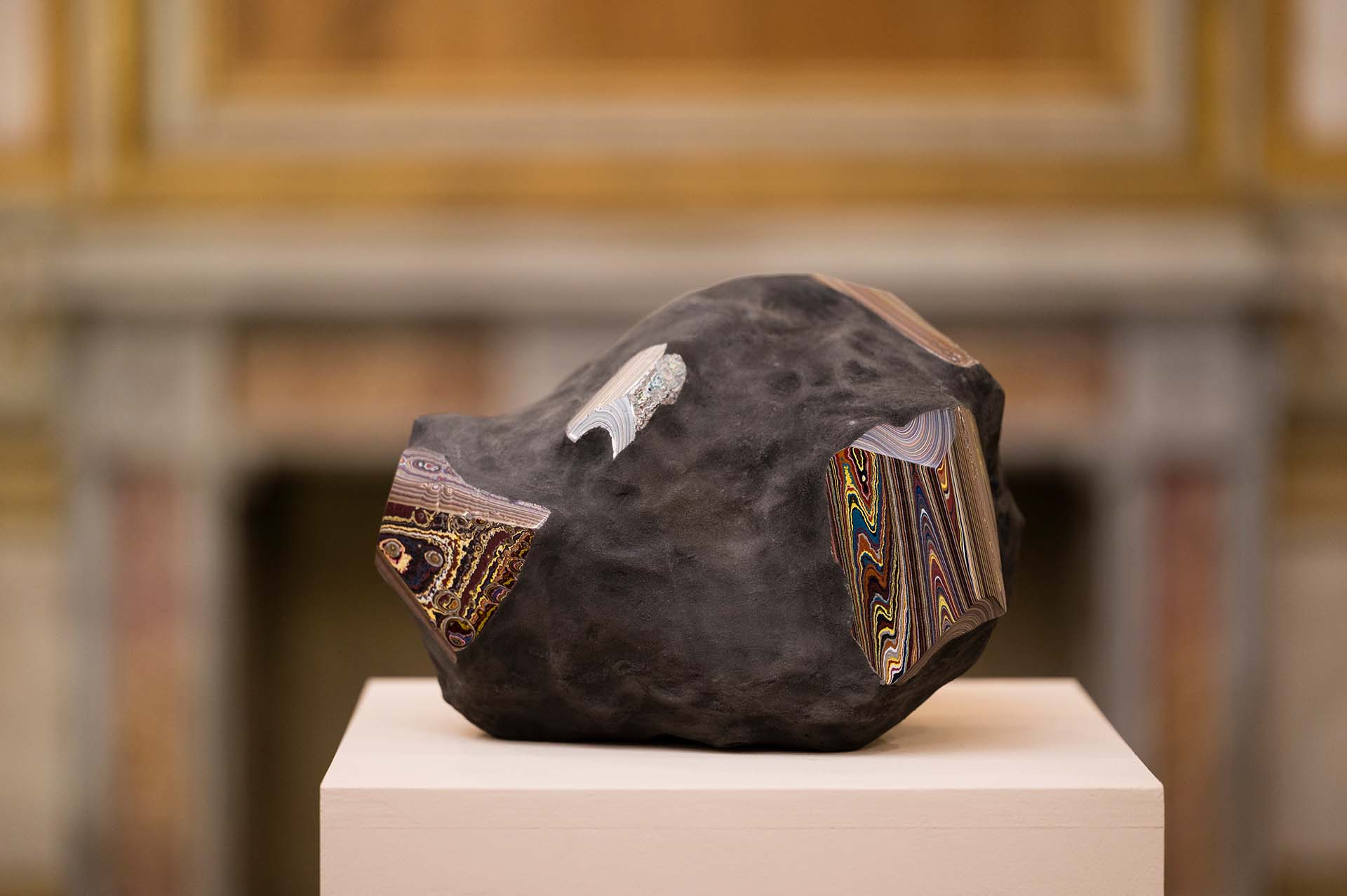
Detroit Agate and Agnieszka Kurant:
A Dialogue Between Industry and Art
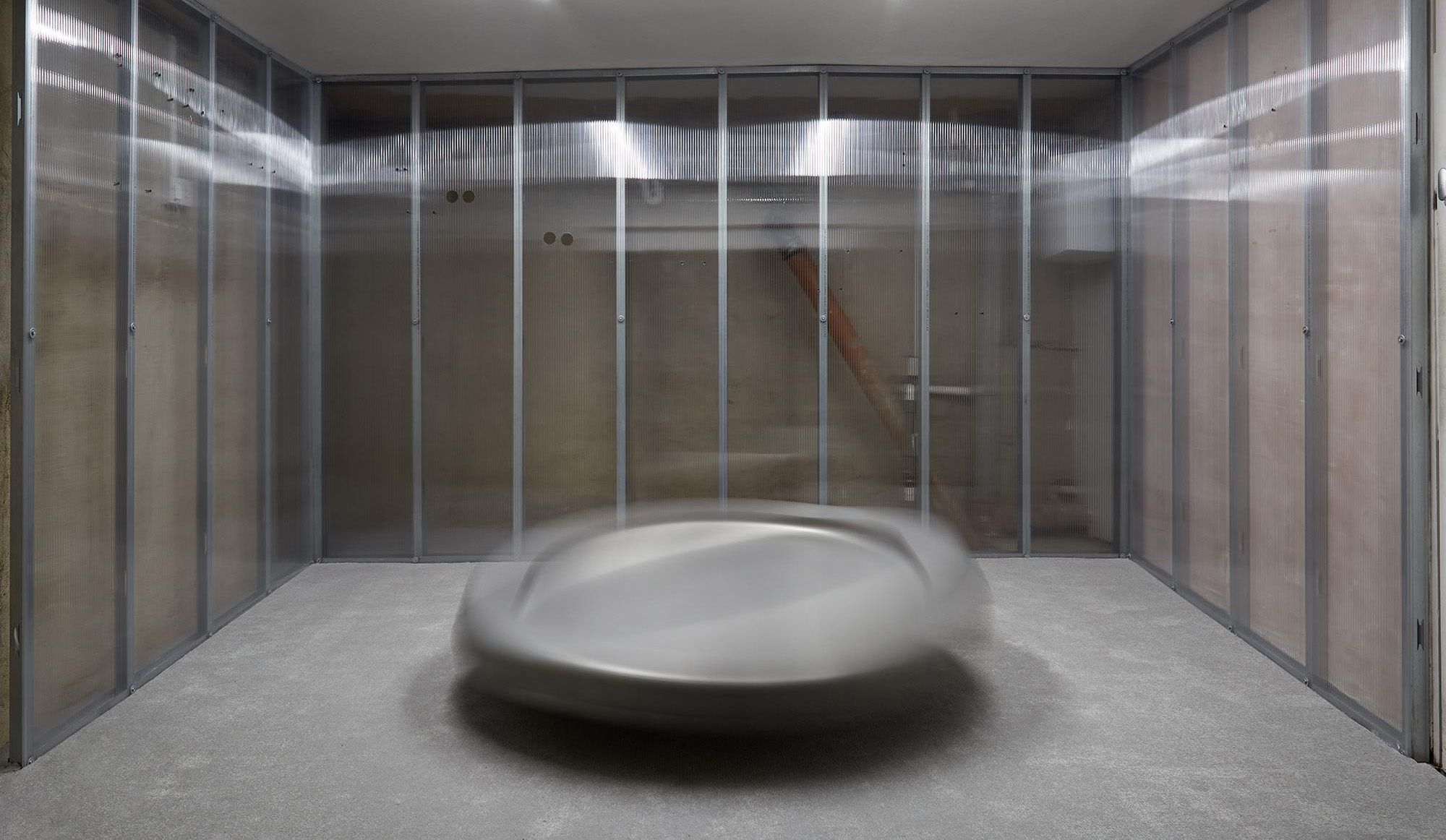
Where Underground Meets Uprising:
PICCALILLI
 PAI_32 platform