

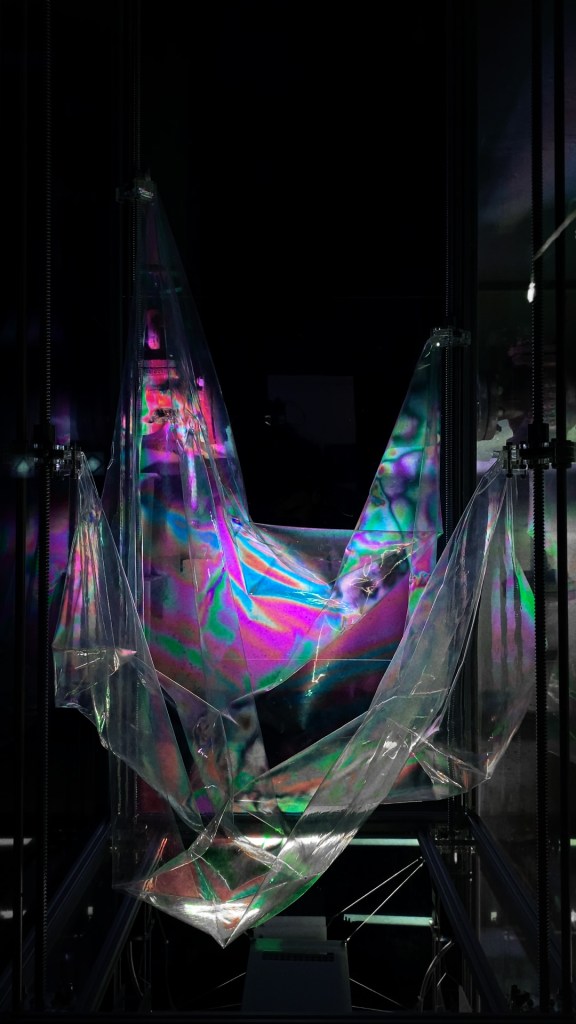
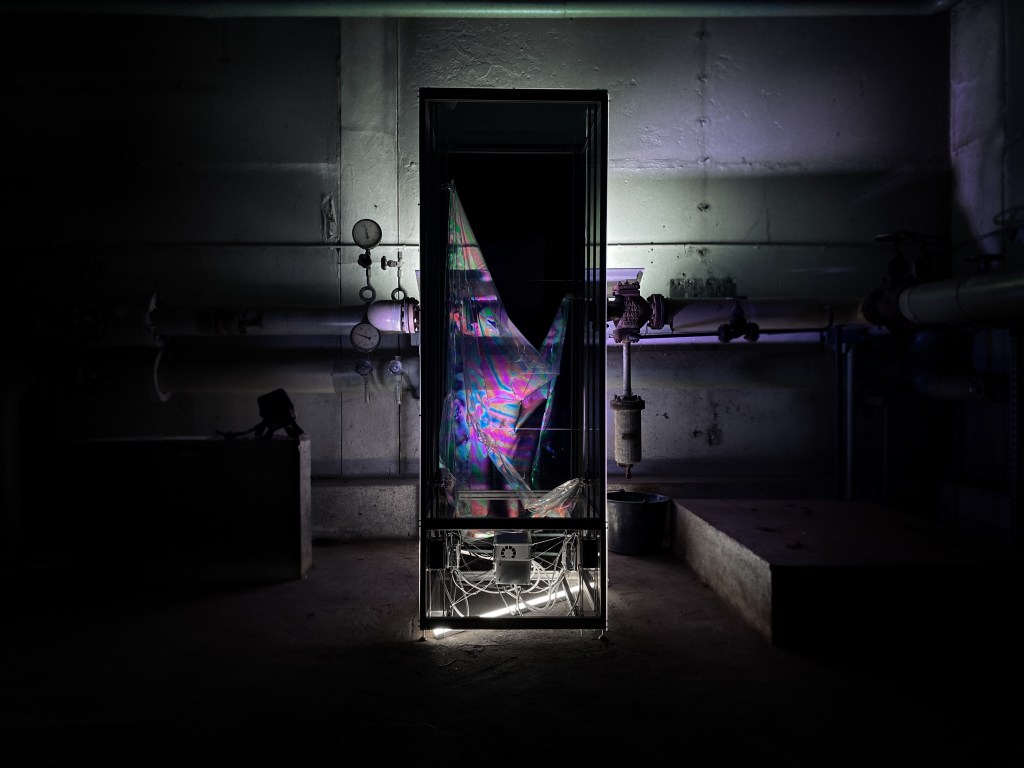
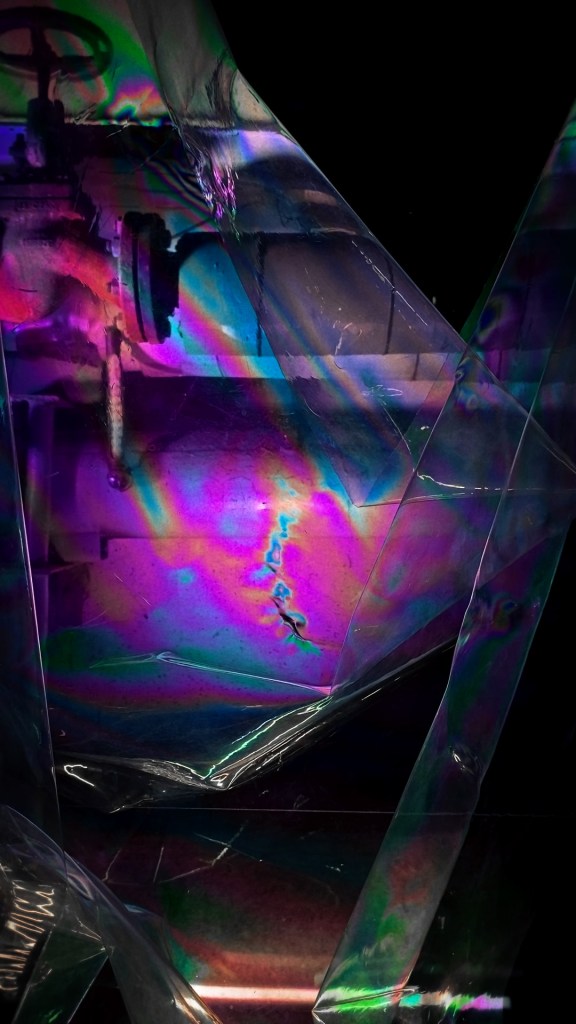
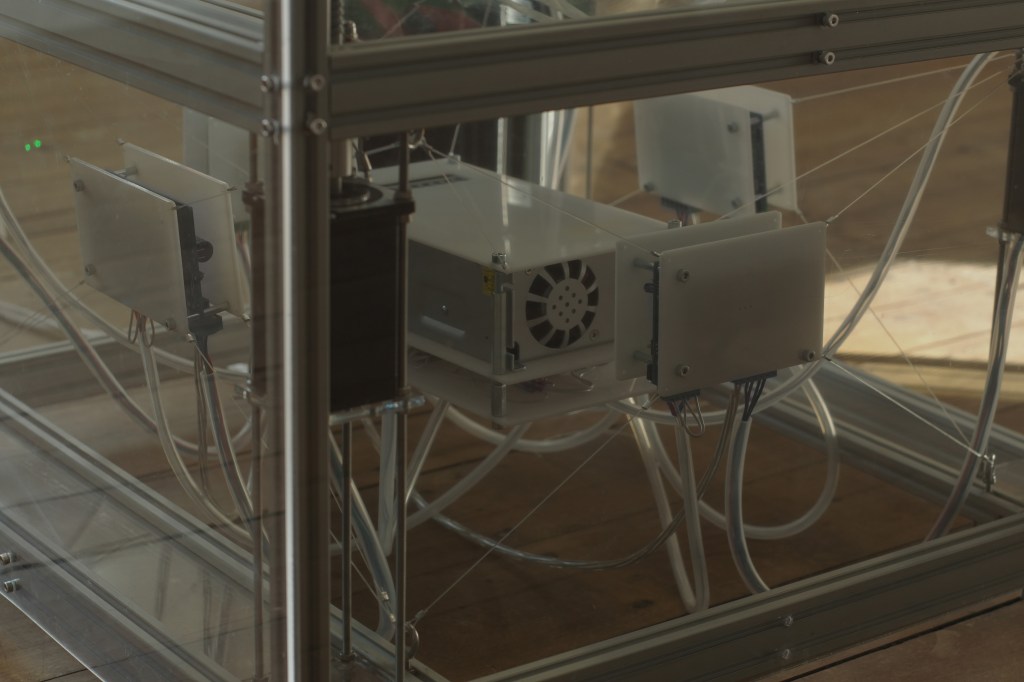
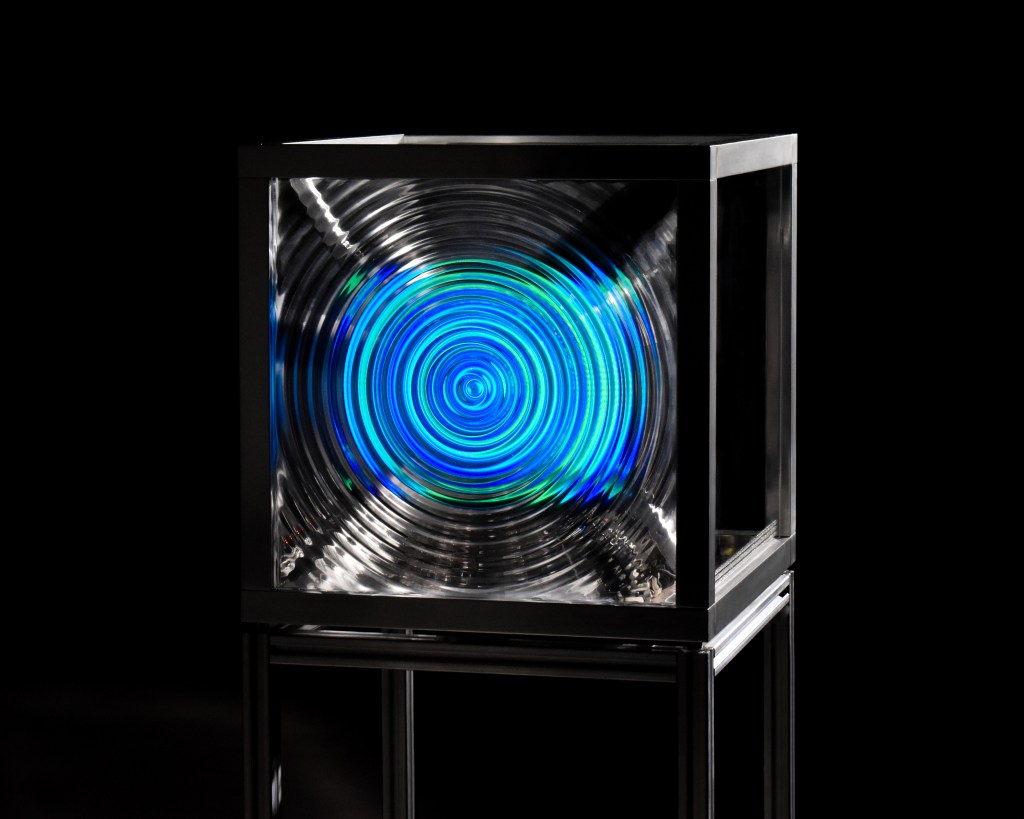
↑ RAFAEL SOTO ACEBAL, 000, Kinetic Sculpture, Aluminum, CRT, Acrylic, 2023
Rafael Soto Acebal’s work exists in the flow between disciplines, where art, architecture and science intersect. Known under the name Nyzuz, the artist and researcher explores the interrelation between humans, the urban environment and natural systems like water and light. In projects such as Wetmesh and Flows of Entropy, Rafael proposes a more fluid, interconnected imaginary of how different elements, both living and non-living, relate to one another, what he calls a “liquid mesh” a space where boundaries dissolve and new ontologies emerge.
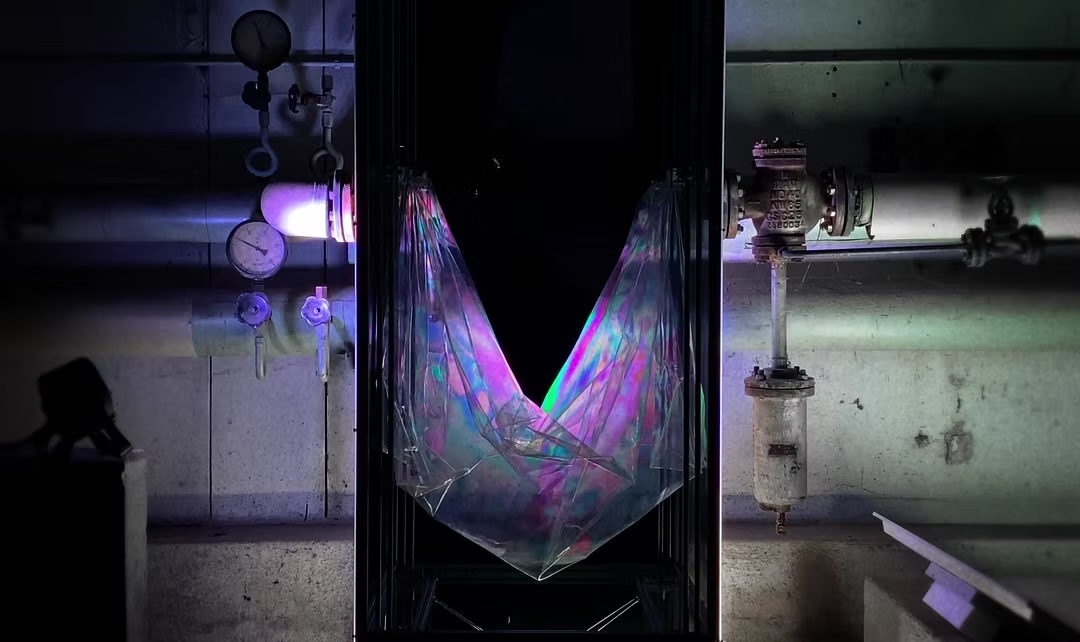
In this interview, we explore Rafael’s conceptual approach to space, materiality and perception, and how his experiences across Buenos Aires and Bremen have shaped his artistic practice. With a poetic sensibility and a rigorous eye for systems, he invites us to re-envision the invisible forces that shape our environments and us.
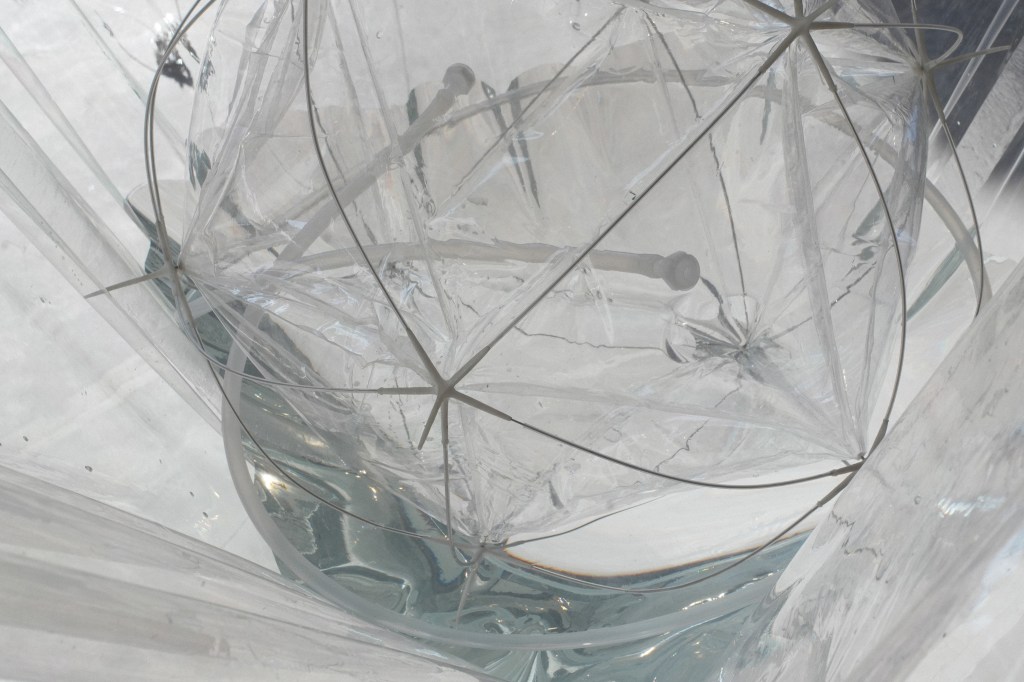
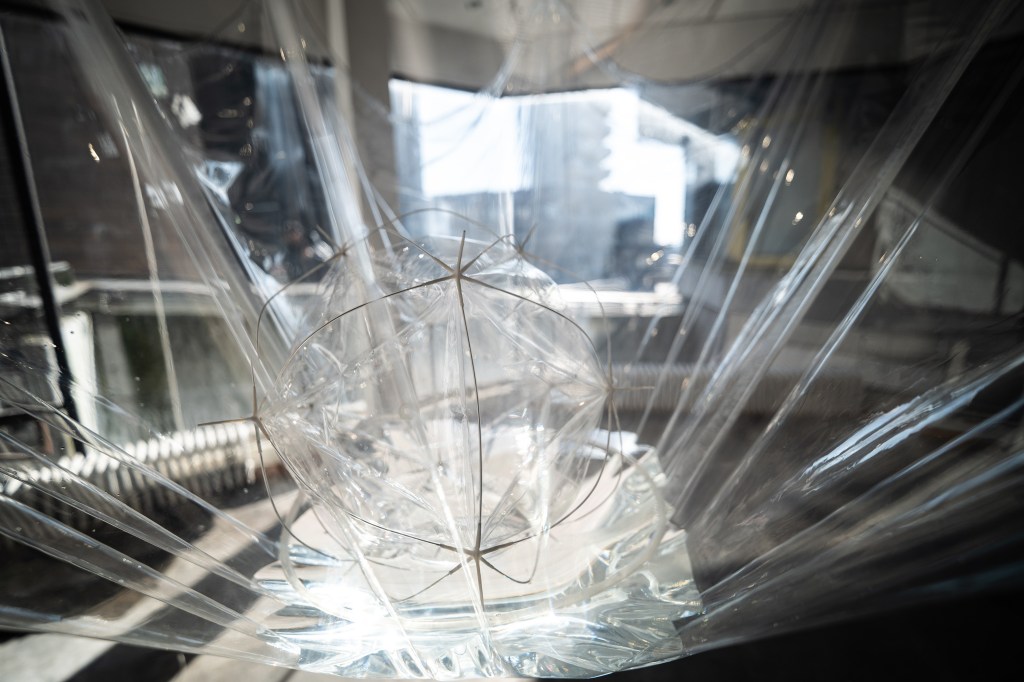
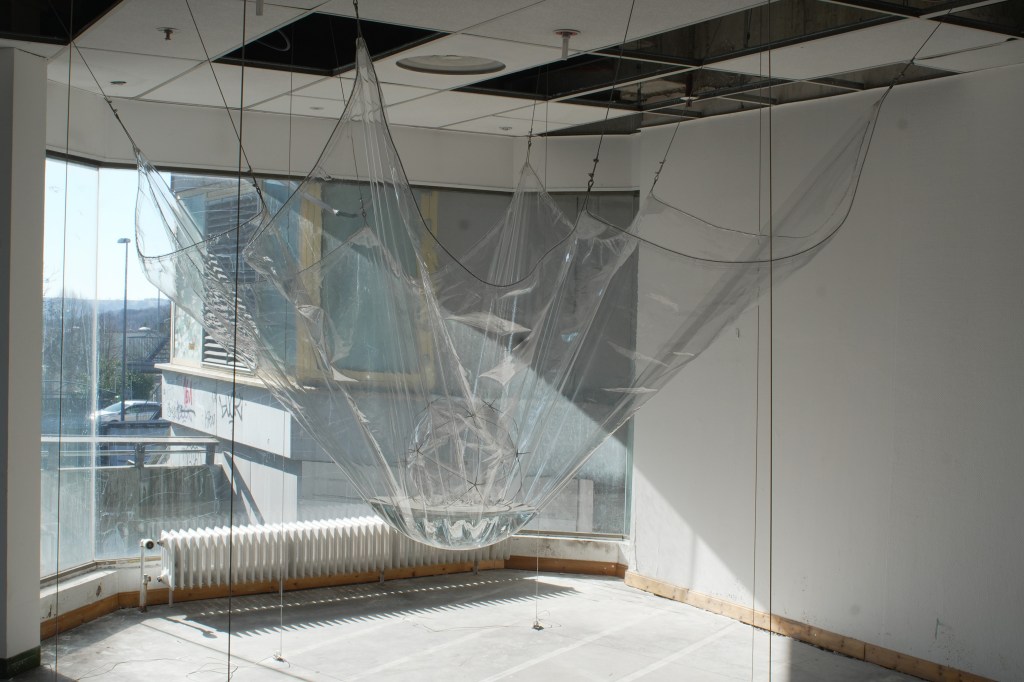

Your most recent project, Wetmesh, expands on your speculative research into the interrelation between the human, the humid, and the urban, proposing a more liquid and relational ontology. In this context, how does the installation Flows of Entropy fit within this exploration, and what role do water, light, and crystallization processes play in your engagement with far-from-equilibrium systems?
Wetmesh is a first approach to a topic I’m currently developing, opening up the possibility of imagining alternative futures, speculating about new relationships between the urban environment, the body and water. The proposal seeks an alternative vision exploring how to position people in a more symbiotic relationship with these elements, placing them in interaction with a “liquid mesh” where different forms of life and material elements intertwine until becoming indistinguishable.
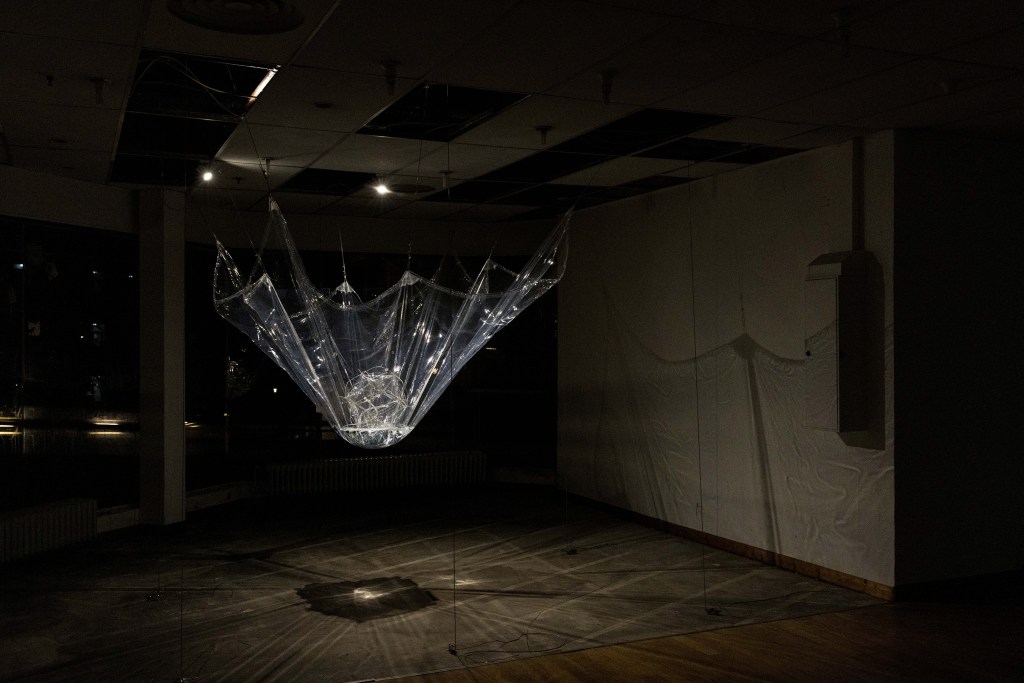
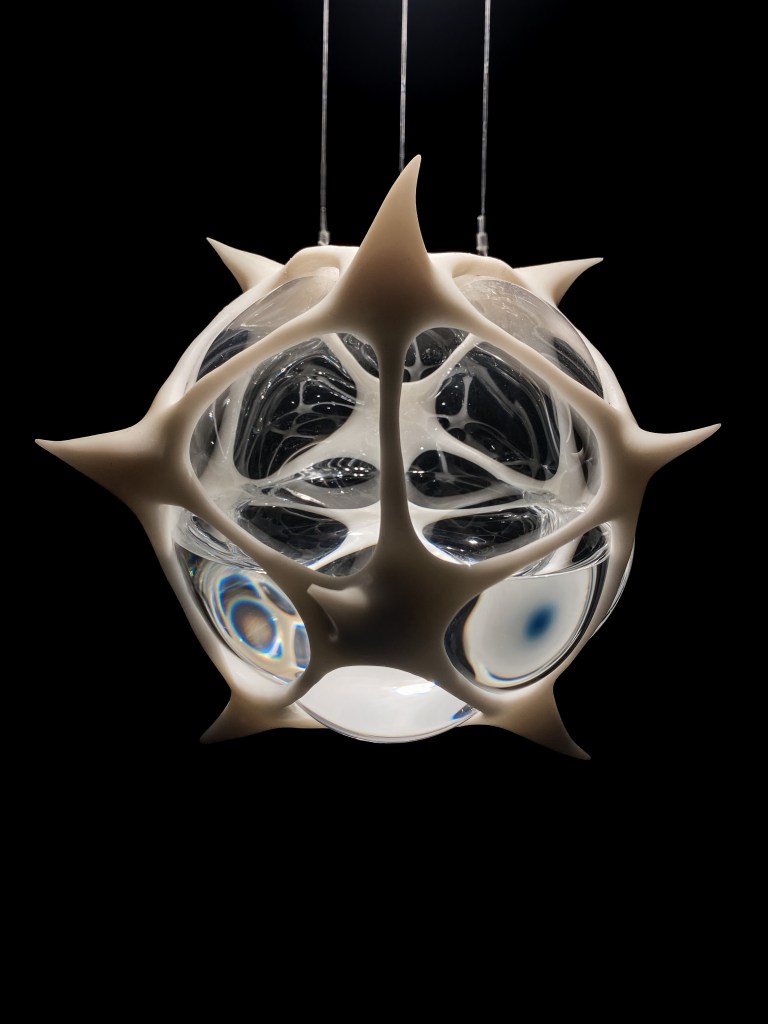
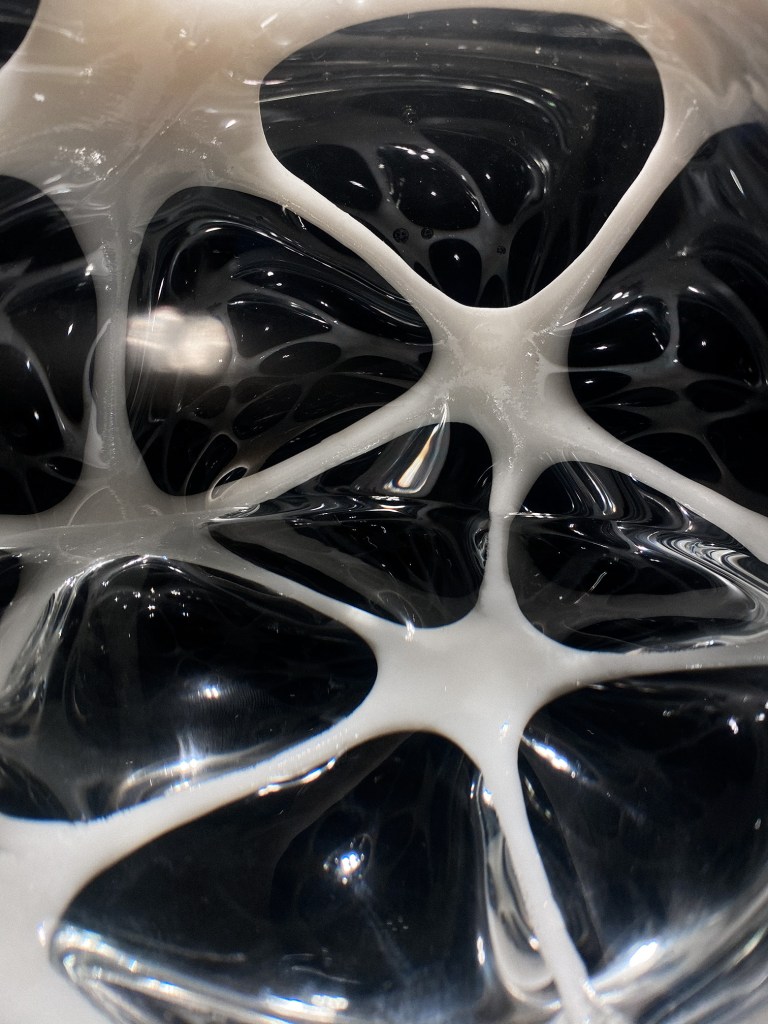
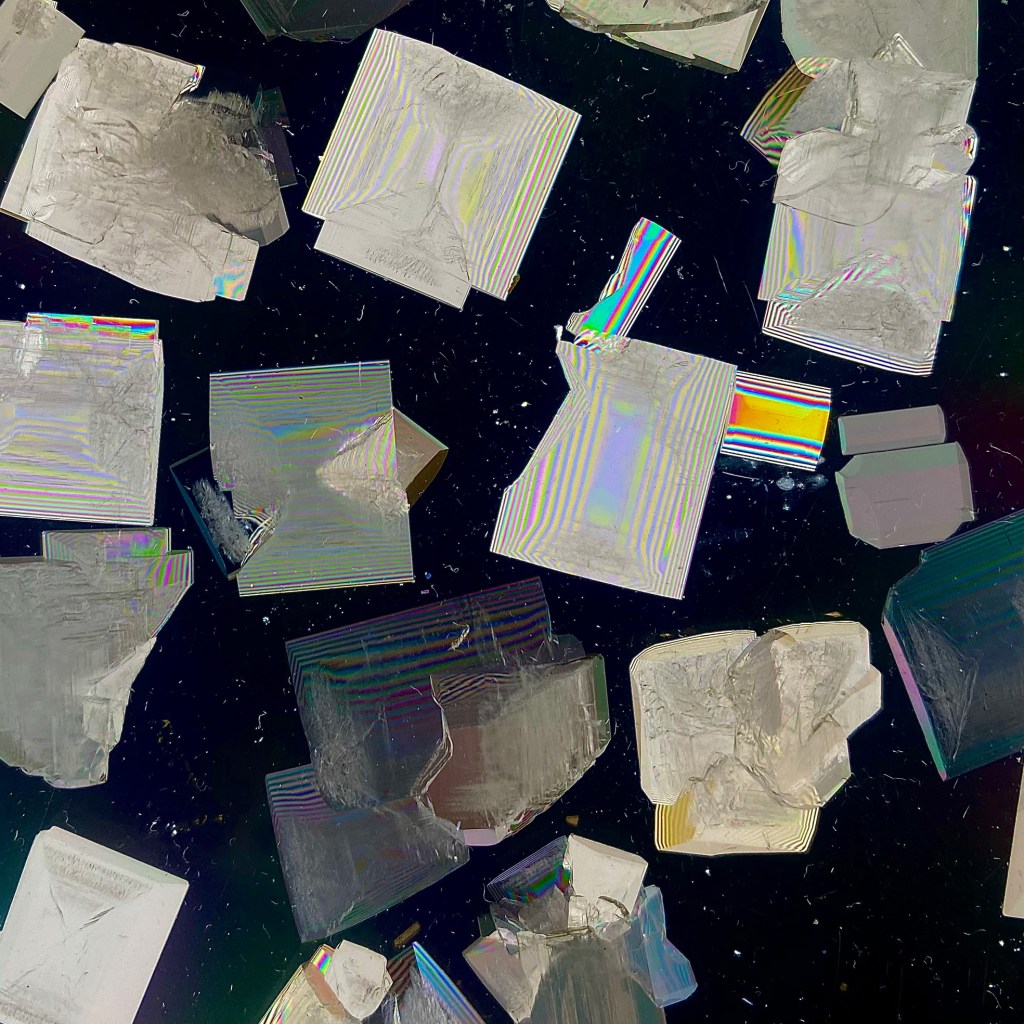
Flows of Entropy deepens this exploration from a more micro perspective, focusing on the interactions between water, light and crystallization processes. For an extended period, I observed various crystallizations through a technique called cross-polarization, which allowed me to reveal their normally invisible structures. It is here that these far-from-equilibrium systems emerge, where crystals continuously form and transform depending on conditions and water saturation. I find it fascinating; each crystallization is different, there’s always a slight variation or deviation; everything is in constant motion, a continuous movement of liquid interactions.
Your background in architecture seems to influence your artistic practice, particularly in how you manipulate light and space. How has your architectural training shaped your approach to creating art, and in what ways do you see these disciplines intersecting in your work?
I believe architecture has shaped me, providing me with a set of tools for reflection and experimentation. One significant lesson has been understanding and questioning what a boundary is, not only materially but also conceptually; how to expand it, dematerialize it or modify its morphology to create new spatial possibilities.
Architecture has also sensitized me towards the social and collective dimension, recognizing how the materialization of an idea can open up new future imaginaries. The intersection between architecture and art from my perspective, is characterized by a phenomenological and poetic narrative. Just like architecture, art allows the experience of
spaces through sensations, colors, shapes, scents and personal relationships. It’s here where something vital happens, a kind of emotional communion that escapes the artist’s control, yet precisely there is where the artwork comes alive.
In your interdisciplinary practice, you blend analog video art, digital media and electronic art. How do you navigate these diverse mediums, and what challenges and opportunities do they present in conveying your conceptual ideas?
I perceive these diverse mediums as gears within a larger system, essential tools that bring life and dynamism to my projects. Though each one presents its own technical complexities and conventional limitations, precisely in that lies an opportunity to question their traditional uses. This reflection allows me to develop new approaches and methods of application, thus expanding their expressive and conceptual potential.
Having exhibited internationally, from Buenos Aires to Bremen, how have these diverse cultural experiences influenced your artistic perspective? Are there specific themes or projects you’re currently developing that reflect this global engagement?
In Buenos Aires, I never fully participated in the formal institutional or gallery-based art scene; those years were highly experimental and spontaneous, marked by impulsiveness and intense collaboration with artist friends. The Argentine art scene is exceptionally talented and active but also demanding, especially in a city like Buenos Aires, with its intense chaotic energy. It’s a place that pushes you into constant active and creative reaction.
In contrast, my experience in Bremen allowed me, as we say in Argentina, to “stop the ball,” think a bit more clearly, and start again from scratch. The German academic context provided time, resources and a certain calmness to deepen ideas, rethink processes and give my projects a clearer and more solid narrative, something often difficult to find.
Buenos Aires and Bremen are both port cities deeply connected to their rivers. Within this framework of the body-city-water relationship, I’m interested in allowing my project to inhabit these currents, thus generating a potential dialogue.
What do you think is the primary idea or goal of art in general? If there is a specific goal, what would it be?
I don’t think art has a specific or primary goal. Precisely, I think its value lies in its freedom, where each artist can explore and construct personal or collective paths. Personally, I feel an artwork fulfills its purpose when the spectator actively engages with it; when something
in the piece expands their imagination or touches a nerve in them. Afterward, of course, the spectator returns to everyday life and probably forgets. But if the artwork manages to leave a subtle resonance, even after returning to routine, I think something important happens there. And if additionally, the artwork itself also gains something from the spectator, even better.

ARTIST OF THE MONTH
Interview, Online Exhibition,
your Art in AOM’25 Book

ARTIST OF THE MONTH
PAI32 EDITION’25
 PAI_32 platform