
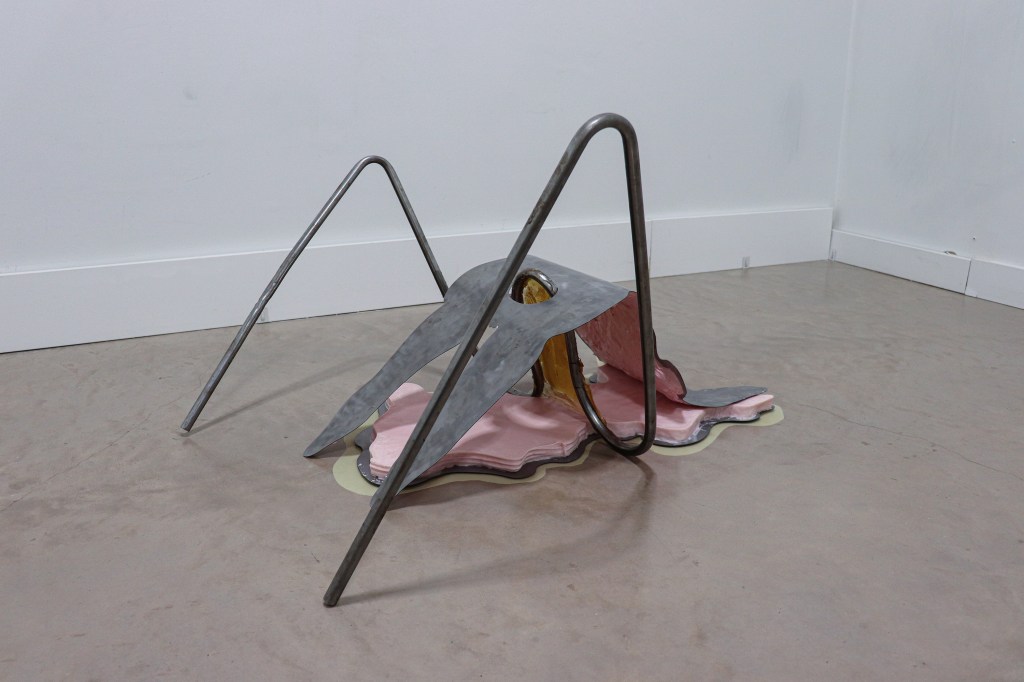
↑ ADRIANA WYNNE, Collapsed, 2022, Metal, Latex, Wax, Silicon, 11 x 76 x 51 cm
The Art world of Adriana Wynne — where the body becomes a landscape of memory, emotion, and transformation
Text Marie Ivanova
April 25, 2025
In an era where the body is often reduced to data points and clinical diagrams, Adriana Wynne’s work demands a different kind of attention—one that honors the visceral, the ambiguous, and the deeply personal landscapes within us. Her sculptural forms and installations do not merely represent the body; they evoke it, reconfiguring flesh, memory, and sensation into tactile narratives that oscillate between familiarity and estrangement.
Wynne’s practice is a relentless investigation of transitional spaces—those liminal thresholds where recognition dissolves into abstraction. Through her intuitive use of materials—wax, latex, metal—she constructs her own anatomical lexicon, unbound by scientific accuracy, yet profoundly resonant on an emotional plane. Each work becomes a fragment of lived experience, challenging viewers to confront the hidden terrains of their own physicality.
In this interview, Adriana Wynne opens up about her creative process, the significance of materiality, and how the exhibition space itself becomes an extension of the body. It’s an invitation to experience art not as a static object, but as a mutable space for emotional truth.


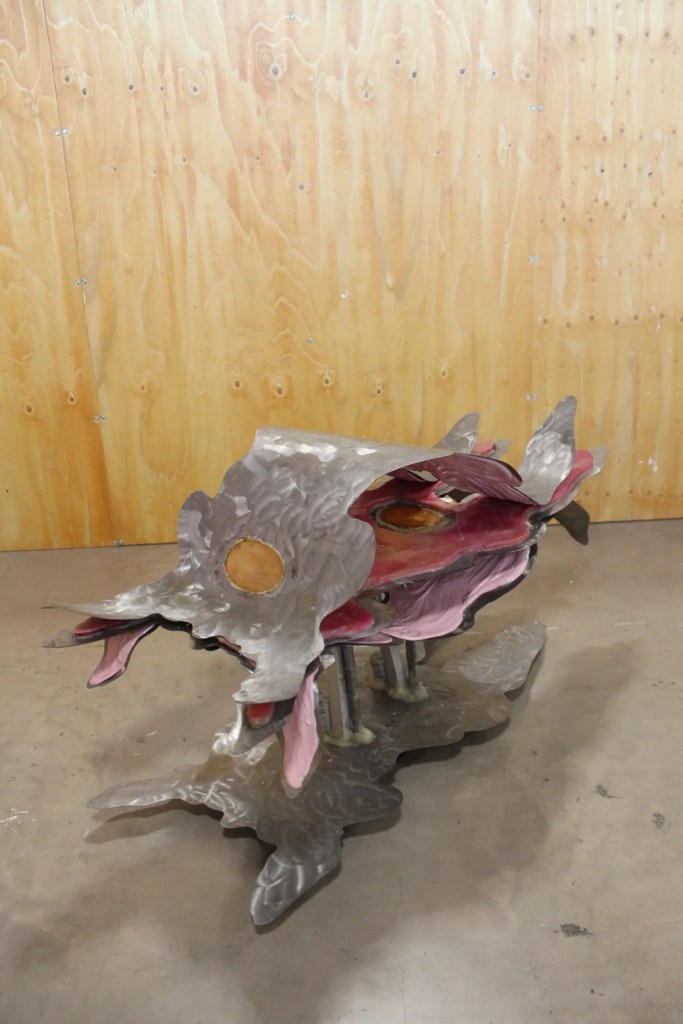

Your work often explores the boundaries between the familiar and the unfamiliar within the human body. What inspired you to investigate these transitional spaces, and how do they influence your creative process?
I’m fascinated by the tension that exists in those in-between spaces, specifically between the external and internal realms of our body, where recognition slips into ambiguity. The body influences my process particularly the notion that it is something we all know intimately, yet it can become strange, fragmented, or abstract when viewed through a different lens.
Exploring transitional spaces, be it physical, emotional, or conceptual and allows me to question what we assume to be known. It’s in those liminal moments where transformation happens. These themes influence my process by encouraging me to experiment with materials that disorient and reorient the viewer. I often begin with something recognizable and then distort or recontextualize it, allowing the work to evolve into something unexpected. It’s a dialogue between control and surrender, familiarity and strangeness.


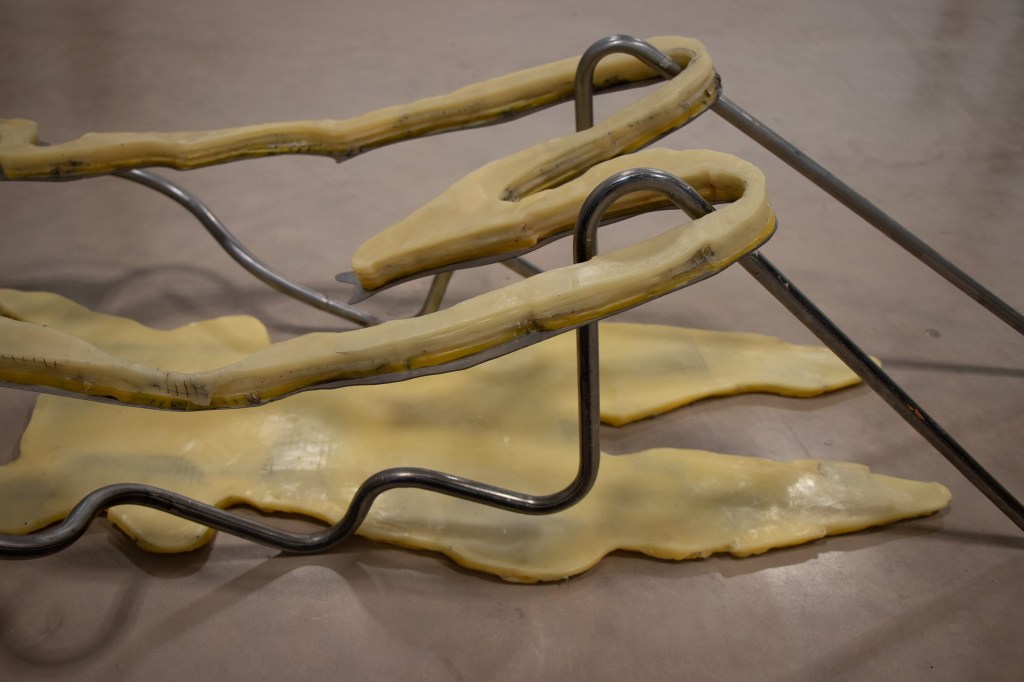

In your statement, you mention reimagining the body’s inner depths based on personal experiences and emotions, moving away from conventional anatomical ideologies. Could you elaborate on how this approach shapes the visual language of your art?
Reimagining the body’s inner depths through personal experience and emotion allows me to move beyond the clinical, diagrammatic view of anatomy and into something much more intimate and emotionally interpretive. I’m less interested in the body as a system of labeled parts and more intrigued by how it feels from the inside; how emotion, memory, and sensation are stored and expressed within it.
This shift in perspective deeply shapes the visual language of my work. Instead of clean lines or literal representations, I often use organic forms, layered textures, and abstracted shapes to evoke the complexity and fluidity of inner experience. The imagery becomes more symbolic than anatomical and more about presence and absence. I try to create visual spaces that are open to interpretation, where the viewer can project their own experiences.


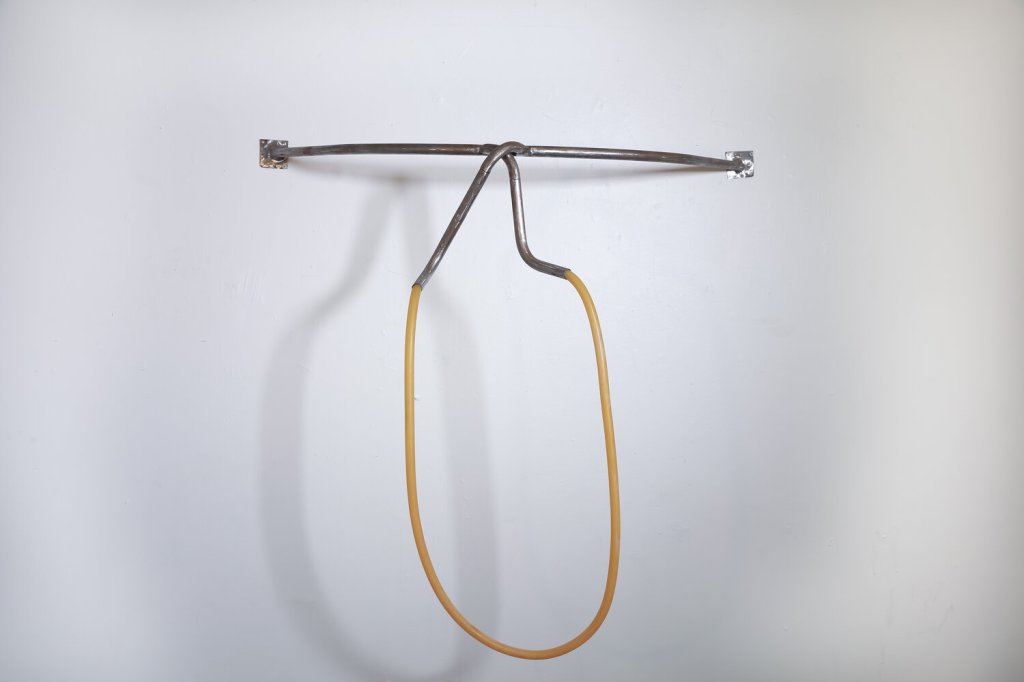

Materiality plays a significant role in your practice, with specific materials assigned to different parts of the body. How do you select these materials, and what do they signify in the context of your work?
Materiality is central to my practice because it allows me to translate bodily sensations and inner states into tangible forms. I choose materials intuitively, often guided by the textures, densities, and associations they carry in relation to specific parts of the body. For instance, something soft and pliable might speak to vulnerability or intimacy, while a more rigid or abrasive material might reflect tension, protection, or trauma.
Assigning materials to different bodily zones helps me construct forms that feel emotionally and physically resonant rather than anatomically correct. It’s a way of honoring the complexity of lived experience and how the body carries history, emotion, and meaning far beyond what’s visible on the surface. For example, I create my own material index of the body, such as, using fat as wax, latex as skin, and metal as bones.
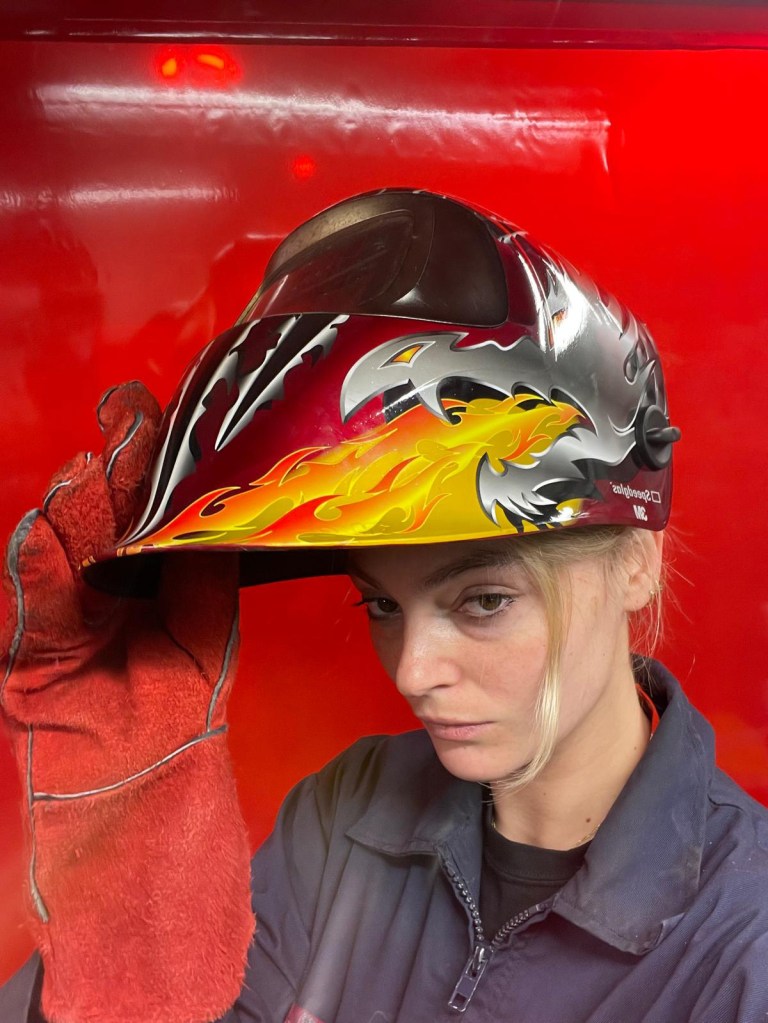
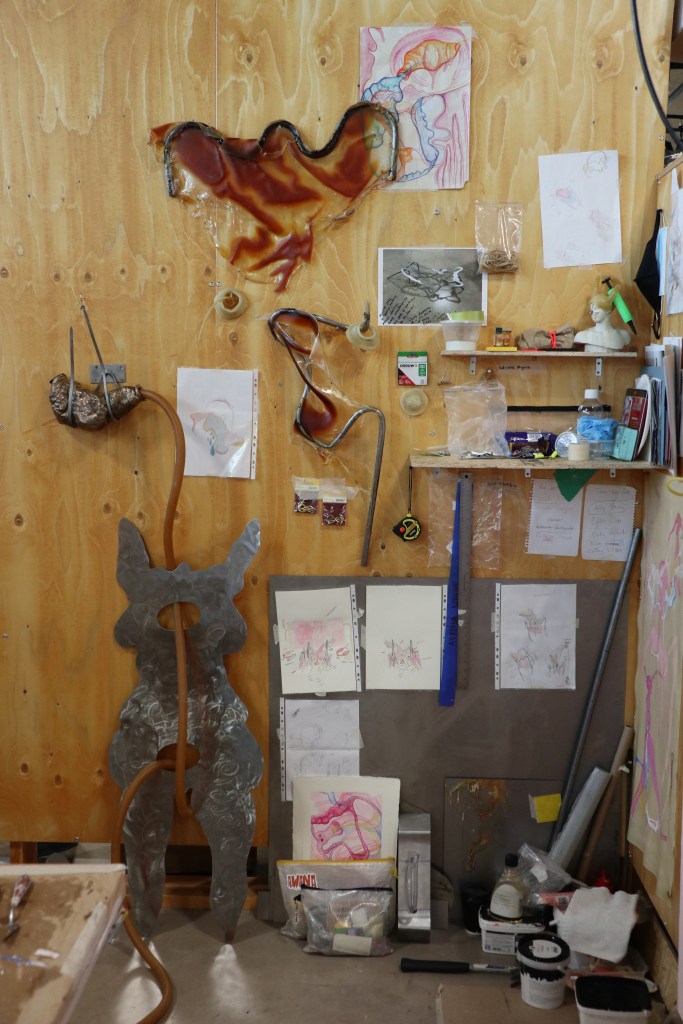


Having exhibited in various solo and group shows, such as ‘THRESHOLDS OF FLESH’ and ‘Body as Home’, how have these experiences contributed to the evolution of your artistic practice and the themes you explore?
Exhibiting in shows is incredibly formative in the evolution of my practice. Each exhibition creates a new context for my work to live in; new conversations, new proximities and that inevitably shifts how I understand and approach my own themes. Seeing the work outside the studio and within a curated environment allows me to witness how others experience these intimate, bodily narratives, and that feedback loop is invaluable.
Ultimately, these experiences have helped me understand that the exhibition space itself can act as an extension of the body, holding and shaping the experience of the viewer just as much as the work does.

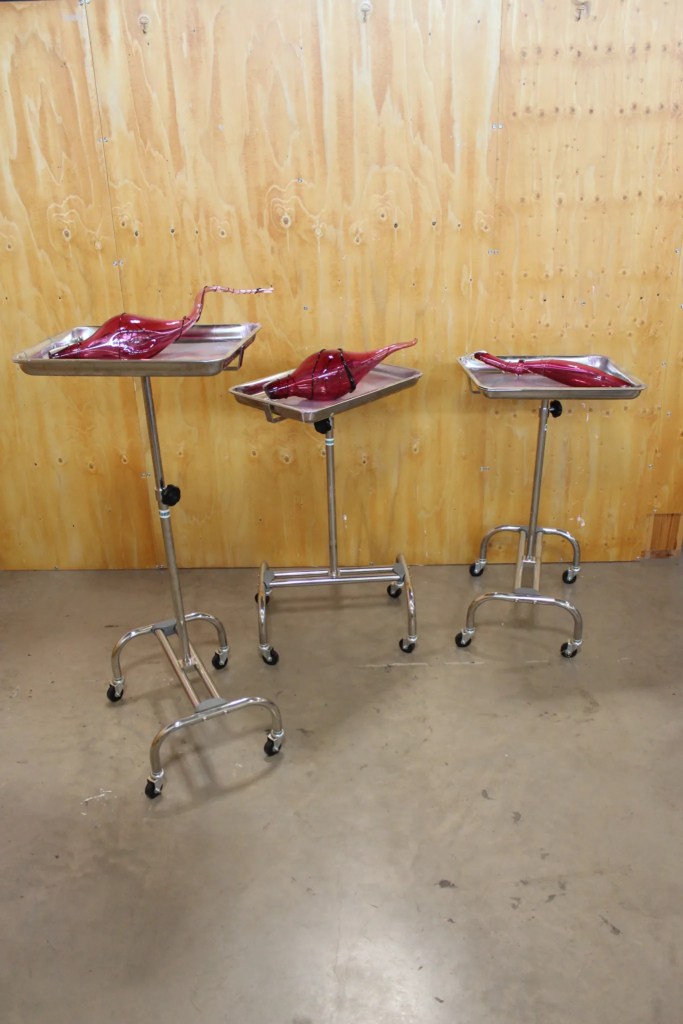


What do you think is the primary idea or goal of art in general? If there is a specific goal, what would it be?
I don’t think there’s a single, universal goal of art, but for me, its primary function is to create an experience that pulls the viewer out of their routine; to offer something unfamiliar, something that disrupts the ordinary. Art has the power to make invisible ideas visible, to shed light on subjects that often go unspoken or remain inaccessible. It creates space for ambiguity, for multiplicity, for emotional truths that don’t always have language. In that space, those truths can be witnessed, transformed, or shared.

ARTIST OF THE MONTH
Interview, Online Exhibition,
your Art in AOM’25 Book

ARTIST OF THE MONTH
PAI32 EDITION’25
 PAI_32 platform