
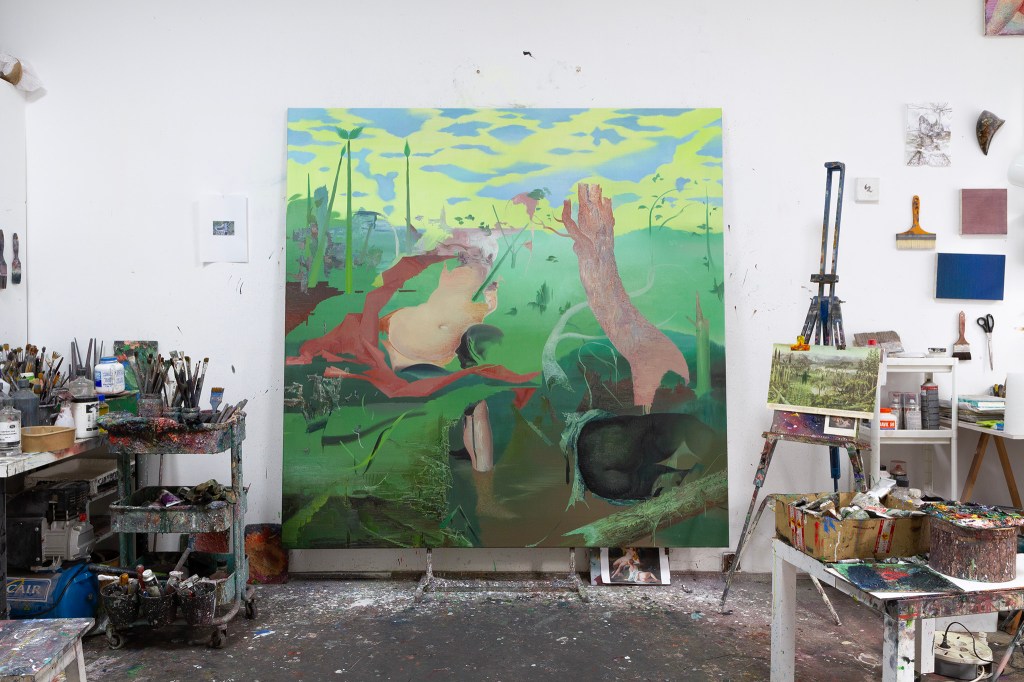
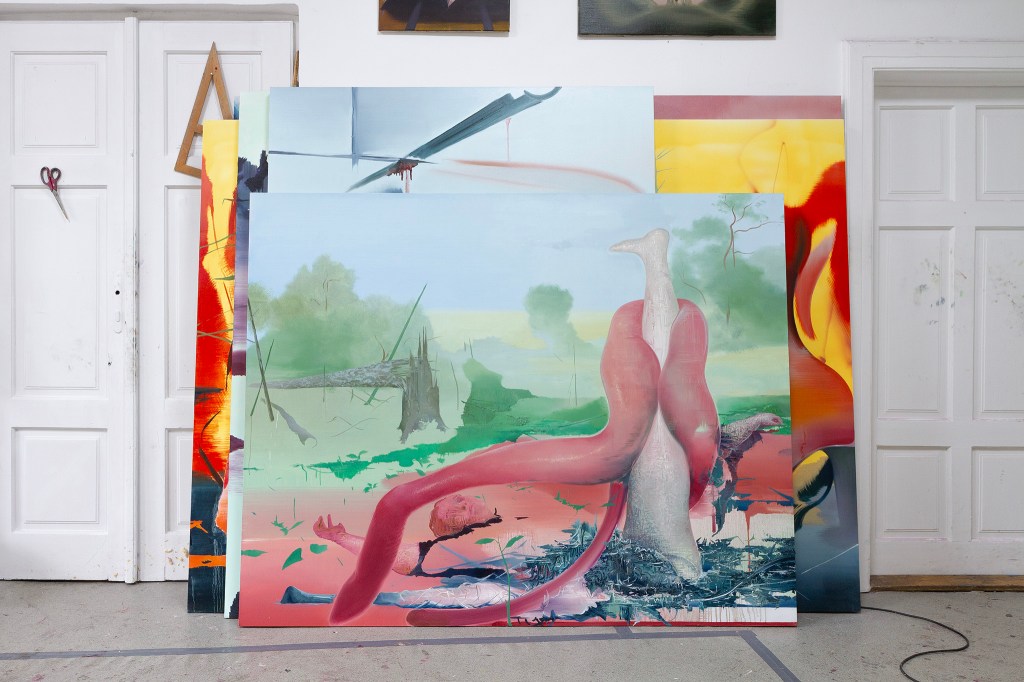
↑ Kamil Kukla artist’s studio view in Kraków
The Art of Chaos: A Conversation with Kamil Kukla
Kamil Kukla is a Kraków-based artist whose practice spans visual art and experimental music, creating immersive exhibitions that challenge conventional boundaries between mediums. Working with what he describes as “a true forest of things”—from rococo paintings to paleo art landscapes, from 3D imagery to war-zone photography—Kukla constructs what he calls “a private archive” that reflects our chaotic, multilayered world.
His approach is deliberately fluid, embracing contradiction and resisting the pressure to define his practice within a single theoretical framework. Whether improvising guitar passages for loose musical projects or creating structured soundscapes that serve exhibition spaces, Kukla trusts intuition over rigid methodology.
We spoke with Kukla about his integration of sound and visual art, his navigation of diverse cultural influences, and his belief that art should serve as “the axe for the frozen sea within us”—a force that disrupts complacency rather than satisfying algorithmic demands.


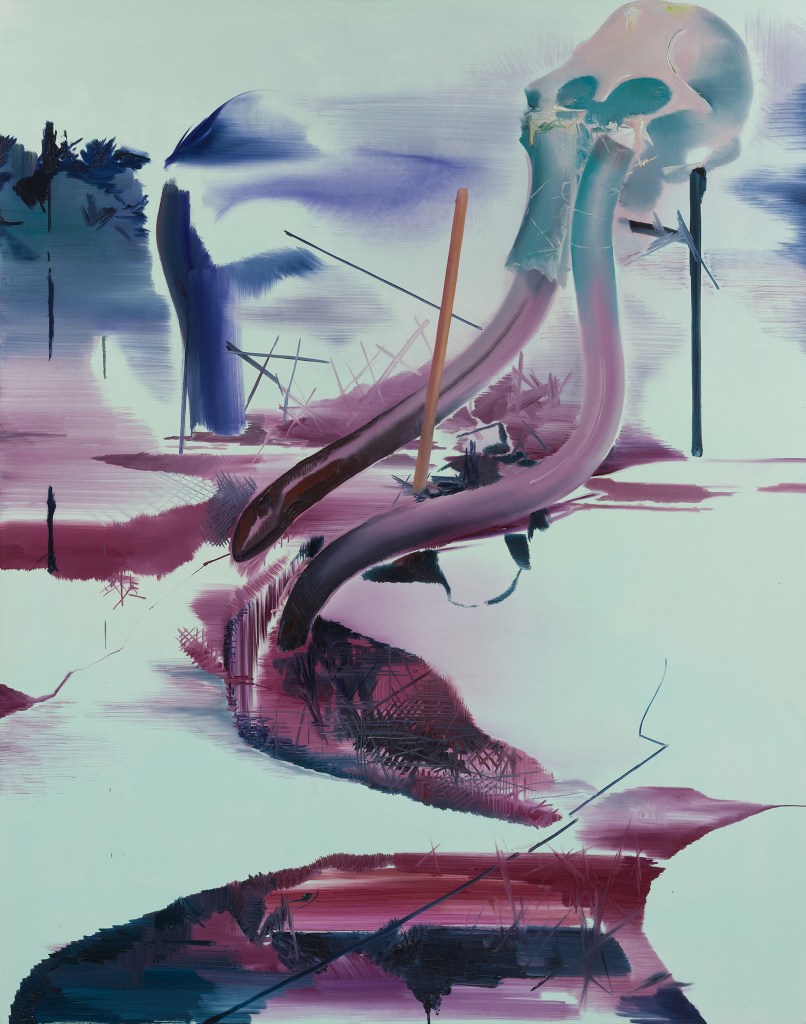
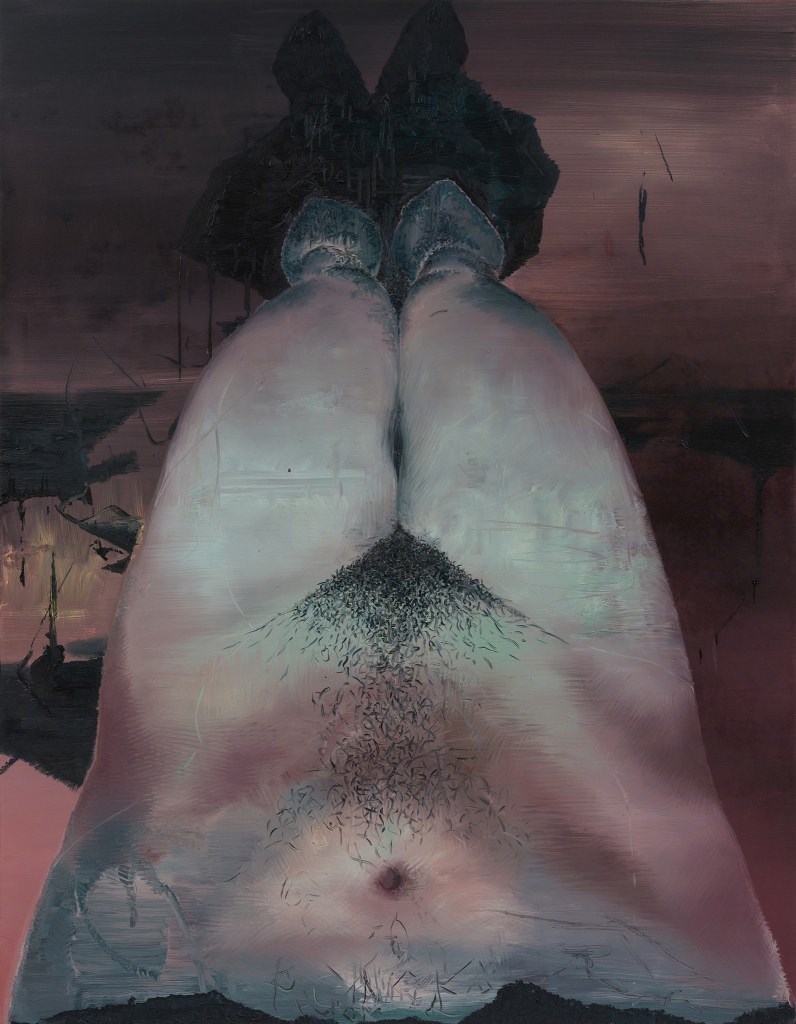


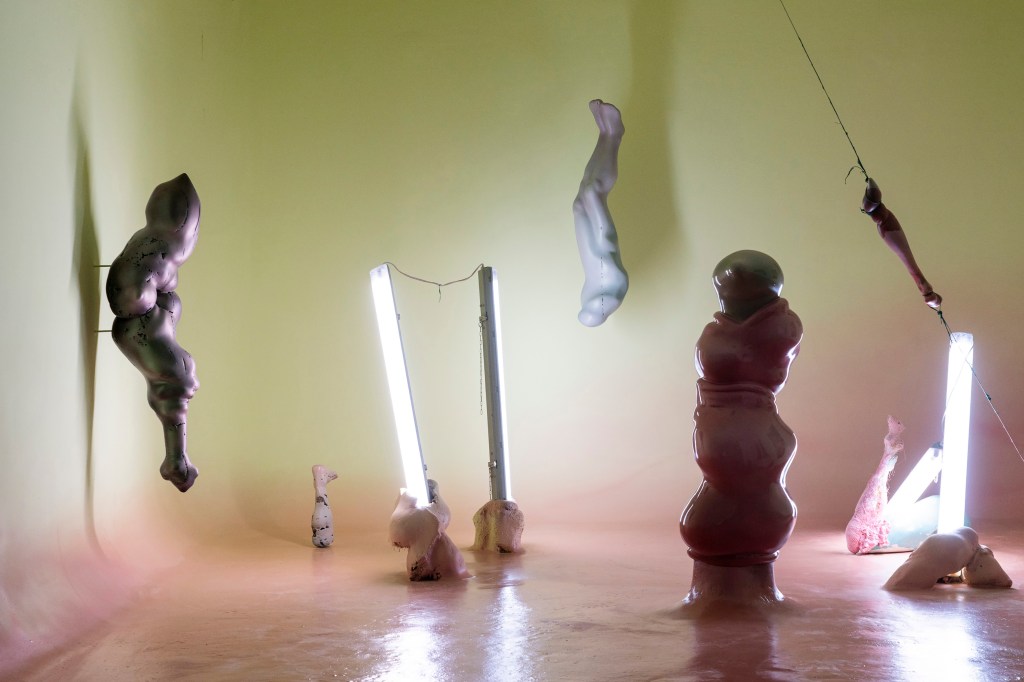
In your exhibitions, you frequently integrate experimental music alongside your visual art. How does your approach to sound inform your painting practice, and vice versa? Do you perceive these mediums as complementary narratives or distinct explorations?
Sometimes I feel like my music represents a different identity, developing independently from the persona working in visual media. There is even a great deal of variety in my musical endeavors themselves — some projects are more loose, based on improvised guitar passages, some are much more structured, combining broader instrumentation within the regiment of short song form. I could just as well release some of these projects under different artist names, to avoid confusion.
When I integrate my music into solo exhibitions, music has to, for obvious reasons, serve the space, the artworks and the overall message of the given show. But as in most of my practice – both in visual art and with sound — I create it on the go, trusting my intuition, my gut feeling and it always seems to be working just fine. I always find it surprising and very satisfying how the sound, and these improvised soundscapes, can change one’s perception of the exhibition space, in a way slowing down and trapping the viewer’s attention like a thick, adhesive substance.

Your pieces often incorporate elements reminiscent of digital aesthetics and pop culture, yet they also reference classical art forms. How do you navigate these diverse influences, and what dialogue are you aiming to establish between the traditional and the contemporary?
My interests change over time rather fluidly and I don’t have a particular problem with not sticking to one major topic or theoretical subject that defines my practice. Although it might be seen as a topic in itself and it definitely reflects a sort of ADHD perception of a late information age. The world is so rich, so complex, the access to the knowledge of any sort is no longer gate-kept, especially after the recent success of AI models. Yet, our primal brain can process only some sad scraps of this accessible data — not to mention remembering it. Still the hunger and even voracity remains and the source material that I draw upon is a true forest of things. Quotes from rococo paintings are integrated within paleo art landscapes, amateurish 3D fetish images coexist with war-zone pictures from the news websites and Telegram channels, mundane reality of everyday life blends with escapist fantasies. The world is multilayered, there is no particular order or sense to any of it. What I am trying to achieve is to ‘capture‘ some of this chaos and create a kind of private archive in the process — which can be seen as a self-portrait in a way.




Having participated in various international residencies and exhibitions, how have different cultural contexts influenced your artistic development? Are there particular experiences that have significantly impacted your creative perspective?
When I have an opportunity to work outside my studio in Kraków, the question always comes up — how much should the environment that I am physically in influence my usual way of doing things. There is always an invisible pressure from the outside (more or less realized) so a dilemma remains — should I try to control it or just go with the flow and give in to intuitive reflex? It is especially a poignant question in the world where we can fall into the illusion of being everywhere all at once — so maybe it is much more important where we are mentally, than where we landed physically. Usually the best answers come up during the painting process itself. Even here in Krakow, I am often surprised by how much my work ignores the local context, just to fall into direct reflection on the environment where I live and the particular forested district. It’s all contradictory — and, to be honest, I’m perfectly fine with that.

What do you think is the primary idea or goal of art in general? If there is a specific goal, what would it be?
A quote from Kafka comes to mind: “A book must be the axe for the frozen sea within us.”
The same principle should apply to art in general. Art should not need to answer a particular demand — which is what ‘content‘ serves perfectly well, especially in the age of frustratingly accurate personalized feeds. Art should demolish our feeling of complacency, which brings us dangerously close to falling asleep — and sleep is just a step away from death. Art should bring us back to life — sometimes with an axe.

ARTIST OF THE MONTH
Interview, Online Exhibition,
your Art in AOM’25 Book

ARTIST OF THE MONTH
PAI32 EDITION’25
 PAI_32 platform