

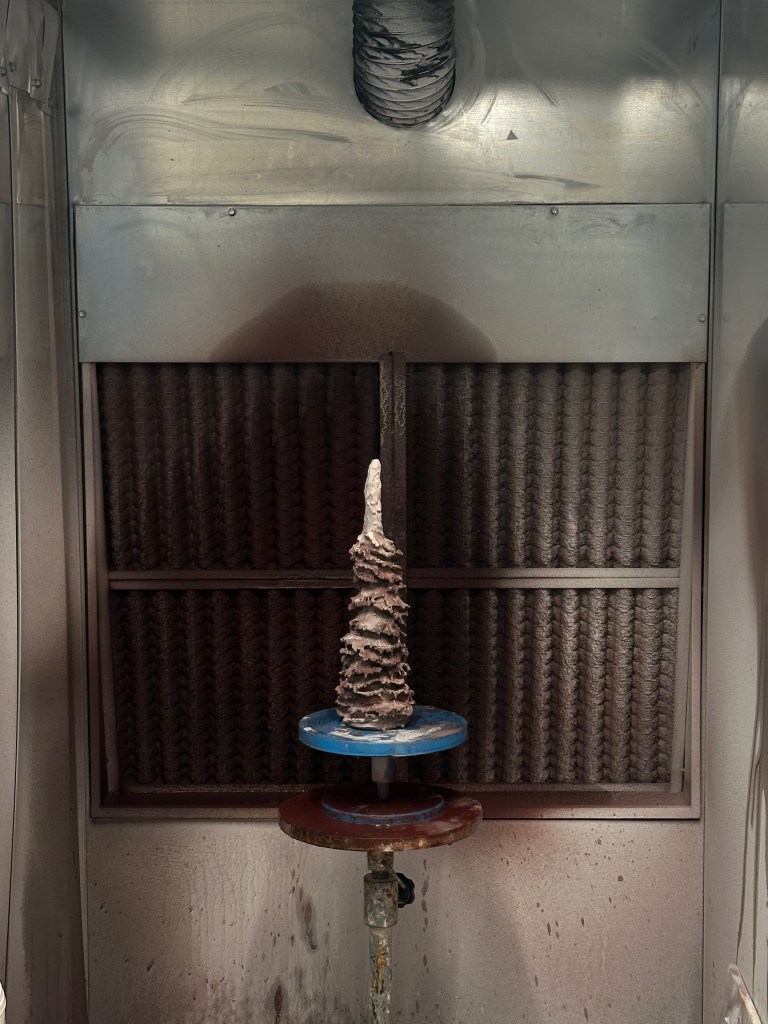
↑ Vinciola, 2023, silk leaves, alcohol aniline, rice starch, papier mâché, tailor-made wool men’s suits, cotton shirts, zentai lycra suits, bamboo socks, (…), 180 x 50 x 40 cm
Magical Materialism and the Restless Life of Objects
Jacopo Belloni’s practice exists at the intersection of folklore and contemporary reality, where ancient rituals meet hyper-technological present and sculptures refuse to remain static objects. Working from his studio in rural central Italy, he creates installations and performances that blur the boundaries between the rational and irrational, between object and subject, between life and death.
His approach, which he describes as “magical materialism,” investigates how human communities construct cultural spheres through beliefs, narratives, and symbolic languages. Rather than nostalgic fascination with the past, his work probes urgent questions about contemporary society: What collective rituals and codes do we cling to in our turbulent reality? Which emerge organically from communities, and which descend upon us to be passively accepted?
Drawing inspiration from Medieval Art History—where artworks were activated rather than merely contemplated, touched and embodied by their audiences—Belloni creates “mischievous, restless pieces” that resist distracted gazes and question the agency within objects themselves. His installations have inhabited significant spaces including Palazzo delle Esposizioni and Ferme du Buisson, always adapting to dialogue with the principles of space and time.
We spoke with Belloni about his research into European folklore and occult practices, his belief in art’s transversal power to challenge identity bubbles, and his decision to relocate his studio to rural Italy as both practical necessity and existential choice.
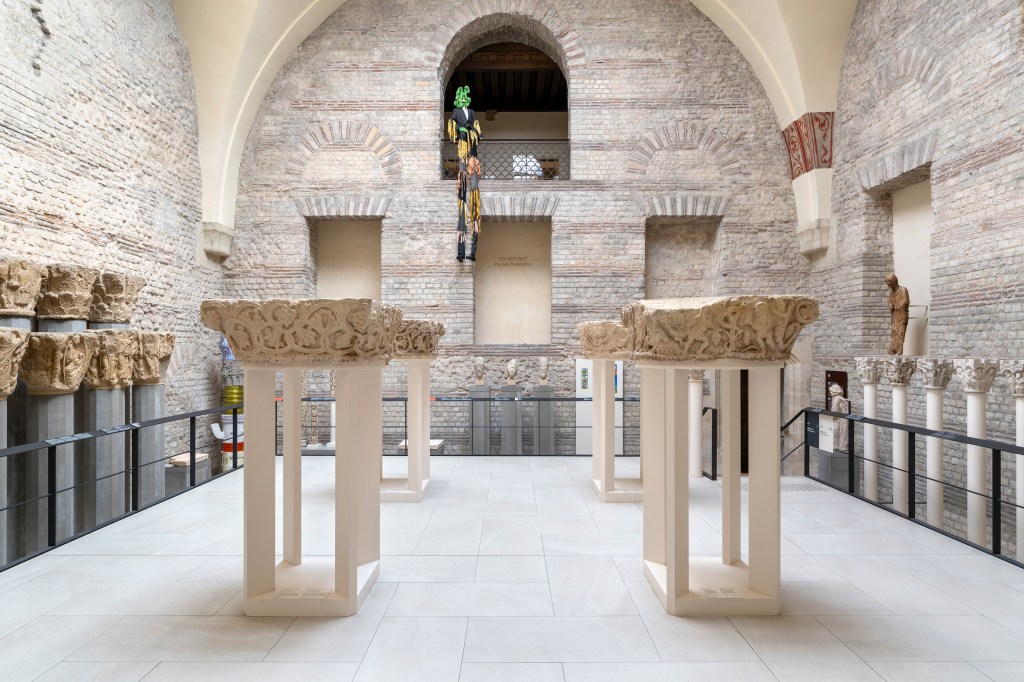
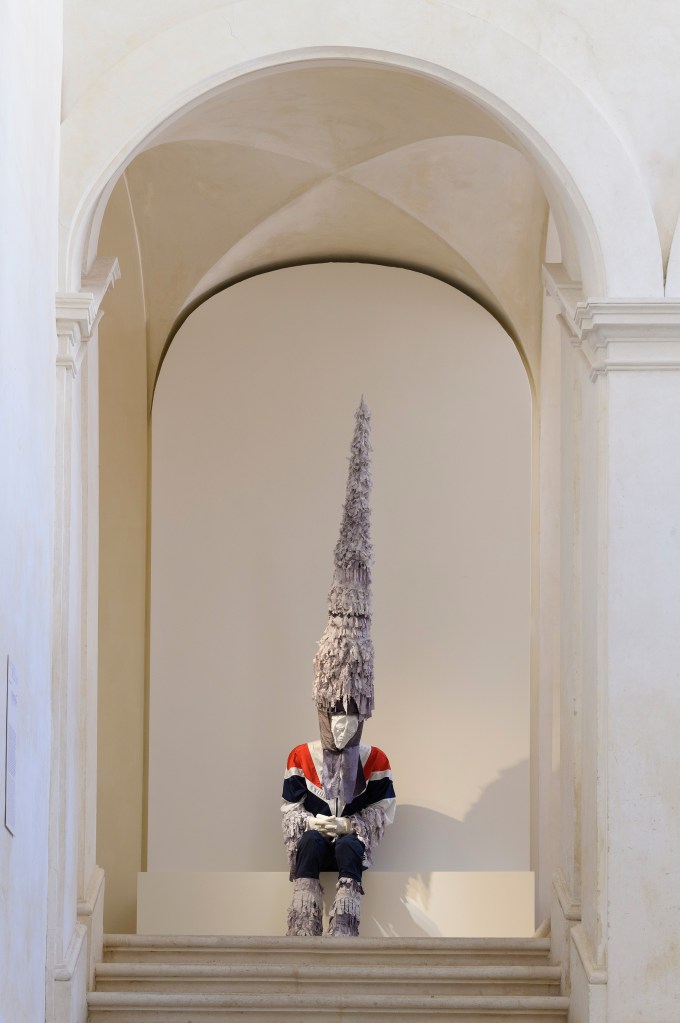


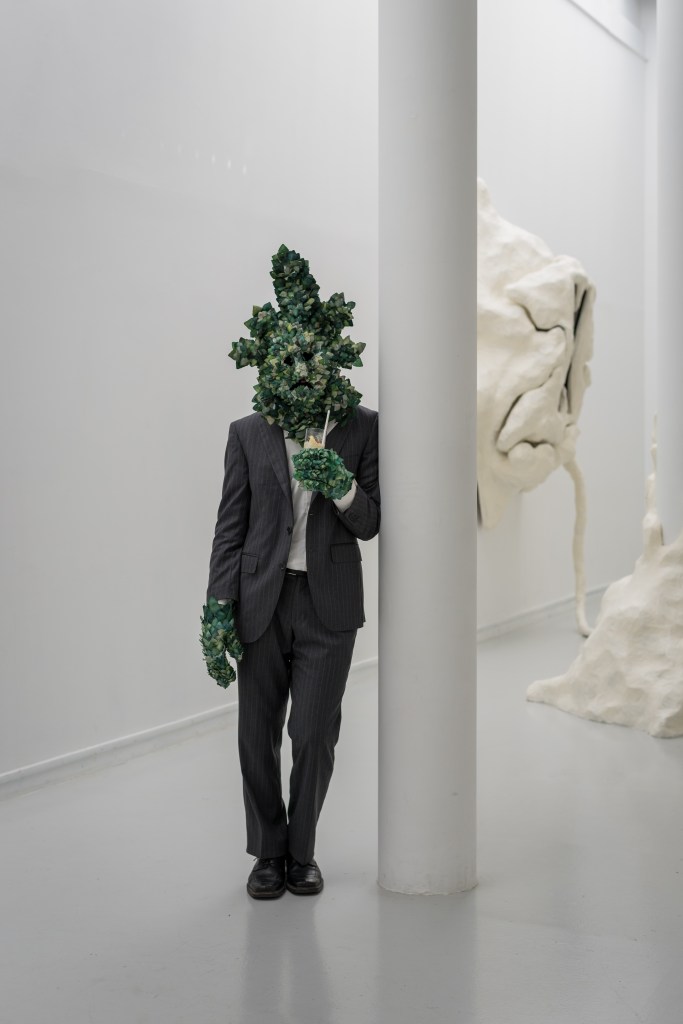
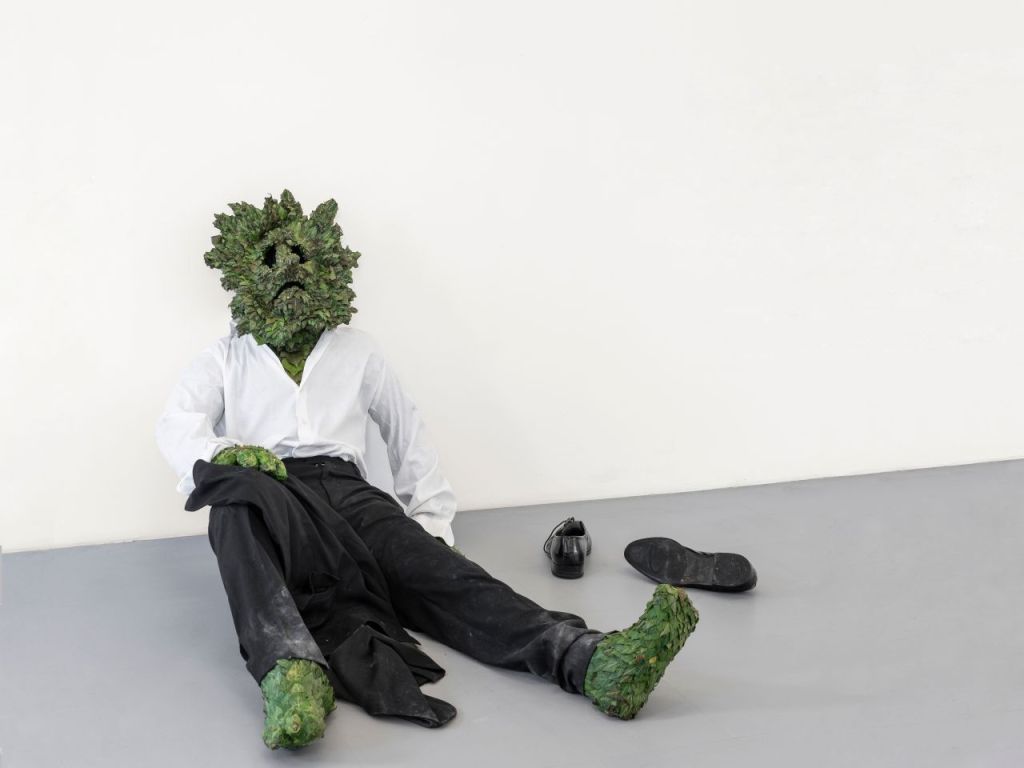
Photo: Riccardo Giancola / Courtesy: the artists and La rada
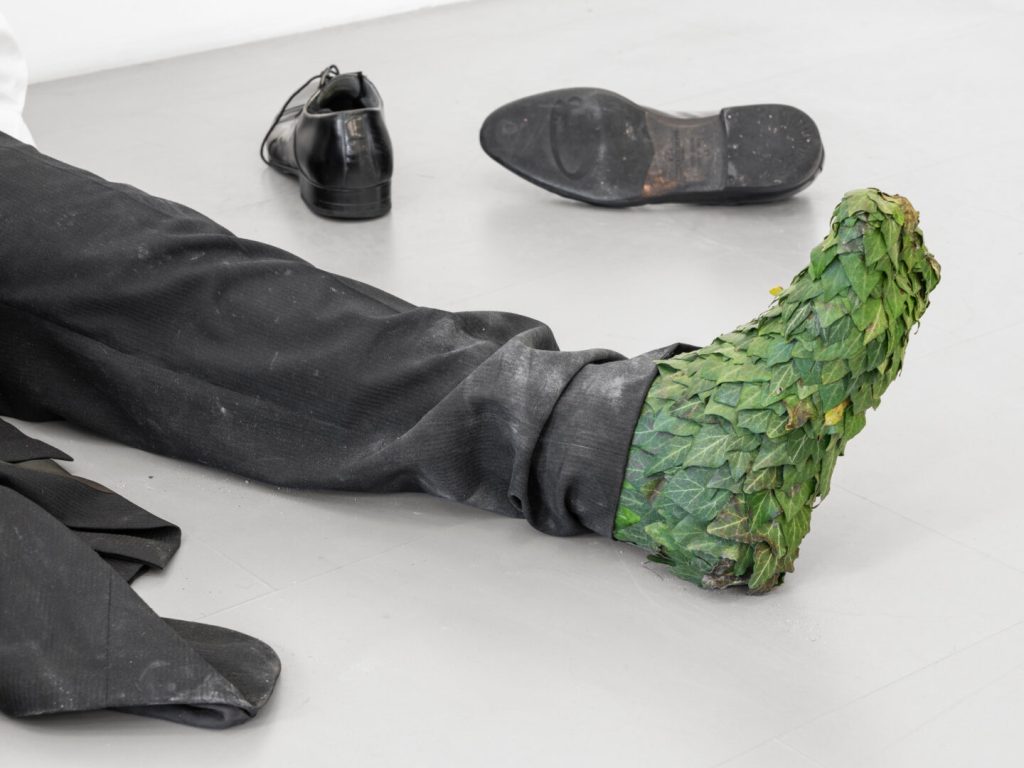
Your work often weaves together European folklore, ritual, and magical symbolism—from Italian vernacular customs to occult practices. What draws you to these ancestral belief systems, and how do you see them resonating within contemporary society?
In recent years, my research has focused on how human beings construct and shape their cultural sphere, developing beliefs, narratives, and an alphabet of signs and symbols to be shared within their communities. What you call ancestral beliefs are, to me, interstices of past knowledge that sometimes, in an anachronistic way, enter into dialogue with a hyper-technological and computerized present.
My interest is not driven by nostalgic impulses nor by a mere charm with magical thinking but, to return to one of the terms just used and its double meaning, by the question: what charm us? What are the collective rituals, signs, codes, and narratives we cling to in order to face such a turbulent and complex reality? Which of these are shared and developed horizontally by a community, and which, instead, descend upon us to be passively accepted without critical analysis? Which are spells and which are curses ?
I would therefore conclude that, if I had to categorize my research, it would be more closely aligned with the approach known as magical materialism.
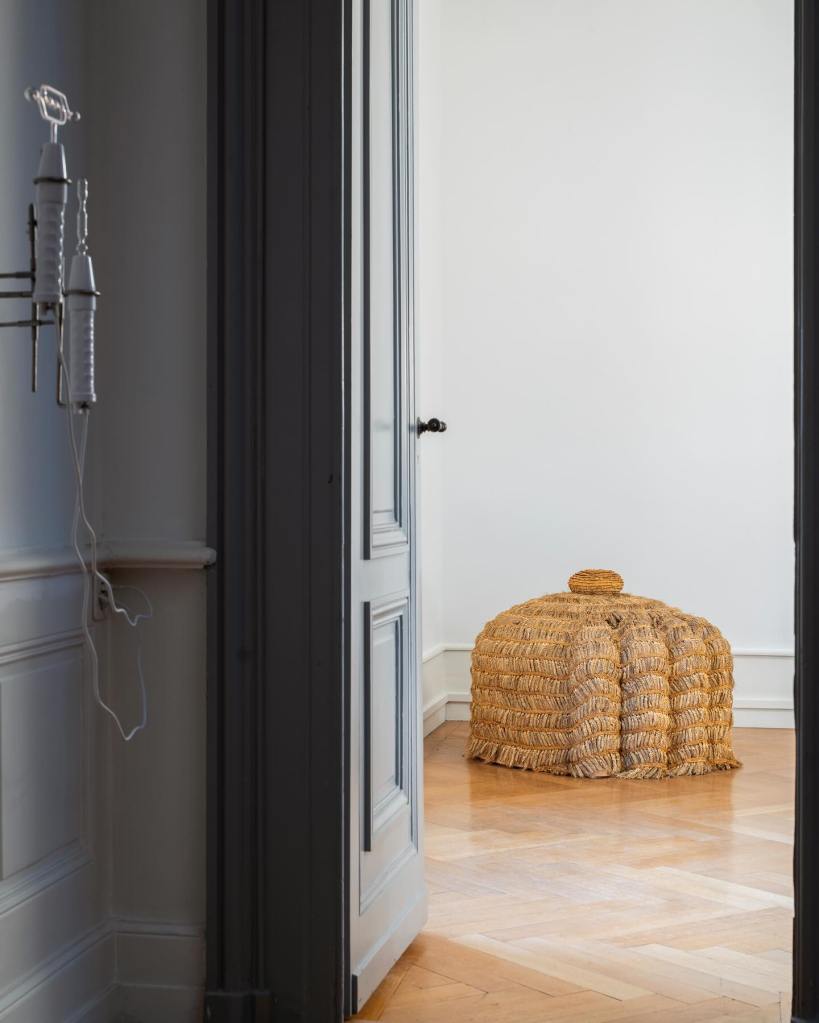
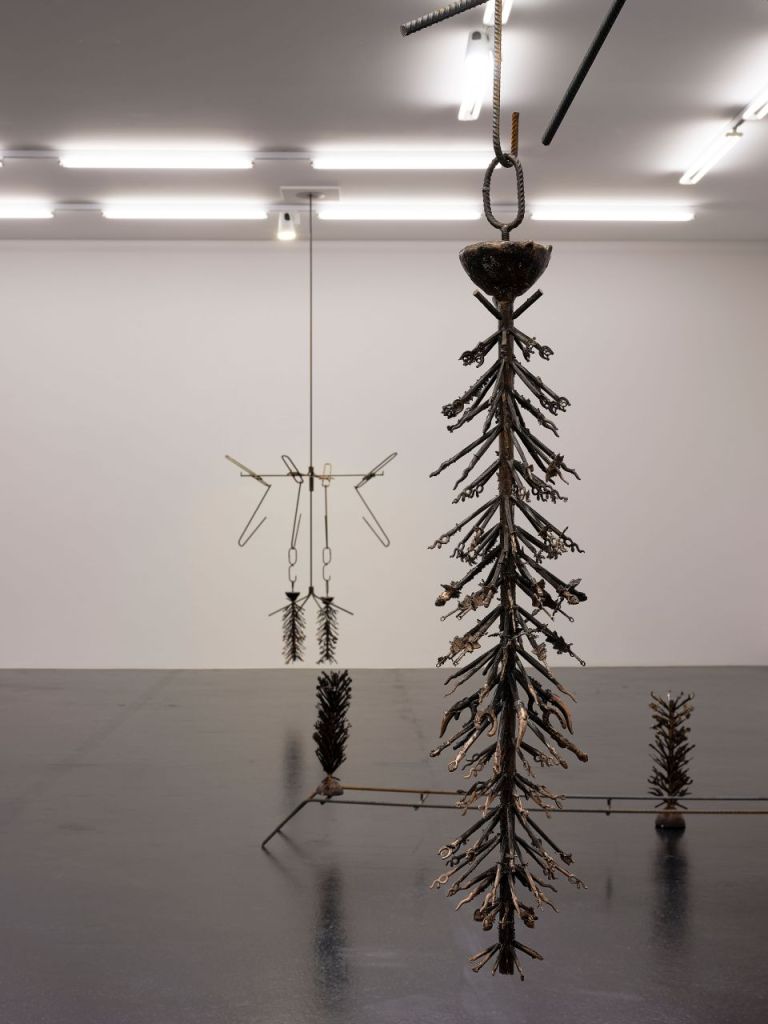


You create sculptures and performances that invite the irrational—ritual objects, incantations, transformation. How do you balance this sense of the supernatural with the viewer’s everyday experience? What moment are you hoping they carry away?
In my practice, I don’t draw a distinction between the rational and the irrational.
First and foremost, I enjoy working with works that can change their state—mischievous, restless pieces, but also idle ones, unwilling to yield to a fleeting or distracted gaze. I like it when the audience begins to question the life within things, blurring the lines between object and subject, between agent and acted upon, between life and death. These are the tensions I try to convey through my works, hoping that each person walks away with more questions about reality, rather than accepting it as a given.
After all, I believe these are questions that art has always carried with it. While studying Medieval Art History for a master’s degree in art history, I was struck by how, in that historical period, works—and images in general—were activated rather than merely contemplated. They were literally embodied by the public, who touched them, twisted them, ate them, and destroyed them. People believed that the works themselves possessed agency, that they performed as active subjects within reality. With my practice, I try to position myself once again on that plane.
Your installations, such as Drollery at Palazzo delle Esposizioni and Les Sillons* at Ferme du Buisson, often inhabit evocative architectural spaces. How do you respond to a site’s history or atmosphere when developing work for it?
*(Les Sillons was the name of the group exhibition curated by Thomas Chonchou, in which he invited me to show several previously completed works.)
I always try to play with space, keeping open the possibility of changing how my works are displayed. It helps me to rethink them—perhaps because I imagine they feel uncomfortable always being in the same position.
This helps me to accept the works not as finished objects, but as entities in their own right, with a subjectivity that questions itself and enters into dialogue—sometimes even into dialectics—with the principles of space and time that underpin an exhibition.


As a graduate of Brera in Milan and HEAD in Geneva, with recent residencies and awards (like Swiss Art Awards finalist), how have these cross-cultural and institutional experiences shaped your artistic trajectory—both conceptually and materially?
It has influenced me deeply and continues to shape my artistic process. I believe it’s important for an artist to engage with different ways of imagining and making art, and to step outside their comfort zone.
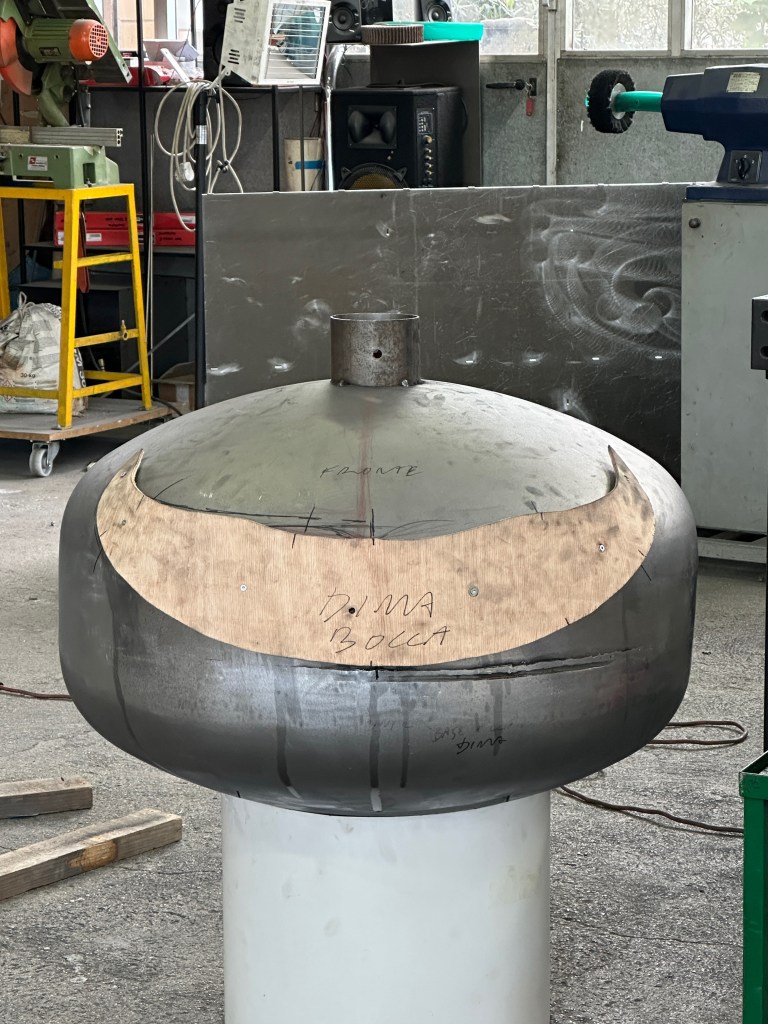
Lately, however, I’ve decided to relocate my studio—at least for the more complex productions—to my small hometown in central Italy, in the heart of the countryside. This choice was driven by practical needs, as I have plenty of space to create and store my works, as well as a network of artisans and suppliers I rely on during the production phases. But it was also motivated by an existential need: I realized it’s the only place where I feel free to experiment without distractions or limitations.
Ultimately, it also makes me more aware of how different reality is from the art world bubble—of how people have other concerns and necessities beyond the narrow world of culture, often confined to its urban strongholds. It’s the place I return to after my projects and travels, and the one that keeps me grounded.





What do you think is the primary idea or goal of art in general? If there is a specific goal, what would it be?
I don’t think there’s just one. Or at least, I have no idea what it might be. Every artist has their own goals, their own vision, and their own way of making art.
Perhaps my attempt is to reimagine a different way of sharing imaginaries—one that isn’t rooted solely in closed, resistant bubbles of identity and social groups, but instead creates works that are transversal, that challenge those bubbles a bit—maybe even burst a few of them.

ARTIST OF THE MONTH
Interview, Online Exhibition,
your Art in AOM’25 Book

ARTIST OF THE MONTH
PAI32 EDITION’25
 PAI_32 platform