
The Space Between: On Writing, Translation, and the Material Life of Emotion — An Interview with Umji Kim
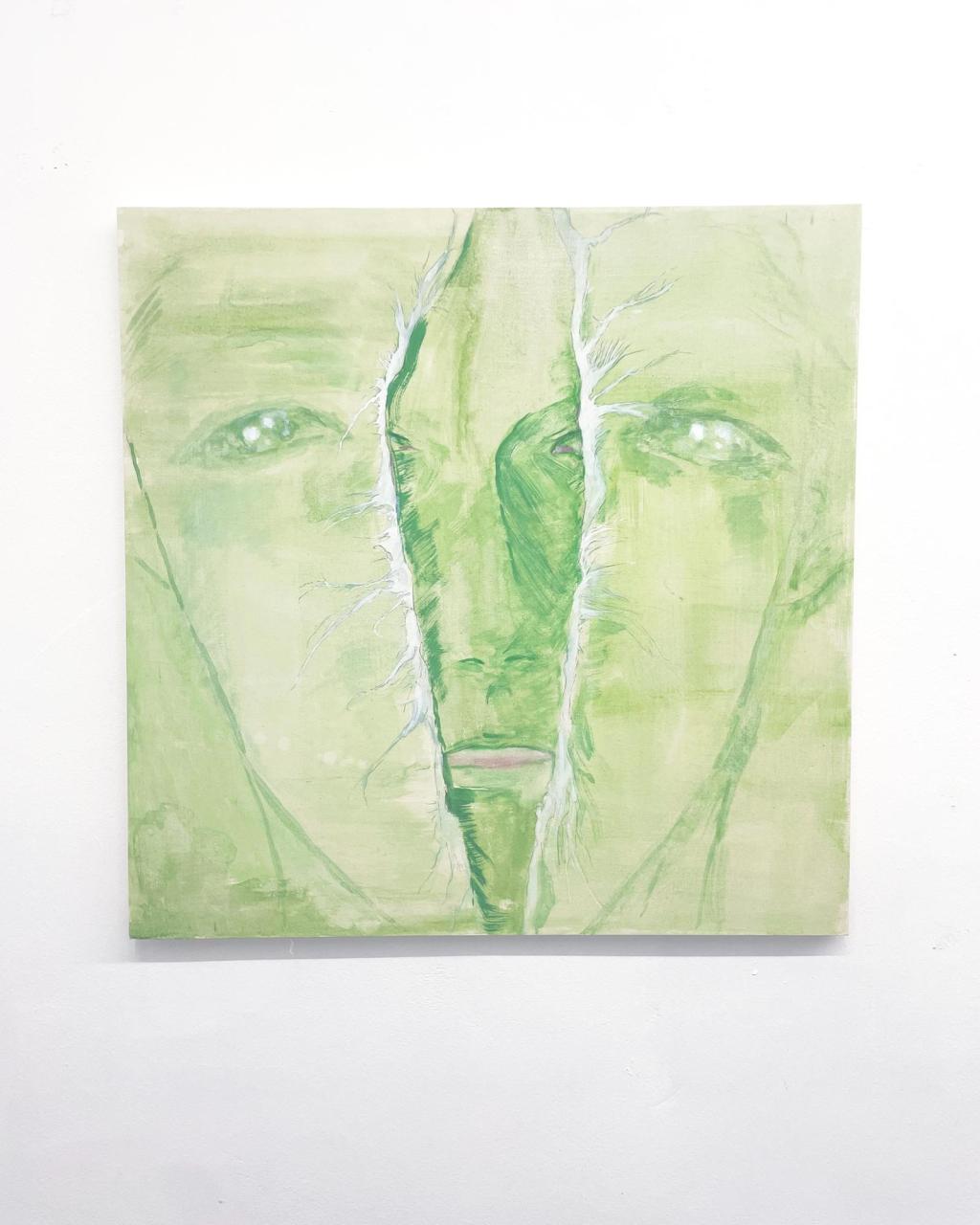
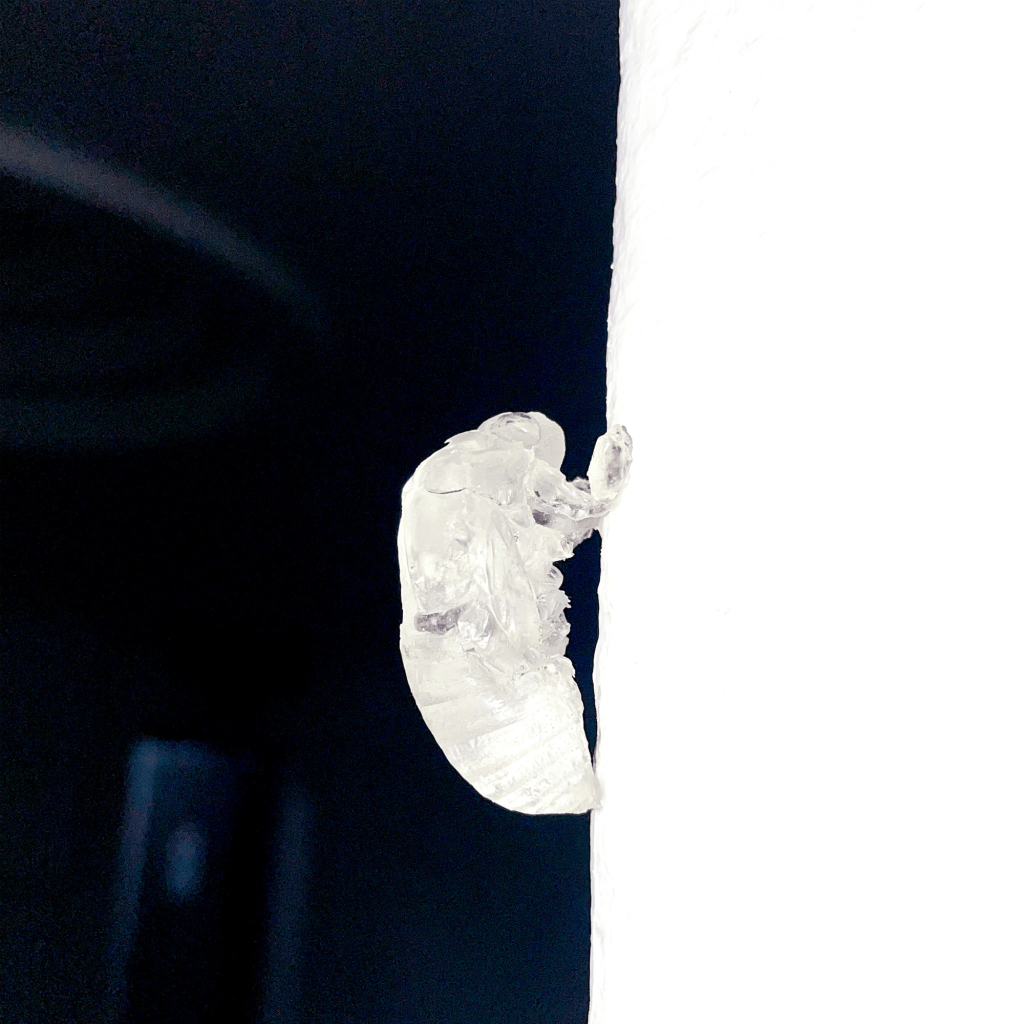
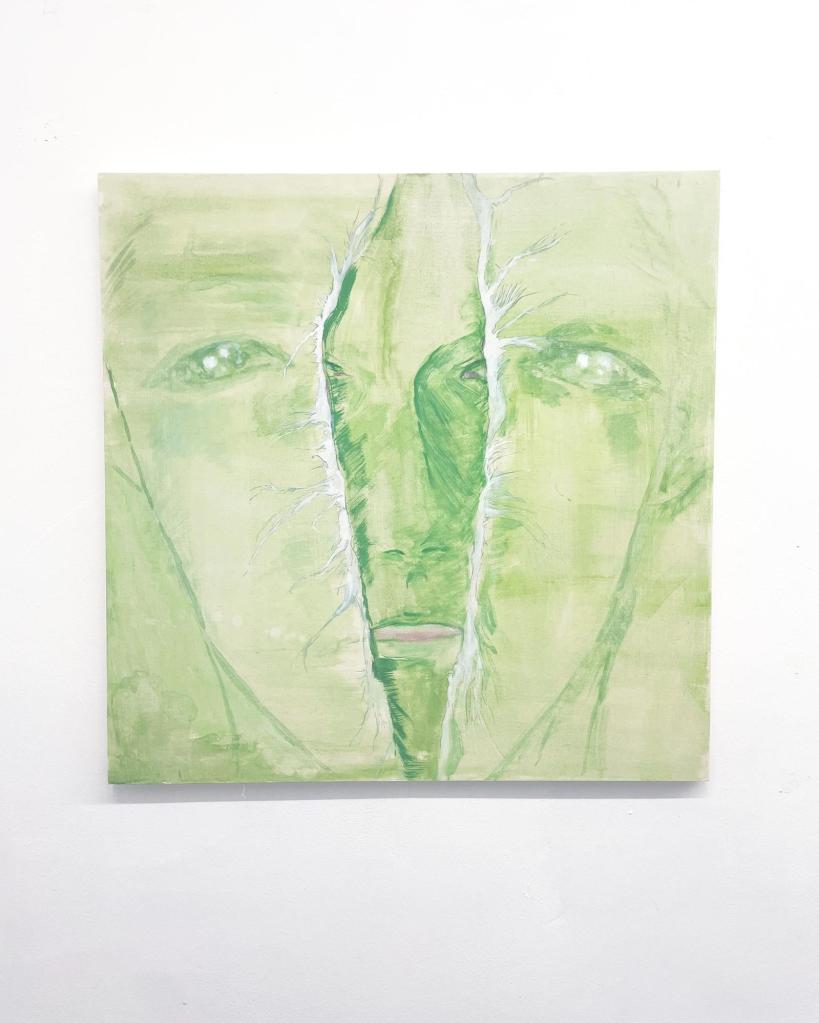
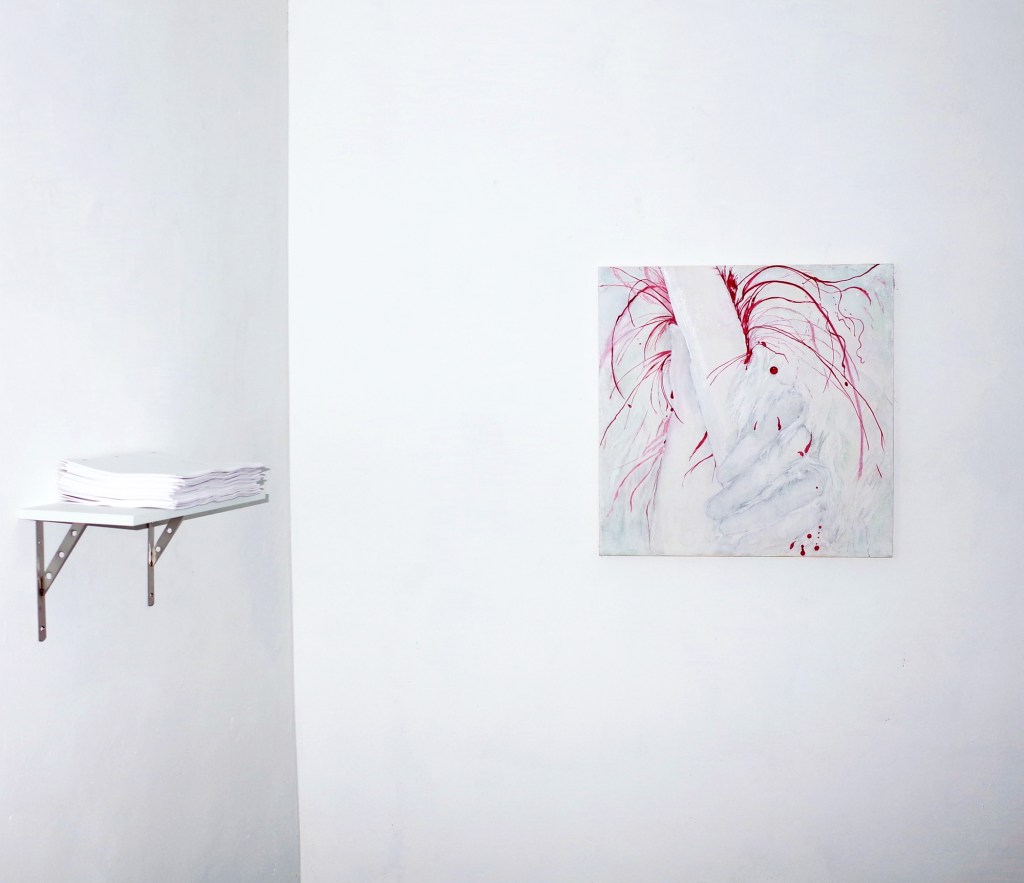
For Umji Kim, art begins quietly—with a note on her phone, a line in a draft, an idea flickering into form through writing. This intimate process is the foundation of her visual work, shaping paintings and installations that carry the weight of fiction, memory, and emotional duality. Drawing from her background in both fine arts and conservation, Kim approaches materials—pigment, resin, silver leaf—not just as tools, but as characters with their own fragility, sharpness, and resistance.
In this conversation, Kim reflects on the tension between tenderness and discomfort, the unpredictability of translation, and how her layered, care-driven approach makes the invisible just visible enough to feel. Her work doesn’t aim to resolve contradictions; instead, it dwells in the ambiguity of emotion and meaning—quietly unfolding like a prayer we didn’t know we needed.

You’ve shared that writing is the starting point for your practice, often shaping the emotional tone and structure of your visual works. What does writing offer you that other mediums don’t, and how do your texts evolve into paintings or installations?
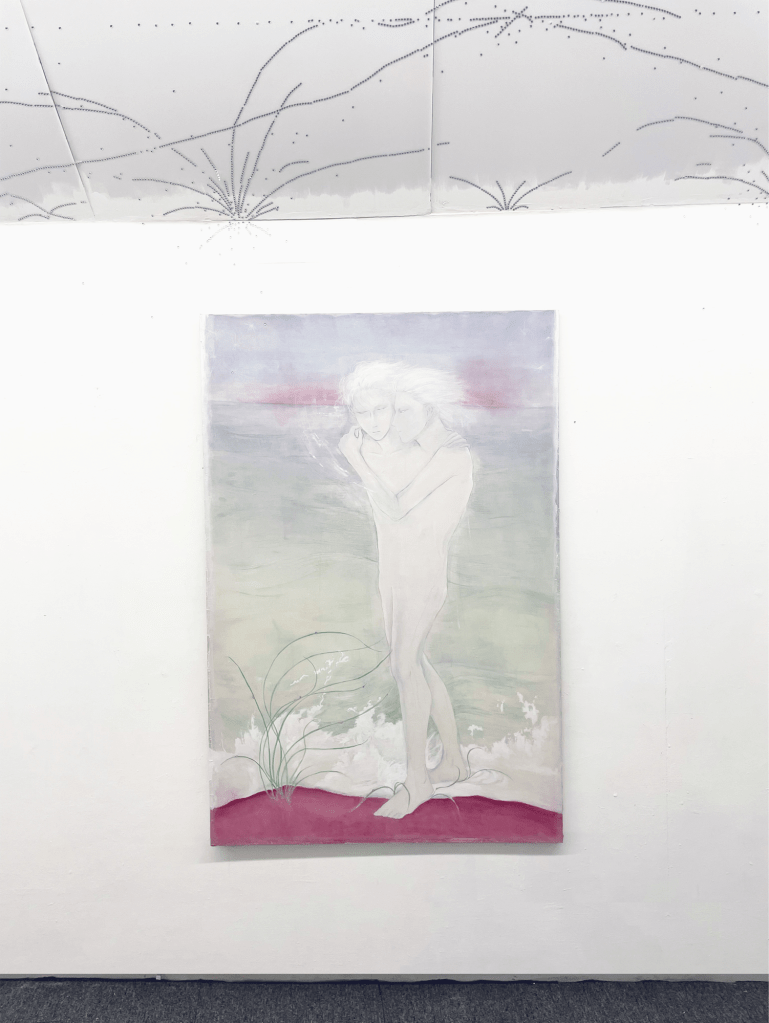
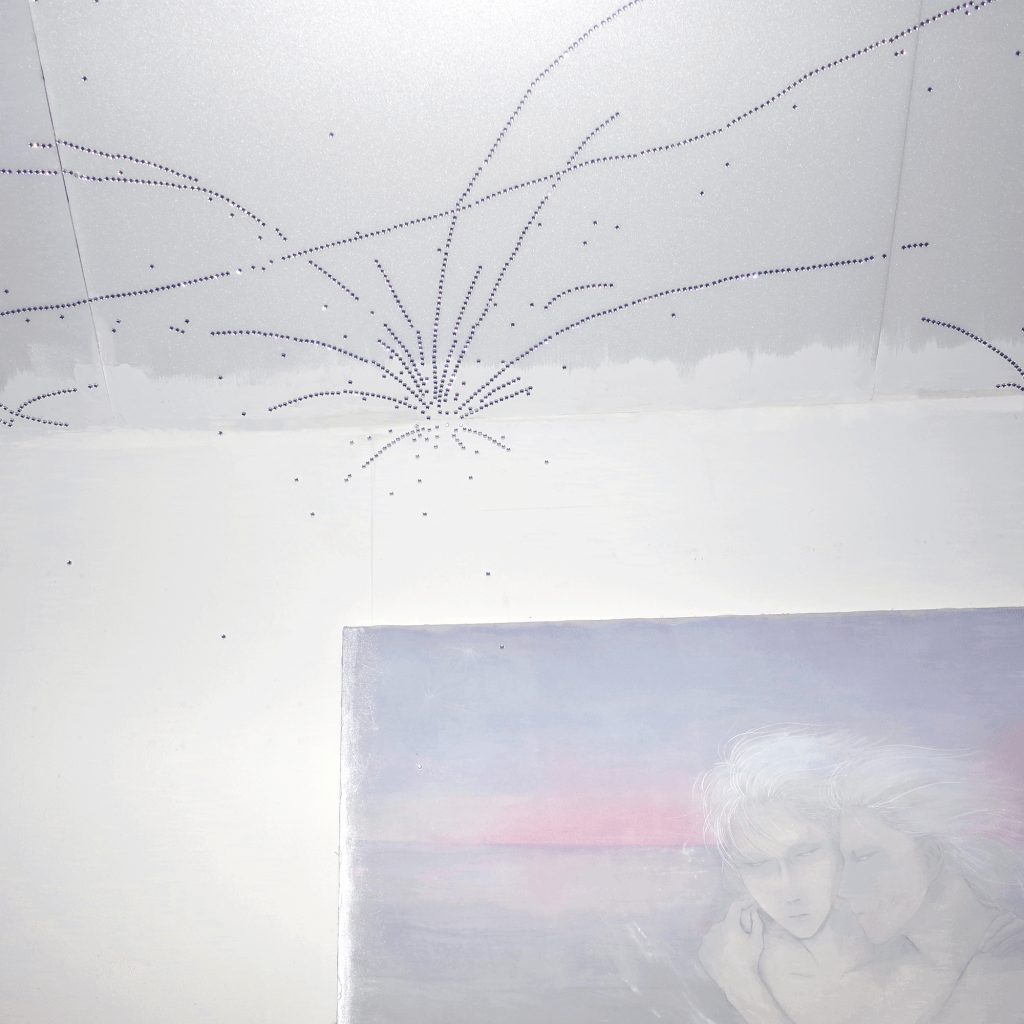
Writing allows me to capture transient ideas. Unlike painting or installation work, which require extensive preparation, I need no more than a smartphone or laptop to write. Writing also lets me keep a certain distance, rather than being straightforwardly confessional. In this process, characters, settings, and events emerge, and when I organize them, they become something quite different from the original idea I had. To create works, I extract a part from these constructed texts—like a scene or a film still—and transform it into an image. I think the process of developing texts into paintings or installations, or the spatial totality they compose, is similar to theatrical enactment. There’s a saying that goes: “A good script has legs.” The more I like a text, the easier it becomes to visualize it as an image. For this reason, I think it’s ideal to write texts that contain vivid images and create images that show stories.

Your recent focus on the idea of “unwanted kindness” is striking—something both tender and unsettling. How do you explore that emotional duality through materials like pigment, silver leaf, fabric, or resin?
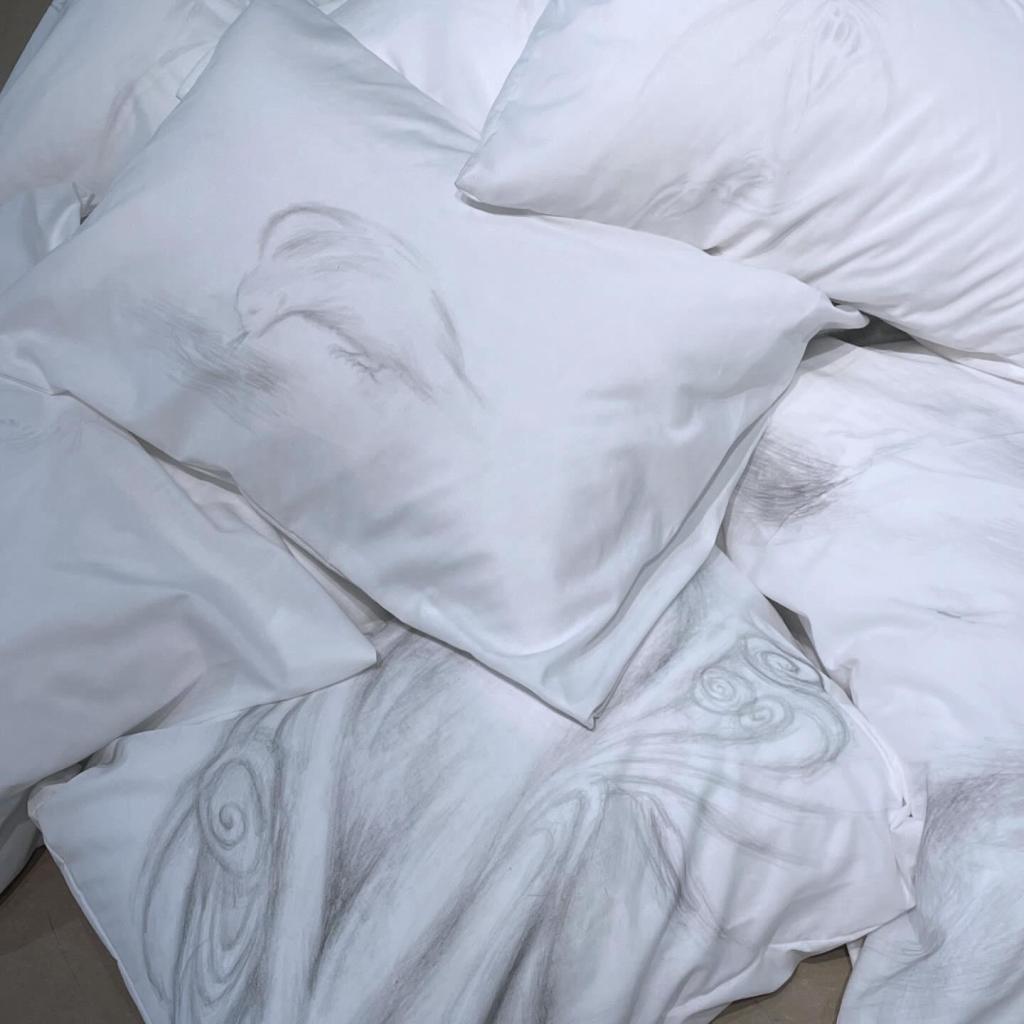
Unwanted kindness—how things we didn’t want simultaneously save us and make us feel ashamed—would also be included in the theme of dilemmas, which I’m obsessed with. Similarly, I’m interested in materials that have contrasting qualities.
The materials you mentioned share visual elements such as subtly shimmering surfaces, sharpness, thinness, coldness, and fragility, which I think are effective for expressing the contradictory sensations that are, to borrow your words, “tender yet unsettling.” It’s like when you look at a snowy landscape and feel it’s cold and bleak, but sometimes it also feels silent and cozy. When you look closely, it’s clean, white, and gives off a subtle light, but it’s also prone to soiling and quickly melts away. This analogy came from peer critique in college, and while it’s a clichéd expression, I’m still trying to maintain a similar sensibility.
Having studied both painting and conservation, you seem to approach materials with a sense of care and complexity. How has that background influenced the way you layer, reveal, and preserve meaning in your work?
To be precise, I studied fine arts and painting materials alongside conservation studies focused on techniques, which involved copying historical artworks. Through this background, I’ve come to think of artworks fundamentally as matter (material). As you might have noticed, I think of the respective processes of organizing ideas into stories, turning texts into visual works, and having them shown like theater in public spaces—moving from the initial fluid state to the completed stage (even though it’s still inadequate and difficult to orchestrate)—as completely different things. I place great weight on bringing meaning into the actual here and now, making it tangible. I often imagine the possibility that solid artworks with layers might last longer than I do. At the same time, I consider that they can easily fade and corrode. The same would be true for the meaning contained in the paintings and sculptures.

You’ve also mentioned an interest in translation and its complications. How does this theme—of things being reshaped, misunderstood, or carrying layered meanings—show up in your current projects?
It always makes me hesitant. I’m trying to connect two objects that aren’t completely identical, and there’s always a gap between them. This inevitably occurs in the process of turning text into images as well. Even in this interview, I’m thinking about the differences between Korean and English.
But these gaps and differences are not fixed. There are times when I use the same language as the listener and articulate myself precisely, and the listener still completely misunderstands; on the contrary, sometimes the listener accurately grasps what I try to say, even though I utterly fumble. I find these situations very intriguing, and they serve as the foundation for writing scripts in my current projects. When crossing between media, I try to consider what is okay to be hidden or ignored, and what must be expressed.
What do you think is the primary idea or goal of art in general? If there is a specific goal, what would it be?
Making the invisible visible, perhaps. Whether it’s personal emotions, others’ lives, or social issues, the subject might differ from person to person, but I think the power of art lies in uncovering things that we didn’t perceive before. There are moments when I encounter a certain artwork and suddenly realize that, although I haven’t been aware of it before, I have been hoping someone would speak about this very thing. I’m deeply moved by such works. It opens up possibilities of life.
I once read that Samuel Beckett said, a few days before seeing Munch’s painting, that the art (picture) that is a prayer sets up prayer, releases prayer in onlooker. I think prayer-like paintings have that kind of power in themselves. I also want to create works like that.
Website umjikim.cargo.site

ARTIST OF THE MONTH
Interview, Online Exhibition,
your Art in AOM’25 Book

#artist of the month
PAI32 EDITION’25
 PAI_32 platform