

Choreographing the Ordinary: From Fastenings to Form
Text Marie Ivanova
October 31, 2025
There’s a quiet rigor to Jundan’s practice that reveals itself stitch by stitch, gesture by gesture. Trained in hand embroidery and fashion textiles, she approaches materials like a choreographer approaches a score, letting repetition, rhythm and tiny deviations accumulate into form. In her hands, a buttonhole can behave like a note on a staff; the act of fastening a garment becomes a phrase of movement; the body’s habits are slowed until their hidden logics show through. Rooted in craft yet restlessly experimental, Jundan maps motion as if it were a textile—drawing on systems like Labanotation to translate lived time into structure, and using “ordinary” actions to probe where control really resides: in the cloth, in the wearer, or in the conversation between them. Her works invite frustration and play in equal measure, nudging us to notice how social rules choreograph our days and how a renewed sensitivity to touch might re-thread awareness itself. In her words, art “opens a door to a new consciousness,” asking us to look again at how we move through the world.
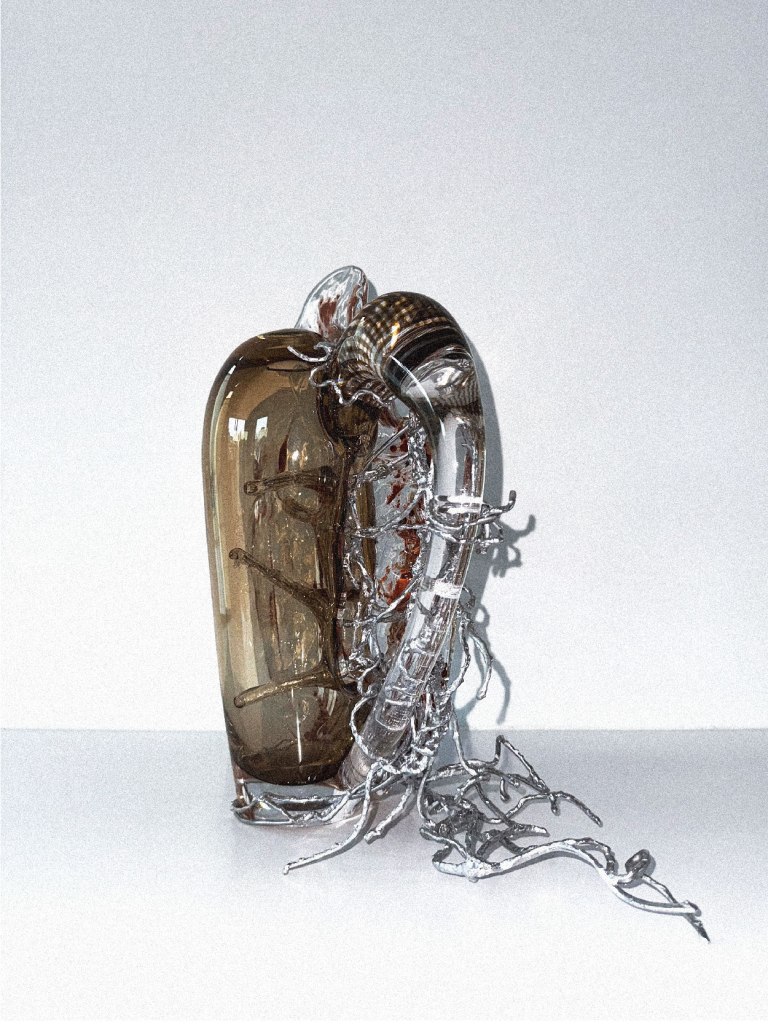
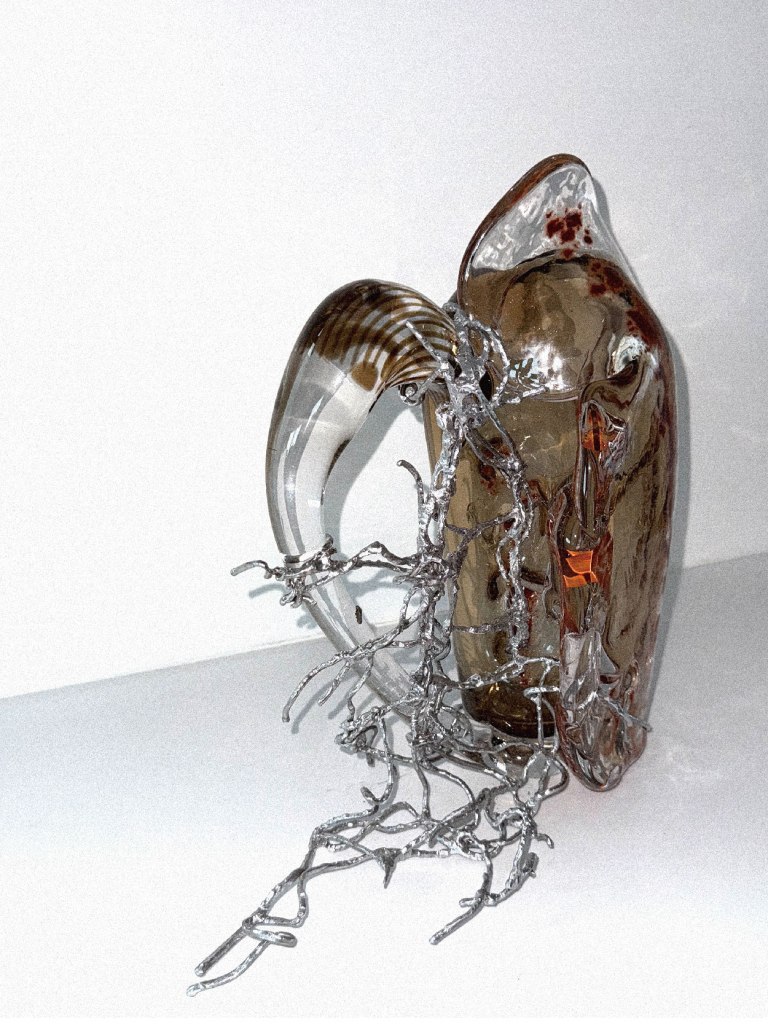
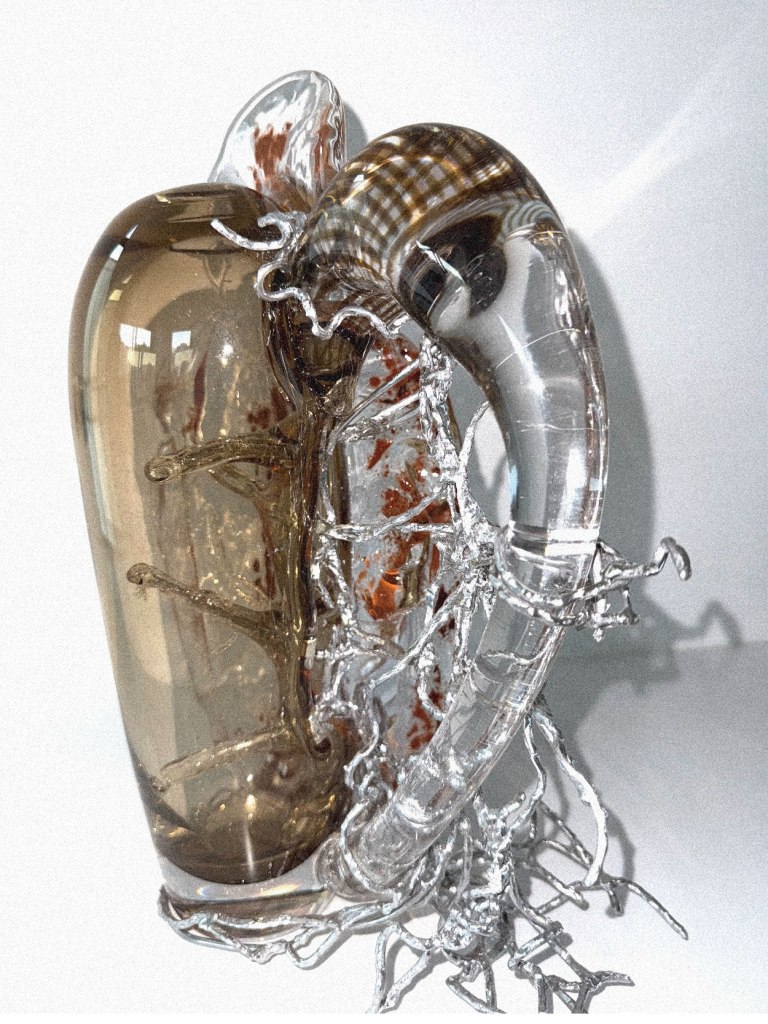
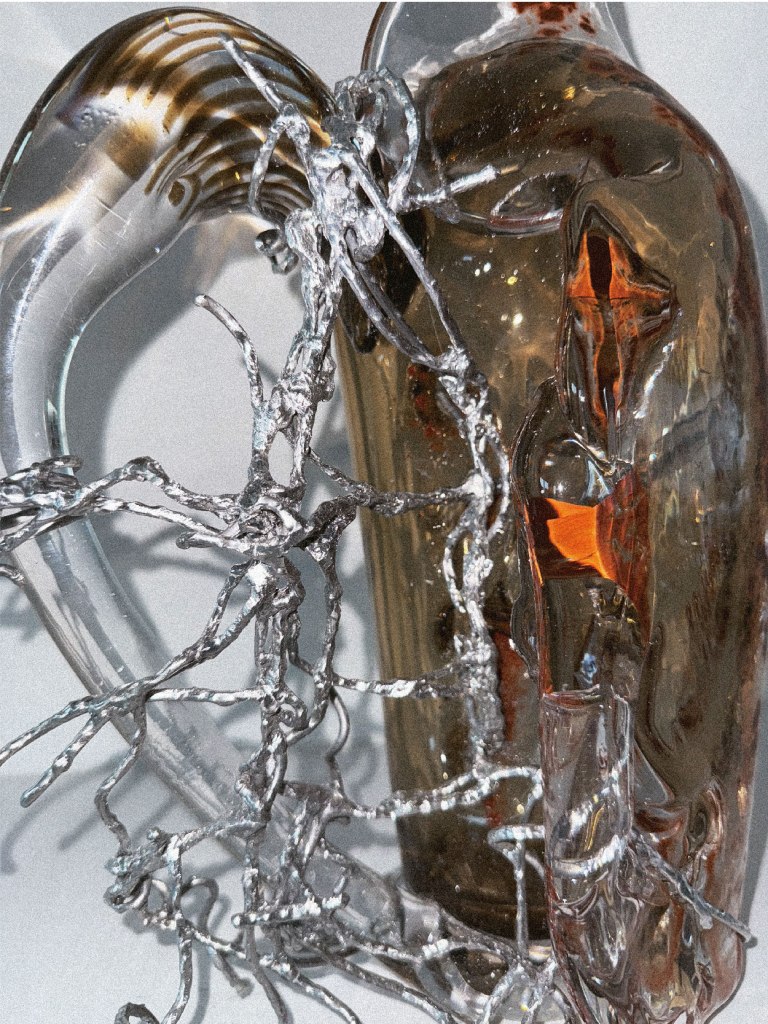
Your background in hand embroidery and fashion textiles brings a deeply craft‑oriented foundation to your mixed‑media work. How has this grounding in traditional techniques shaped the way you explore the materiality and structure of multifunctional textiles?
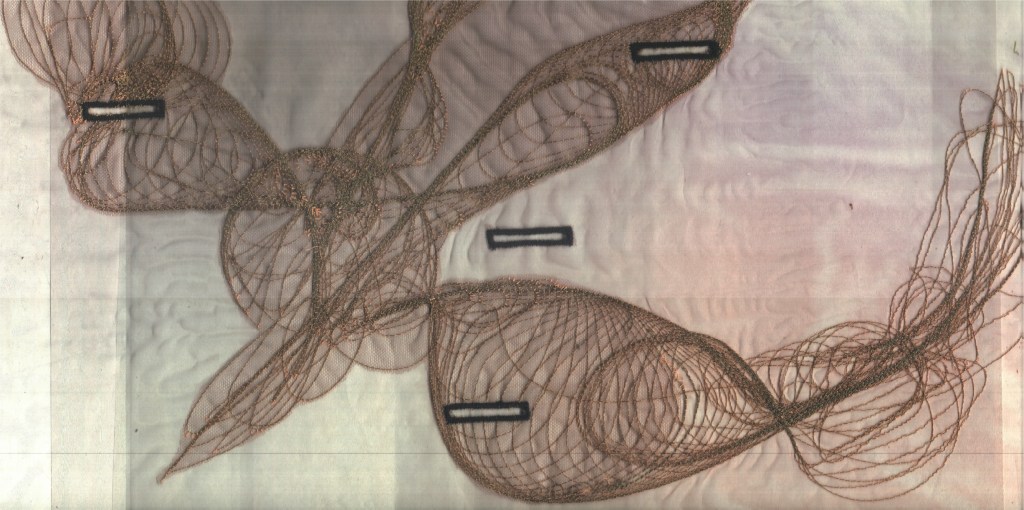
For me, immersion in the act of making is central to my creative practice. I am deeply drawn to the inherent order and systematic nature of handicraft techniques, where subtle variations can give rise to endless creative possibilities. Take embroidery for example, its fundamental stitch is repetitive. Yet, by altering stitch length and spacing within a self-directed rhythm ,this repetition can be transformed into a rich language of form. This craft-based mindset extends to my exploration of materials. When working with any material, whether traditional textiles or other media, I begin by observing and experimenting with its properties to discover the inherent patterns and order that emerge during the production. I then naturally imbue the work with a vibrant rhythm unique to handicraft.

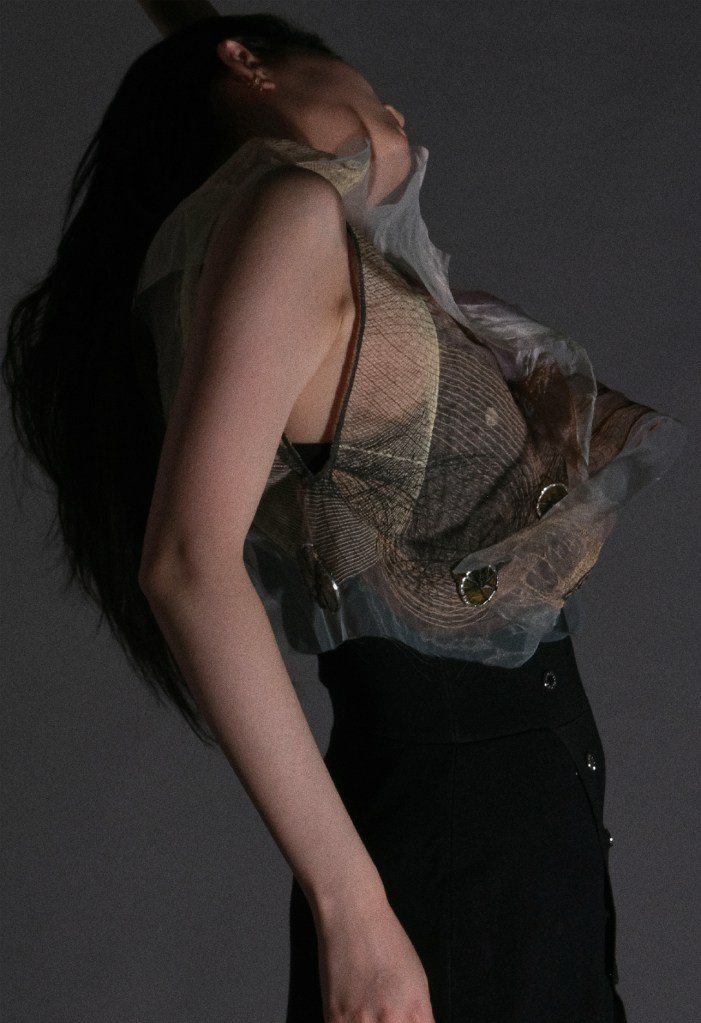

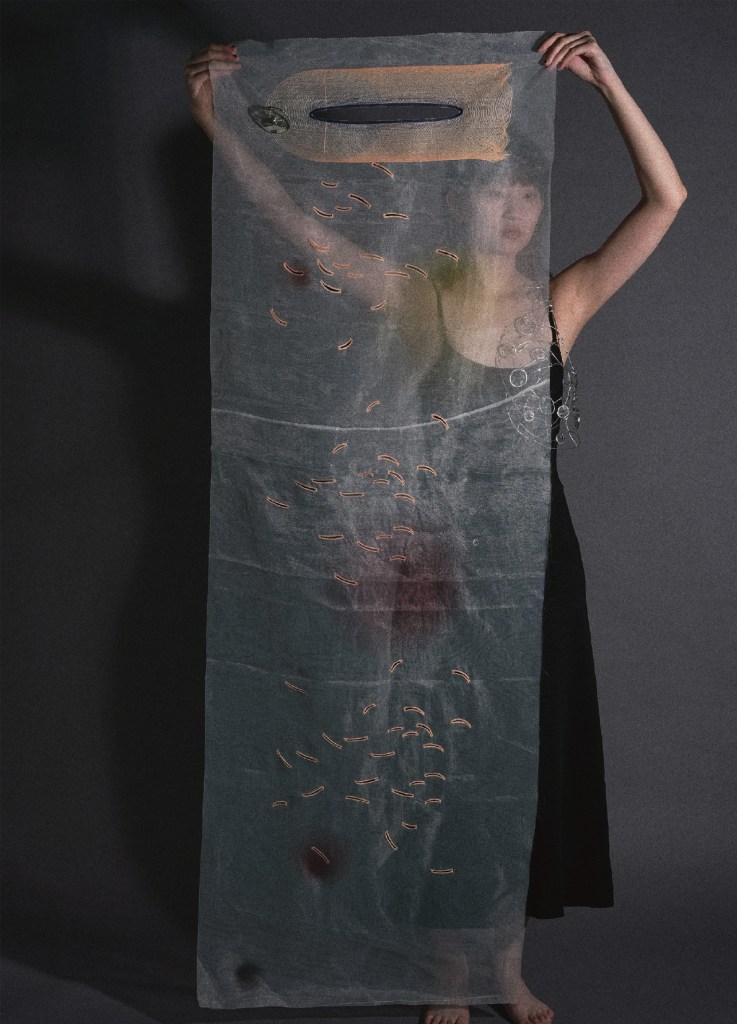
Your textile objects are designed to interact with the body—transforming through movement and touch. Could you describe how bodily engagement drives the evolution of your textile forms, and how it continues to inform your design process?
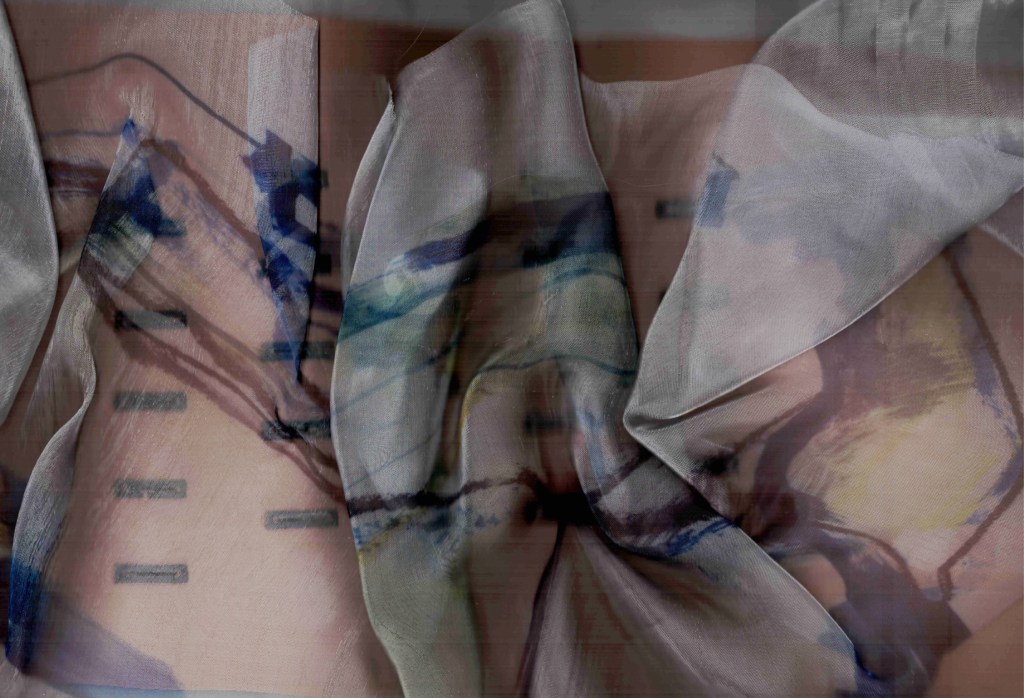
I begin a project by dissecting movement sequences into dynamic, linear gestures. Through motor intuition and memory images, I seek to capture the condensation of time and the visual composite of a completed movement. This translation of 3D movement space into an ornamental “trace” is my foundational step. Then, I create manipulated patterns choreographed to direct or react to behavior. I have merged the sequences process of buttoning with choreography as a developed method I approached for exploring external powers controlling the physical, psychological, and spatial aspects of our actions. Discovering Labanotation was a pivotal moment. This dance notation system, which codifies movement within a 3D spatial framework, revolutionized my view of textiles. It inspired me to see cloth not as a static surface, but as a dynamic map of motion. This evolution reflects in my practice: from detailed fabric manipulation, then expanded to constructing textile objects from 2D surfaces to 3D forms. Further evolving to reach a stage where my body movement becomes the tool that “stitches” or “buttons” through space, applying craft-based thinking to non-traditional materials. This journey has granted me a unique craft perspective, one that moves fluidly between the minute detail and the expansive whole.
You’ve mentioned that your work invites wearers to connect with the textile through agency and sensation, often redefining everyday movement. What does the relationship between textile, body, and control reveal about identity or awareness in your practice?
My practice interrogates the relationship between textile, body, and control to reveal identity as a fluid construct shaped by both conscious and unconscious movement. I design textiles that require active engagement to provoke reflection, thereby transforming routine actions like buttoning into choreographed performances. The strategic rearrangement of buttons and holes or alteration their sizes, it creates resistance, breaks habitual motion, and elevates bodily awareness. This creates a negotiated space where control is constantly redefined, neither fully imposed by the garment nor entirely commanded by the body.This reveals how our movements are often choreographed by external forces like social norms and functional routines. My work makes these invisible structures visible, transforming mundane actions into conscious performances. It raises a fundamental question: where does “control” truly resides? In the body, the textile, or the dialogue between them? Ultimately, this interaction with textiles reshapes self-awareness. When one slows down and re-learns movement, the relationship between body, space, and time becomes palpable. self-awareness is clarified and identity is experienced as a continual act of creation, where consciousness is woven, stitch by gesture, into existence.

Your experiments in scoring movement—turning buttonholes into musical notes— reveal a fascinating dialogue between choreography and material design. How does this interplay between dance, notation, and fabric influence the way you imagine textiles evolving in emotional or social contexts?
At the heart of my practice is a belief that textiles can be dynamic mediums for emotional and social dialogue. I see dance as a phenomenon arising from fundamental human needs for order and expression. In our technology-saturated age, however, the innate reflex of our bodies to respond rhythms and emotions has become suppressed, reducing movement to a tool for control and productivity. In this context, I began treating buttonholes as musical notes in a choreographic score. This transforms textiles from static surfaces into responsive environments where the body navigates between order and chance. By elevating simple acts like buttoning into conscious, choreographed interactions, I aim to liberate these daily rituals from pure function, infusing them with emotional and social resonance. Emotionally, this creates layered experiences. When wearers feel frustration, discovery, or playfulness while engaging with these textiles, they mirror our navigation of invisible social structures. The textiles become tangible metaphors for the unspoken rules that guide our behavior—much like how architecture and traffic systems choreograph urban life. Yet, they also reveal the control embedded in any prescribed order. Socially, this material choreography facilitates new modes of relation. Pieces that require mindful engagement challenge efficiency-driven norms. Through these redesigned daily rituals, wearers develop a more sustained awareness of their embodied presence. Ultimately, I envision textiles evolving beyond passive coverings into active mediators, inviting us to perceive, question, and potentially reweave the very emotional and social fabrics we inhabit.




What do you think is the primary idea or goal of art in general? If there is a specific goal, what would it be?
I believe the core of art is to open a door to a new consciousness. It is a medium for deep reflection, that awakens our forgotten sensitivities and prompts us to rethink our relationships with ourselves, others, and the world. In this way, art expands our ways of perceiving things, helping us reexamine what we take for granted, from how we act to how society is structured. In my view, art makes us human. It provides a space to breathe, to freely question, speak, and feel, ultimately leading us to rediscover our inner being.
Artist’s instagram @danbroo_

ARTIST OF THE MONTH
Interview, Online Exhibition
#artist of the month
PAI32 EDITION’25
 PAI_32 platform