
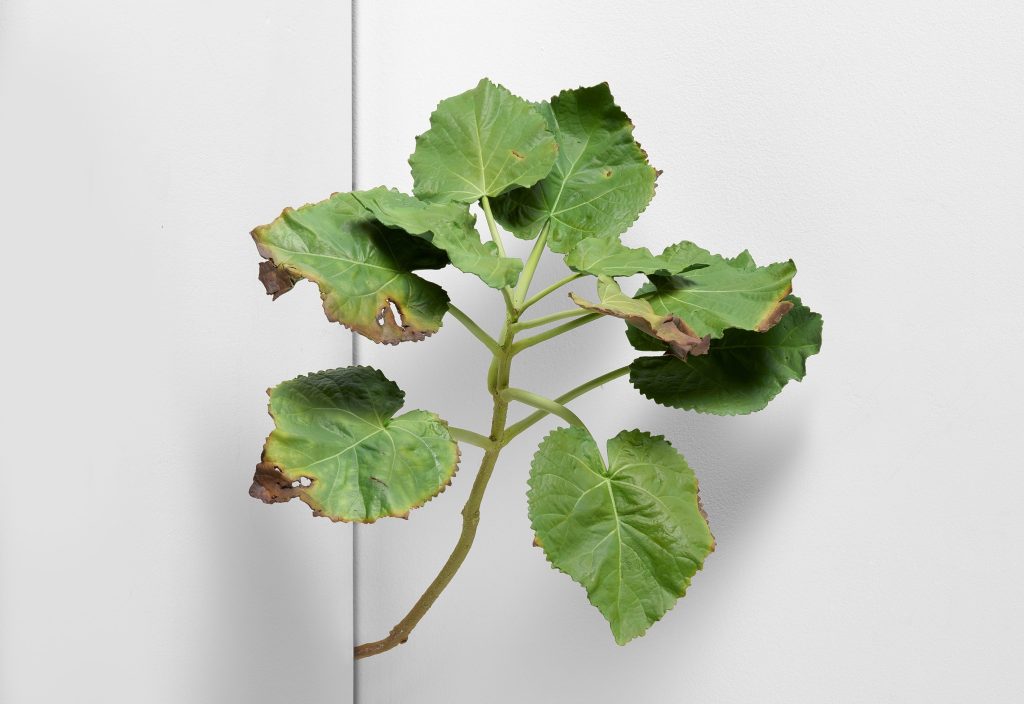
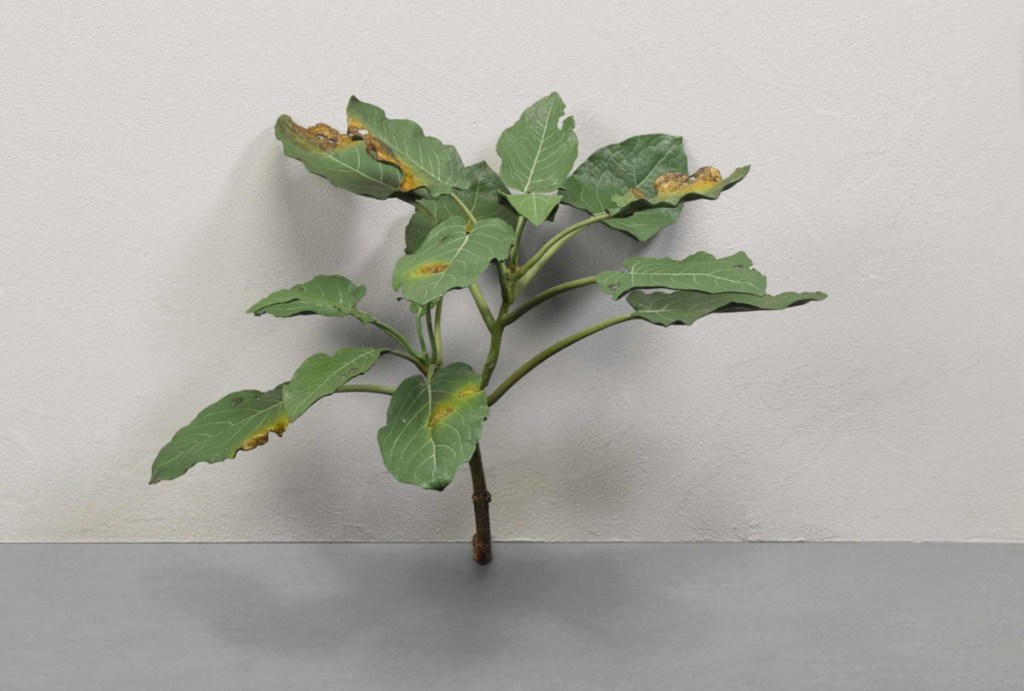
↑ Tony Matelli, Ohne Titel, 2011, Bronze, farbig gefasst, 42 x 35 x 25cm
The Kasper König Collection
Tony Matelli’s Bronze Flowers: Weeds, Bouquets, and the Politics of Survival
Tony Matelli (American, born 1971 in Chicago) is best known for his unsettlingly precise hyperrealist sculptures: sleeping figures, rotting fruit, crumbling classical busts, and objects that feel halfway between joke and existential crisis. Across this broader practice, his bronze flowers – from stubborn “weeds” to impossible bouquets – form a crucial thread, where questions of survival, fragility and illusion are played out through the most familiar of motifs.
Pace Gallery London – Monument to the Unimportant (group show)
Venue: Pace Gallery, 5 Hanover Square, W1
Dates: 26 November 2025 – 14 February 2026 pacegallery.com
Tony Matelli’s work shown: The exhibition text explicitly mentions“Matelli’s delicately painted bronze weeds” and the featured works section lists Weed (770) (2025, painted bronze) as one of the works on view.
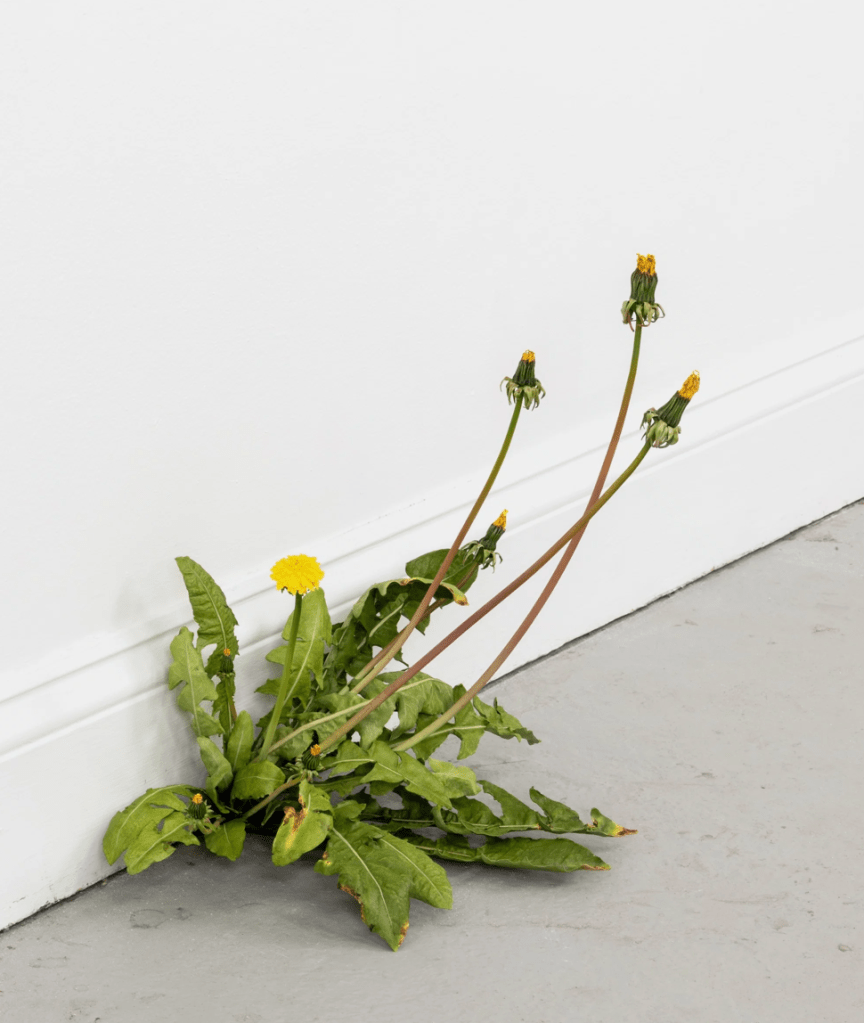
Weeds in the cracks
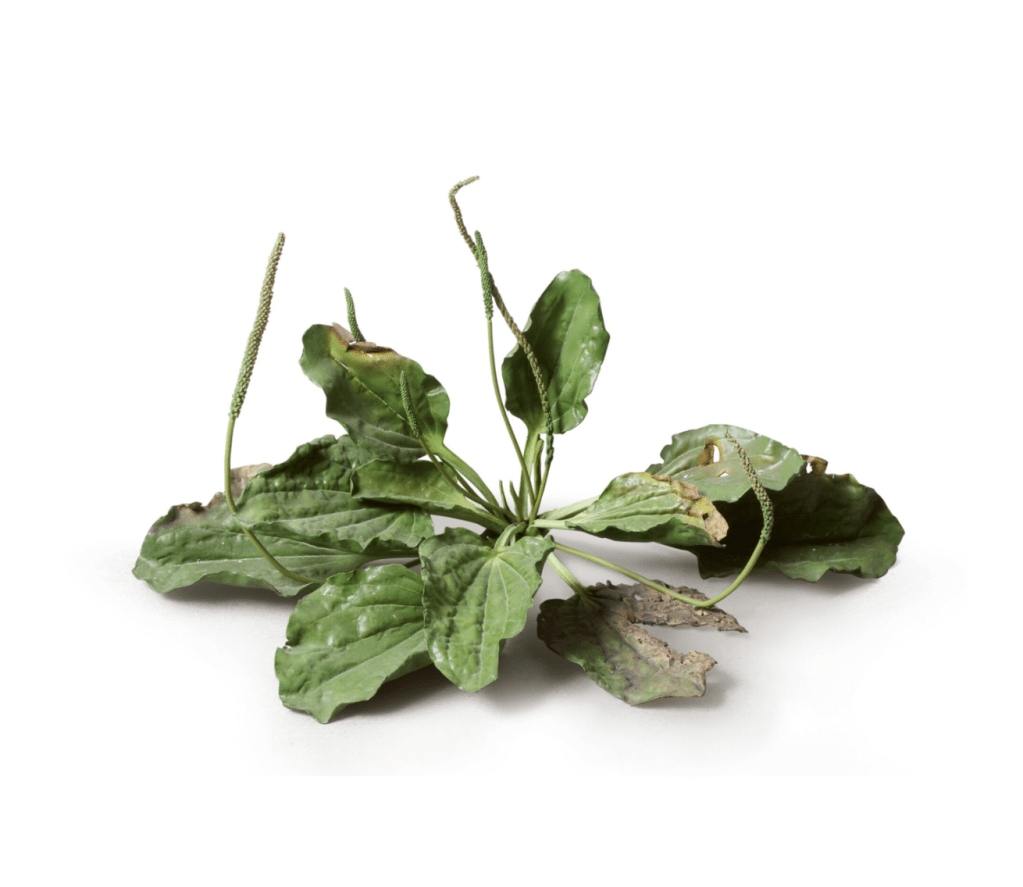
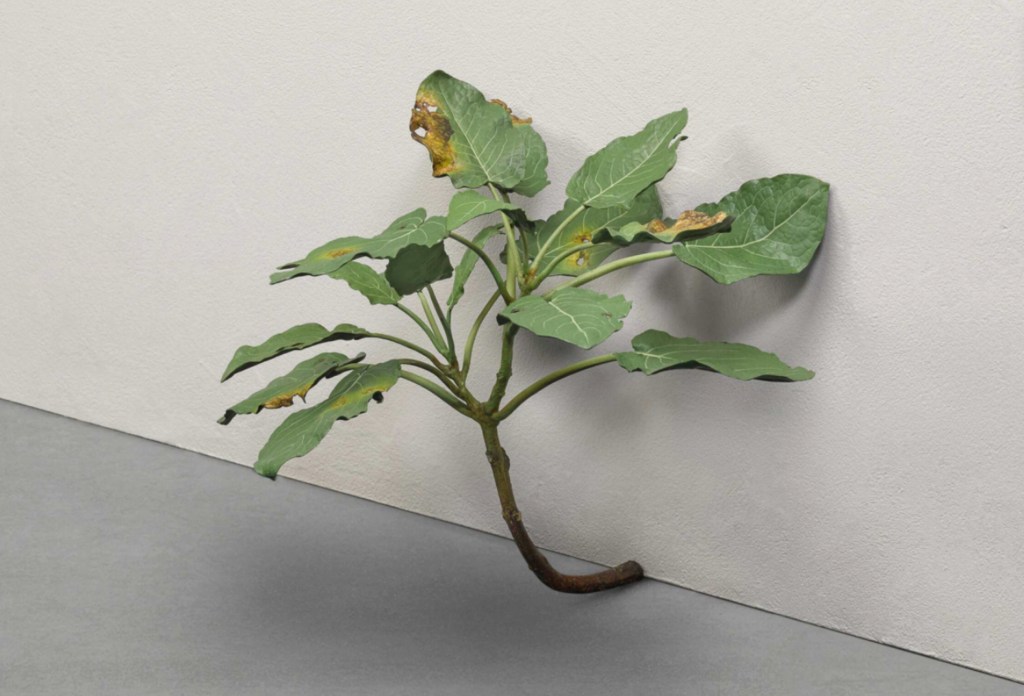
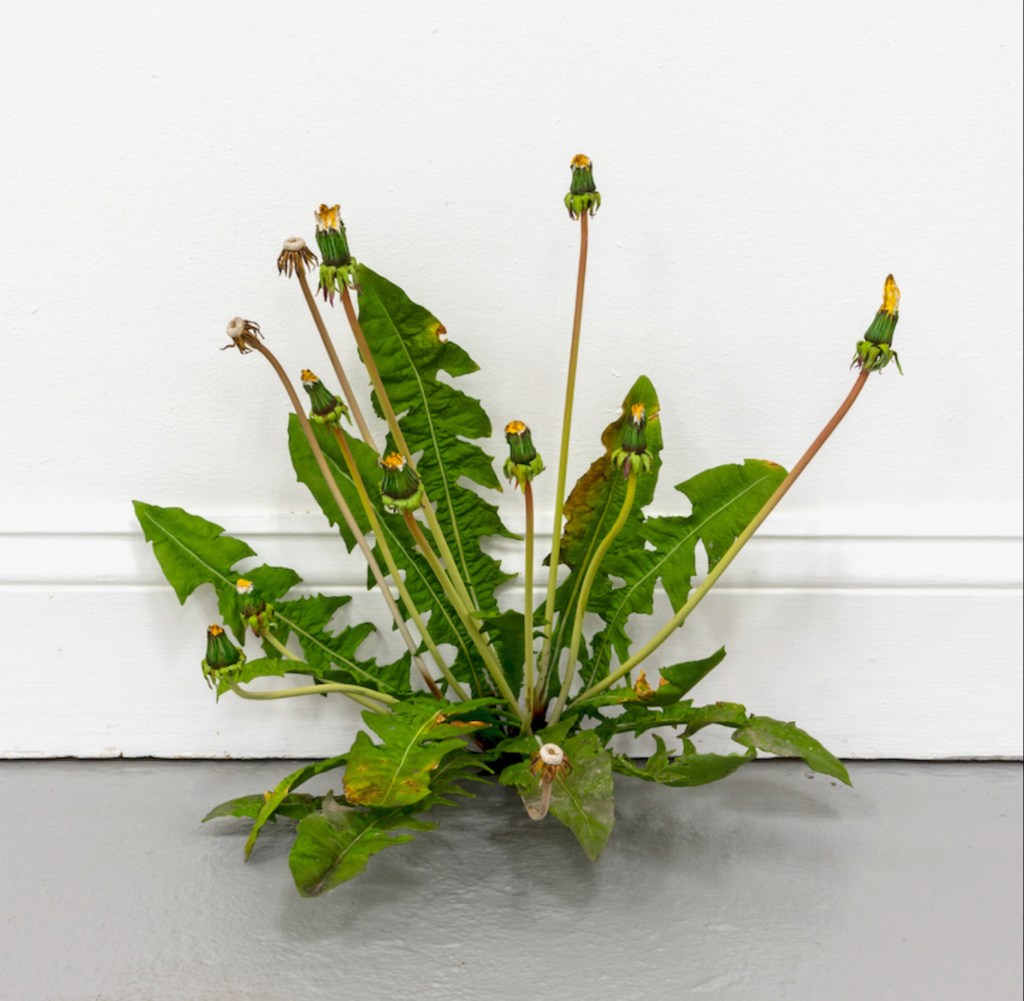
Matelli’s long-running Weeds series takes as its subject the most overlooked plant life: scrappy dandelions, tufts of grass and anonymous wildflowers. Cast in bronze and finished with meticulous, hand-painted colour, these small sculptures are designed to appear as if they are simply sprouting from the gaps where floor meets wall, or from cracks in the architecture of the gallery.
Despite their material weight, the weeds initially present almost invisibly – something you might step over rather than look at. Matelli has described wanting viewers to experience them “first, as simple weeds,” without immediately recognising them as sculpture or as “art” at all. Only on closer inspection does their status as carefully modelled, cast and painted objects become obvious.
That shift in perception – from everyday nuisance to carefully staged artwork – is central. Cast in bronze, a material associated with permanence and monumentality, these fragile plants become anti-monuments: tributes not to power, but to vulnerability, persistence and the low-level struggle to stay alive in inhospitable conditions. Matelli himself has linked the Weeds to “hope and possibility, persistence, and rebellion,” imagining them as images of things that “keep going” at the edges of attention.
Works such as Abandon Weed (2008) and Abandoned Weeds #127 (2009) show single plants in shallow trays or isolated on plinths, their stems sharply bent, their leaves slightly wilted. They are at once resilient and pathetic, somewhere between botanical study and psychological self-portrait.
Upside-down bouquets
If the Weeds hug the floor, Matelli’s bouquets stand on the edge of collapse. In the Arrangement series, everyday floral arrangements made of lilies, tulips, orchids or tropical flowers are cast in bronze, painted in bright colour – and flipped upside down. In some pieces, an entire bouquet balances on a single petal, an absurd feat of engineering that seems to suspend gravity.
These “polychrome bronze bouquets of inverted flowers” have been shown in exhibitions such as Arrangements at Nino Mier Gallery, where tulips, lilies and potted orchids appear as frozen explosions of colour and form.
The flowers are rendered with near-photographic fidelity: rubber bands around the stems, bruised petals, the weight of water implied but absent. Everything is naturalistic except the orientation.
The inversion does several things at once. It destabilises the cliché of the bouquet as a decorative, celebratory object, turning it into something precarious and slightly ridiculous. It also turns the pedestal into a kind of stage for an impossible event: the moment just before collapse, held forever. Critics have described these works as “upended” and “Alice in Wonderland” versions of ordinary bouquets – recognisable yet somehow wrong.
In Matelli’s hands, the bouquet becomes another kind of anti-monument. Instead of commemorating a single heroic figure, these works monumentalise a fleeting domestic gesture: the cut flowers that are already dying as soon as we bring them home. Eternalised in bronze, they become a quiet meditation on time, care and our attempts to hold on to what cannot last.
Hyperrealism with a margin of error
Across both weeds and bouquets, Matelli’s approach to realism is precise but never neutral. Curators have described his sculptures as “anti-monuments,” reinterpreting American hyperrealism to speak about alienation, ambivalence and decadence. He uses the techniques of commercial model-making and traditional bronze casting to summon objects that are, at first glance, completely believable – only to introduce a small “margin of error”: a weed appearing where it shouldn’t, a bouquet balancing in a way it cannot.
That slight distortion creates a charged space between what we know and what we see. The flowers are convincing enough to trigger our habitual responses – to ignore the weed, to admire the bouquet – but strange enough to trip those habits up. In that pause, questions open:
– Why do we value some forms of life and not others?
– What counts as “worthy” of attention, memory, or care?
– How do small, overlooked things survive within systems not built for them?
Flowers as stand-ins
Matelli’s bronze flowers are never just about botany. In the Weeds, fragile plants become stand-ins for people and communities that live at the margins, making do with whatever space is available. In the inverted bouquets, images of luxury and celebration are quietly twisted into images of unease, where beauty depends on a highly artificial, unstable arrangement.
Seen alongside his other works – from crumbling classical figures overwhelmed by painted-bronze fruit, to life-size human figures caught in moments of drift – the flowers read as part of a larger project. They are sculptures about what it means to keep going, awkwardly and imperfectly, in a world that doesn’t quite make sense.
Cast in one of sculpture’s most “serious” materials and painted with almost absurd care, Matelli’s flowers insist that the smallest things in the room – the weed in the corner, the bouquet on the table – might be where the real drama is happening.
 PAI_32 platform