
Everything Comes Together While Pushing All Apart
02.06. – 10.06.2026
REAKTOR VIENNA, AU
Curated by Roxana Morar
Presenting the artists:
Andrei Arion, Ana Ionescu, Albert Kaan, Claudiu Lazăr, Ana Petrovici
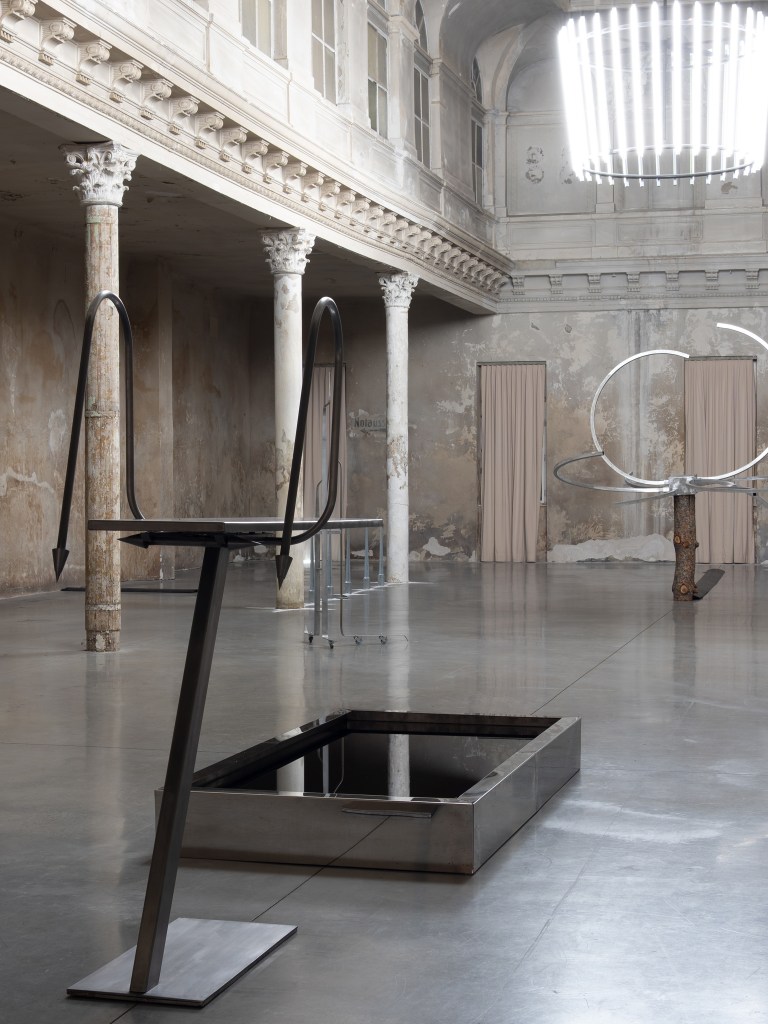
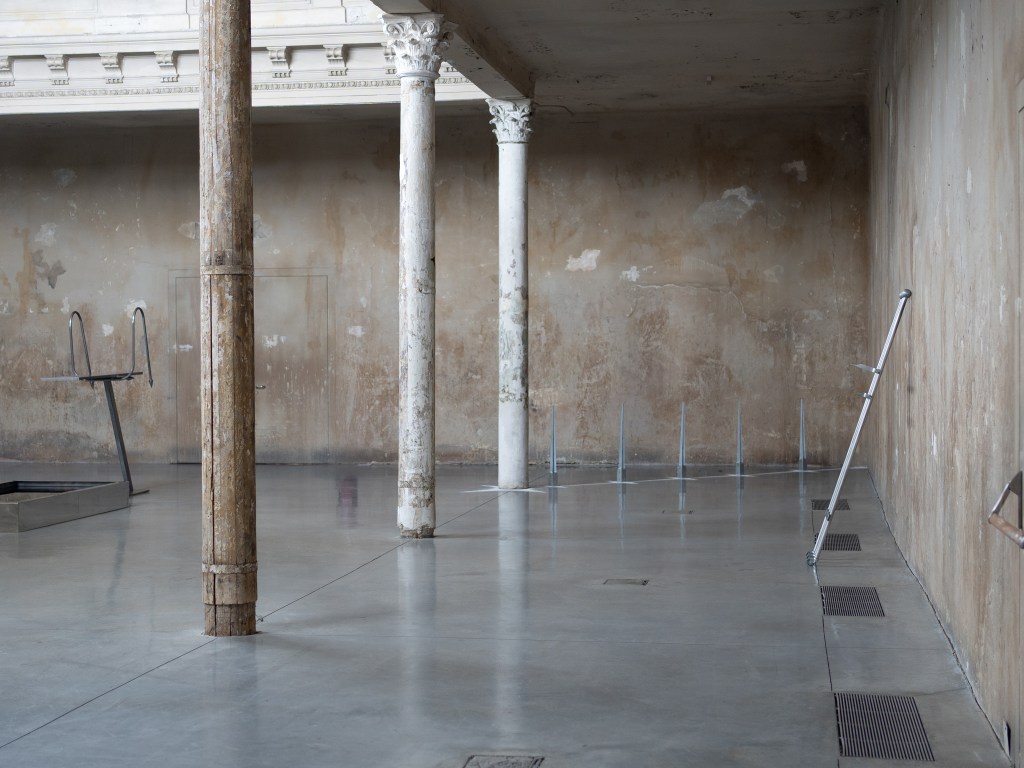
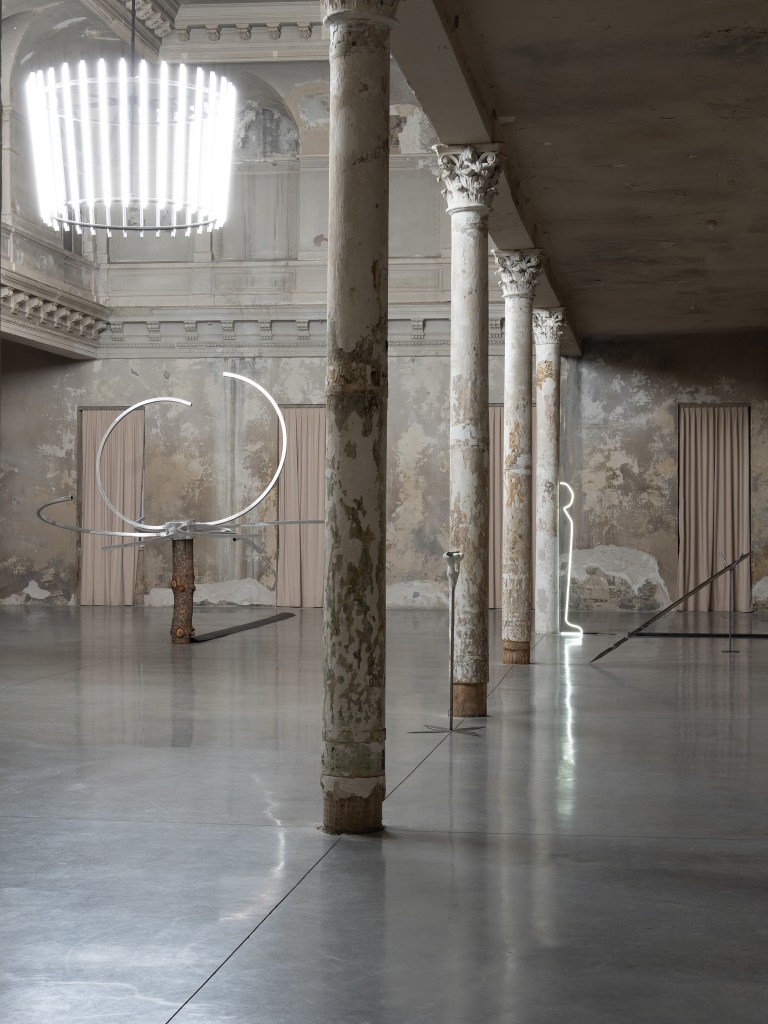
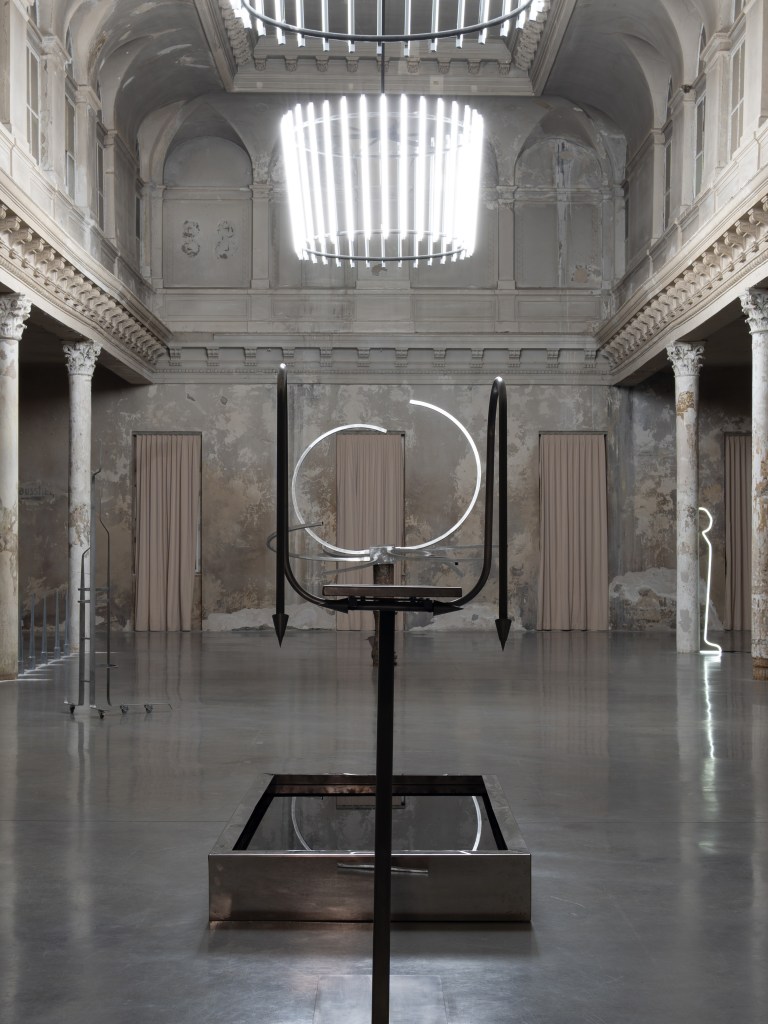
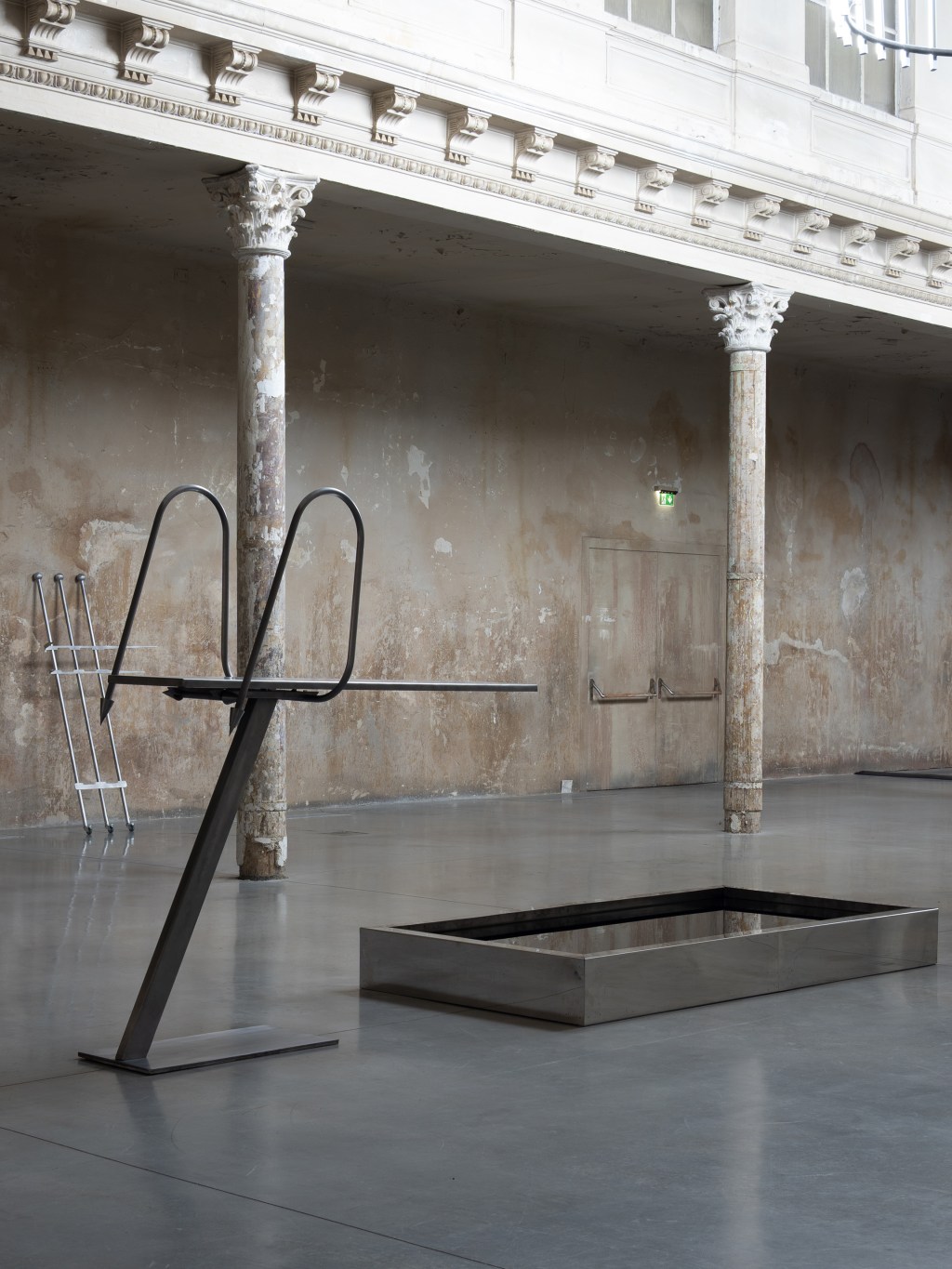
Everything Comes Together While Pushing All Apart departs from the material condition. Here, the materiality, the metal, functions as the exhibition’s shared material language but every piece diverges into a separate territory of meaning, sensation, and spatial logic. The landscape formed within the space aims to create a gentle terrain suitable for exploration. Even if every piece emerges from a rigid, surface-tense, industrially legible resource, the viewer is invited to join the “everything” and be part of the elastic collision. The group show references the action-force of hitting a cluster of marbles and sending everything outward in different directions.
What the exhibition proposes is not resolution but a highlight of a coexistence that is already structural, already operative or, paradoxical, unusable, made briefly legible through the specific tensions of these five practices brought into proximity.

Albert Kaan
Albert Kaan (b. 1993, Sinaia) is an artist who works across a wide range of forms, from sculpture, installation, drawing to photography, video and performance.
His practice relies on the performance of living life and transforming the artist’s personal space into a shared playground for the public. Space is a quintessential element in his projects, often incorporating site-specific elements into his practice. Born in Romania a few years after the fall of the Communist Regime, he is currently based in Bucharest and Gulia, incorporating both urban and rural living experiences into his artistic practice.
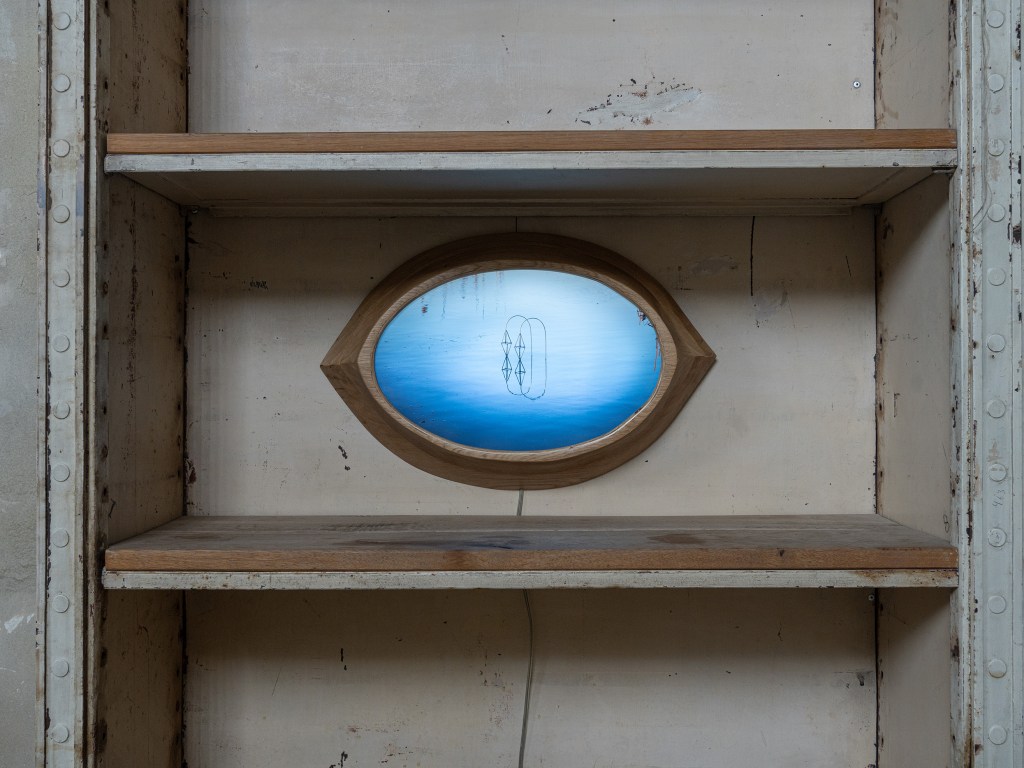
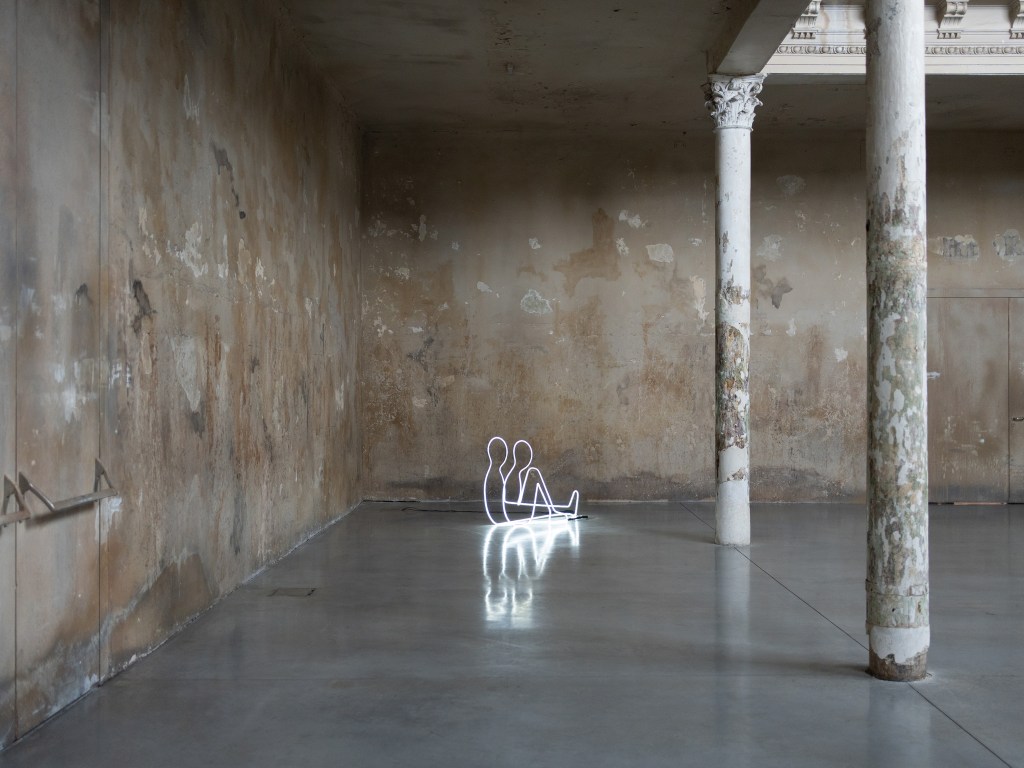
In this setup, Albert Kaan, known as well for working within the public space, treats the gallery space as well as an exhibition but also as a playground. His presented works are a combination of LED sculptures, video, and objects and are scattered across the space, occupying the margins and overlooked architectures of the room: beneath windows, on ladders, on shelved walls. The gallery becomes a found landscape, and within it, Kaan finds the same unconventional sites he would seek in any street or square. His practice, rooted in the performance of everyday life and the transformation of personal space into shared territory, arrives here not as documentation of that life but as its continuation. It’s an invitation to view the public playground reassembled indoors.

Ana Ionescu
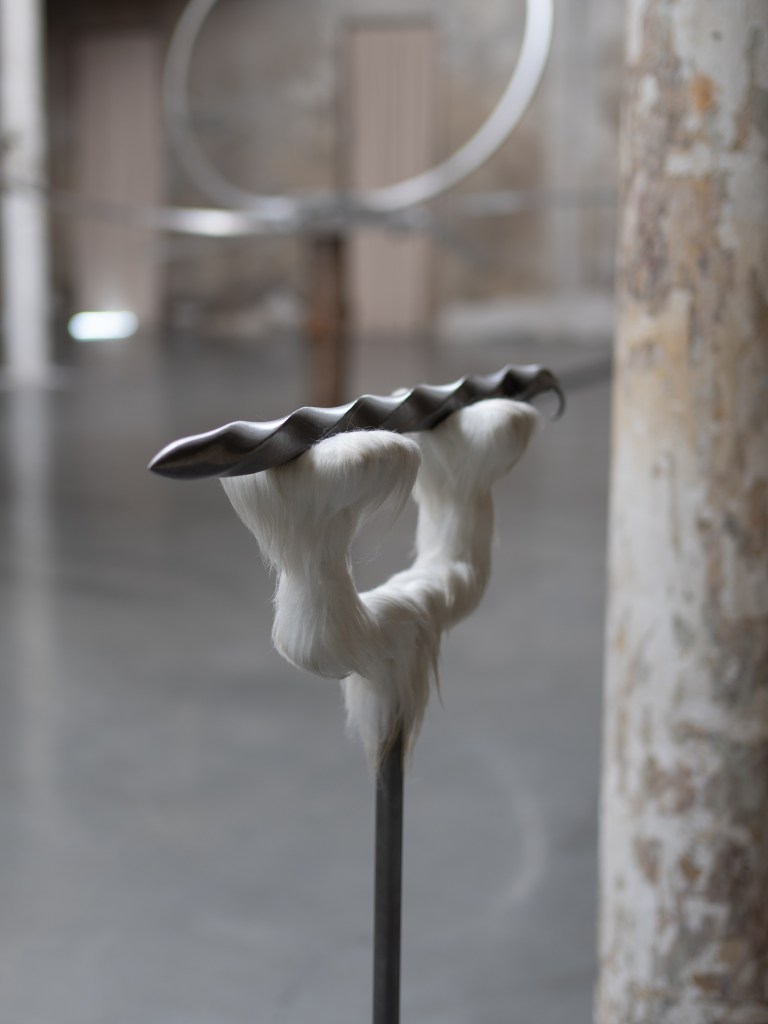
Ana Ionescu (b.1999, Bucharest) is a sculptor working between Bucharest and London. Her practice reflects a deep interest in how we navigate the external world and engage with objects, an experience she believes is shaped by our inherent need to find meaning and to see ourselves as the central figure. This egocentric tendency, rather than being criticized, is embraced in her work as a source of multiplicity in interpretation.
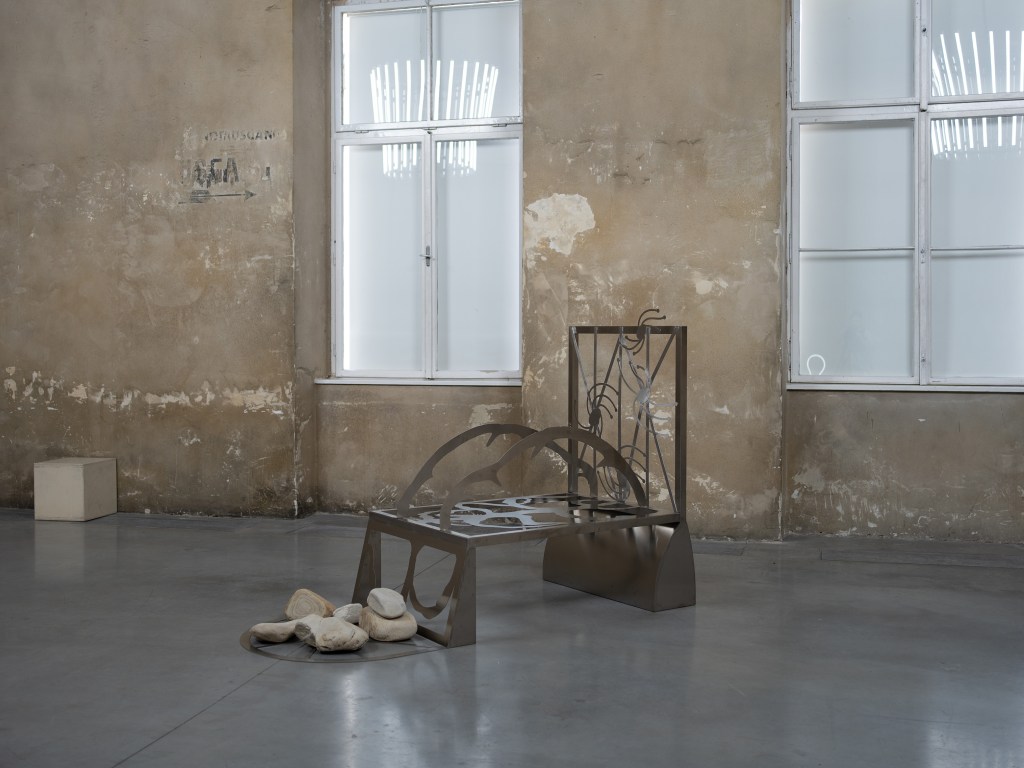
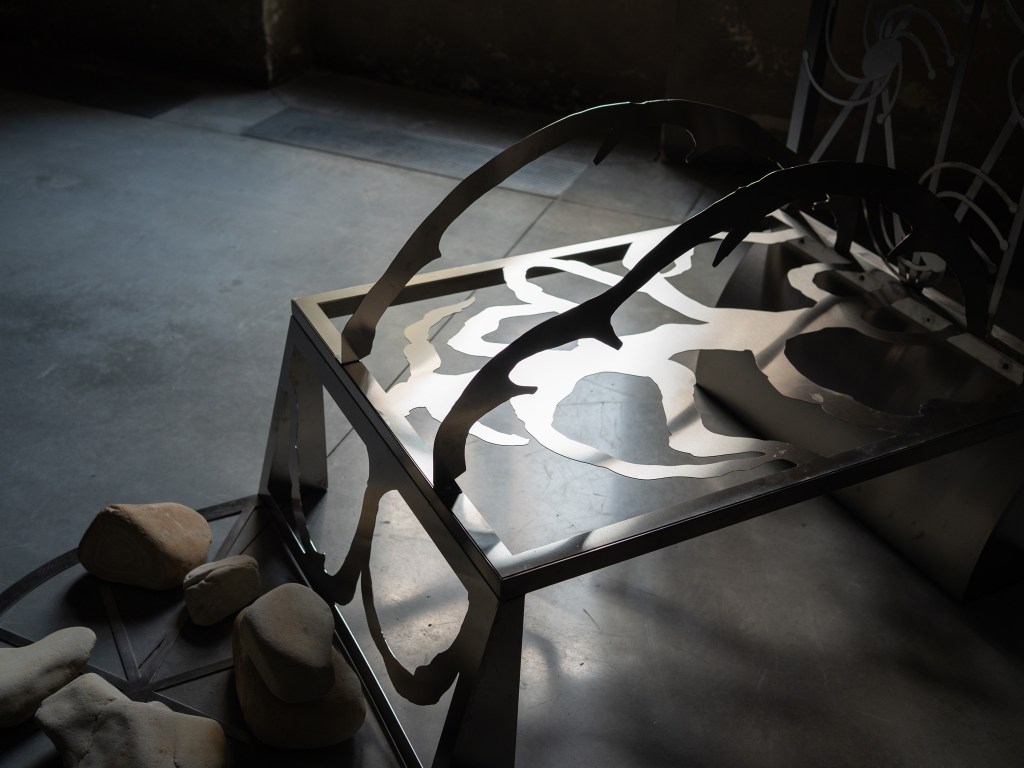
The sculptures occupy a transitory space between reality and another world. They often reference familiar forms, hinting at performative or bodily functions, yet are transformed in ways that invite personal projection. The incorporation of the object hints at an imaginary interaction, where past connections coexist with new narratives. At times, it exceeds the passive state of the object to embody an entity of its own, an exaggeration that lives in our mind. This metamorphosis, together with shape, dimension and ergonomics, bring bodily and sculptural matter together.
A recurring motif in her work is the duality of material existence, the tension and allure of binary opposites coexisting. This interplay generates a sense of visual and conceptual excitement, referencing absurdity. She aims to challenge the boundaries of aggression by using elements such as thorns or spikes on sculptures that resemble weaponry. This confrontation becomes possible within the safe context of the gallery, altering the perception of the object from fear to temptation. This contrast is at times amplified by elements of fragility or even the abject, the physical form becoming the manifestation of visual desire, transformation, and layered meaning.

Ana Petrovici
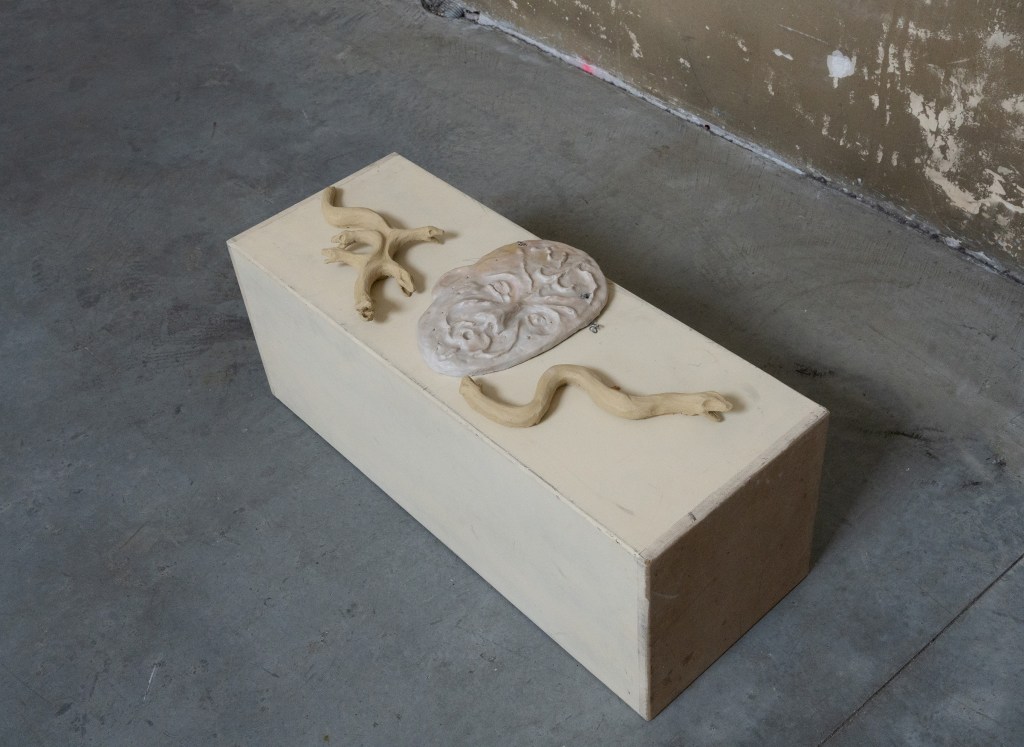
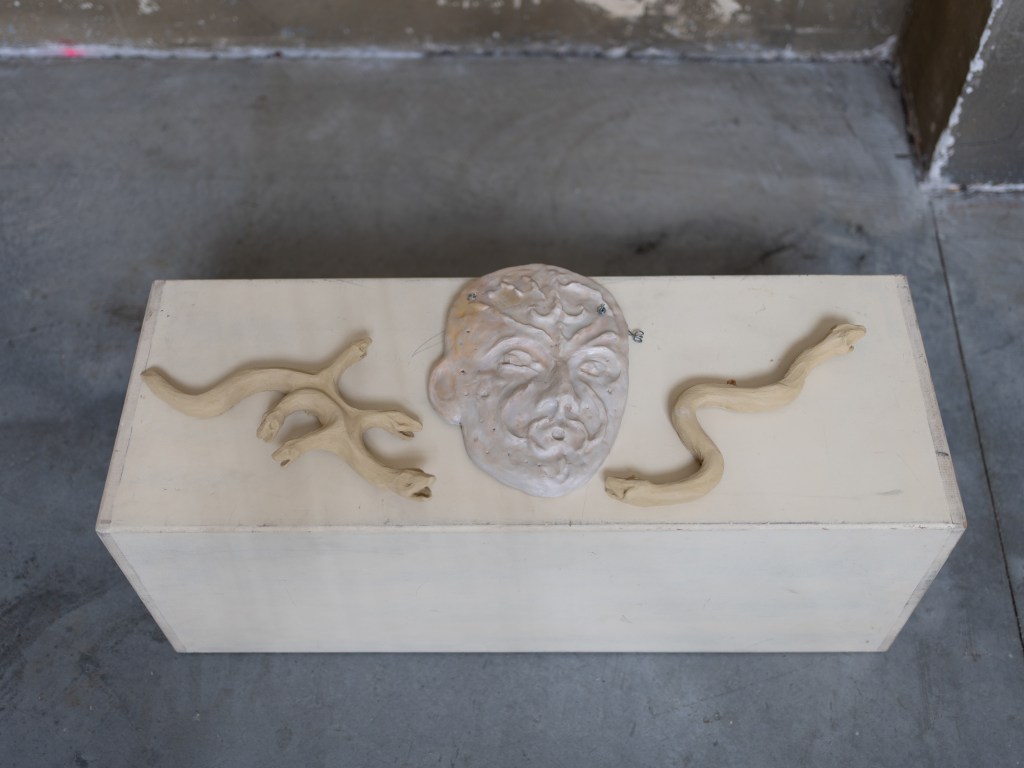
Ana Petrovici-Popescu (b. 1986, Romania) lives and works in Bucharest, Romania. She is a visual artist whose practice moves between painting, sculpture, and installation, developing a sensitive inquiry into the body, memory, and the social inscriptions carried by matter. Her work is driven by an interest in transforming the poetry of sensation into visual form, approaching the artwork as a container for psychological, bodily, and personal-history traces. Petrovici-Popescu addresses the spectrality of otherness, sexuality, and the skin as a surface upon which both the subconscious and society leave their marks.
Through materiality, imagined shapes, and clean-cut contours, her practice reflects on gender, human gestures and the fragile tensions between intimacy and collective experience. Her works often open a space where personal perception becomes entangled with broader social and symbolic structures.


Andrei Arion
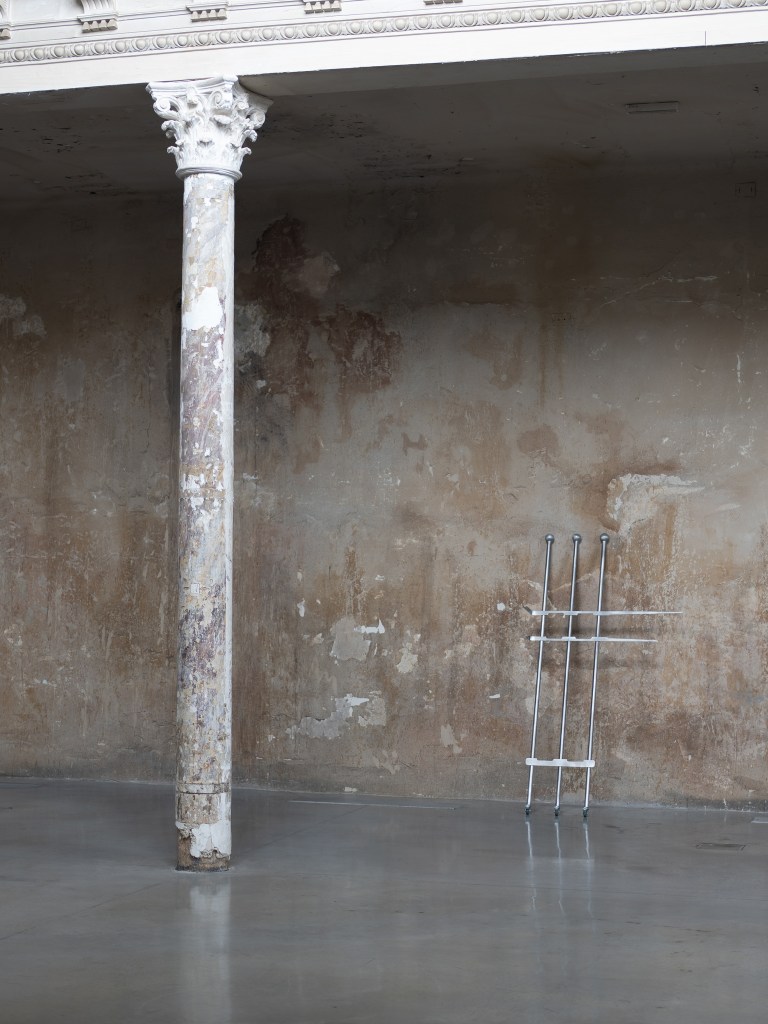
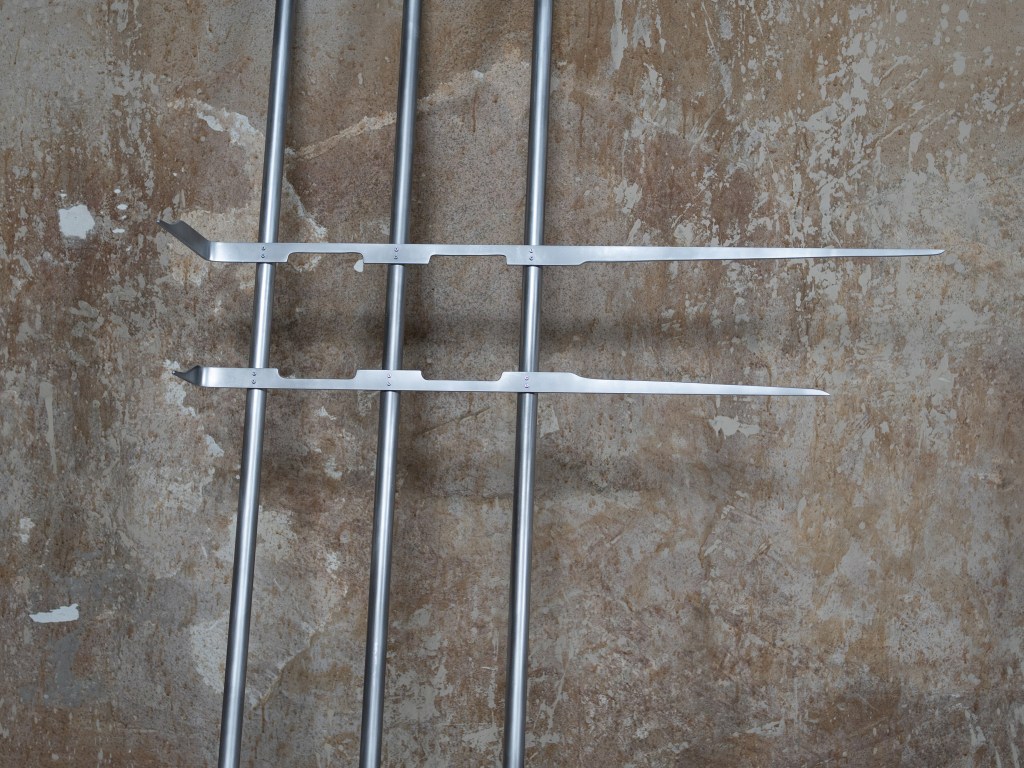
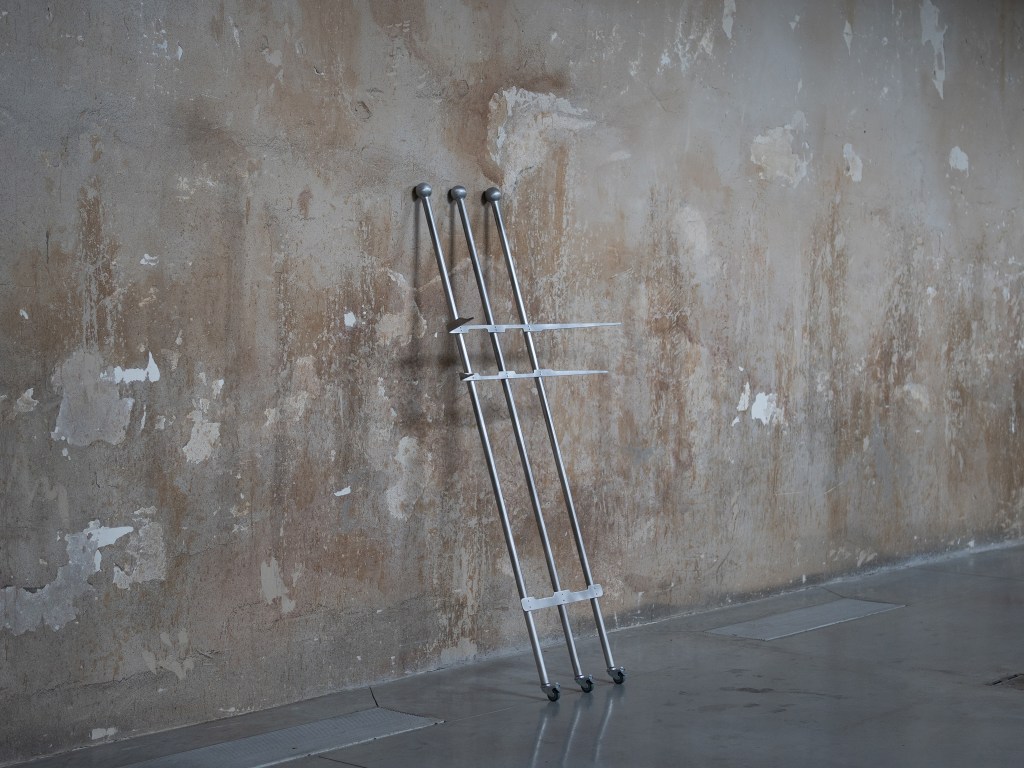
Andrei Arion (b. 1996) is a Bucharest based artist working with sculpture, installations, and drawing. In his work he uses sharp corners and edges that give the objects a heightened sense of presence in space, drawing attention and creating a direct spatial relationship with the viewer. His practice explores the correlation between everyday observations and fragments of memory, often transforming familiar objects through reduction and subtle alteration.
Childhood experiences and early habits of modifying toys continue to influence his approach, leading him to develop modular works with interchangeable elements.

Claudiu Lazăr
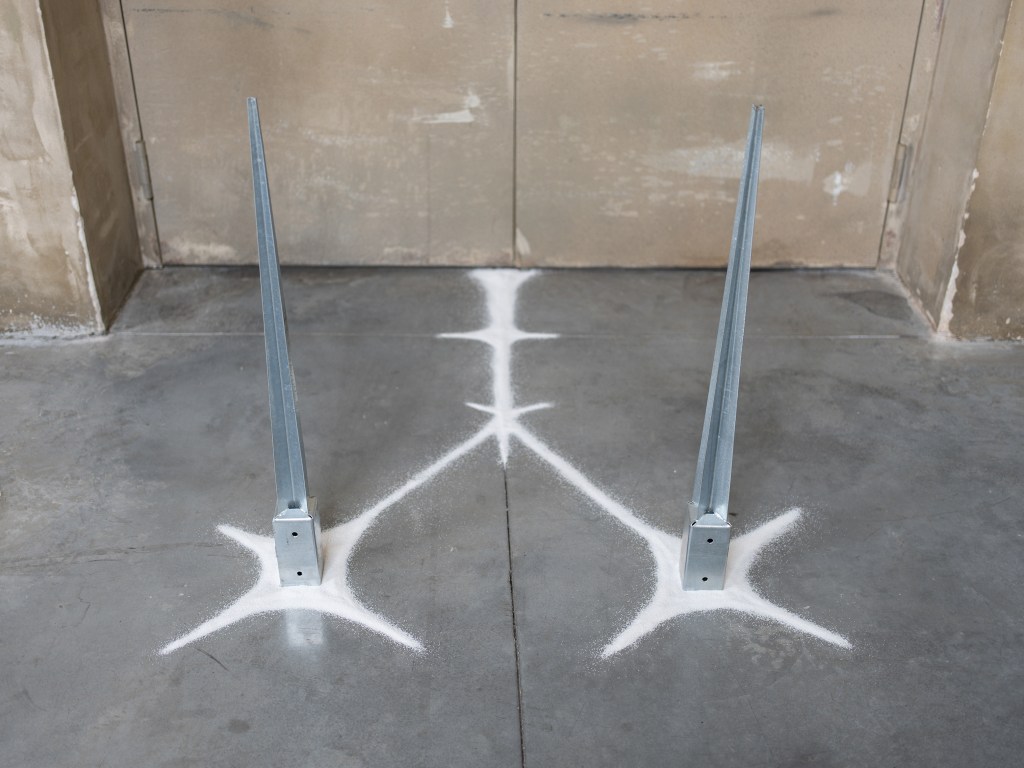
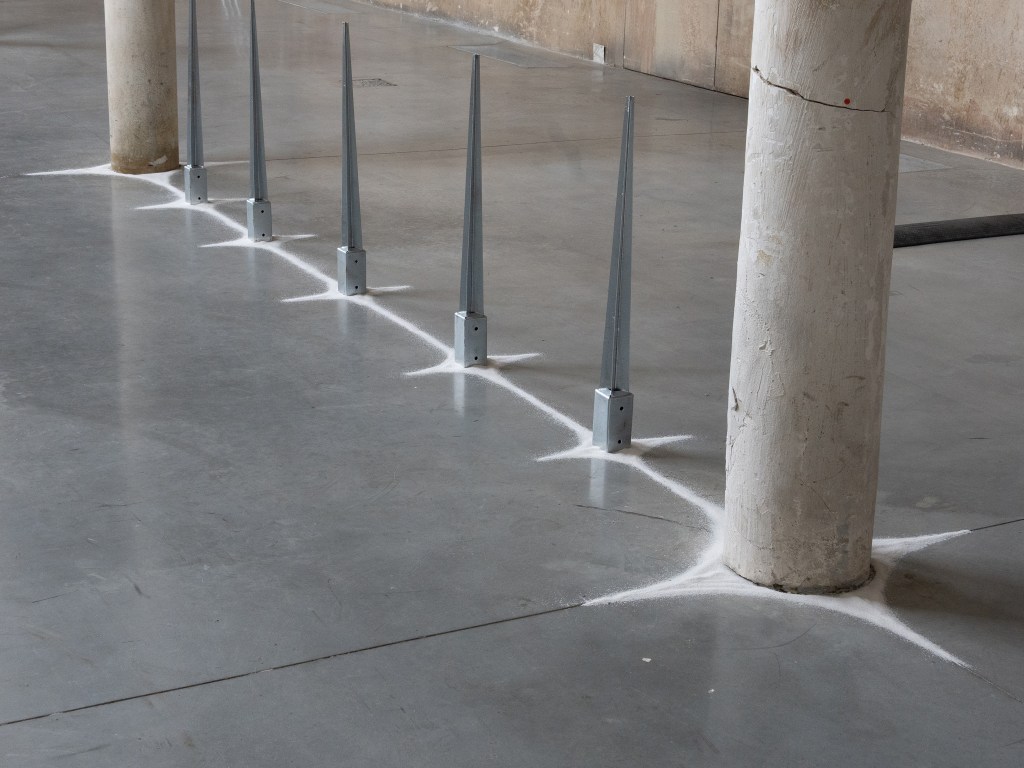
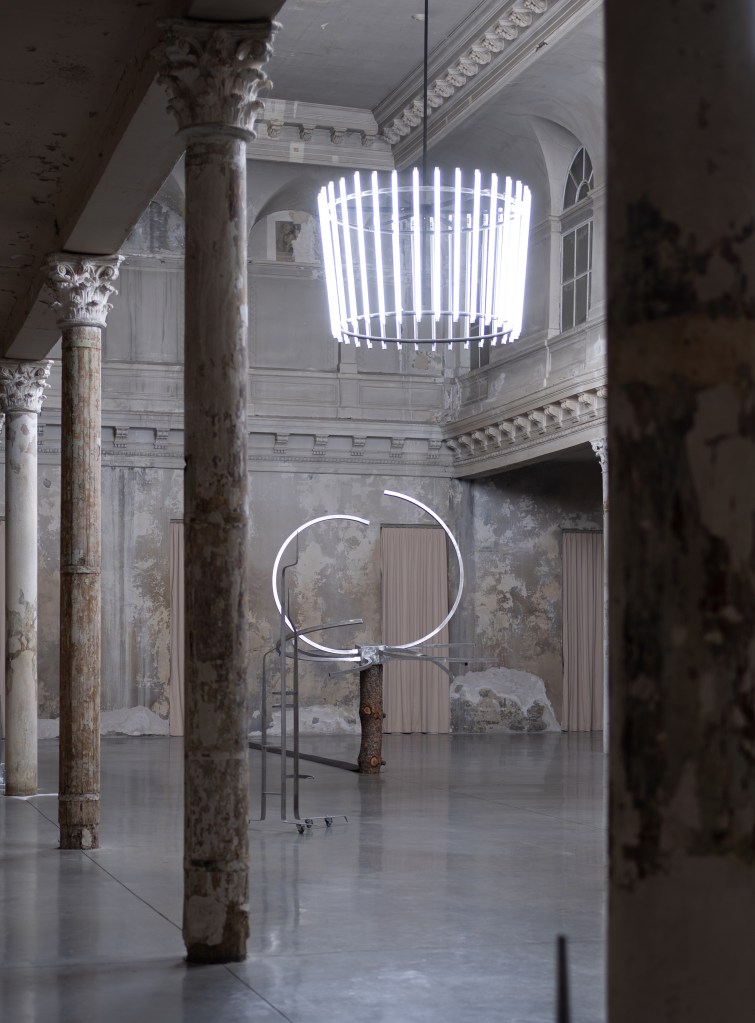
Claudiu Lazăr (b. 1997, Romania) lives and works in Bucharest, Romania. He is a multidisciplinary artist whose installations explore the dynamic relationship between humans, matter, and nature. His work seeks to establish a sound-tactile dialogue with the audience, incorporating diverse materials such as metal, salt, wood, and other experimental resources, commonly found in nature.
For Lazăr, the interplay between space and object forms the foundation of his installations, enabling an intuitive and immersive encounter with the viewer. His work gravitates around an ongoing search for paradox, a simulation or reinterpretation of tension in deliberately constructed contexts.
The work “Ambivalent Roots (2026)” constructs a scene full of tension between the natural and the artificial. The structure of the object originates from a real fragment of a tree trunk, an organic element, yet simultaneously dead, severed from the vital cycle. This remnant of nature becomes the support for an artificial crown made of aluminium, whose metallic branches suggest the organic form of a tree canopy, rendered however in a mechanical and cold manner. The inert matter, metal and dead wood, become carriers of a living presence invisible, yet audible. Sound thus becomes the medium through which life is reconstituted within a hybrid body, at the boundary between sculpture and artificial ecosystem.

