
Alejandro Javaloyas: Uneasy Space Between Beauty and Fear
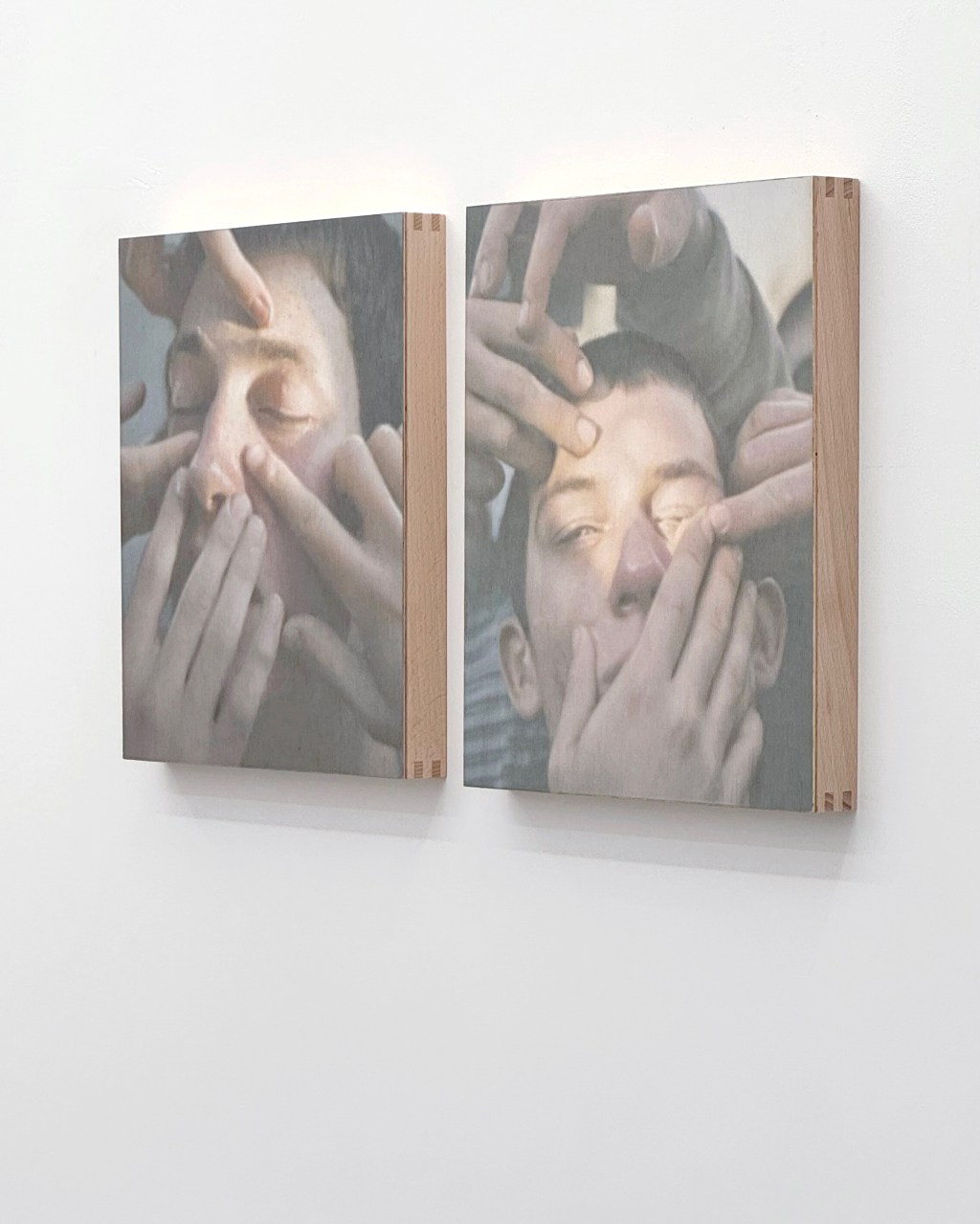
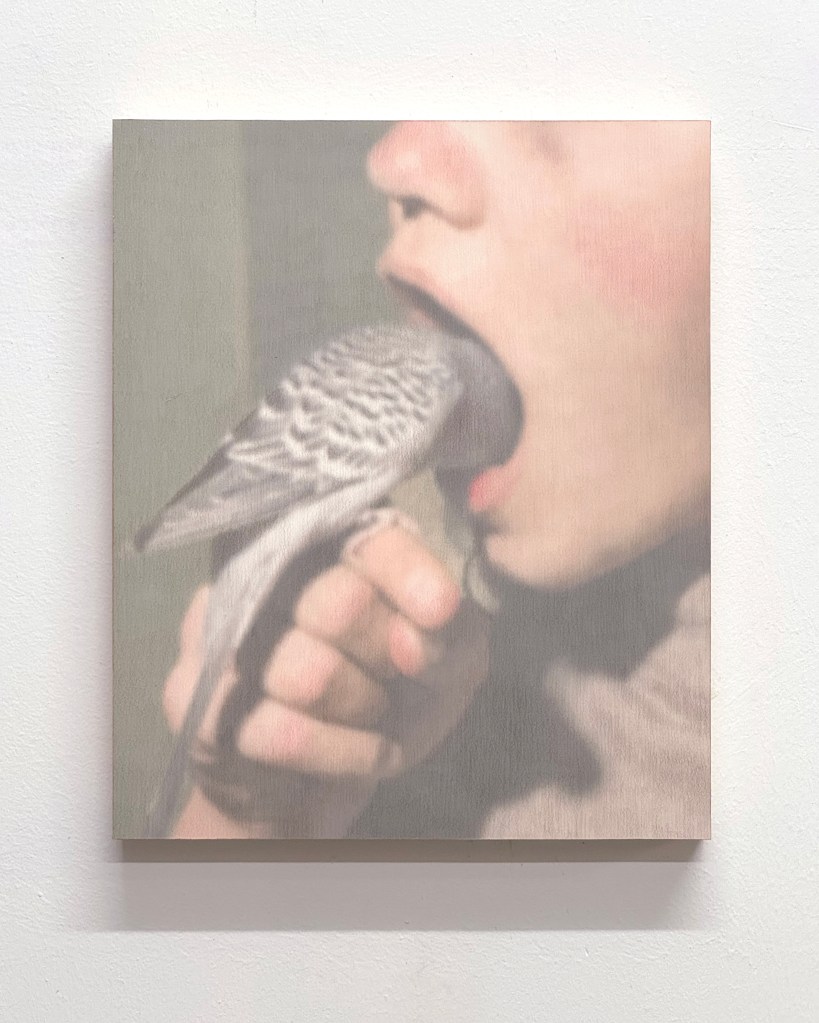
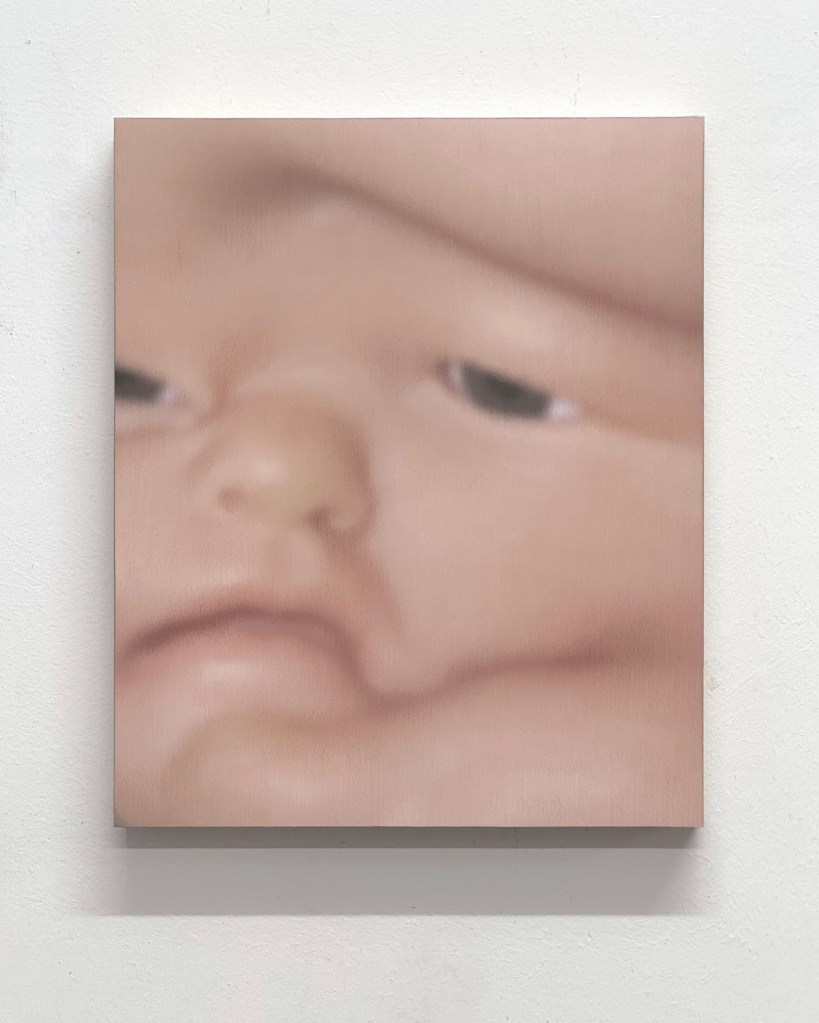
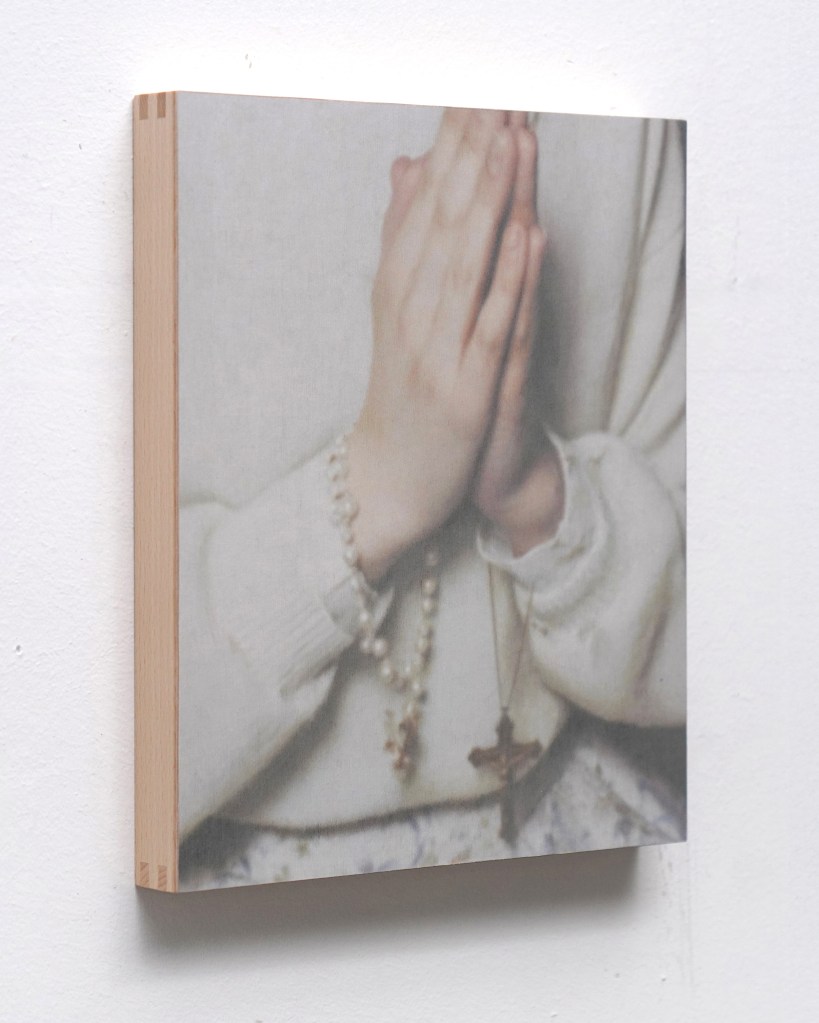
Alejandro Javaloyas turns the fragile remains of dreams into images that feel both intimate and strangely familiar. Beginning with notes from recurring nightmares, his works move through writing, AI-generated imagery and finally into delicate coloured-pencil drawings — accumulating distortions and new meanings along the way.
In this interview, Javaloyas speaks about memory, death and the uneasy space between beauty and fear, as well as the influence of cinema, literature and religion on his visual language. His work asks what remains of a private experience once it becomes an image — and whether our most personal fears might, in fact, be shared.
alejandrojavaloyas.com
@alejandro_javaloyas
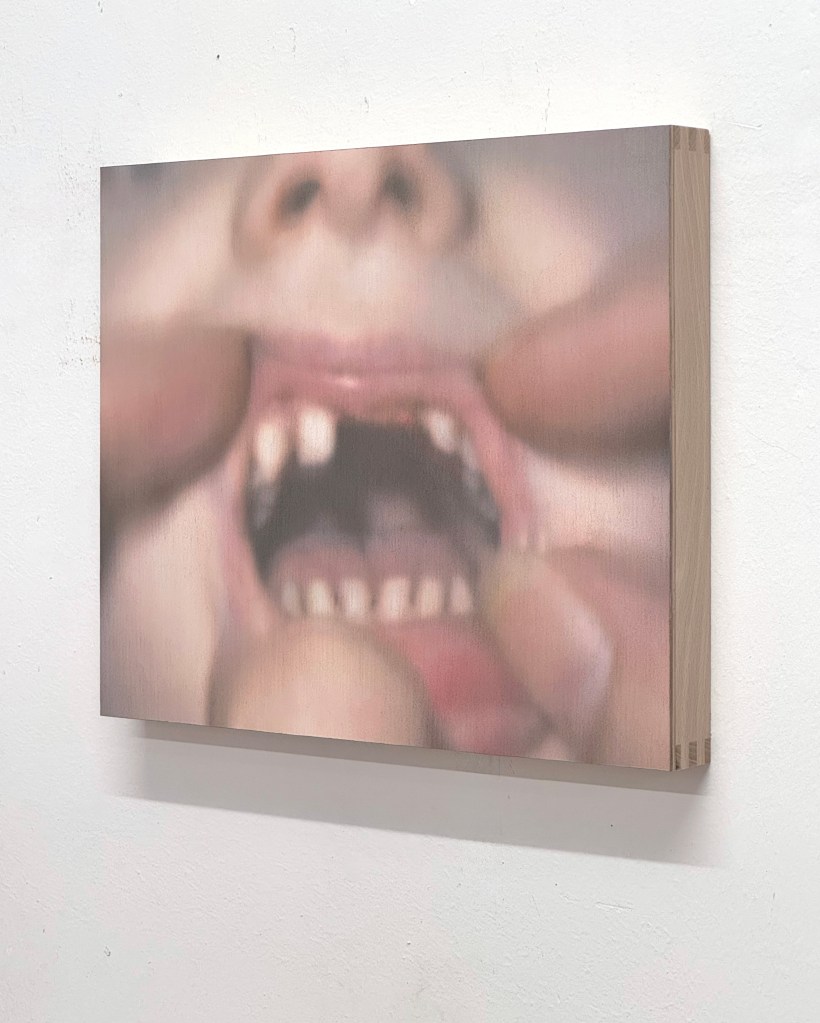
Your recent work begins with recurring nightmares that you’ve been writing down for years. What made you decide to turn something so private and fleeting into a body of work, and has working with these dreams changed the way you understand them?
My previous project was a photographic installation called Memento Mori, made for Ultrafotografía, an exhibition curated by Fernando Gómez de la Cuesta. I photocopied already-wilting white lilies, placed the A3 prints in iron developing trays, submerged them in water, and allowed the paper to dissolve and decay throughout the exhibition. The installation was almost cemetery-like: the photograph stopped being only an image of something dead and became a physical object that aged, deteriorated, and disappeared.
After that, I wanted to start a new project while staying with the same underlying question: the inexorability of time, decay, aging, and ultimately death. I’ve had recurring nightmares since I was a kid, and often I write down notes on those dreams right when they wake me up. Going through those old notebooks I had kept in my studio for years, I suddenly realized that many of my recurring nightmares seemed to be responding to fears I already carried while awake, and that death appeared underneath a surprising number of them.
The first thing that came out of that archive was the poem Un cuchillo que no corta. Then I began making images to illustrate individual verses, but the project quickly outgrew the poem, and I started working directly from the nightmare annotations themselves. There was something very honest, but also quite uncomfortable, about exposing that material. It felt like allowing the viewer access to a private cosmology built from my deepest fears and most vulnerable thoughts.
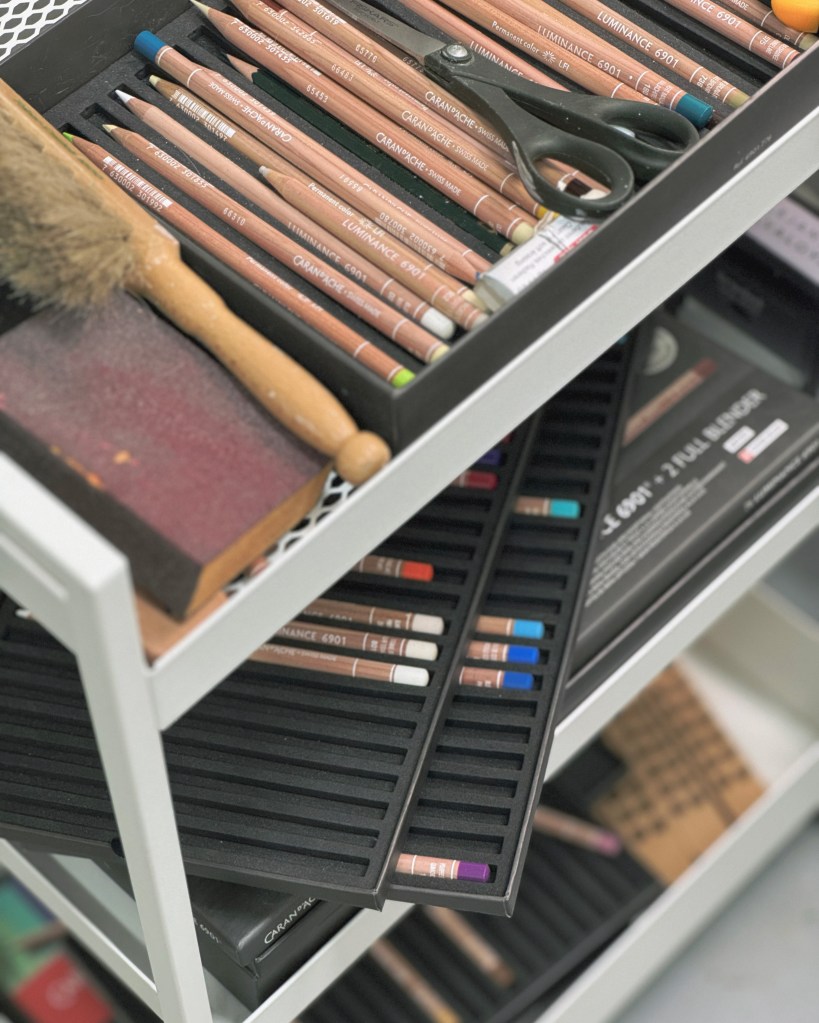
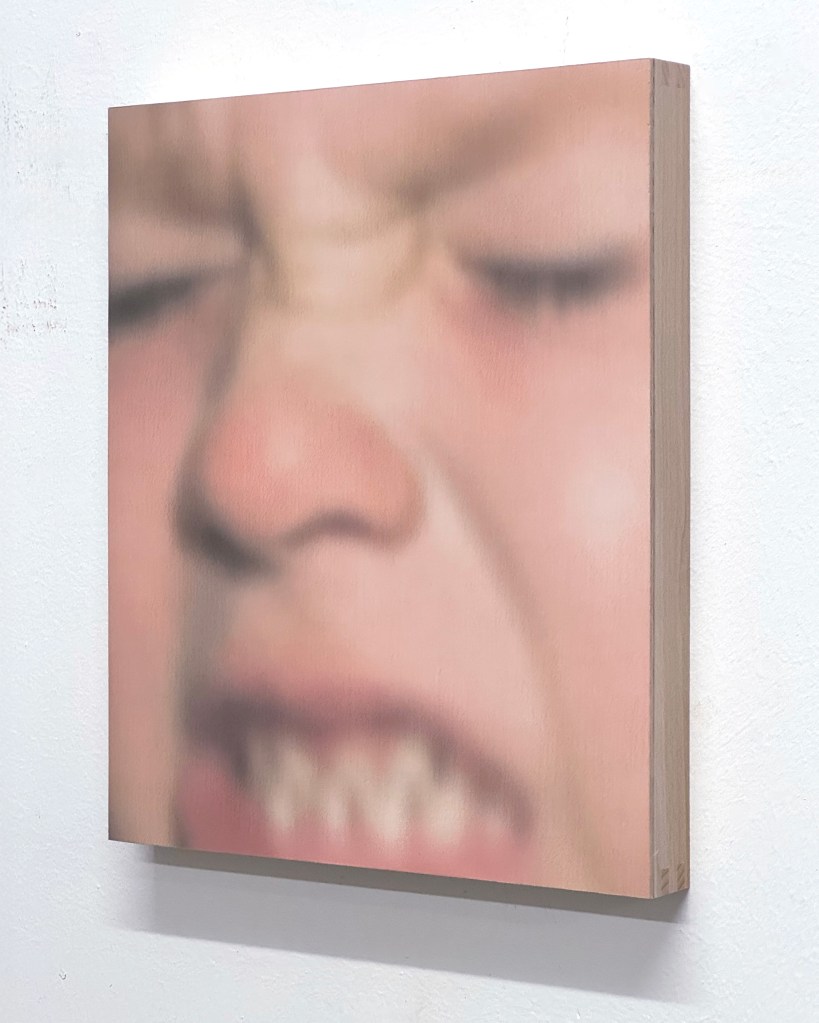
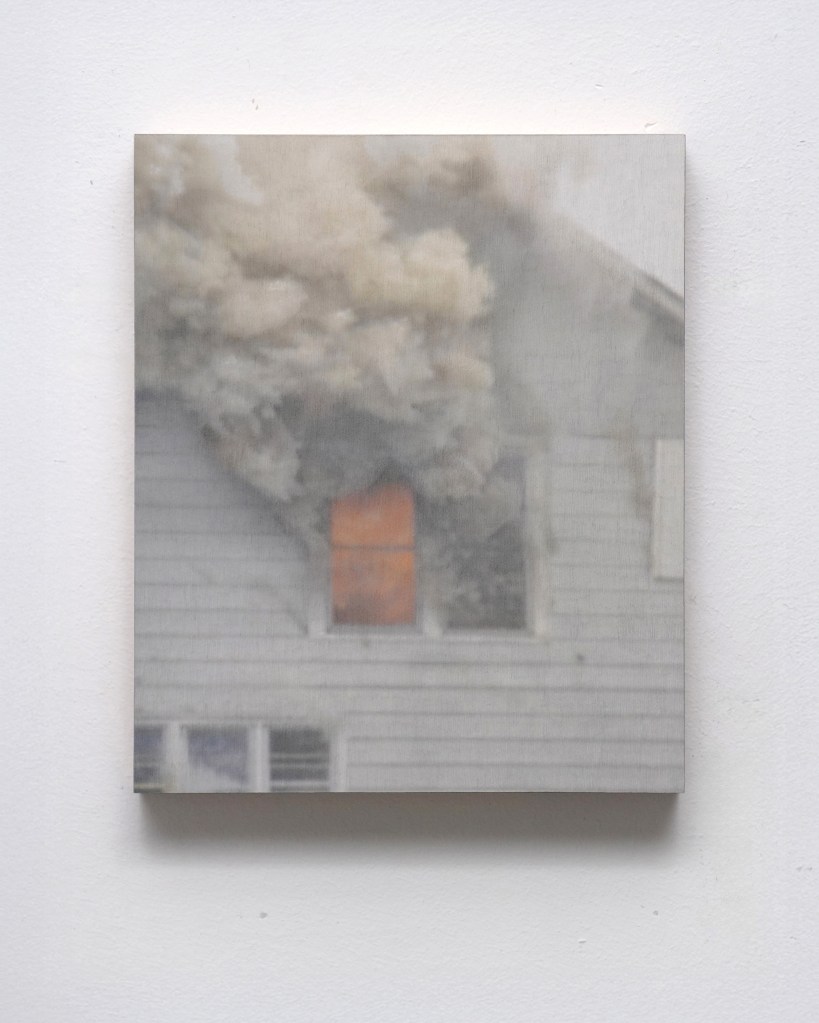
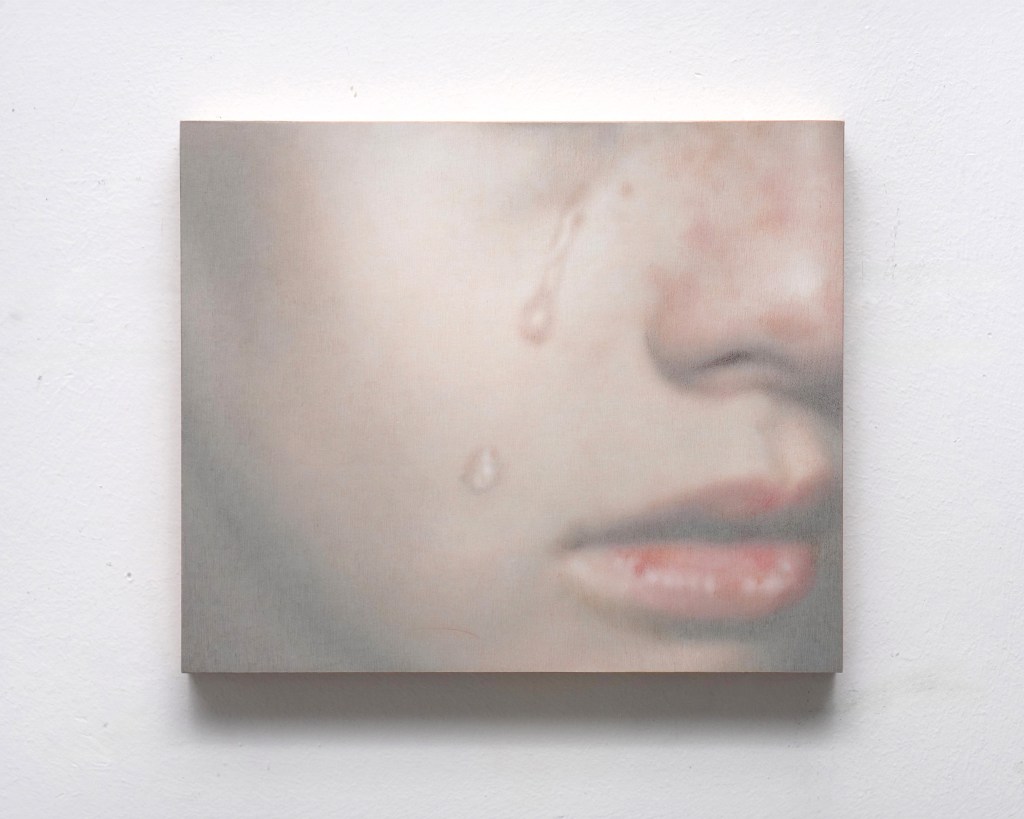
Has it changed the way I understand those dreams? Not really. The first part of the process can be therapeutic, but also painful and quite intense: going back through the notes and trying to find an image capable of carrying the same emotional weight. Once I begin drawing, though, everything changes. The colored-pencil process is labor-intensive, and the repetitive act of drawing becomes almost mechanical and meditative. I’m so physically close to the image that I stop seeing a frightened child, a crashed car, or a burning house; I see values, hues, shapes, edges, and shadows.
And once the work is finished, I feel a surprisingly strong detachment from it. Sometimes I have difficulty even recognizing that I made it. The image seems to belong to the world by then, rather than to me.
There’s an interesting journey in your process: a dream becomes a written note, the note is interpreted by AI, and the generated image eventually becomes a coloured-pencil drawing. What interests you about all these translations and distortions between the original memory and the final image?
What interests me most is that the whole project is doomed to fail from the beginning. I don’t really have access to the original dreams anymore. What I have are tiny residues in notebooks: a smell, a color, a person, an object, a situation, perhaps one sentence written
half-asleep at four in the morning. They obviously cannot do justice to the complexity of something that felt completely real while I was experiencing it.
Then the prompt-to-image model introduces another layer of failure. It interprets that already-impoverished description and adds its own deviations, associations, distortions, and misunderstandings. I generate hundreds of outputs, and only a very small number survive. That selection is almost entirely intuitive. Fidelity cannot be the criterion because I no longer remember what the original image looked like. I’m simply asking: does this image have the right emotional density? Does it disturb me? Is there enough there to spend days drawing it?
Hito Steyerl’s idea of the “mean image” has become very interesting to me in relation to this process. In her 2023 essay Mean Images, she describes machine-generated visuals as statistical renderings, built from patterns learned across enormous quantities of existing images. They “replace likenesses with likelinesses.” So there is a strange contradiction at the heart of my project: the starting point is radically private—one person’s nightmare—but the machine reconstructing it operates through a statistical synthesis of collective visual culture.
Narrative art has always made that movement between the intimate and the universal. Cinema, which is where I come from, does it constantly; so do novels. Someone gives you an extremely specific experience and somehow you inhabit it with your own memories, fears, desires, perhaps reaching something close to the Aristotelian idea of catharsis.
Here, though, that bridge becomes almost literal. My private memory passes through a machine built from collective imagery before becoming personal again through drawing. By the end, I’m not sure whose memory I’m looking at anymore. And that ambiguity is probably the most interesting part.
Cinema, literature, religion and art history appear throughout the work — from David Lynch and Tarkovsky to Caravaggio, Shakespeare and biblical texts. These references feel almost like fragments of memory mixed with your own dreams. How do you choose them, and what happens when they enter your personal imagery?
Most of those references enter the work at the very end. The process always begins with a note from a nightmare. That note leads to an image, the image becomes a drawing, and only once the drawing is completely finished, mounted, and documented do I start looking for a title.
At that point I begin making connections between the new image in front of me and things I’ve accumulated elsewhere: a scene from Tarkovsky, a line from Shakespeare, a biblical verse, a painting, a film, a piece of literature. I consume an enormous amount of culture—I probably enjoy looking at art, watching films, and reading even more than making objects myself—so a huge archive sits somewhere in my head. The finished drawing activates parts of that archive.
A good example is a drawing of a burning house. The nightmare itself was connected to a real fire in an apartment where I once lived, but once the work existed, it led me toward Tarkovsky’s The Sacrifice. A drawing of a crashed car later made me think of Cronenberg’s
Crash. Those references weren’t origins or instructions. They were associations discovered afterward.
I like that because the title doesn’t close the image or tell the viewer what it means. It adds another layer of memory to something that already began as a fragment of memory.
And perhaps that is how our visual imagination works anyway. Personal experience is constantly mixing with films, paintings, stories, prayers, photographs, things we have read or half-forgotten. Eventually it becomes almost impossible to separate what is entirely “ours” from everything we have absorbed. So those references don’t explain the drawings. They expand their genealogy. They connect a very private image to a much larger cultural memory.
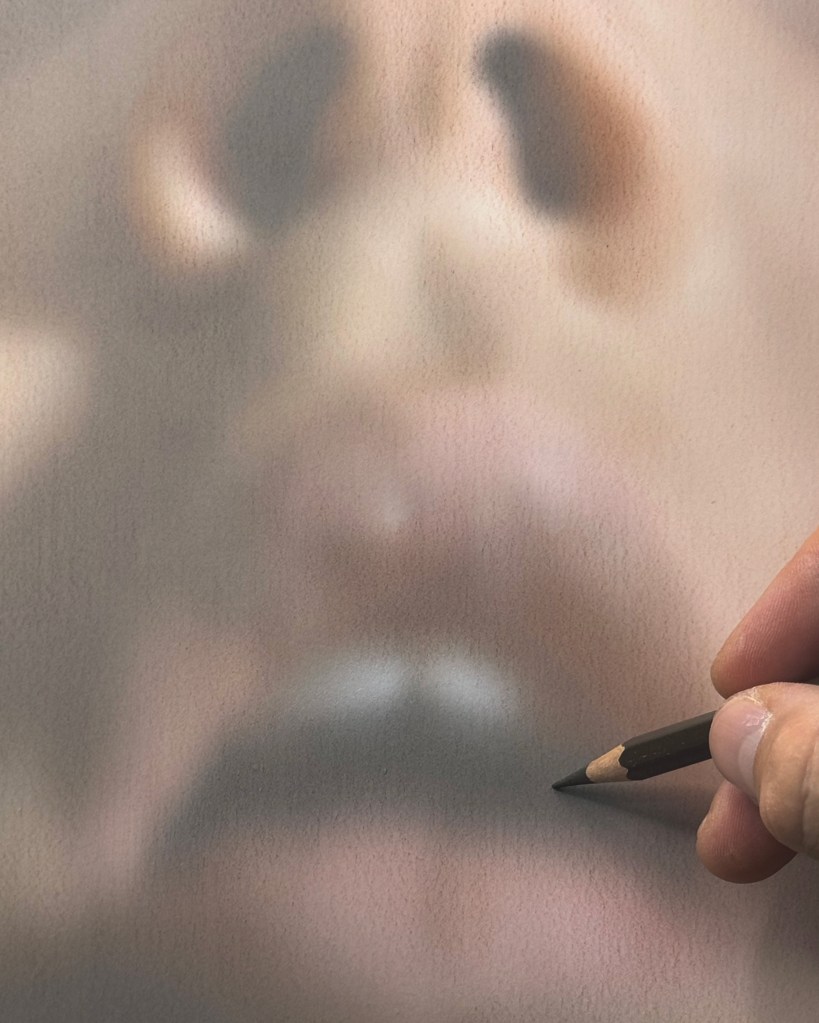
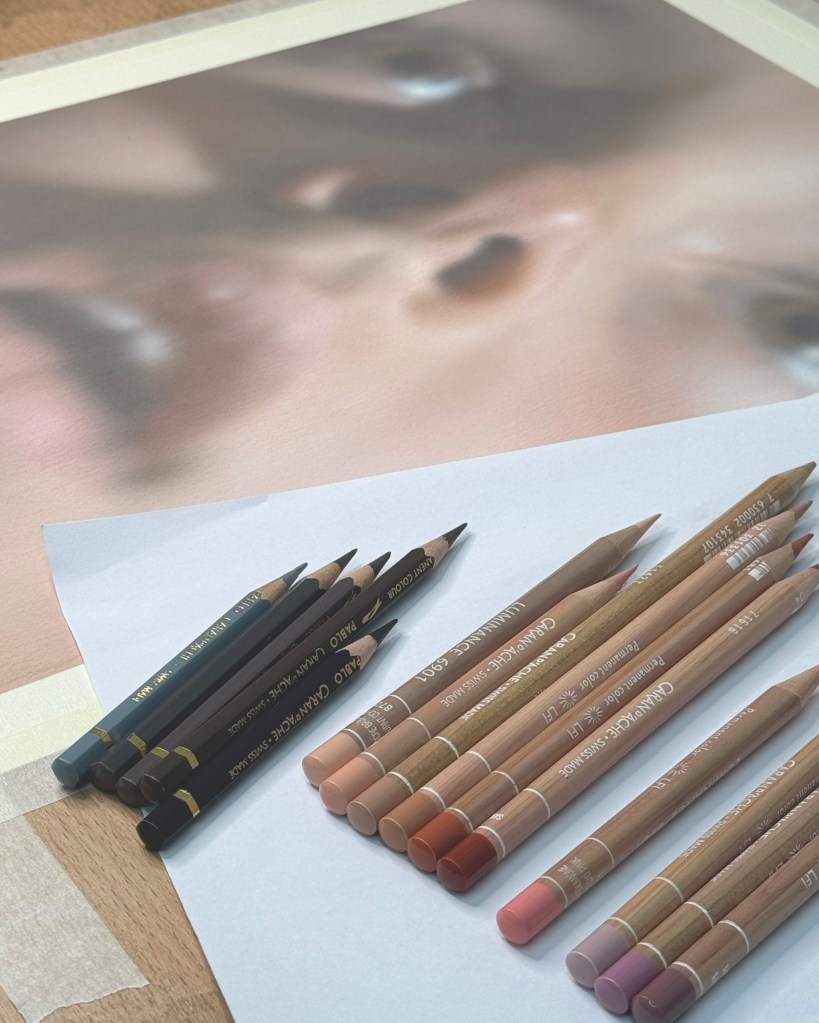
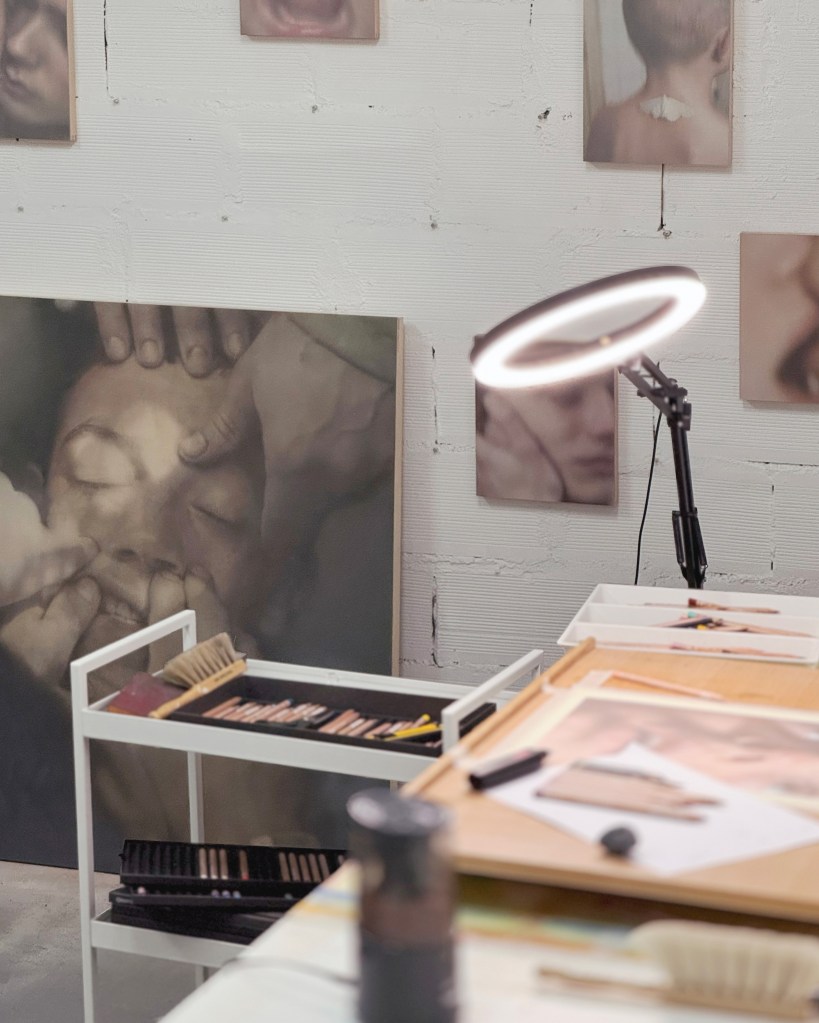
Your images often look quiet and delicate at first, but there’s something unsettling underneath — death, fear, faith, violence or uncertainty. How important is this tension between beauty and discomfort to you, and what do you hope stays with the viewer after they encounter the work?
That tension is probably one of the most important things in the work, and also one of the things I respond to most strongly as a viewer. I’m not particularly interested in making something that is simply beautiful, but I’m equally uninterested in horror, violence, or ugliness for their own sake. What interests me is the moment when an image attracts you and then, almost imperceptibly, stops feeling completely safe.
Eugenio Trías writes beautifully about this in Lo bello y lo siniestro—about the proximity between beauty and the uncanny, and how one can emerge from inside the other rather than simply oppose it. David Lynch describes something very similar in a much less philosophical way: “If one looks a little closer at this beautiful world, there are always red ants underneath.” I love that image. The beauty is still real. The ants don’t cancel it. But once you notice them, your relationship to the surface has changed completely.
That is very close to what I’m looking for. And for me, atmosphere is crucial—probably more important than the idea, the subject of the image, or even its technical execution. Film school changed that in me. I can make a drawing that is technically very accomplished, but if it doesn’t have a certain density of mood, if it doesn’t create tension or suggest that something remains unresolved, then I’m not interested in it.
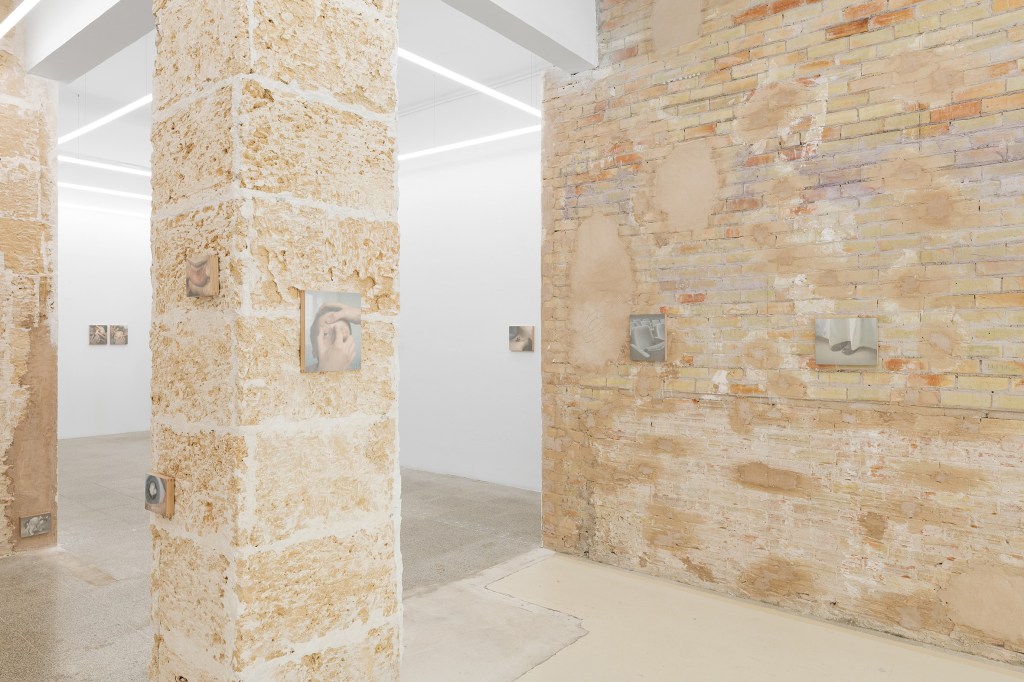
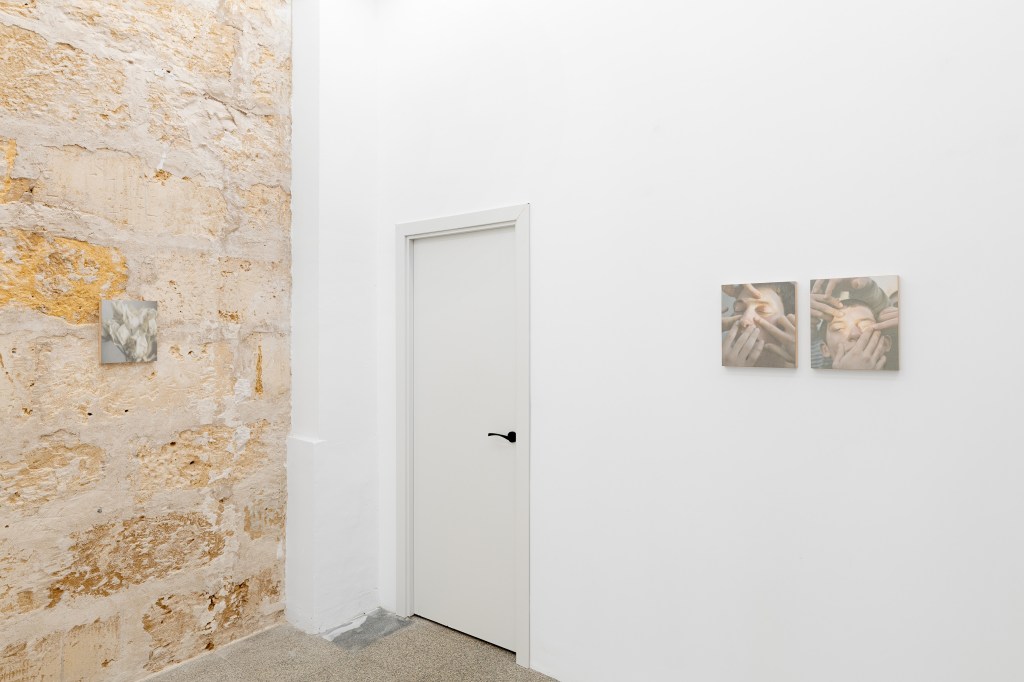
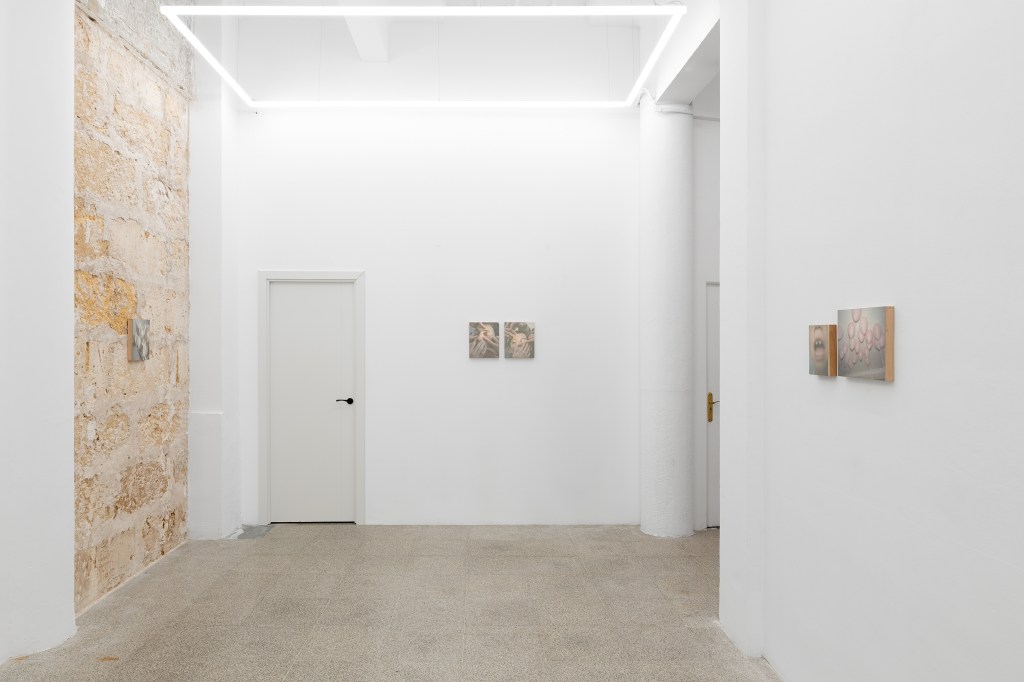
The muted colors, softness, close framings, delicate execution, and small scale help seduce the viewer into coming closer. Then perhaps the image begins to resist them.
I don’t really want a specific thought or message to remain afterward. Ideally, I want the image to stay slightly unresolved—to follow the viewer for a while without explaining itself. And if something extremely private in my own fears manages to touch a fear, memory, or uncertainty belonging to somebody else, that is probably enough.
What do you think is the primary idea or goal of art in general? If there is a specific goal, what would it be?
That is an extremely ambitious question. We would probably need a PhD thesis just to summarize the centuries-long argument around it, let alone add another position with any confidence.
I tend to feel closest to thinkers like R. G. Collingwood and John Dewey, although ultimately I would take a pluralist position. Collingwood understood art partly as expression—not simply communicating an emotion that is already perfectly understood, but giving form to something that may only become intelligible through the act of making it. I relate strongly to that. Often I don’t completely understand what is bothering me until it becomes an image.
Dewey’s idea of art as experience also feels important to me. Art doesn’t necessarily need to transmit information or deliver a moral. It can alter the quality of our attention; it can intensify experience, make us see, hear, or feel something differently for a moment.
But I would resist turning either of those ideas into a definition of what art should do. Art can express, communicate, disturb, console, entertain, document, seduce, protest, provoke thought—or apparently achieve absolutely nothing. I think its extraordinary plurality is precisely why attempts to impose a single purpose on it tend to fail.
Susan Sontag controversially wrote in 1967 in Partisan Review: “The truth is that Mozart, Pascal, Boolean algebra, Shakespeare, parliamentary government, Baroque churches, Newton, the emancipation of women, Kant, Marx, Balanchine ballets, et al, don’t redeem what this particular civilization has wrought upon the world.” I’m fascinated by her words because she might be right; yet temperamentally I disagree with her so deeply.
Indeed, we live in an extraordinarily unjust and cruel world, and sometimes it feels as though we are watching the collapse of the West as we knew it. And yet I put on Carrie & Lowell by Sufjan Stevens, walk through an exhibition by Sophie Calle, enjoy a ballet choreographed by Pina Bausch, or watch a Haneke film, and somehow I reconcile myself with being alive. I recover a little faith in human beings. For a moment, everything seems to make sense.
Maybe that’s it. Maybe that’s why we make art.
All rights to the images belong to the artist. No part of this publication may be reproduced, stored in a retrieval system, or transmitted in any form, electronic, mechanical, photocopying, recording or otherwise, without the prior permission of PAI32 Platform.

ARTIST OF THE MONTH
Interview, Online Exhibition
#artist of the month
PAI32 EDITION’26
Between the Organic and the Artificial

