
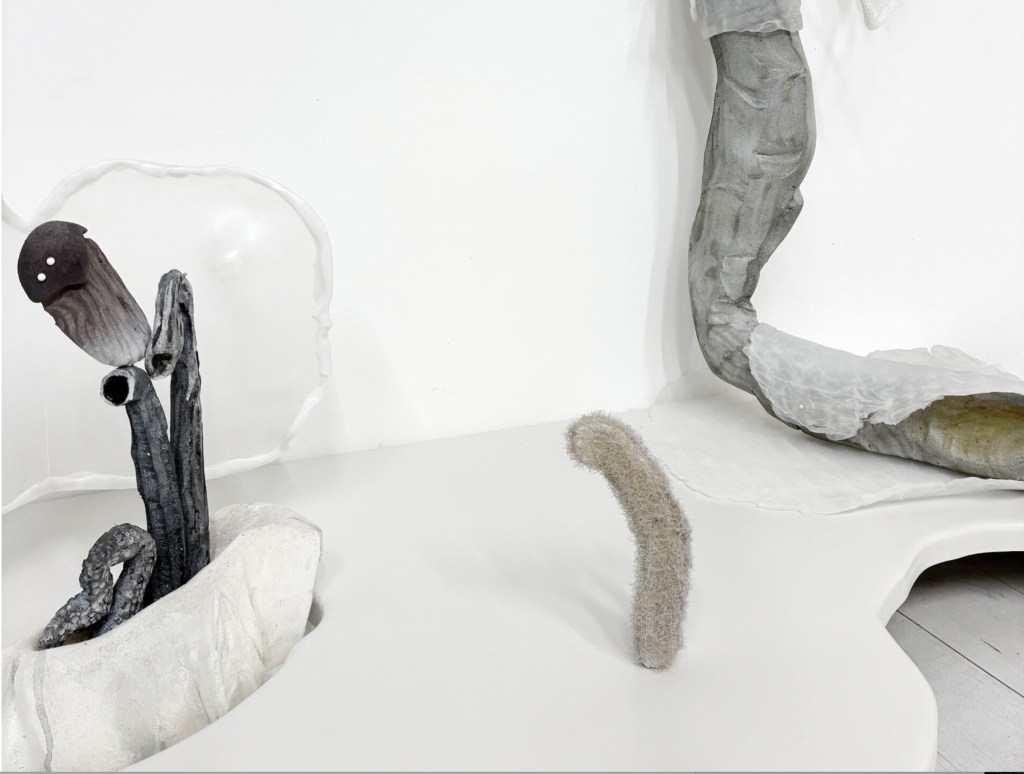
Lennart Foppe: Between the Organic and the Artificial
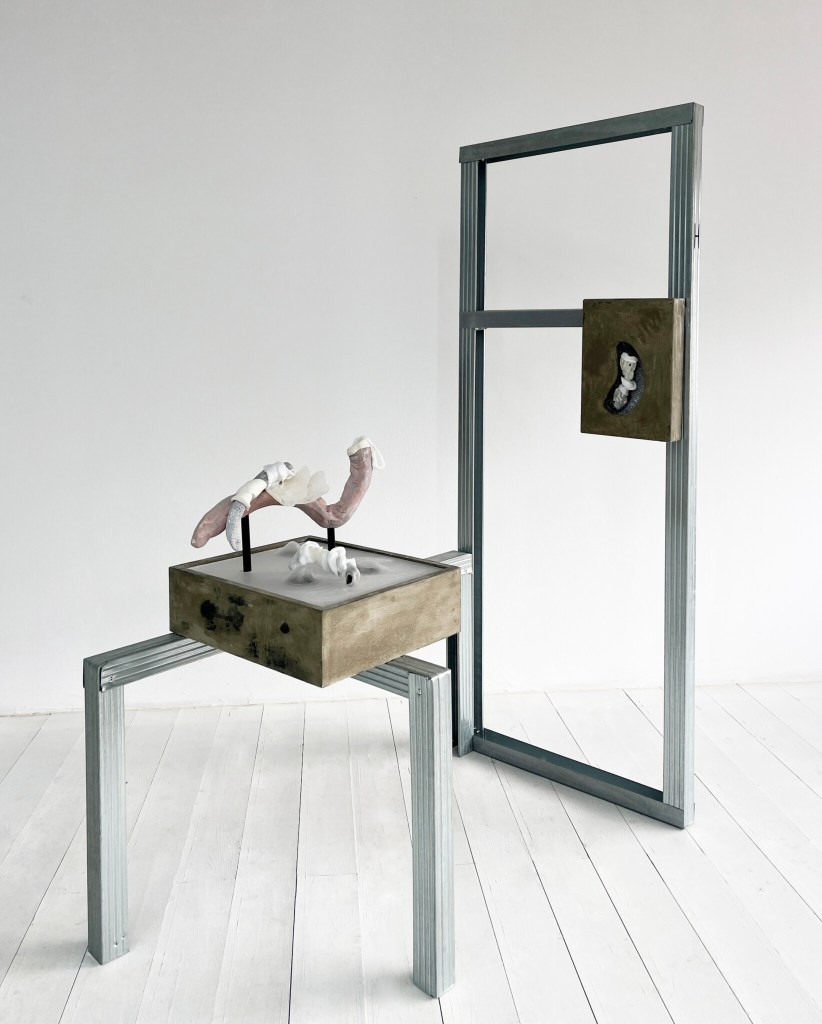
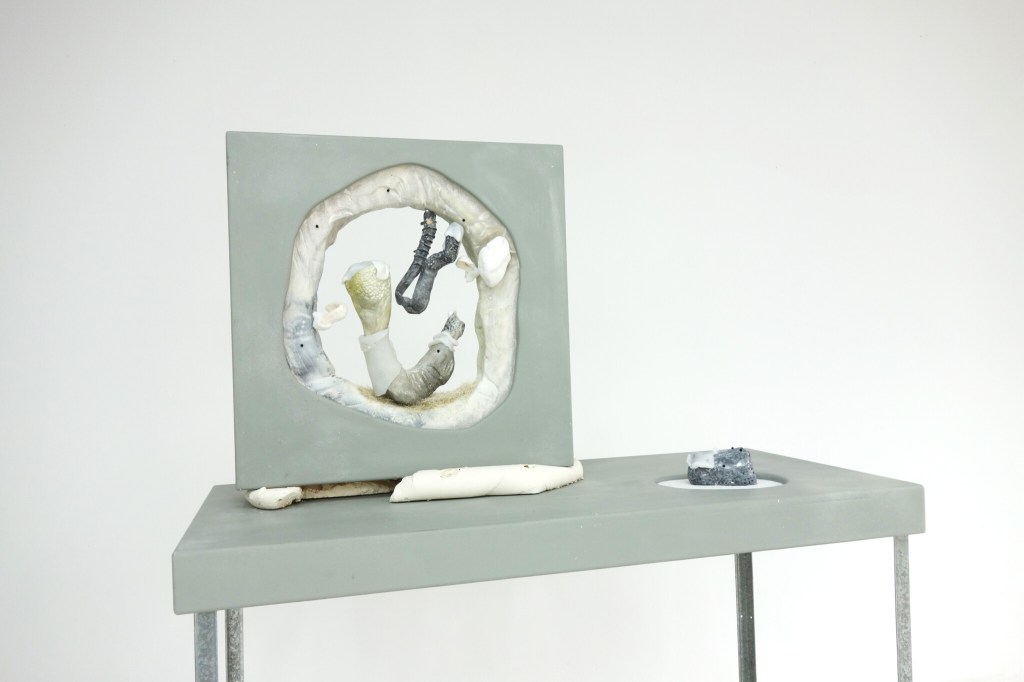
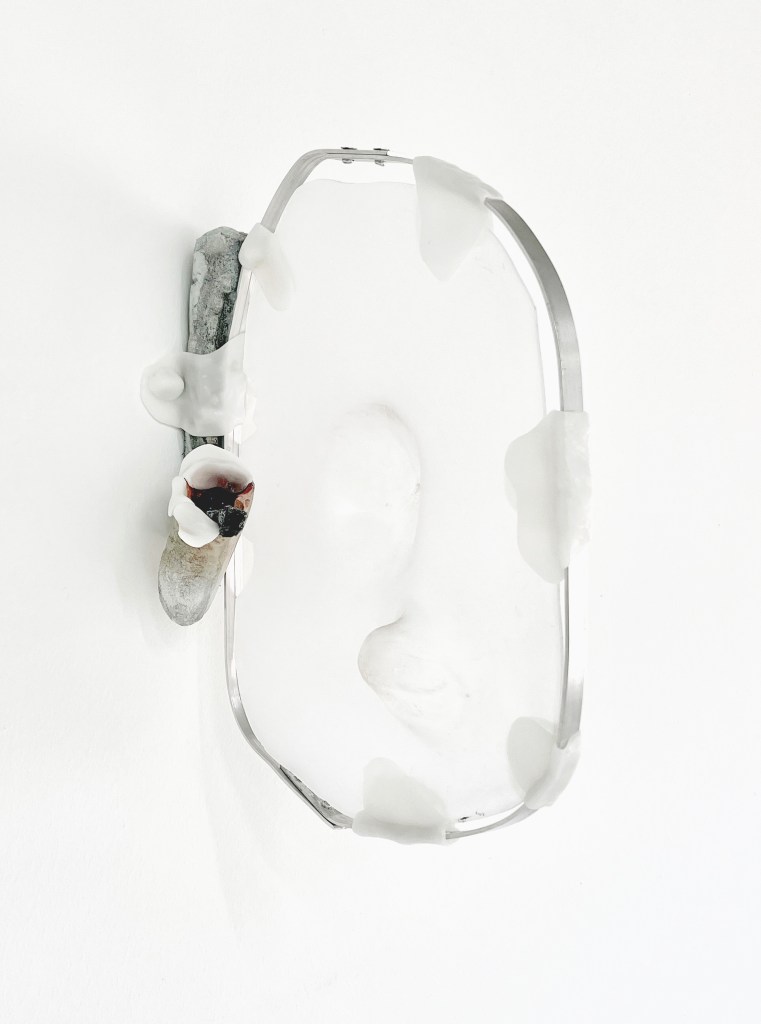
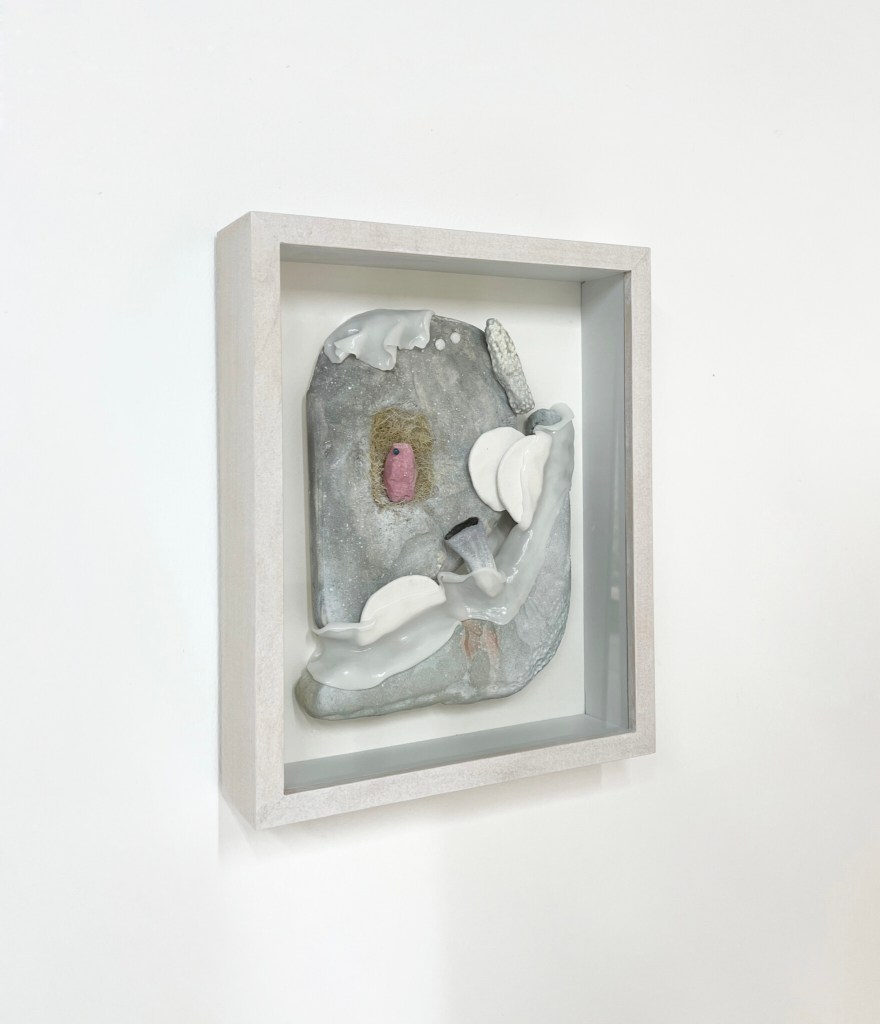
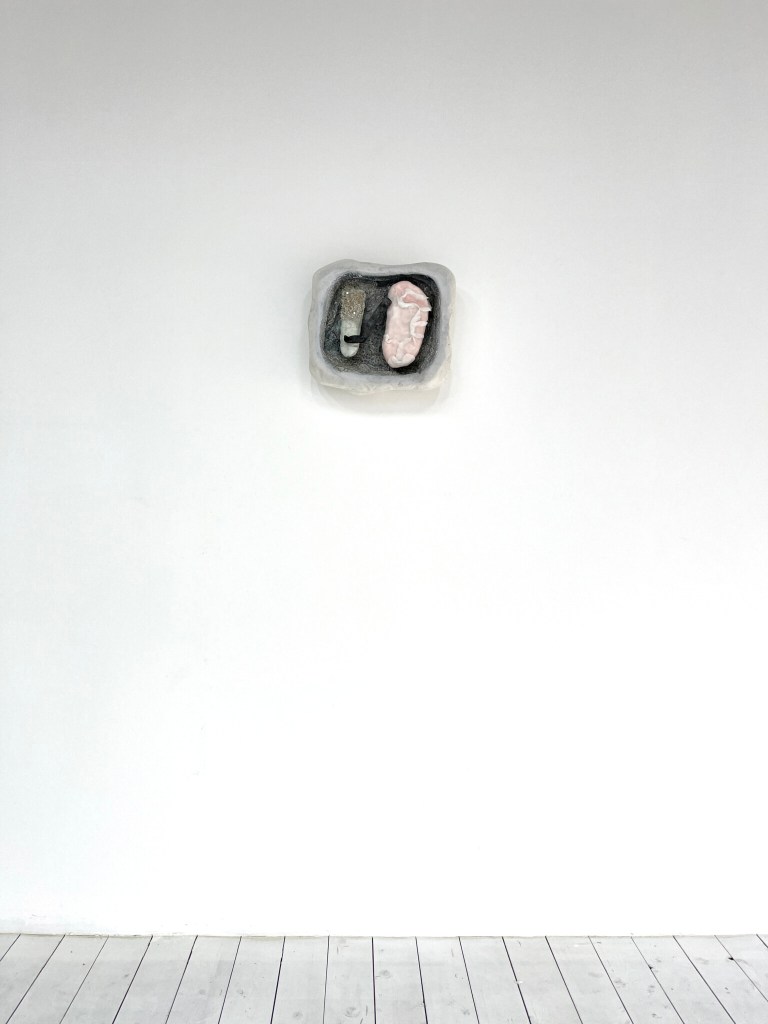
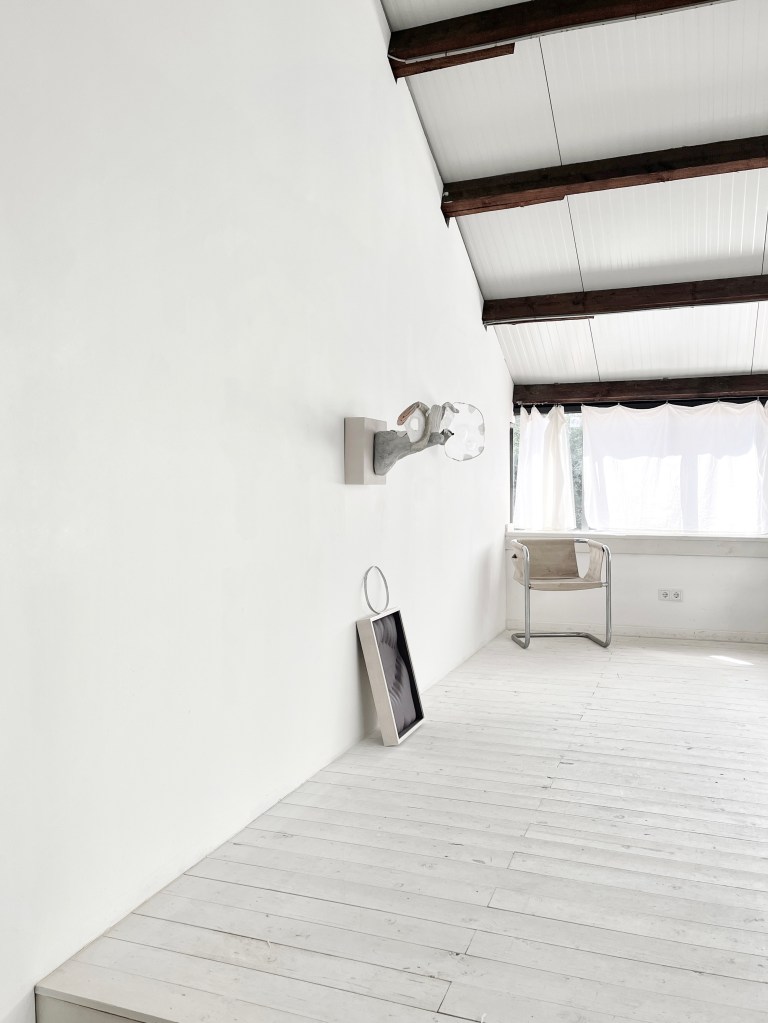
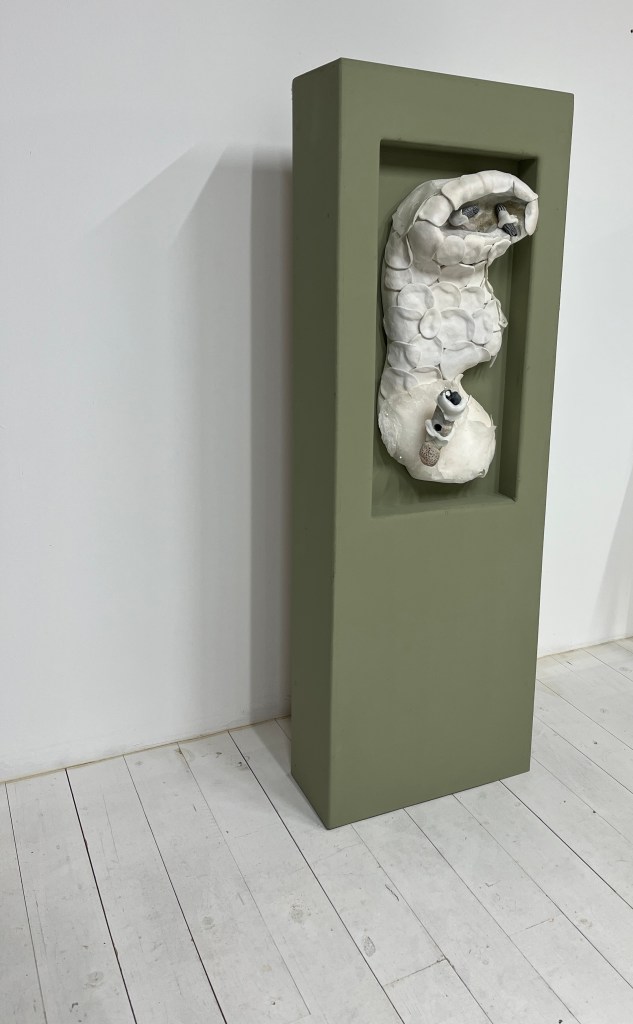
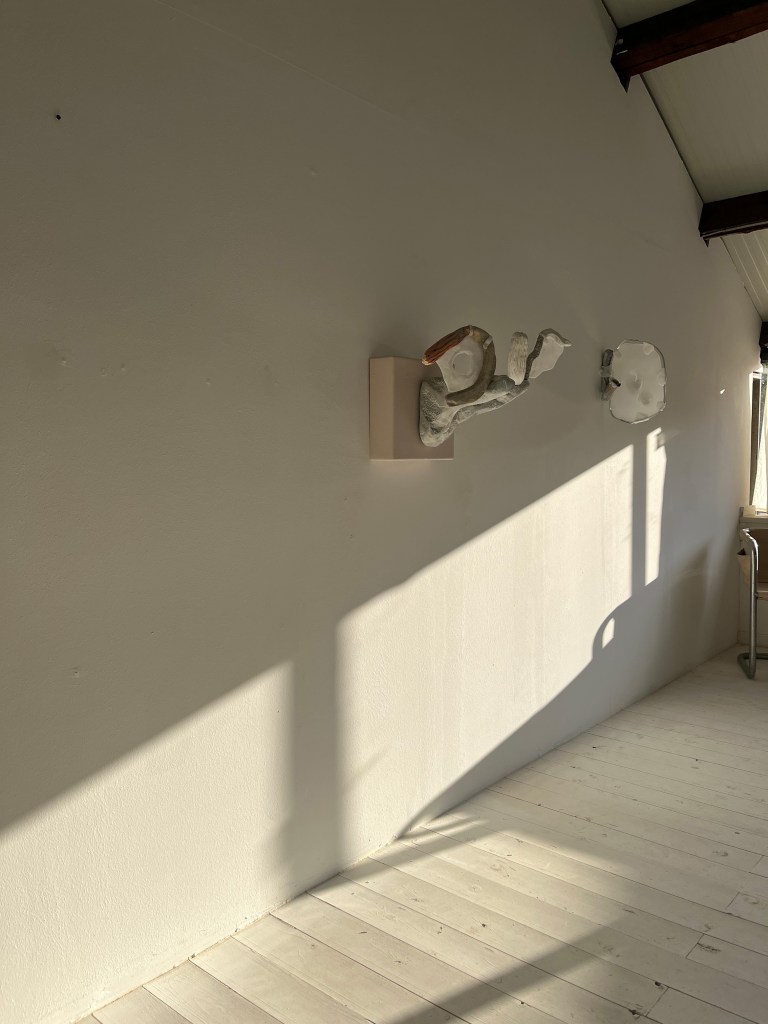
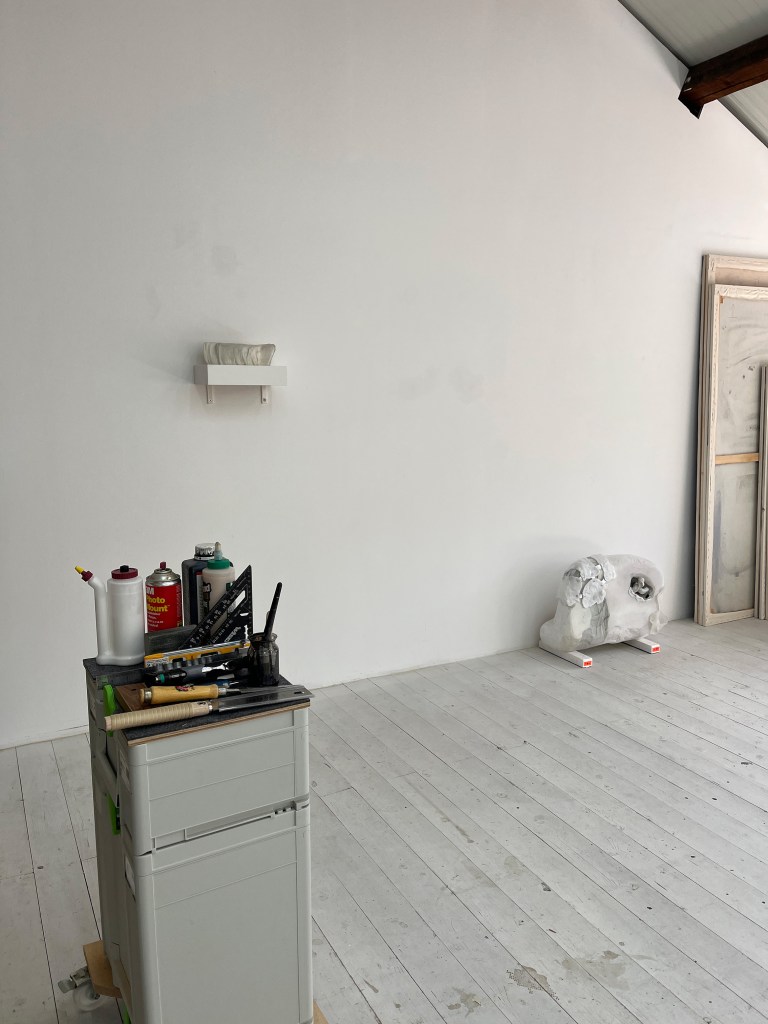
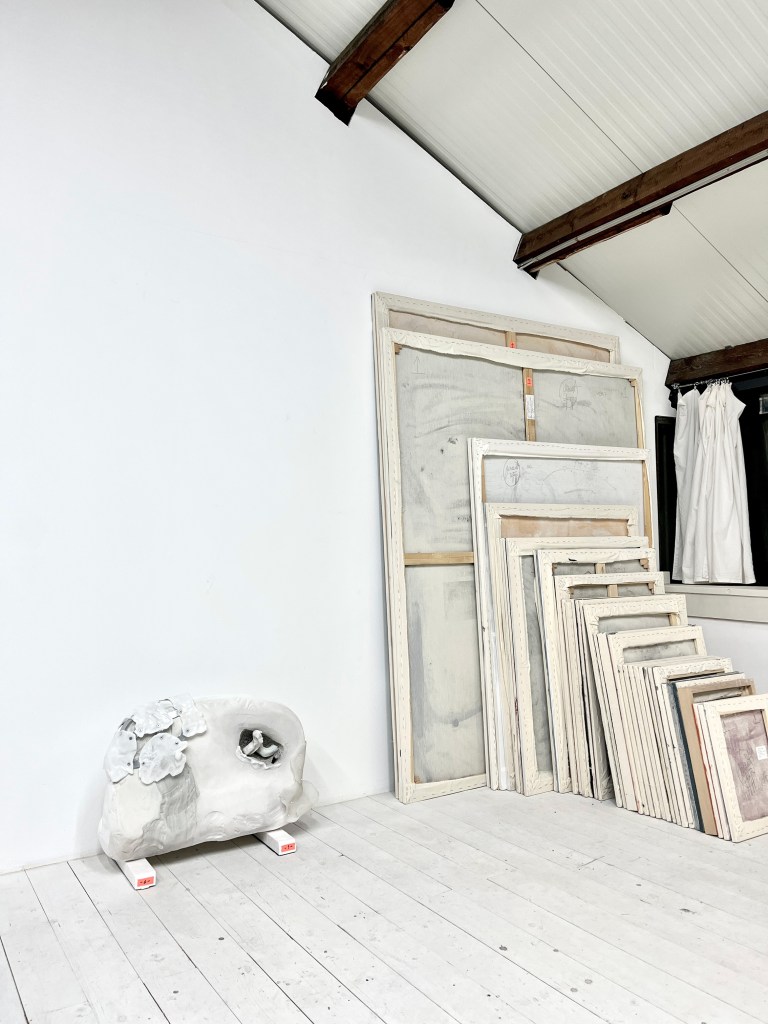
Lennart Foppe’s practice occupies an ambiguous space between painting, sculpture and installation, where industrial materials begin to suggest something strangely biological. Working with latex, silicone, foam, PVC and other synthetic substances, he creates forms that appear to grow, adapt or decay, while remaining materially suspended in what he calls a “forever situation”.
This tension between movement and permanence runs throughout Foppe’s work. Materials are not simply tools but active collaborators, capable of resisting his plans and redirecting the work through unexpected reactions. His installations similarly resist immediate interpretation, asking viewers to spend time with uncertainty and to notice what gradually emerges through closer attention.
In this interview, Foppe discusses the years of experimentation behind his distinctive visual language, the role of failure and chance in his process, and why, in a culture of instant images and quick conclusions, art can still offer something increasingly rare: permission to slow down and remain curious.
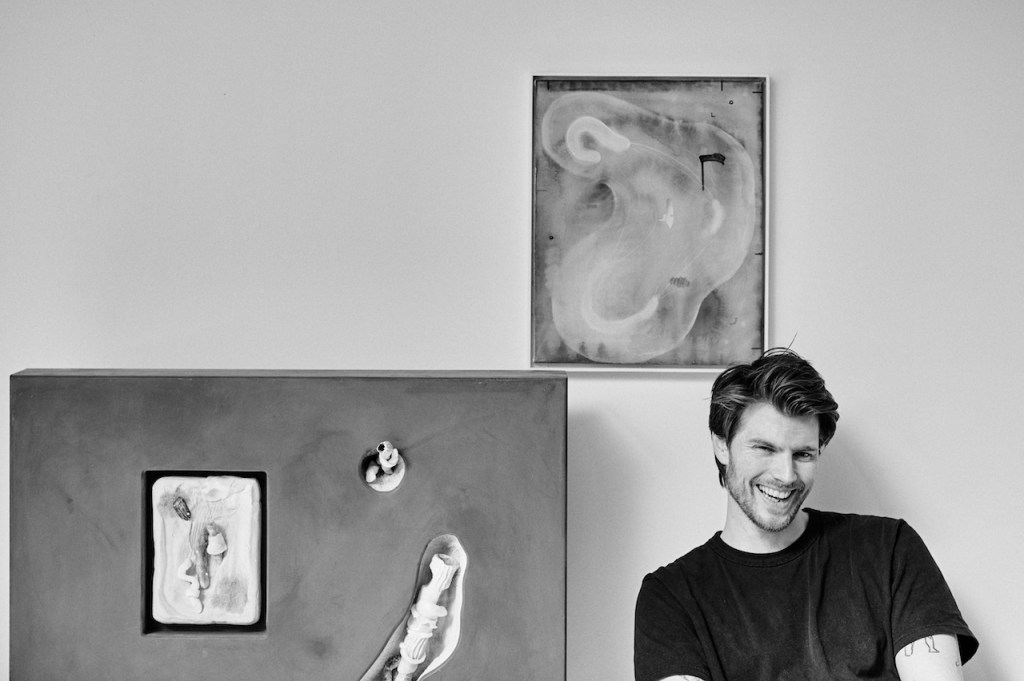
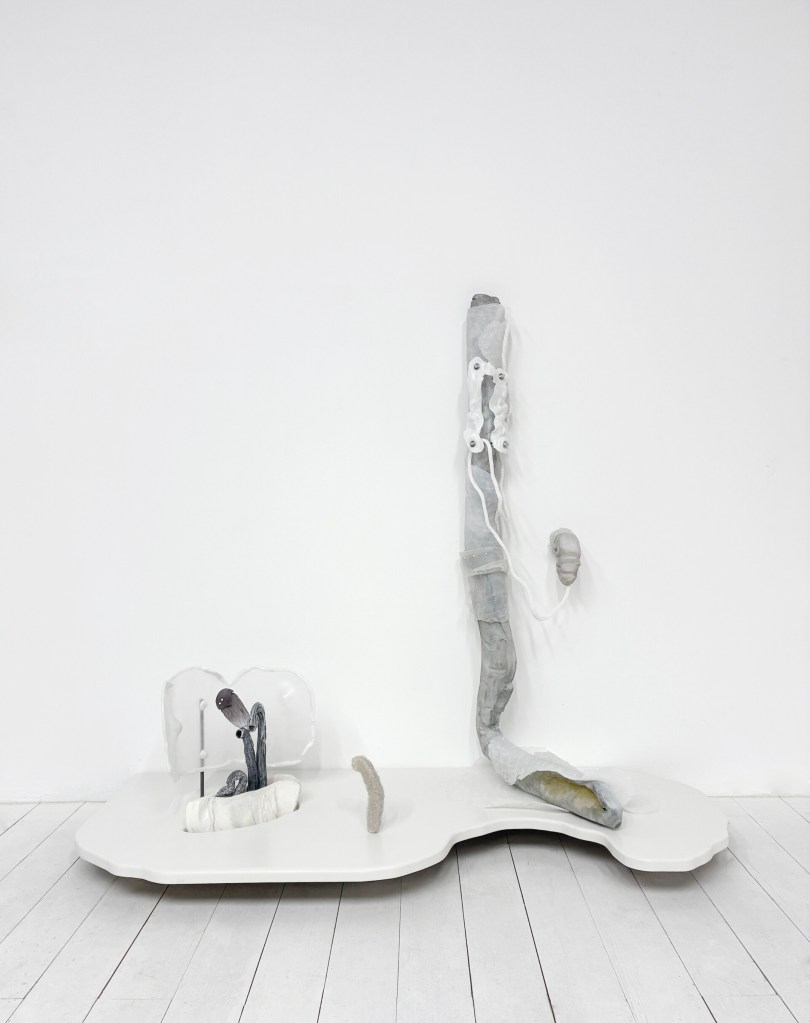
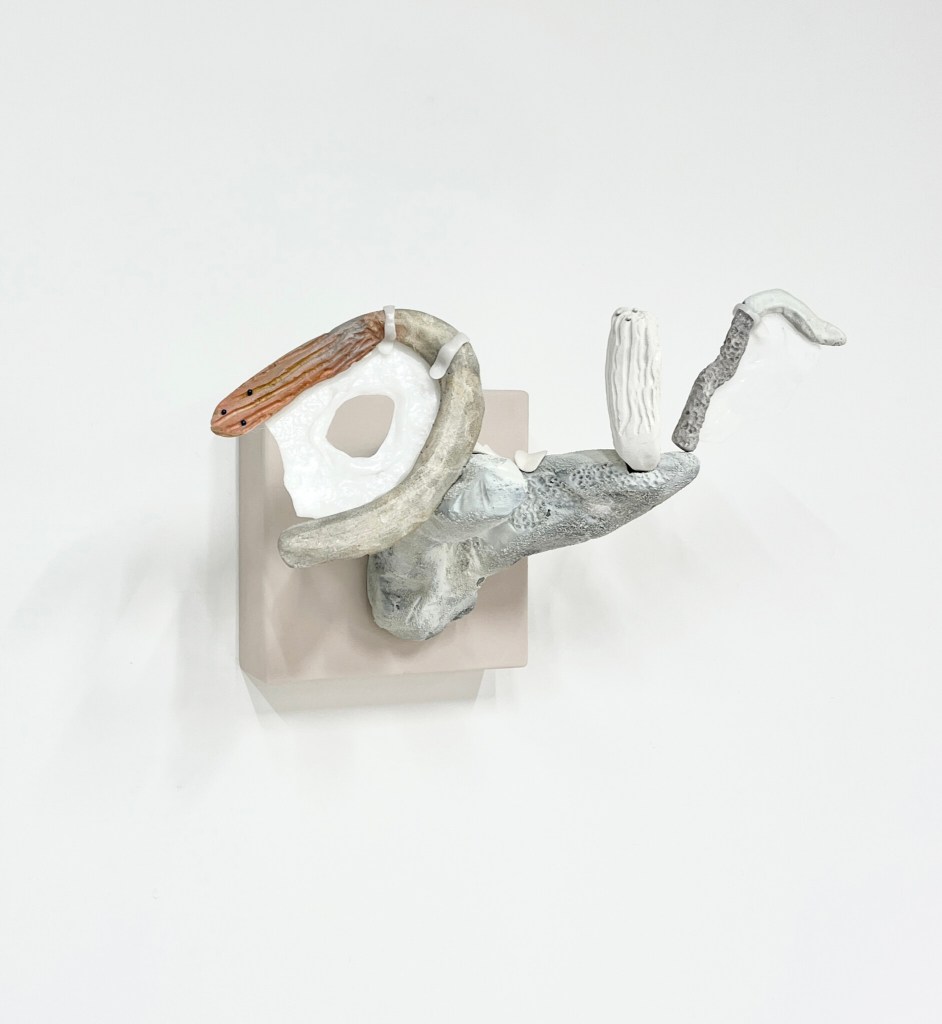
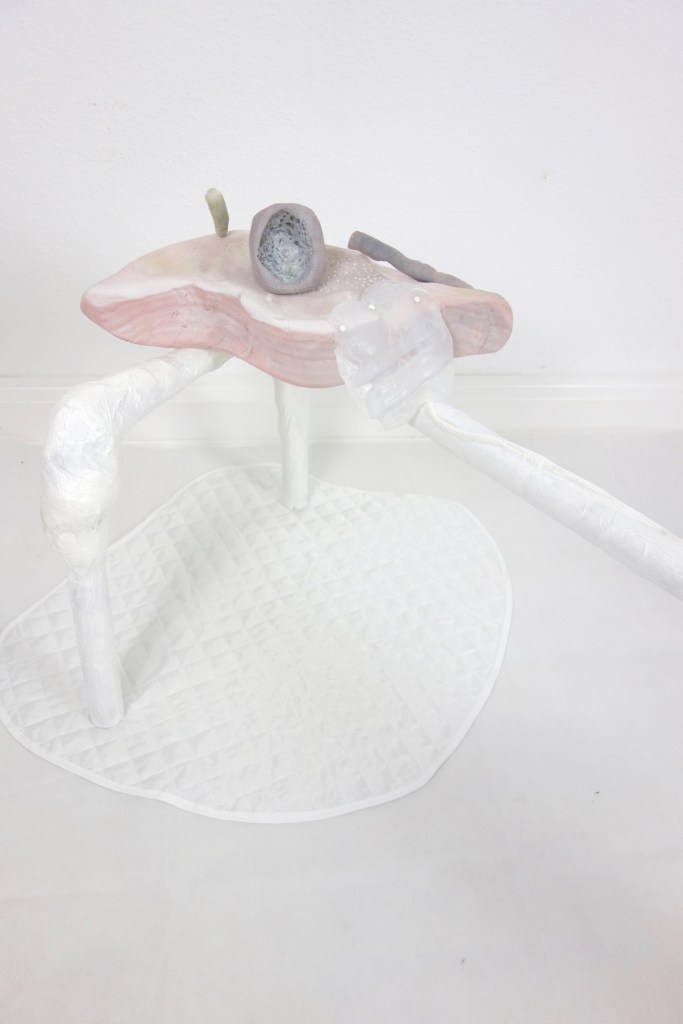
Your work exists somewhere between painting and installation, between something that feels organic and something unmistakably artificial. What first drew you to this in-between space, and what keeps you returning to it?
When I first started exploring ideas around biological atmospheres, I became interested in the points where the obvious artificial elements of our surroundings meet biological references. My earlier paintings were largely based on that idea.
Over time, while working on different series in my studio, I wanted to open up this perspective by focusing more on the spatial experience. Moving from painting into objects and installations took much longer than I expected. Finding a balance between something that feels artificial and something that feels organic required years of experimenting.
In painting, abstraction can happen quite quickly. But creating objects that evoke living systems while still revealing their artificial nature takes many more steps, adjustments and material decisions.
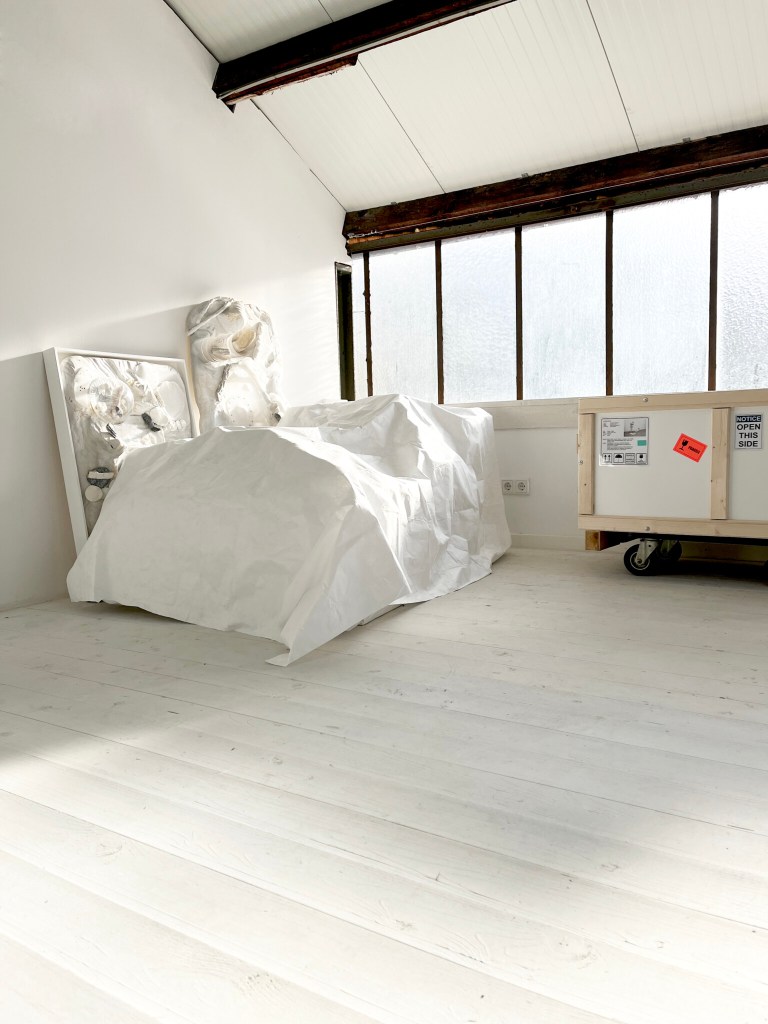
I also realised that presenting paintings and installations together, while addressing the same underlying questions, creates a productive tension. The contrast between the two leaves enough space for viewers to form their own associations rather than leading them towards one specific interpretation.
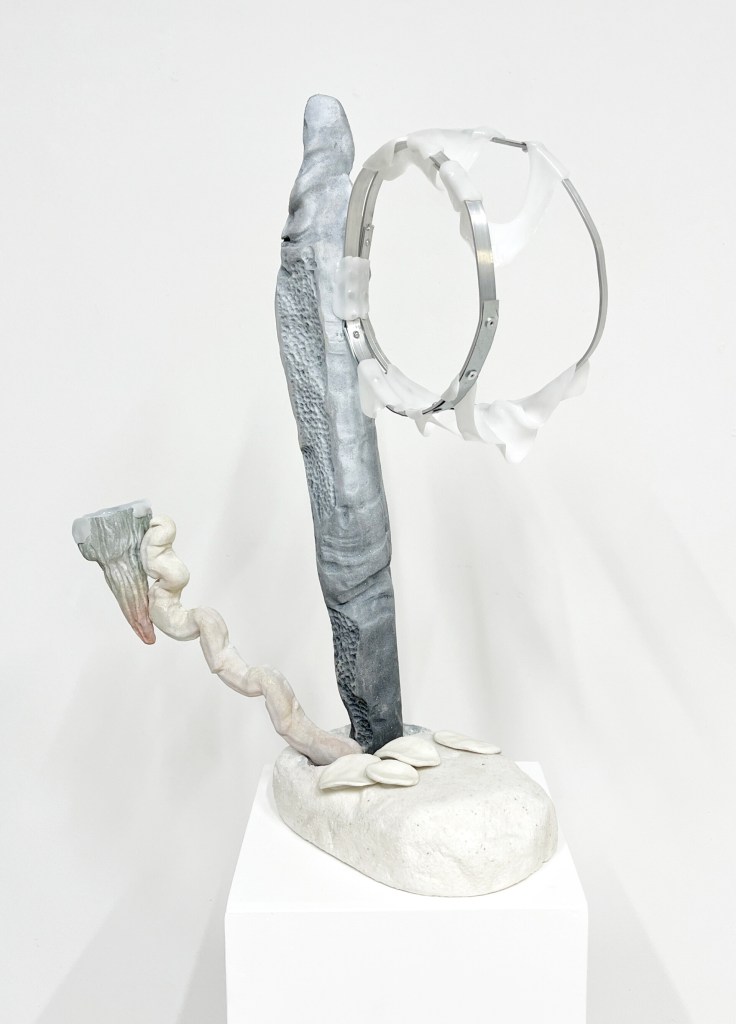
Many of your sculptures resemble living systems or microscopic organisms, yet they’re built from industrial materials like latex, silicone, foam, and PVC. What interests you about giving these synthetic materials such a strangely biological presence?
Most of the materials I work with are highly processed industrial materials, many of them originally developed for the construction industry. They were designed to resist biological processes such as humidity, mould, water or heat.
I like the contradiction. These materials were invented to keep nature out, yet I use them to suggest something that feels alive and constantly changing.
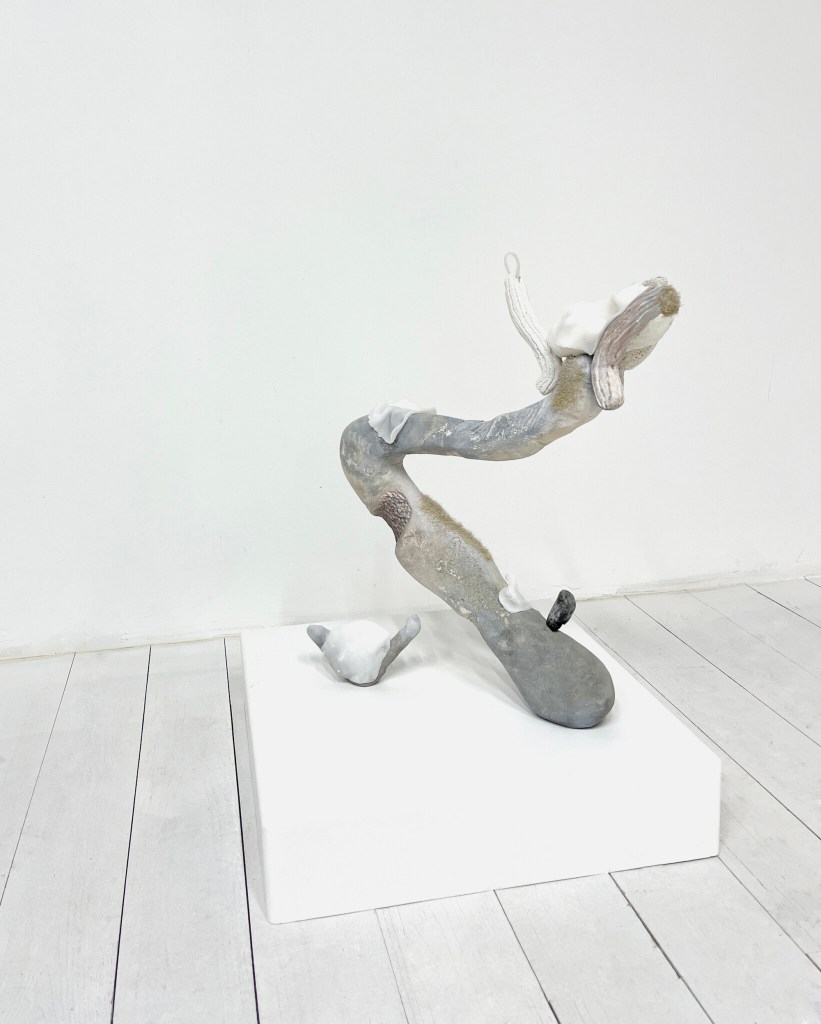
Another important aspect is what I call the “forever situation.” The surfaces I create are inspired by moments of biological activity that would normally continue to grow, decay or transform. In reality these processes never stand still.
My sculptures freeze one possible moment. They preserve all the fragility, irregularity and imperfection of living matter, while the material itself is built to remain almost unchanged for decades. In that sense, each work becomes a kind of pause button—a chance to spend more time observing forms that would otherwise constantly transform.
You’ve spoken about treating materials as collaborators rather than simply tools. Can you describe a moment when a material surprised you or completely changed the direction of a work? How do you know when to follow it rather than your original idea?
My sculptural work is driven by an ongoing dialogue with materials because they are essential in creating a believable biological presence.
Many works begin with careful drawings and technical planning. From there, I spend a lot of time testing materials and different ways of manipulating them until something feels convincing.
Most of the process is actually trial and error. Failures are part of the work. Materials react differently over time—colours change overnight, surfaces behave unexpectedly and chemical processes can completely alter a form. Sometimes those unexpected reactions become more interesting than the original idea.
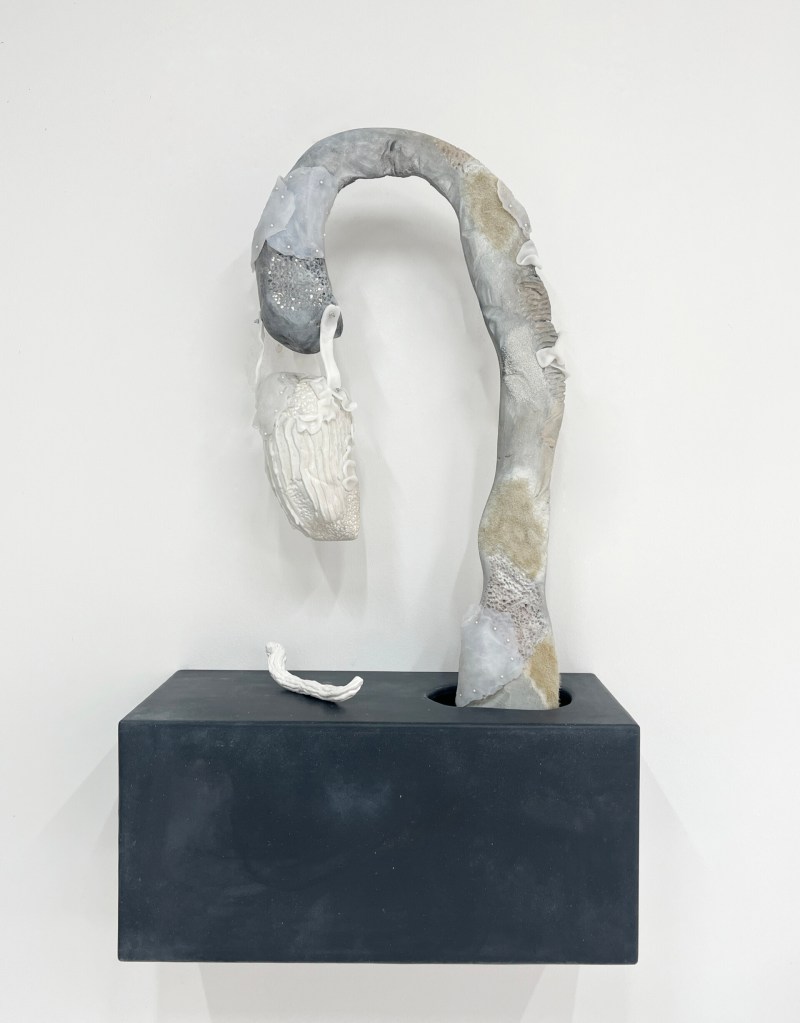
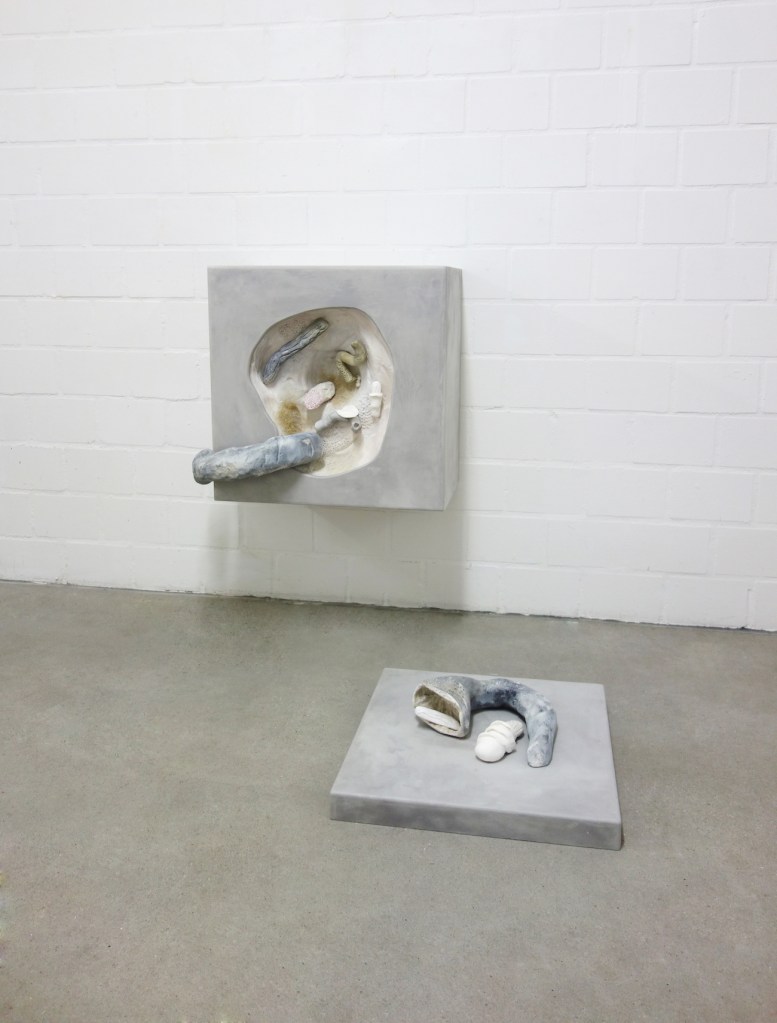
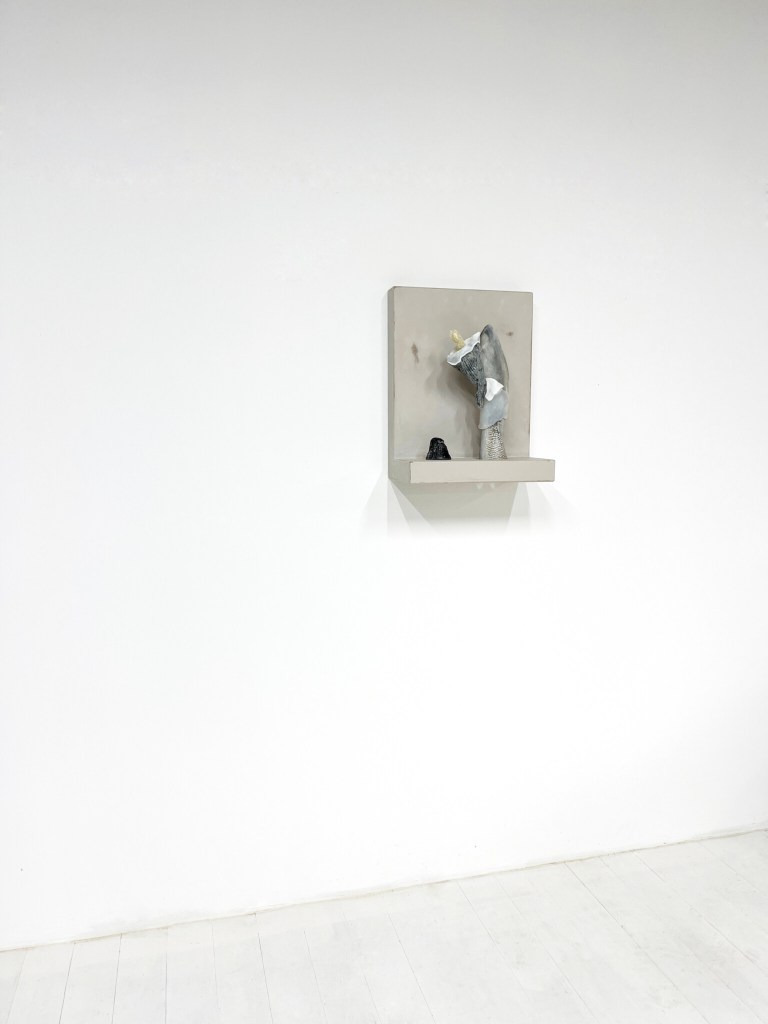
I remember working on a wall-mounted sculpture with an element extending into the room. I spent hours looking for a material that could connect both parts. I tried complicated solutions that required days of preparation, but none of them created the spatial impression I was after.
Eventually I walked through the workshop and found an ordinary flexible dryer hose. After manipulating its surface and shape, it became exactly what the sculpture needed and eventually found its place in the work “Pulp” (2021).
Moments like that remind me that materials often have their own logic. Sometimes it’s better to listen to them than to insist on the original plan.
Your installations invite viewers to slow down and spend time with subtle forms, textures, and relationships rather than offering an immediate narrative. In a world that increasingly demands instant attention, what kind of experience do you hope people leave with after encountering your work?
We are surrounded by screens and an endless stream of information competing for our attention. Images change constantly, and we rarely spend much time looking at a single thing.
My work deliberately moves in the opposite direction. The installations rely on the relationship between the viewer, the object and the surrounding space, and that relationship only develops over time.
A quick encounter may even result in frustration because the work doesn’t offer immediate answers or an obvious narrative. I actually think that frustration can be a valid part of the experience.
But if someone stays a little longer, changes their viewpoint, notices small details and lets go of the need for an immediate explanation, the work slowly begins to unfold.
I don’t expect viewers to arrive at one correct interpretation. Instead, I hope the work encourages an openness towards uncertainty. In psychology, there’s the concept of ambiguity tolerance—the ability to remain curious and engaged even when something cannot be fully understood or clearly defined. I think that’s a quality we are slowly losing in a world that constantly asks for quick answers and certainty.
If someone leaves the exhibition a little more attentive, a little more patient, and more comfortable spending time with something they don’t immediately understand, then I think the work has done its job.
What do you think is the primary idea or goal of art in general? If there is a specific goal, what would it be?
For me, art is a form of language without fixed rules. Anyone who is willing to stay open can connect with it in their own way.
Unlike many other forms of communication, art doesn’t always have to explain itself. It can create experiences before it creates meaning. It can raise questions instead of answering them.
I don’t think the goal of art is to tell people what to think. It’s to make us look more carefully, stay curious and remain open to different ways of seeing the world.
Especially today, when so much of our daily life demands quick opinions, instant images and immediate conclusions, I think art offers something increasingly valuable. It gives us permission to slow down, to spend time with uncertainty and to accept that not everything needs a clear answer.
If my work can encourage someone to become more attentive, more curious and more comfortable with not knowing everything straight away, then I feel it has achieved its purpose.
All rights to the images belong to the artist. No part of this publication may be reproduced, stored in a retrieval system, or transmitted in any form, electronic, mechanical, photocopying, recording or otherwise, without the prior permission of PAI32 Platform.

ARTIST OF THE MONTH
Interview, Online Exhibition
#artist of the month
PAI32 EDITION’26
BEAUTY AT THE POINT OF UNEASE

