
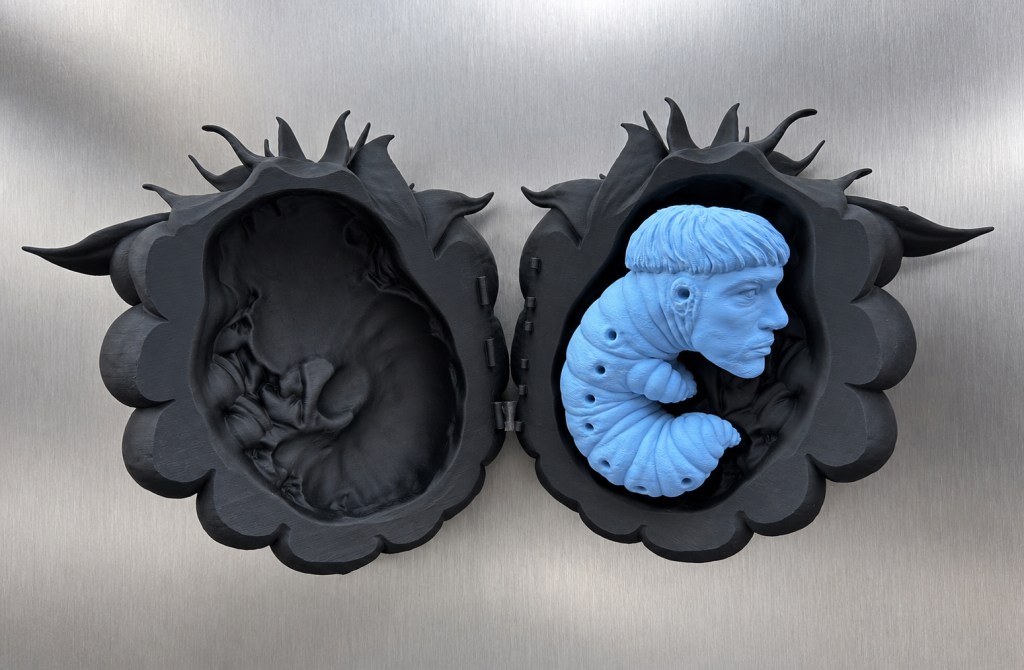
Ottone Radavi: Reprogramming Identity Through Art, Play and Participation
For artist Ottone, art is a way of disrupting established patterns of behaviour, challenging authority and creating space for unexpected experiences. From large-scale participatory installations to experimental objects and digitally fabricated sculptures, his practice explores the boundaries between play, control and individual freedom.
Shaped by his experiences of growing up in post-Soviet Russia and subsequently relocating to France, Ottone’s work reflects on inherited social conditioning, displacement and the reconstruction of identity. His interactive installations invite audiences to become active participants, questioning the relationship between artistic authorship and collective agency.
In this interview with PAI_32, Ottone discusses the political potential of play, the transformative experience of migration, the unpredictable nature of audience participation and his understanding of art as a form of information that circulates, mutates and generates new connections.
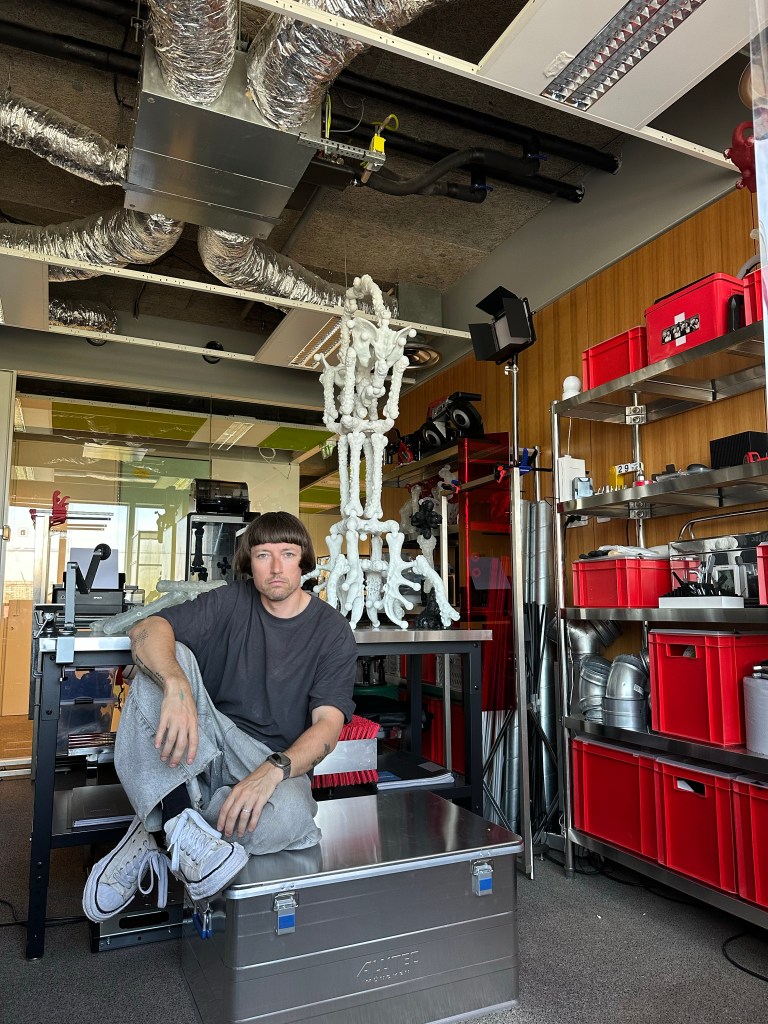
You describe many of your projects as “large-scale toys” that pull adults out of their certainties and protective shells. What made play the right tool for this, and what have you seen happen when a spectator finally stops consuming the work and starts participating in it?
I spent many years making projects that were basically toys, or maybe training machines, things designed to exercise new emotional states and psychological modes in people.
I grew up in a post-Soviet environment shaped by pretty tough people, generations raised under dictatorship, forced to growing up very early, working till the burnout, not standing out, not showing too much emotion, not speaking out and resisting at all. People that were never truly decompressed after breaking the surface of freedom. They raised their children in a similar way. Even dudes my age, who were already living in a completely different time, still carried a lot of that anti-individual programming. It was a grey slime of disintegration I witnessed, and one that inevitably ran through my own veins too.
My own experience was very different though. I grew up in a very safe, globalized family, and in a way my childhood never really ended. Carelessness, beautiful toys, fairy tales, international literature, Disney cartoons, acting in a theater, music lessons in artists studios etc. When I started making my own shit, I realized how lucky I was to somehow get this quantum state, so I could share it.
That’s why I started making things that were difficult for “adults”, for fossil souls to resist, things that gave you an excuse to fuck around again and not be judged. For a moment, you could become a brain that knows nothing yet, isn’t programmed yet, and has suddenly landed in some strange abstract space. Abstract experience btw was always very important to me, creating a situation you couldn’t immediately describe using familiar words. I wanted the viewer to have a tiny existential crisis: for a second, the system doesn’t know which program to run. Something you don’t know how to control. And that second opens up the possibility of a reboot. But there was a political trick hidden inside those big toys too. They were a kind of Aesopian language for me. In authoritarian circumstances, one of the few relatively safe ways to resist is to play the fool: become the harmless eccentric making silly little things, the court jester, the village idiot. You keep playing while the people desperately controlling and censoring culture hopefully don’t notice that the toy is actually doing politics.
Through the 2000s, 2010s and into the 2020s, this connected very directly with a real soreness in huge part of Russian society: a closed mindset, intolerance towards anything new or different, and all these authoritarian, obsequious programs we kept hauling around with us. The whole idea of the “inner child” suddenly wasn’t childish at all. It was responding to a very adult problem and btw very political and even persecuted by government in late 20s. Looking back now, I realise this is actually quite a modernist way of thinking. Artists at the beginning of the twentieth century also naively believed that a new artistic experience could alter a person. I’m not so sure anymore that art can actually change anyone, but I keep building machines that try to provoke a microscopic glitch anyway.
There was another reason participation became so important to me. Somewhere in the low-level zombie assembler I was written with, there was this inherited fear of individual agency that used to be even criminalised in my sick birth place. Maybe that’s partly why I became so obsessed with participatory work. I wanted to build situations where authority over the artwork wasn’t centralised in the artist. Where I didn’t arrive as another authoritarian figure saying: this is the work, I’ve decided everything, now stay back, shut up and admire. The viewer had to get some actual power over what happened.
So participation was never just “interactivity” for me. The moment someone stops consuming the work and starts playing with it, even briefly, they stop following the usual g-code trajectory. Giving the viewer actual agency inside the work, a kind of a share of power. Provoking that little glitch in the system was always the interesting part for me.
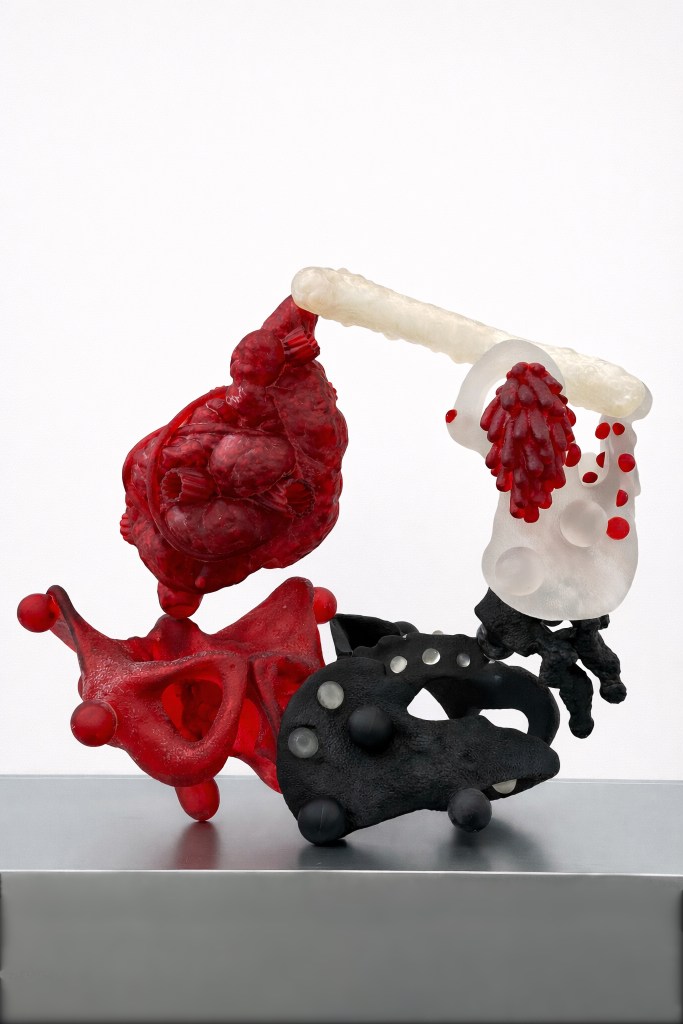
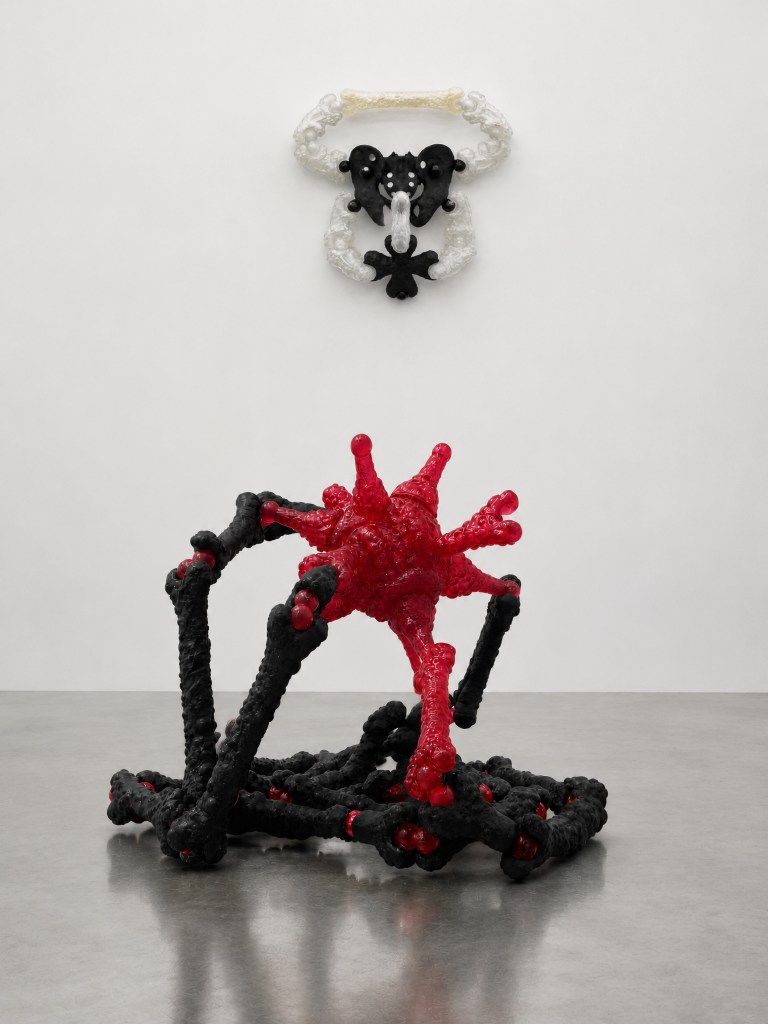
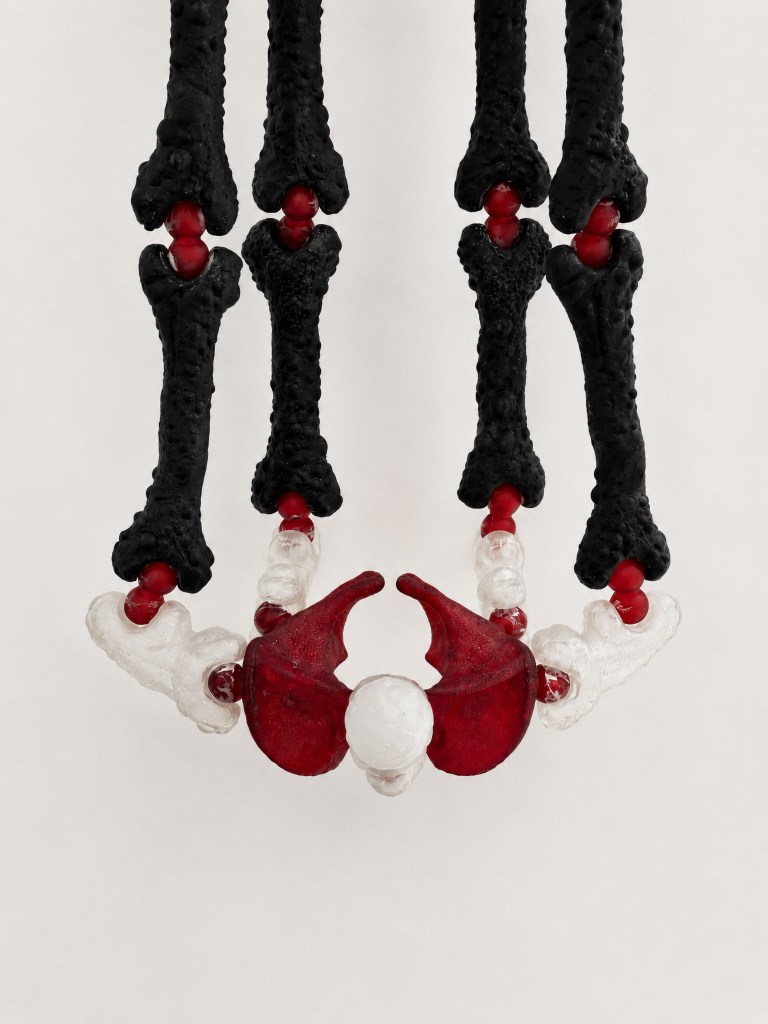
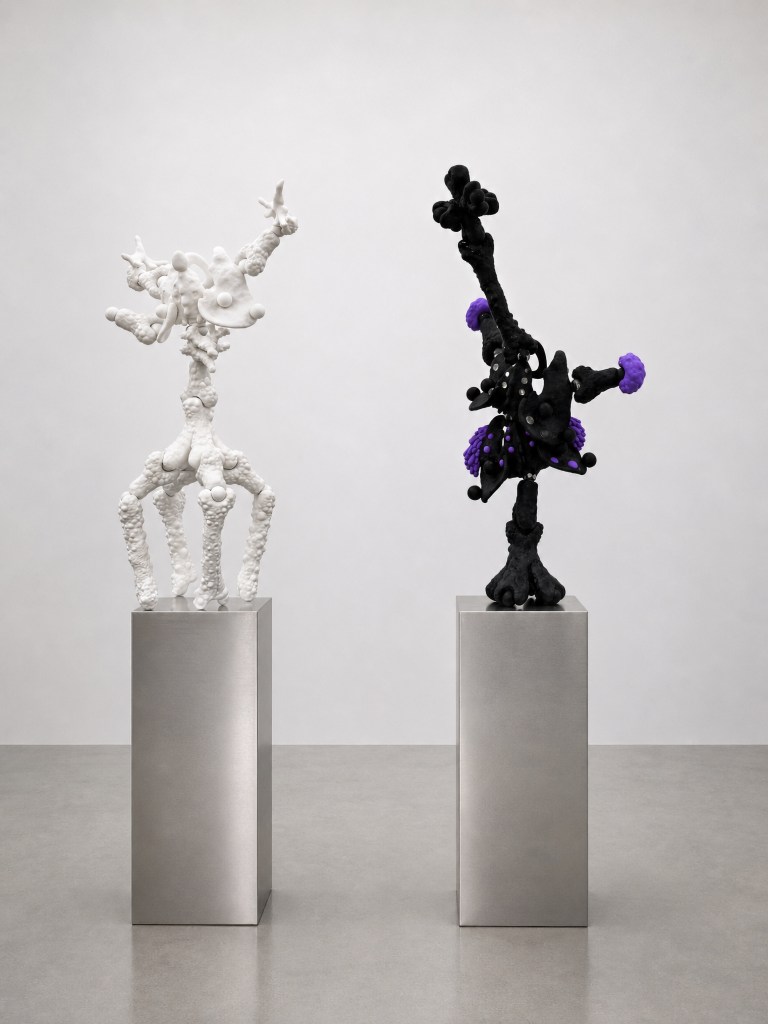
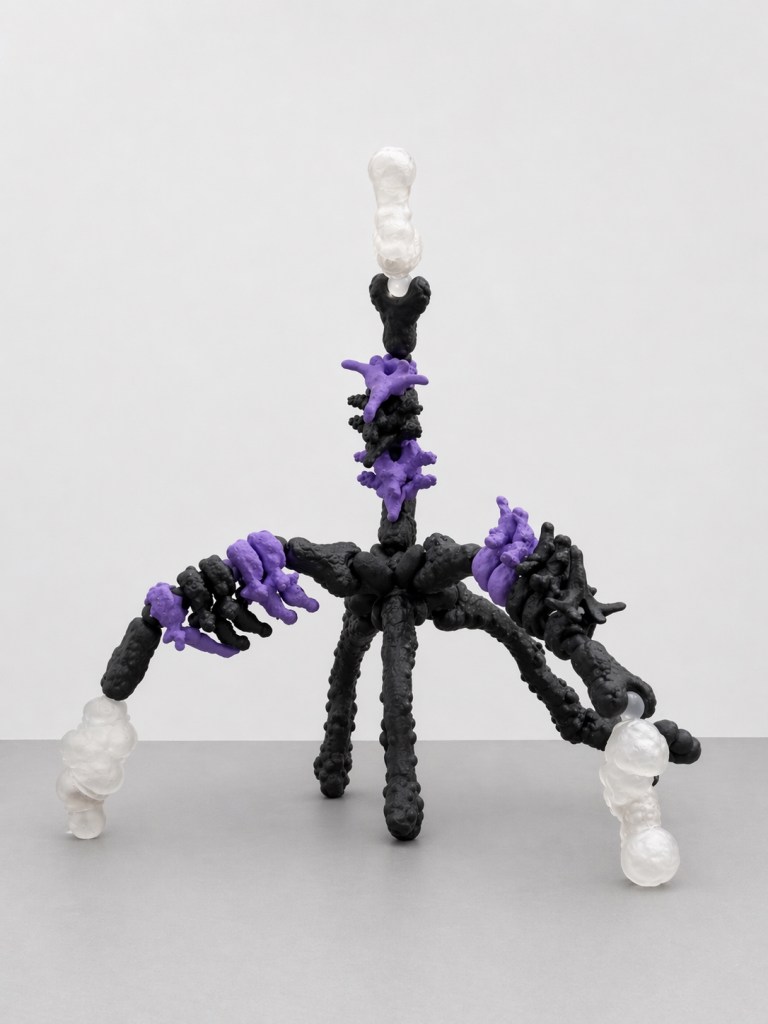
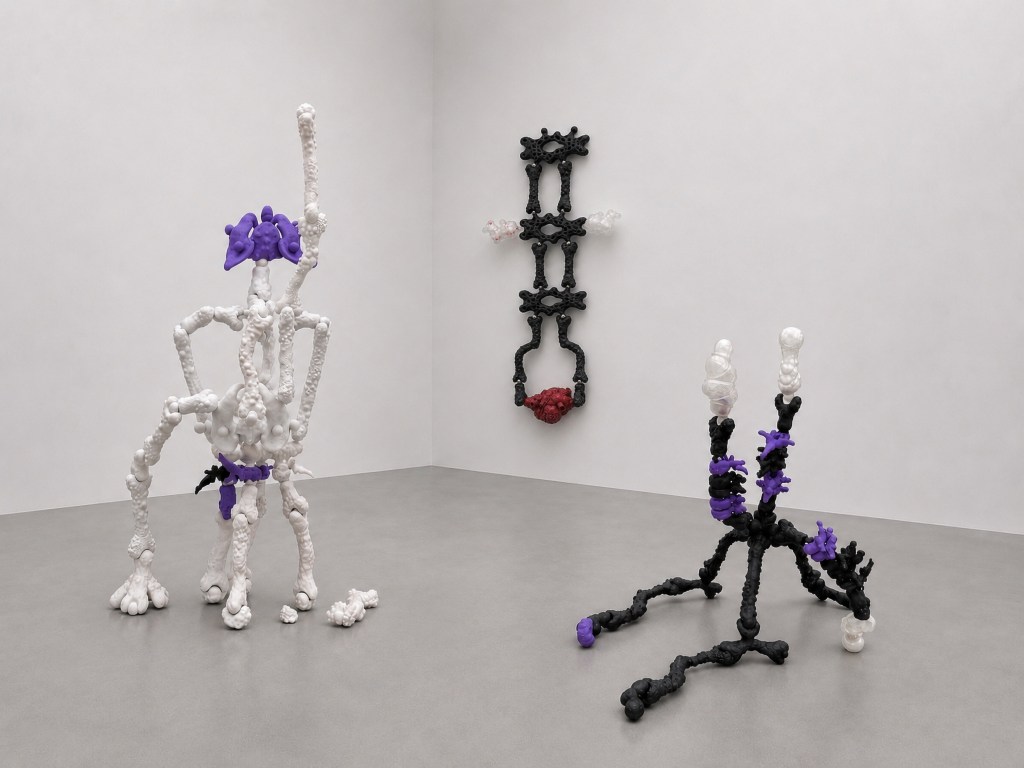
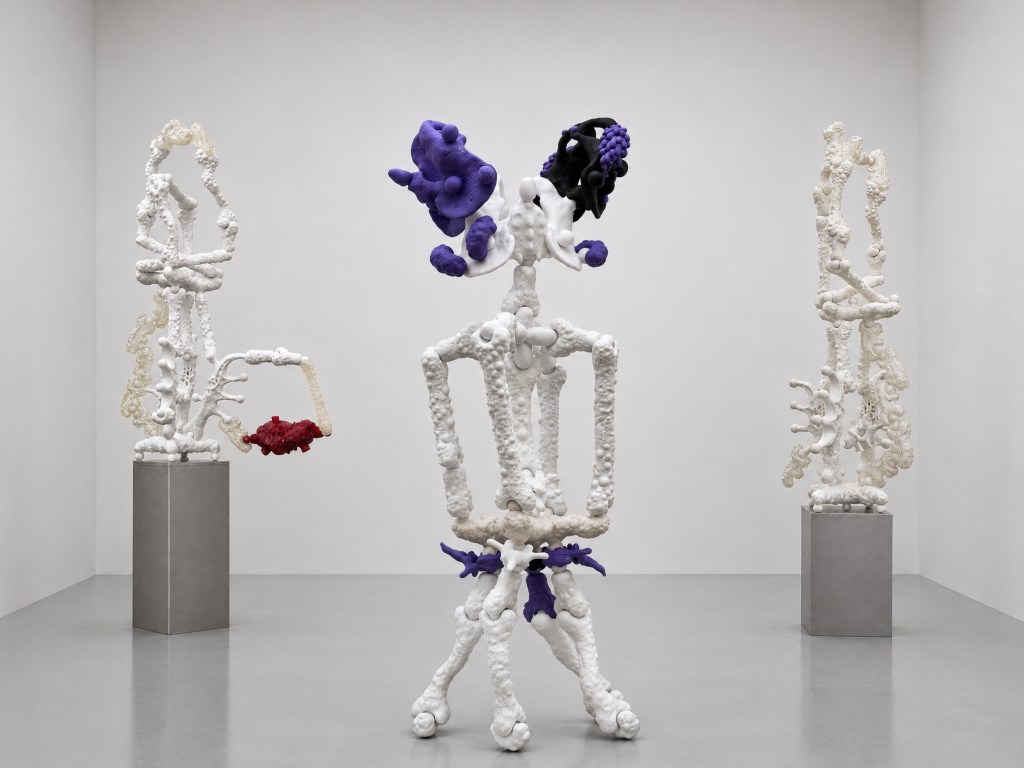
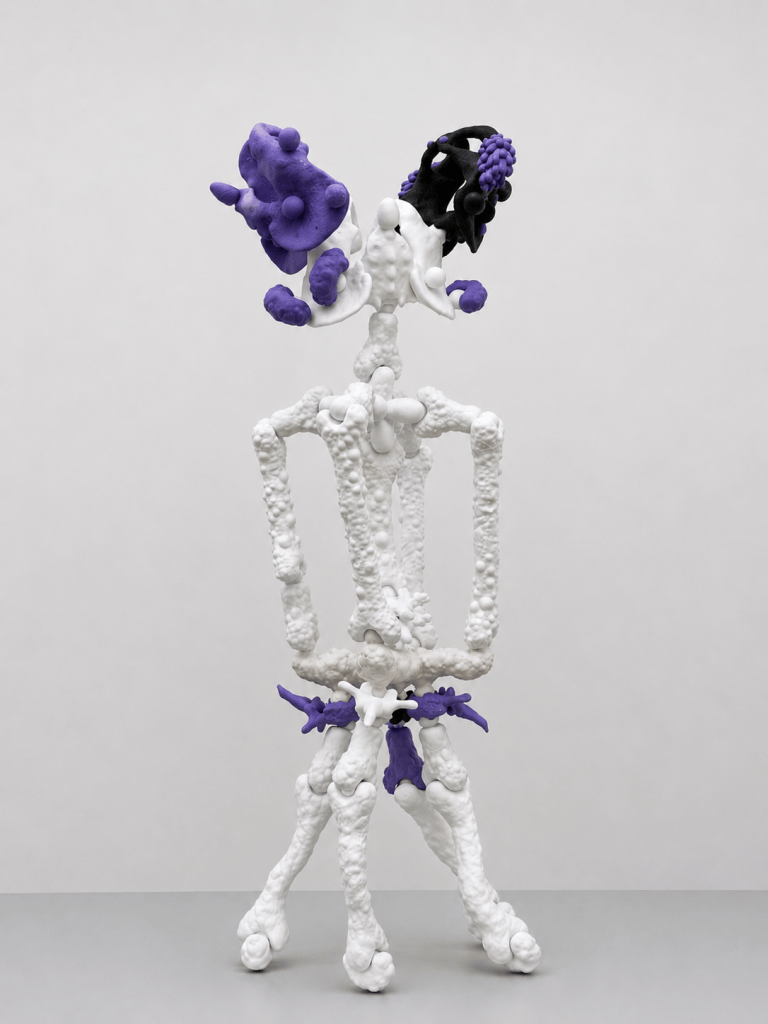
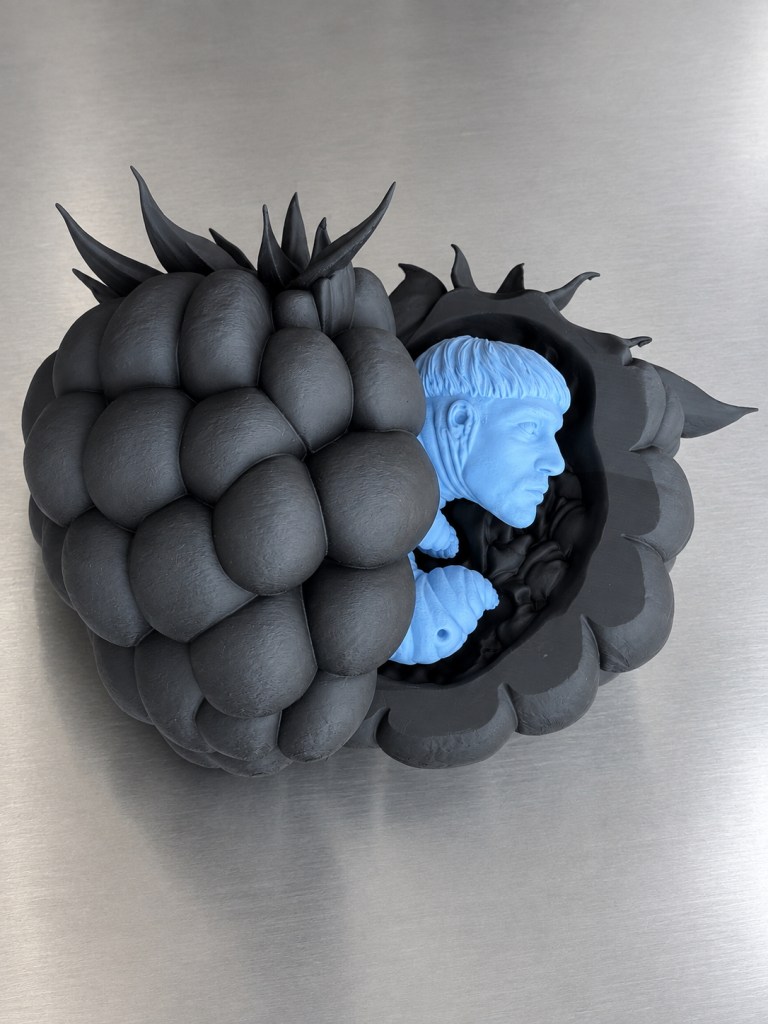
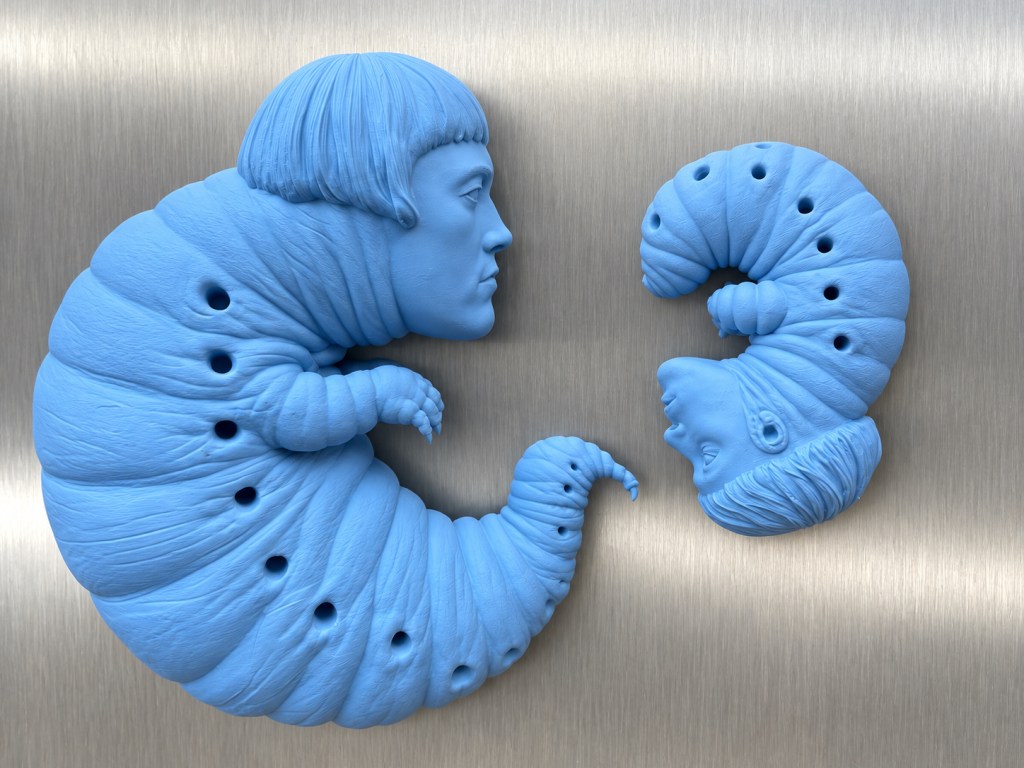
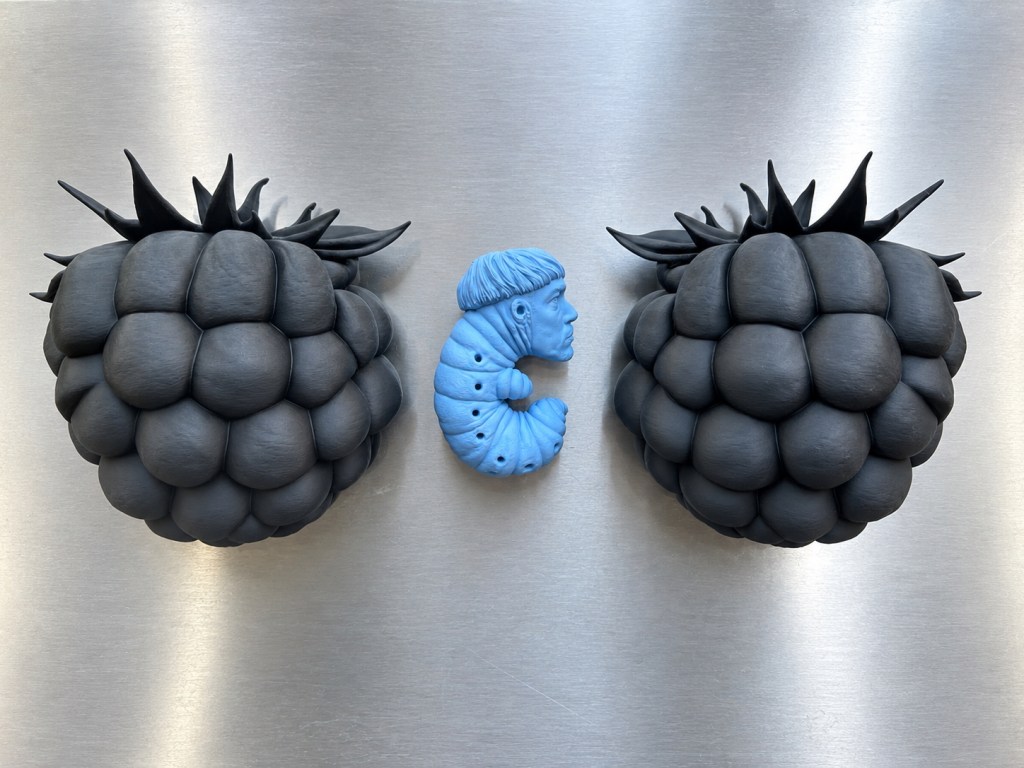
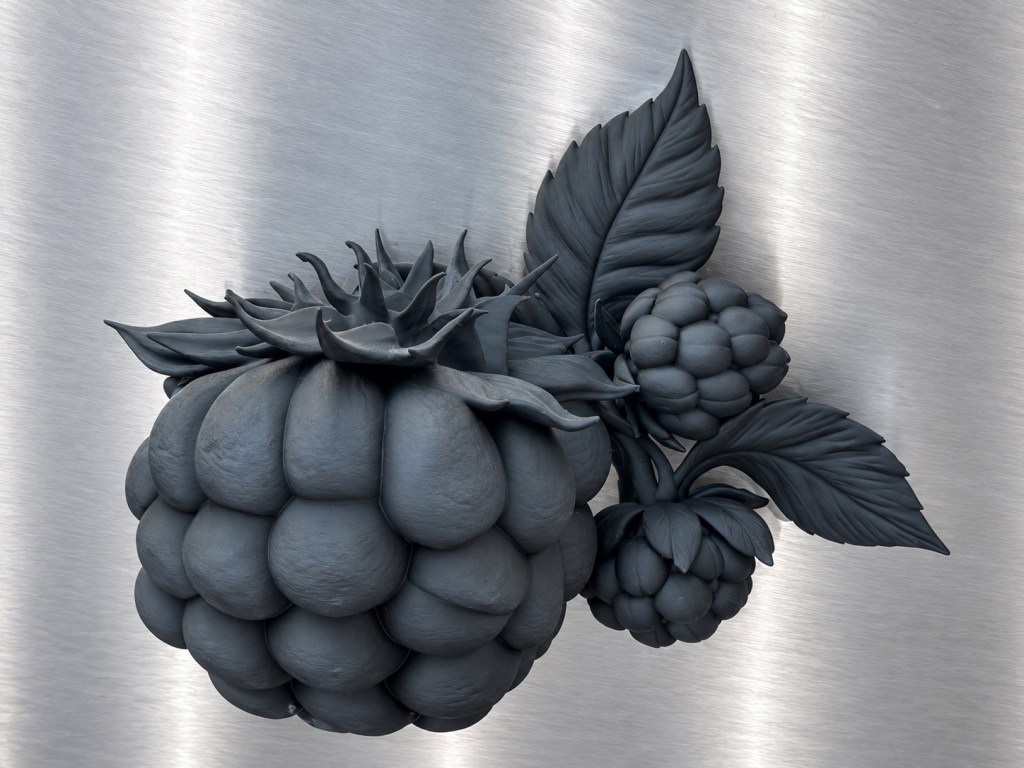
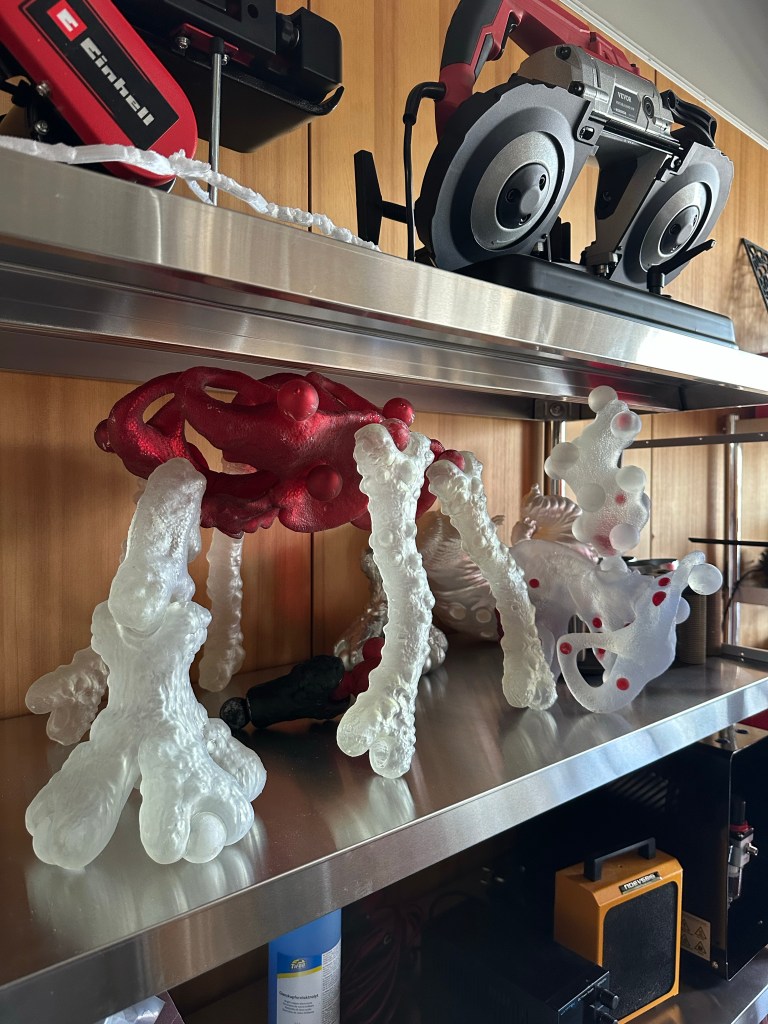
Your current project, Rebone Organism’os, grew out of migration, fractured identity and the search for stability. Why did you choose to reconstruct your own body, and what does it mean to hand that body over to strangers who can reassemble it however they like?
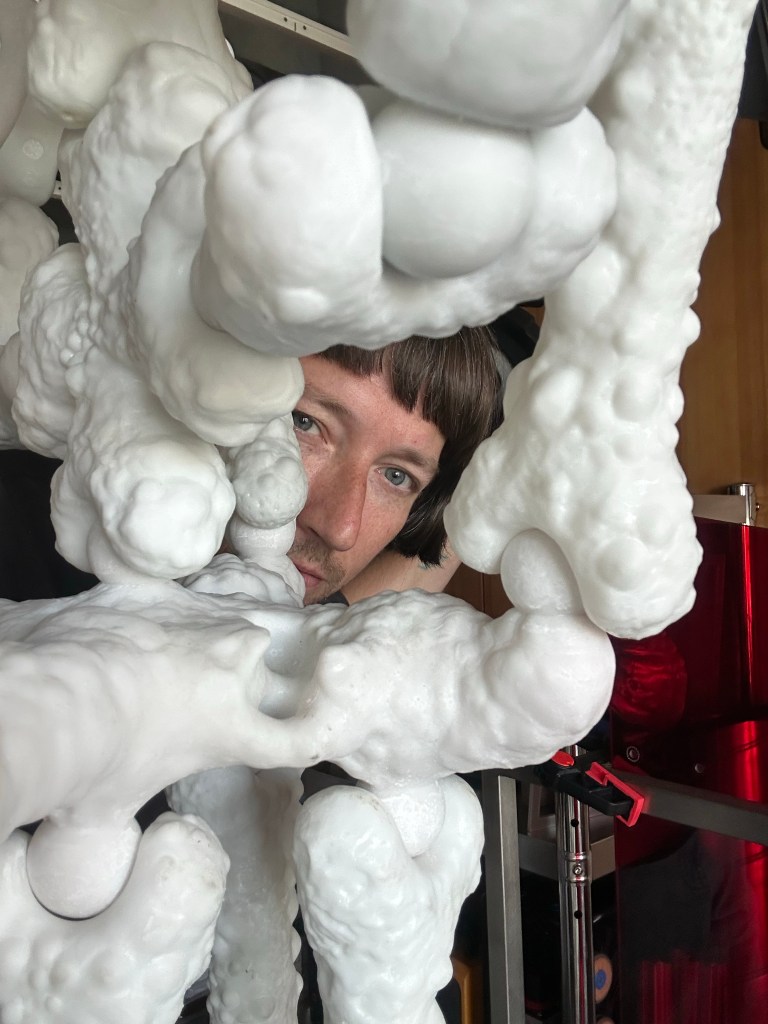
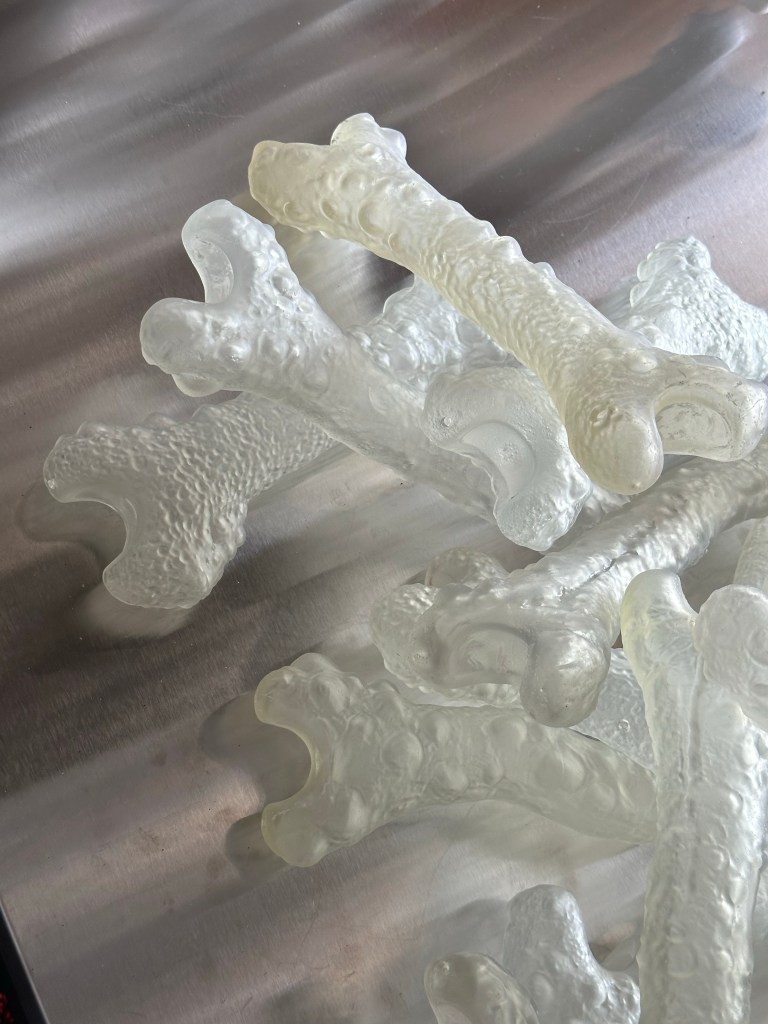
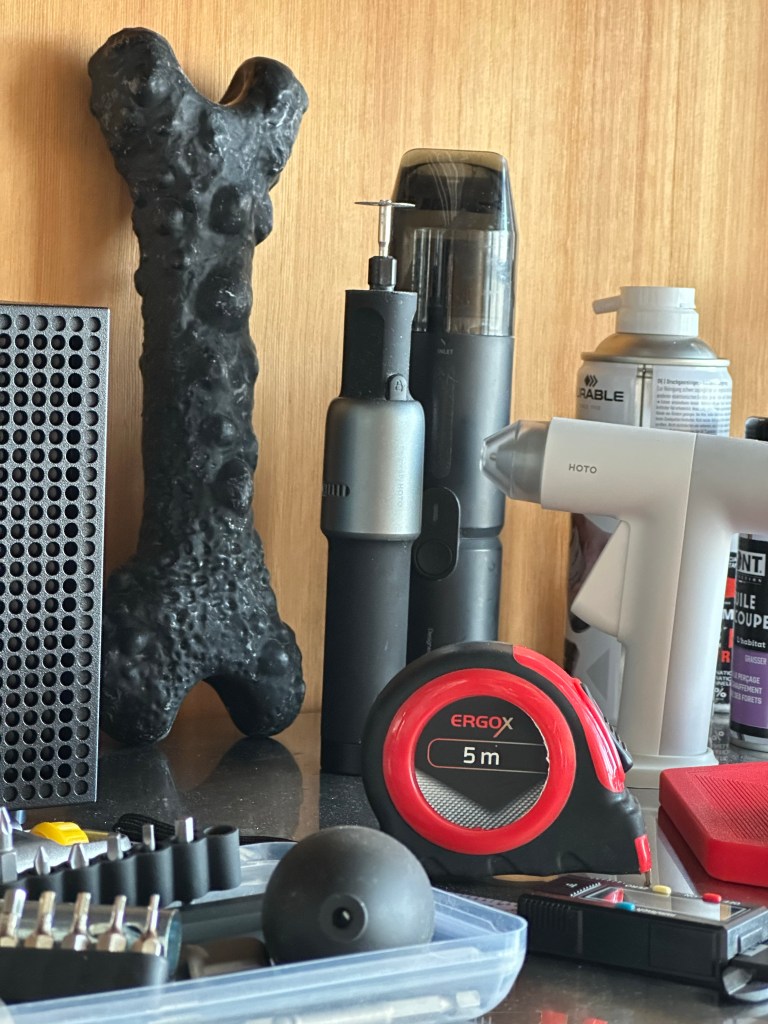
This part is less analysed in my own head. I’m not sure I completely understand why I did it this way and not some other way. I think it was simply the quickest ride towards reconstructing myself: First I needed to find something solid in myself. The skeleton seemed like a good place to start, a kind of metal framework that everything else can be attached to. The thing that keeps my shape and lets me move. Because shapelessness and immobility were exactly what I felt during my first years of migration.
When you move from one country to another not because you want to, but because circumstances force you to, and you do it very suddenly, within a few days you just pack up and fly into the unknown, you leave behind an identity built over years, a career, connections, reputation, relationships, and that whole version of yourself you actually knew how to operate. In the new place, you start from zero. Literally from the bones.
But I don’t regret it at all. I liked it. It was actually a pretty cool experience. I’d spent years talking in my projects about returning to point zero, and then, well, there you go, Ottone himself gets delivered straight back to the beginning.
As for why I want other people involved in this process: other people have never really felt like “other people” to me. They’re more like a biosphere I exist inside, something that inevitably shapes me and keeps shaping me. I don’t really believe in the completely autonomous self, this idea that somewhere inside us sits an independent author making sovereign decisions. We’re written by all sorts of things we never chose. But strangely, this is exactly why participation matters to me. If nobody is fully autonomous anyway, then I’m much more interested in making this mutual influence visible, and giving people some actual power inside it. I’m completely comfortable with that. I like yielding to that influence. In fact, this whole mess of other people, centuries of history, generational traumas, dna mutations and occasional events is exactly what made me who I am.
With Rebone Organism’os, I wanted to tickle that process, to stimulate it somehow. I wanted to let the local French biosphere make something new out of me. Let them mould whatever they want. I like being played with.
You’ve linked your work to migration and the search for stability. How has moving between places shaped the way you build, and do you see the endlessly reconfigurable organism as a source of instability or as a kind of freedom?
Migration exposed a weakness in me, but at the same time it bred a new kind of strength. In Moscow, I knew I could always go back to my apartment or my studio. They were mine, and nobody could kick me out (thanks to private property, which we finally got). Here, I live and work with this constant feeling that at any moment you might have to leave: your lease ends, somebody complains about you, something else happens. It creates this permanent temporariness. But at some point you stop clinging to that lost feeling of being anchored into a place, and the lack of attachments becomes a possibility for new movement.
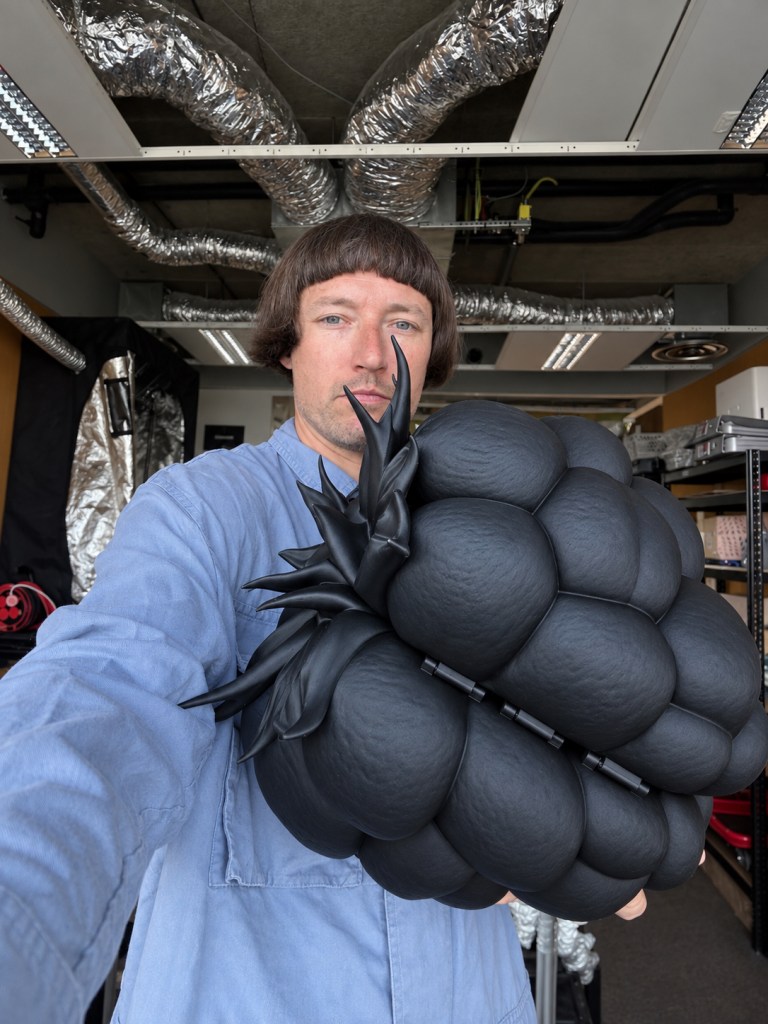
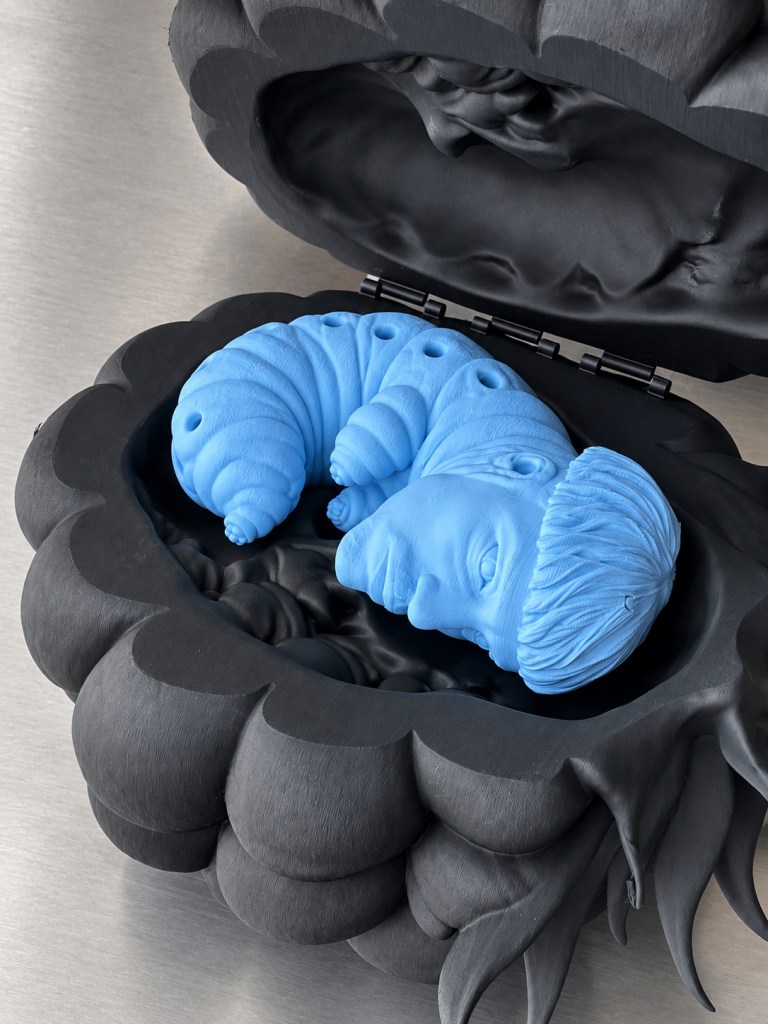
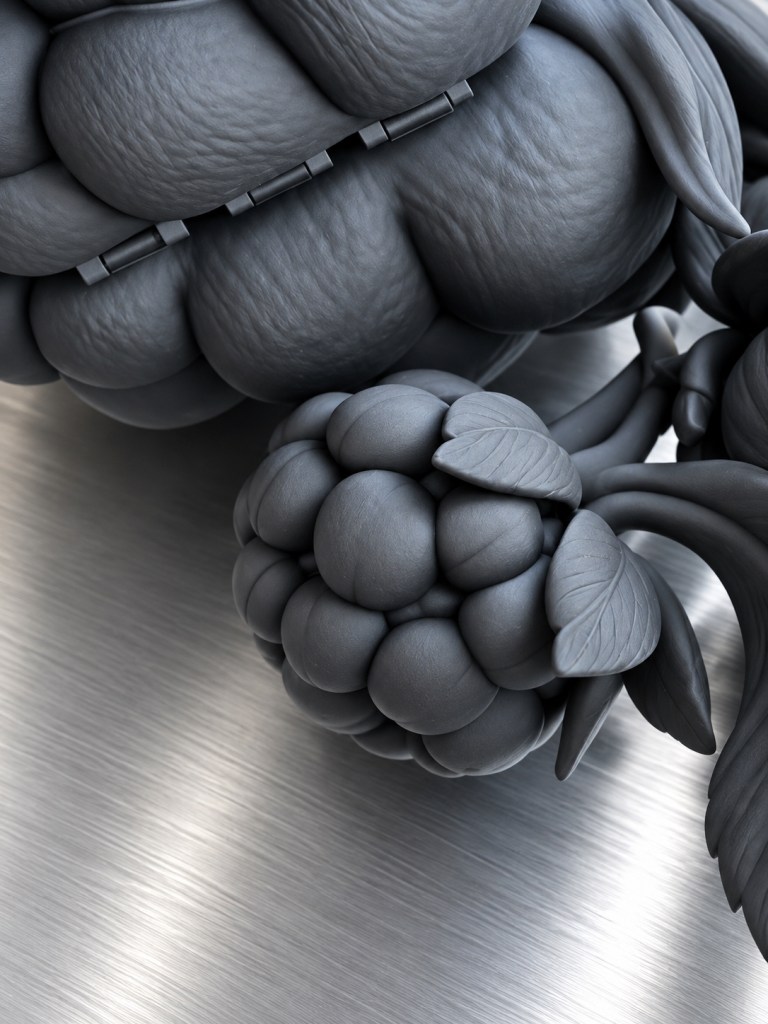
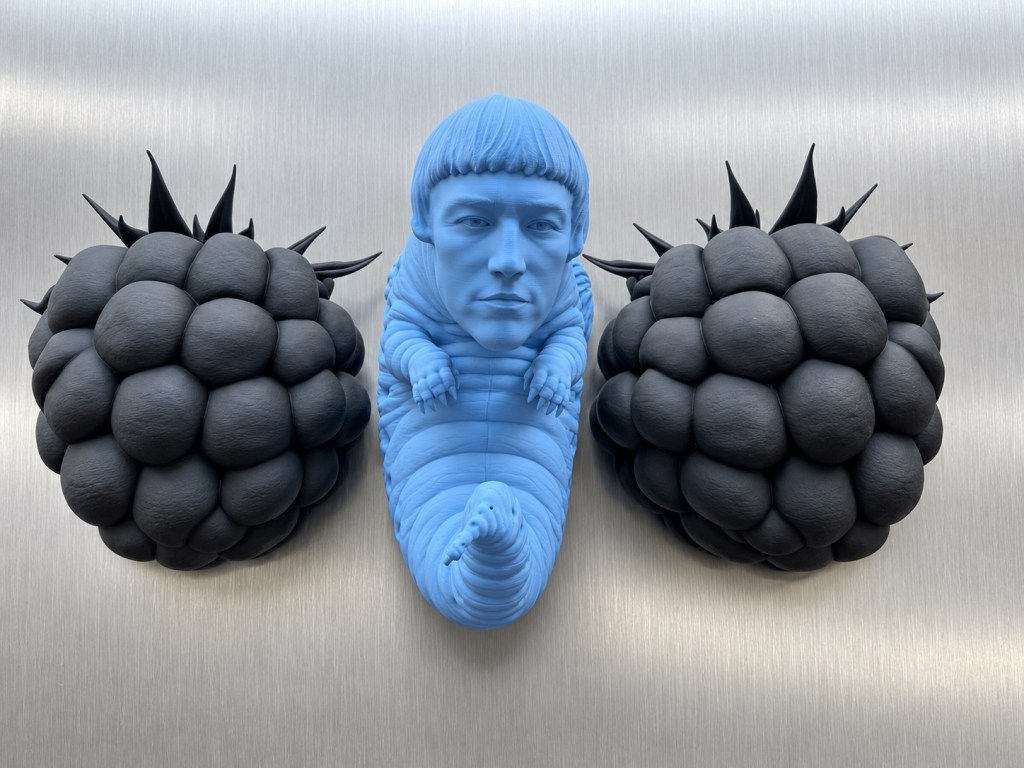
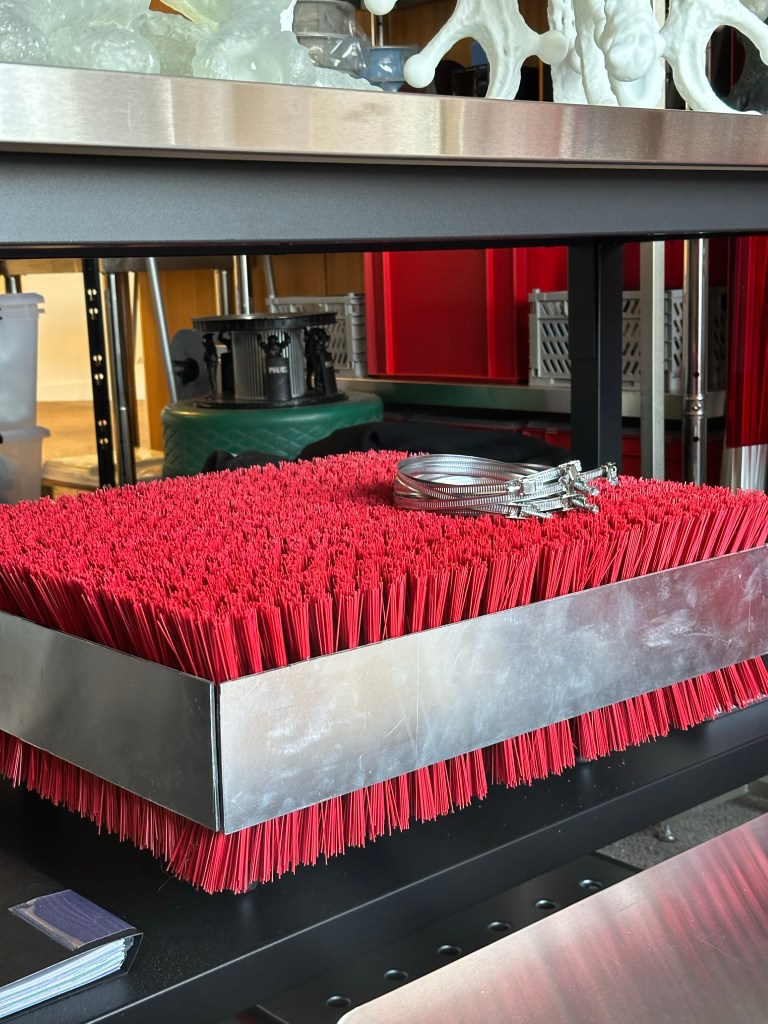
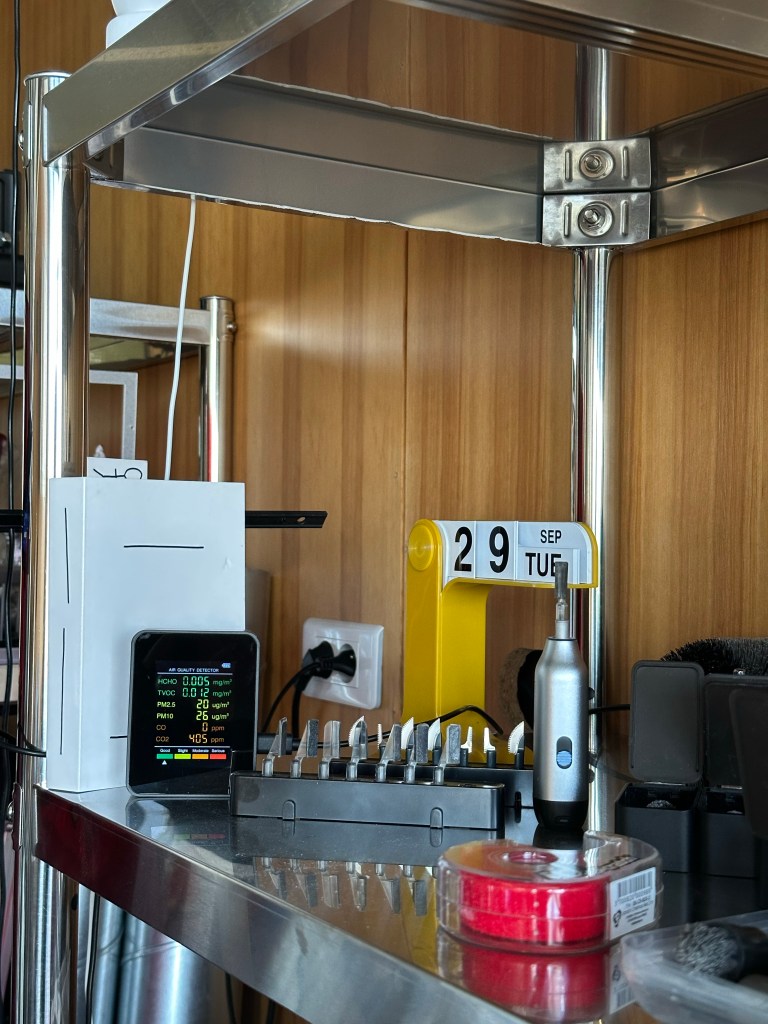
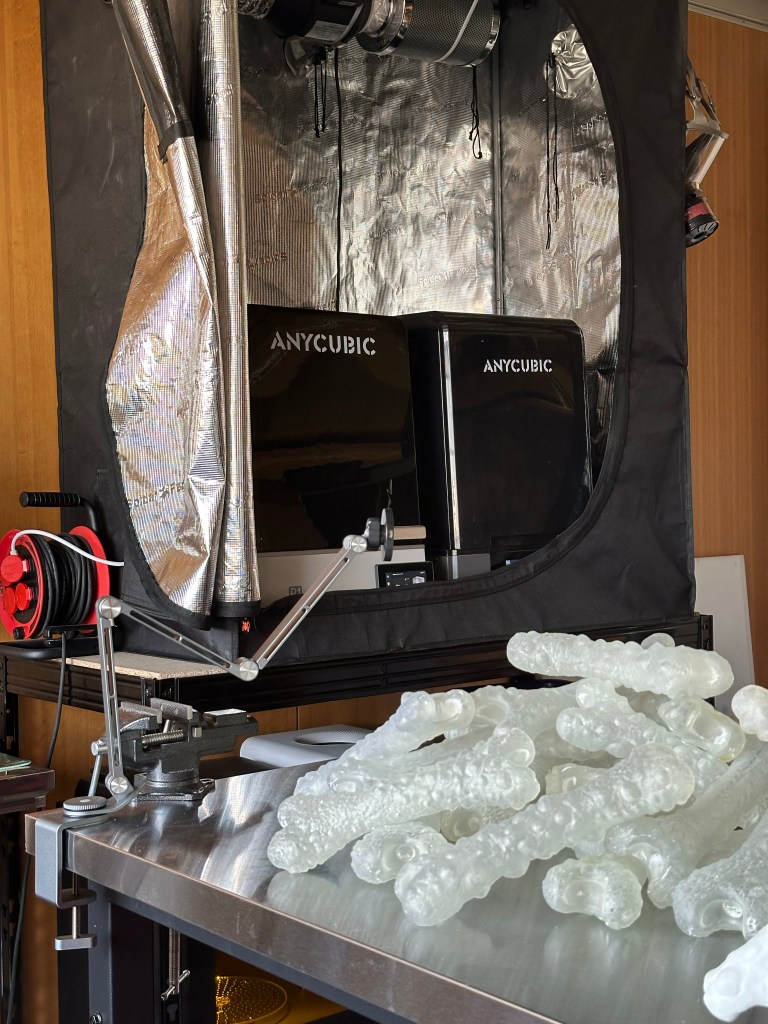
Migration also completely rewired the way I make work. In past i had an art group. I founded it and was basically the creative instigator. I had lots of partners and assistants, and I delegated most of the actual work. My job was to come up with project concepts, make some primitive sketches, describe them in words, and then basically infect my partners with these ideas. The team would activate and produce the project. Someone built, someone welded, someone soldered, someone cut things, someone painted, someone sanded. Meanwhile I sat around drinking my Ethiopia washed v60 , taking pictures of the process, posting them on social media and enjoying this very relaxed, slightly decadent artistic mode of existence. I was, like, an established artist. Then I moved, and all of that vanished instantly. I was left alone with my own lazy ass hands, which had pretty much forgotten how to work. So I had to learn how to operate from that shortage of possibilities. I bought several 3D printers and various desktop machines, which now allow me, in a way, to do alone what used to take an entire team. And it influenced the materials I use and aesthetic as well. The whole plastic language of my current project is partly produced by this new social condition I found myself in. So migration toughened me up. It turned me into this independent artist who can actually do shit himself (relatively).
You’ve said your installations make invisible boundaries tangible, from control and censorship to self-censorship. Can you describe a moment when a participant’s behaviour surprised you, or went in a direction you hadn’t planned, and how do you decide how much authority to give up to the spectator?
Imagine this. You’ve just finished an interactive light-and-sound installation, basically a public musical instrument, commissioned by the city and installed in a park. And because you want people to understand that they’re allowed to interact with it, you put it in big letters on the sign: “You can and should touch this object. Please feel free with this work.” You come back the next day to check on your baby and discover that some parts are broken, others have literally been ripped out of the platform. But that’s not even the worst part. There’s some drunk thug in a striped sailor shirt standing there pissing directly onto your artwork. This literally happend to my art in Russia.
At first, experiences like this exposed how romantic our approach was. But eventually they hardened the approach. We started making works where the possibility of vandalism was built into the piece itself. We tried to use vandalism, somehow take possession of it. We realised people genuinely enjoy the possibility of wrecking something. And that’s fun. It’s fertile stuff to work with.
For example, we made an installation called “ici on dance”. It was built around collecting accumulated human aggression. We literally made a boxing ring with a punching bag full of sensors, and next to it we put a control panel with a huge red button. Anyone walking past could press it and record whatever sound they wanted. And of course people mostly recorded obscenities, insults, political slogans, all kinds of shit. But that wasn’t really the trick. First you record something, then you go and punch the bag. With every hit, your recorded phrase goes through an algorithm we built: it gets chopped into pieces and randomly stitched back together. So maybe you shout “Fuck the government,” and what comes back is something like “gavkshiyavrfuck.” Then you hit it again and the phrase mutates again. And again. It was very funny, not just to us, but basically to everyone doing it. You hear your own attempt to insult someone or say something aggressive, except now it sounds utterly ridiculous. Suddenly you feel slightly awkward and start laughing at yourself, at your own attempt to perform this aggression, this kind of menacing posture.
And that’s a good example of how art can expose invisible boundaries, in this case, the boundaries of ignorance and self-irony. It also makes visible the line between the freedom you’re given and the loss of the author’s control, the line between participation and vandalism.
What do you think is the primary idea or goal of art in general? If there is a specific goal, what would it be?
I don’t think it’s really my place to define some universal purpose of art. Art isn’t design. It doesn’t have to be functional or ergonomic. It doesn’t necessarily have to fix anything.
For me, it starts with the fact that the universe is unbearable: too cruel, too beautiful, too prickly and too smelly. Sometimes there’s simply too much of it. Beauty gets in your eyes, cruelty gets lodged between your teeth, reality rubs against you with every surface it has, and eventually you can’t take it anymore. You need to say something, draw something, build something, add another crutch to whatever is happening, pull some kind of trick, mess around with it somehow. I see an artist as someone who has basically caught a disease from this contact. Unhealthy, in a sense. Art is both necessity and need, a call, an itch, an inability to leave the world without your own reaction to it. It’s something you can’t not do. A kind of condition that takes control of you. For me it’s an incredibly addictive substance, and wrestling with it in yourself is difficult. Making yourself stop being an artist is a much harder task than becoming one.
At the same time, I think of art as meme production, the production of units of viral information (hi, Richard Dawkins). You make contagious content that people want to share and circulate. You produce information that has some bite. In that sense, art is a way for data to reproduce. I think there’s something almost biological about it. We don’t just reproduce physically; we’re constantly producing and reproducing information. Art is part of that mechanism, except the data it produces isn’t always the most legible or immediately understandable kind. It looks for connections where, at first glance, there aren’t any. It tries to connect the unconnectable, to rig up new bridges between islands of information that previously had nothing to do with each other. Basically, for me, it’s a kind of neurogenesis, on a global, almost universal scale.
All rights to the images belong to the artist. No part of this publication may be reproduced, stored in a retrieval system, or transmitted in any form, electronic, mechanical, photocopying, recording or otherwise, without the prior permission of PAI32 Platform.

ARTIST OF THE MONTH
Interview, Online Exhibition
#artist of the month
PAI32 EDITION’26
Uneasy Space Between Beauty and Fear

