
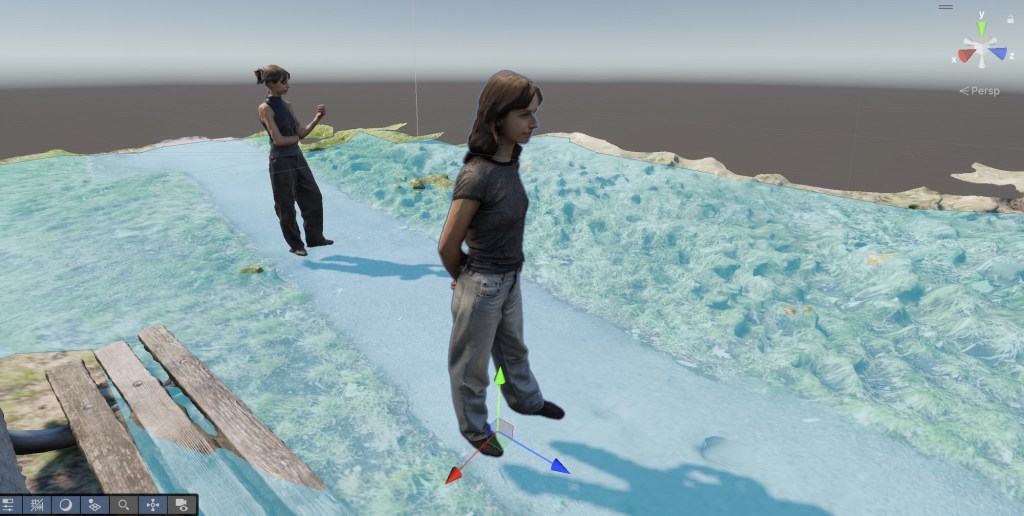
Veronika Gryshchuk: Where does the organic end and the technological begin?
In his artistic practice, Veronika explores the shifting boundaries between living matter and digital systems, examining how technology reshapes our understanding of bodies, environments, and non-human intelligence.
Working with bones, plants, sensors, and electronic signals, she creates installations that invite unexpected encounters between natural materials, machines, and human presence. Rather than treating technology as a tool of control, her work considers its potential for listening, mediation, and coexistence.
For PAI_32, Veronika discusses the physical reality behind digital experiences, the intelligence of matter, and the possibilities of developing more attentive and less extractive relationships with the world around us.
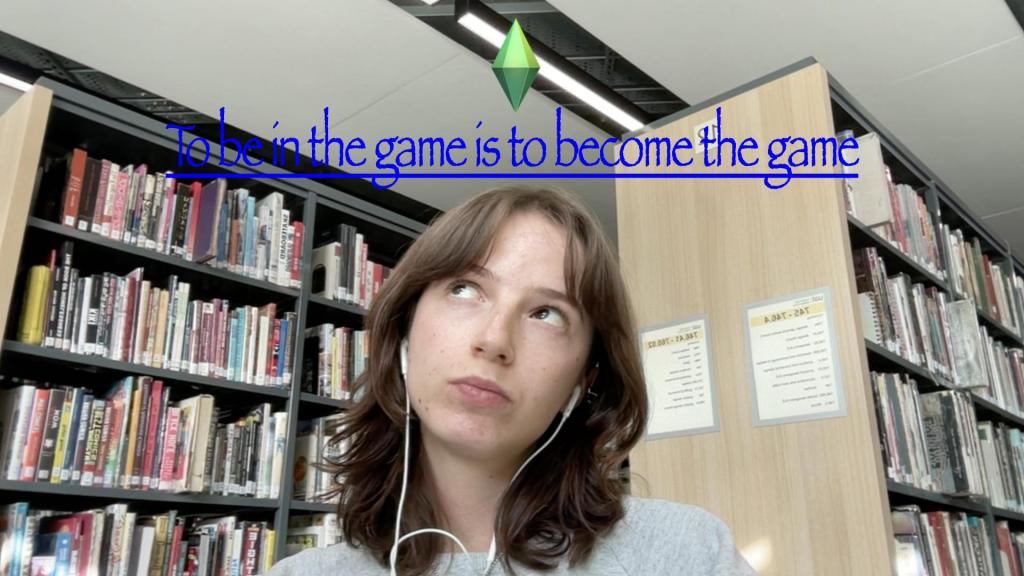
You describe your practice as sitting where the boundary between the organic and the technological becomes unstable. What keeps drawing you back to that space, and can you share a moment in your work when it genuinely wasn’t clear where one ended and the other began?
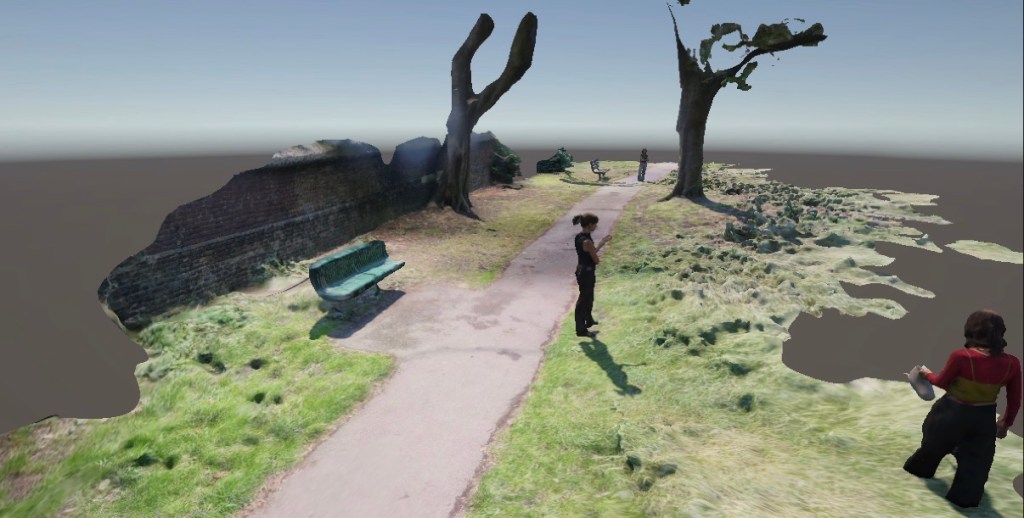
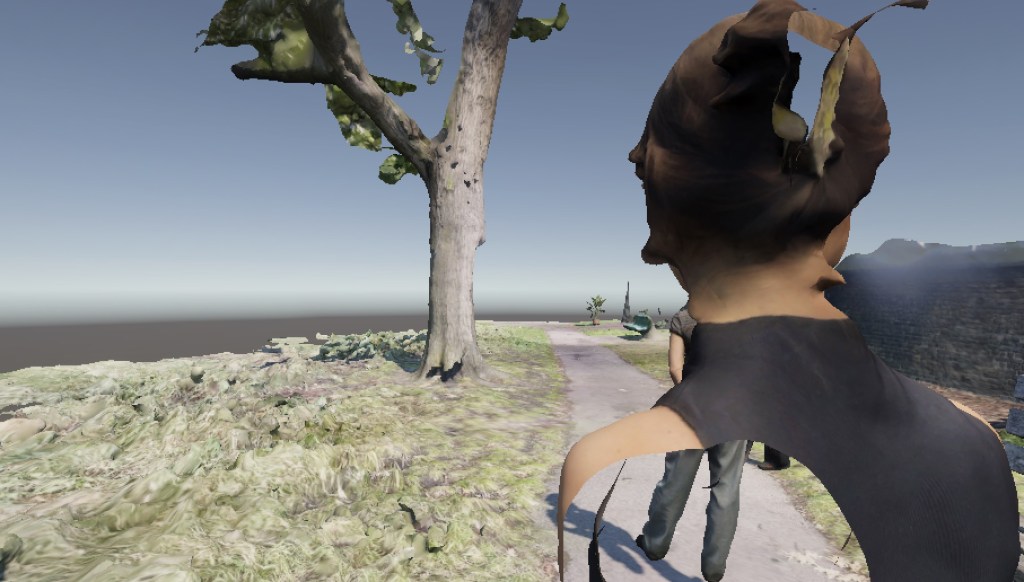
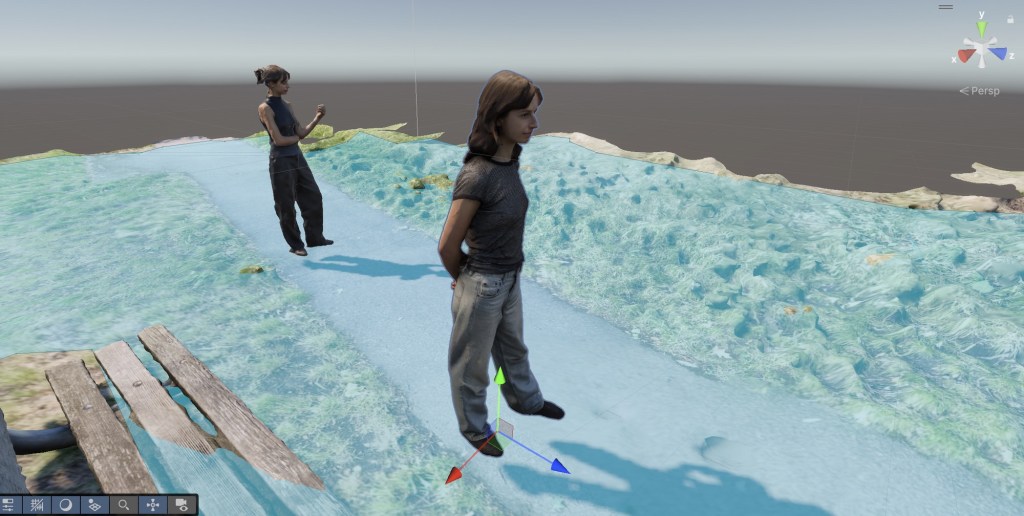
Everything is earthly and comes from somewhere. All the digital media that seems to flow in a three-dimensional space is still stored somewhere physically (servers, circuit boards, and minerals taken from the earth), making everything deeply entangled. Usually, I feel an eerie sensation when I spend hours in front of my computer, between infinite tabs and Are.na channels. I feel, or, more precisely, sense, that the body’s defined borders are taking on a new essence without a direct semantic meaning. The flood of on-screen images we consume daily creates desire through interfaces, moving the body away from a fixed, immutable form. This desire gets expressed through digital materials and processes such as pixels, algorithms, and node connections. Just as Alice in Wonderland keeps changing her body size to fit the world around her, we shapeshift depending on the digital interfaces we encounter. So how does bodily presence persist in digital reality? That’s what I try to explore and develop through my practice currently. On a more concrete personal example, when I just got to London, the moment Instagram picked up my location and started feeding me content through the city’s algorithm, I felt relieved, as if the digital realm had welcomed me into its chamber. Seeing Google Maps fill up day by day with “green flags: want to go” and “pink hearts: my favourite,” I started to feel that this city might one day feel warm and familiar. Although I still didn’t know many people here, beginning to build a digital footprint made me feel more at peace.
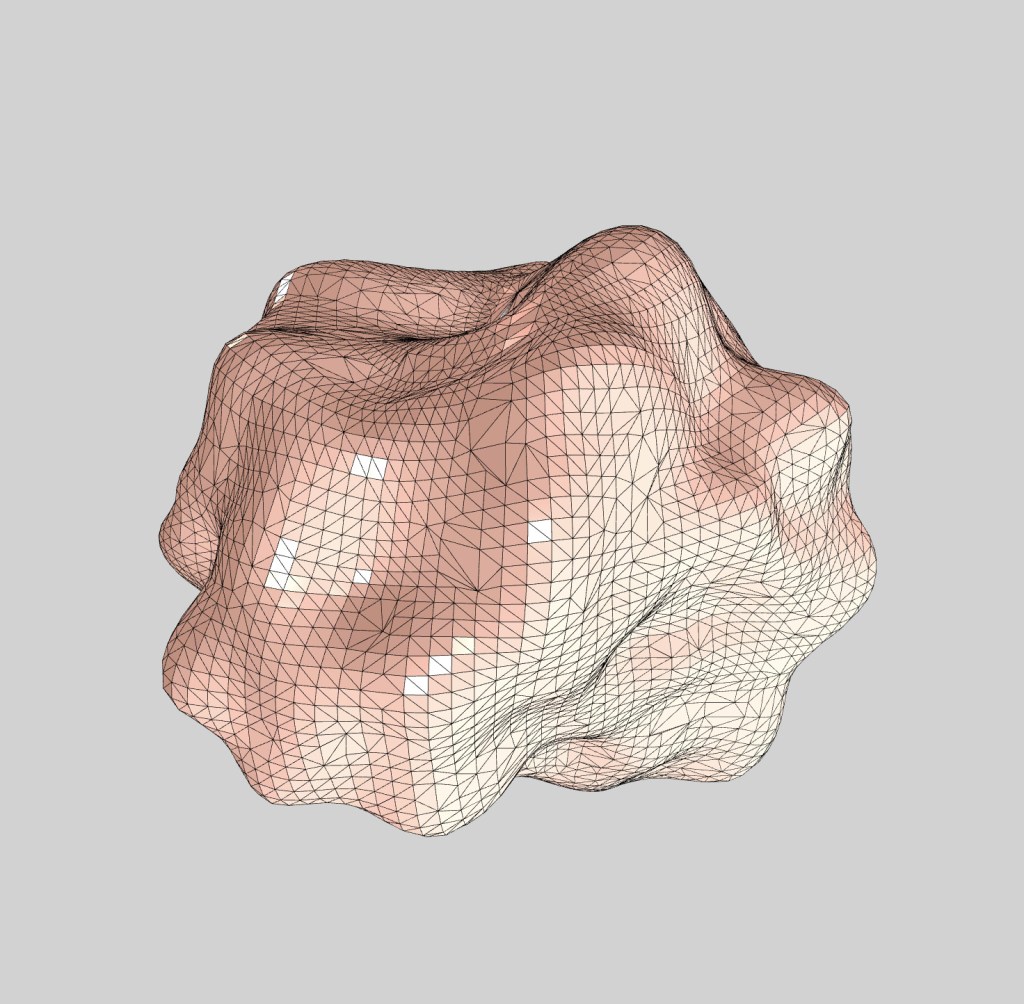
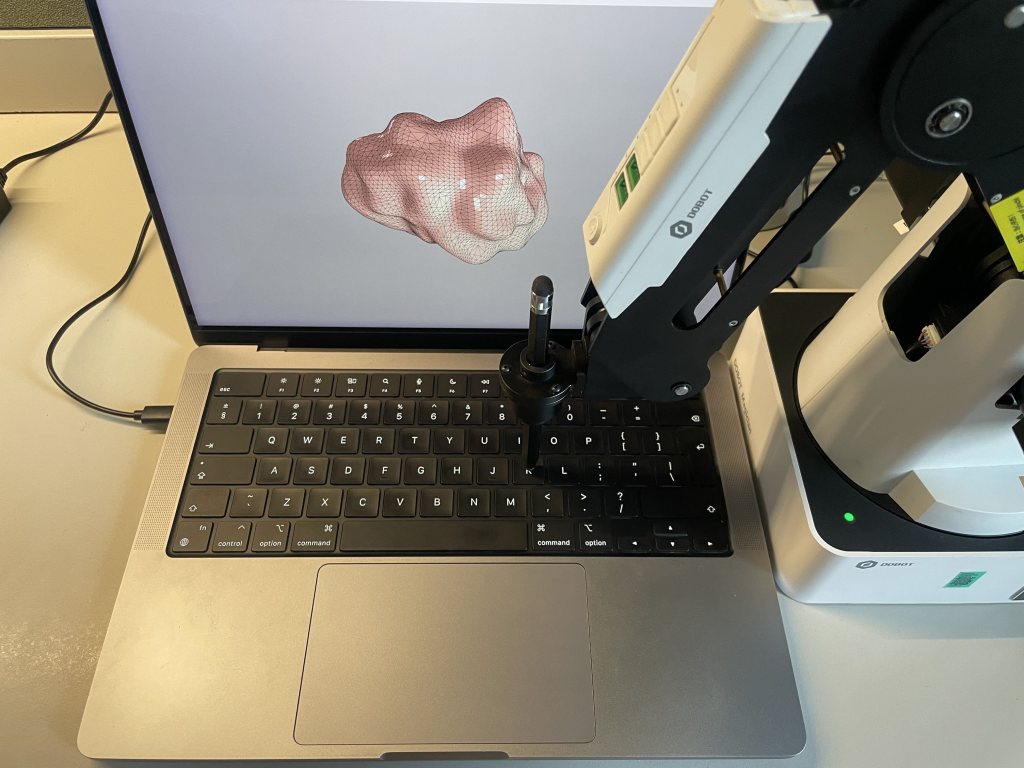
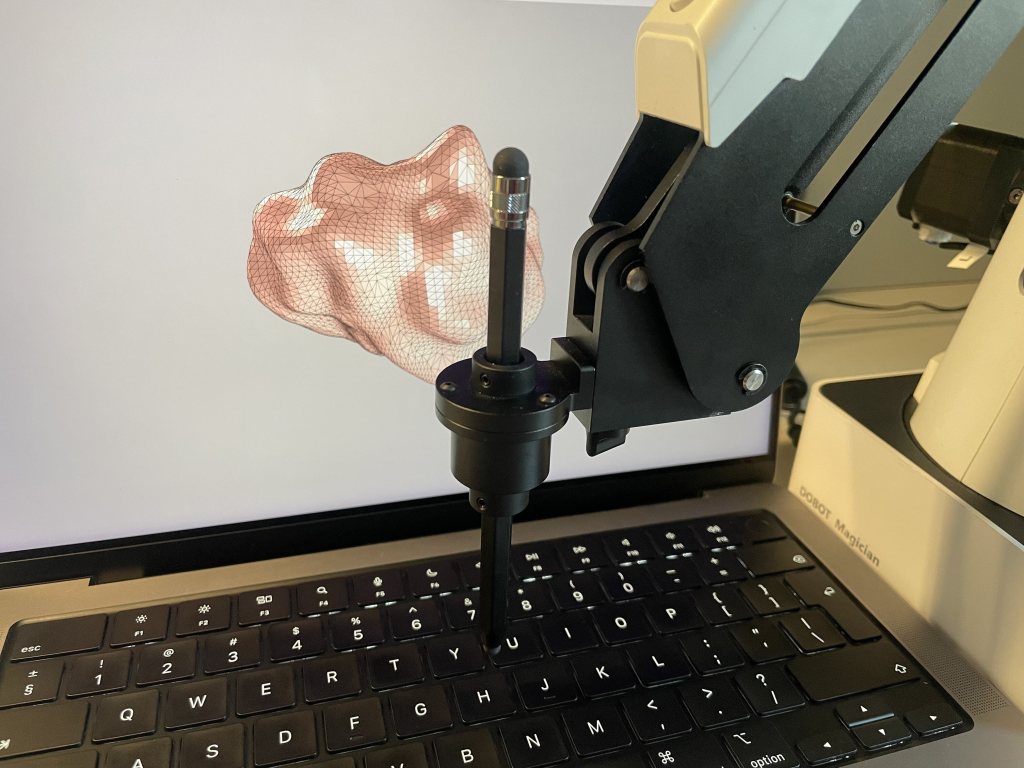
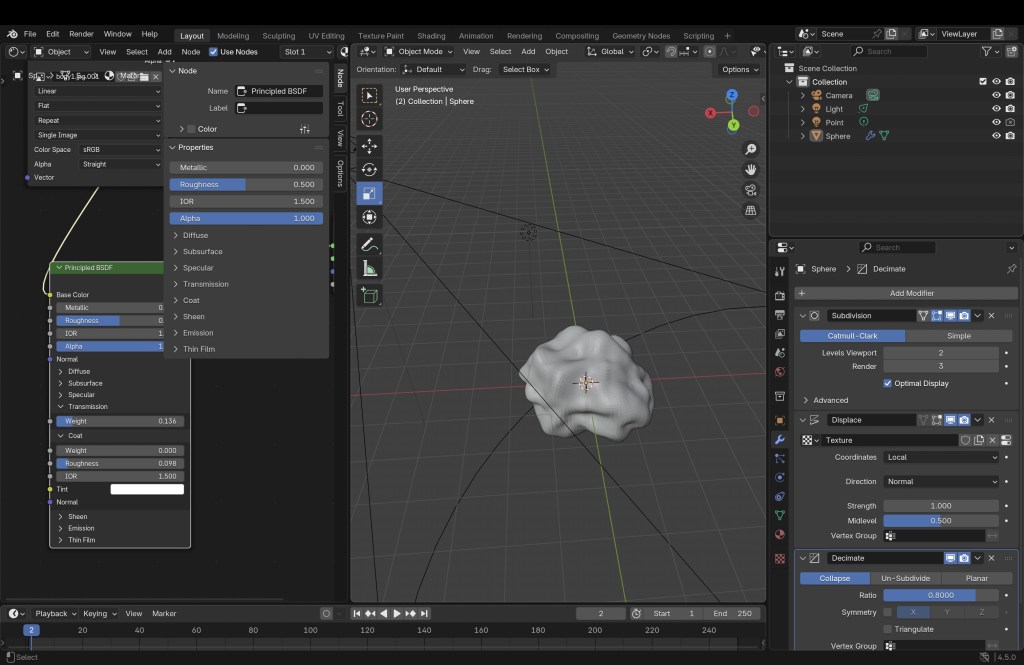
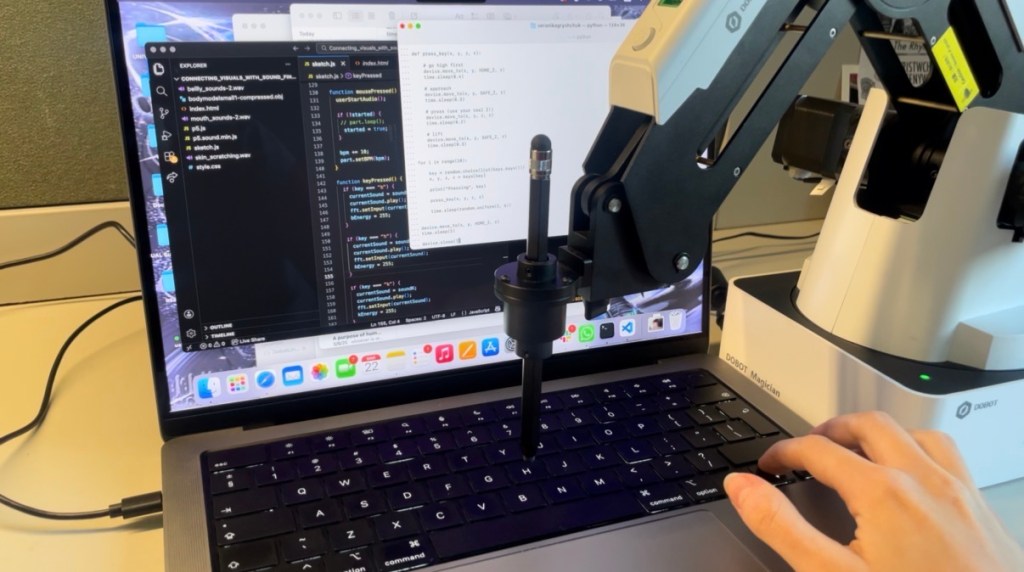
You write that every piece of hardware physically exists on this planet, subject to the same entanglements as living things. How does that awareness shape the way you choose and use your materials and machines, from sensors to electronics?
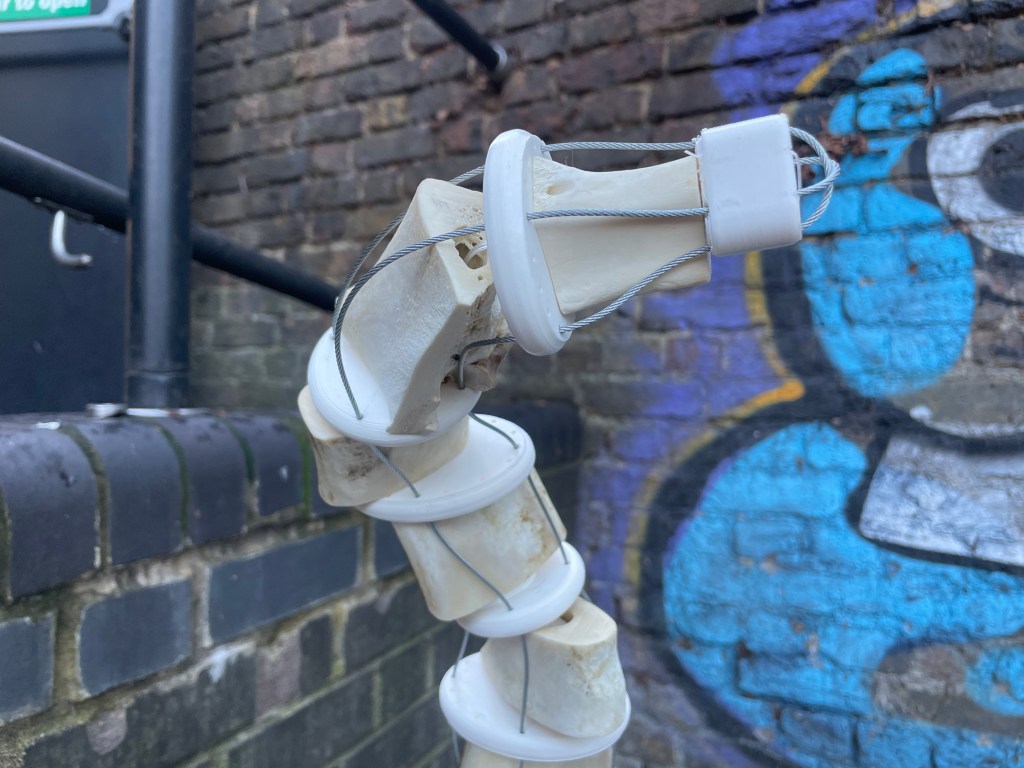
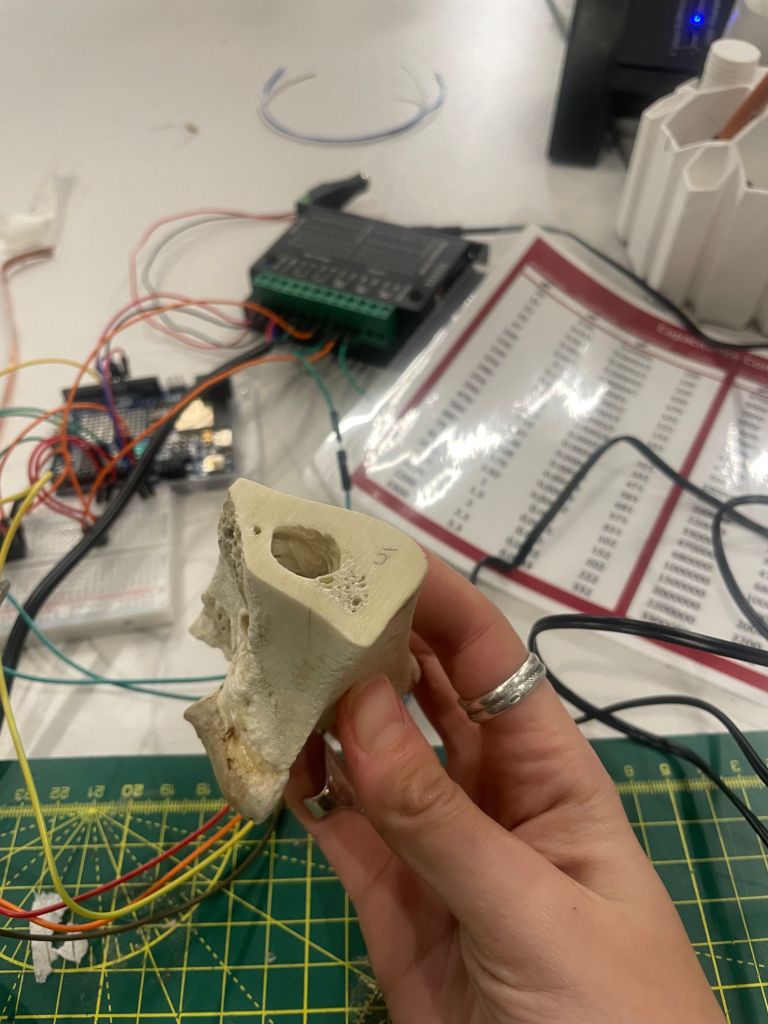
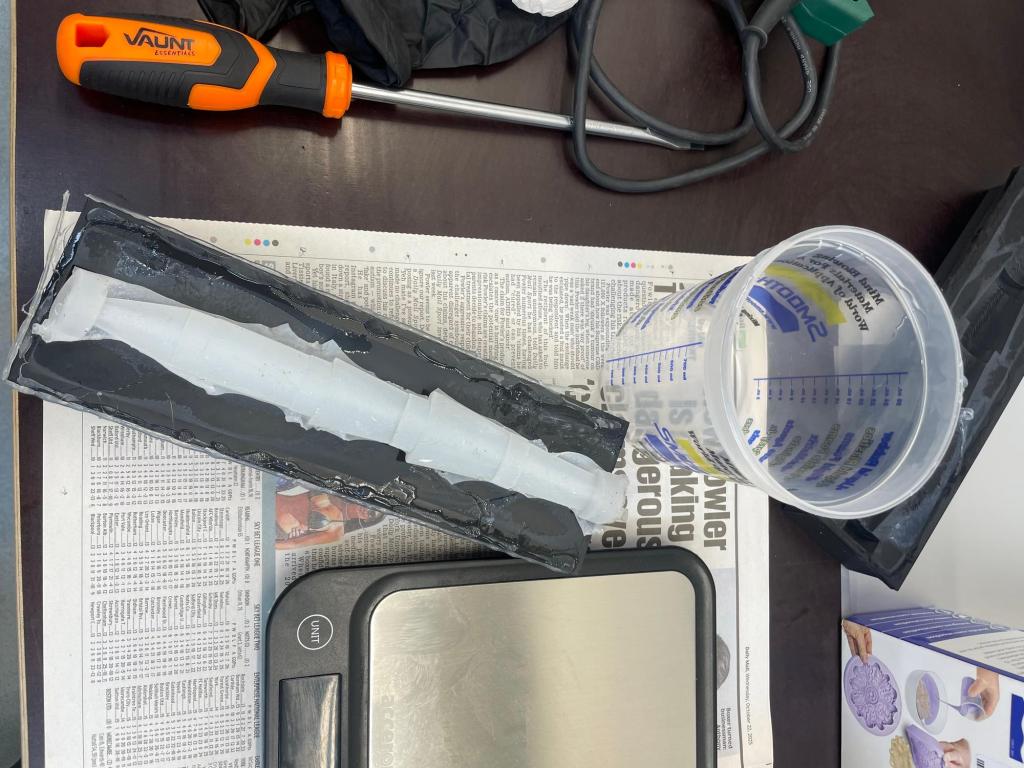
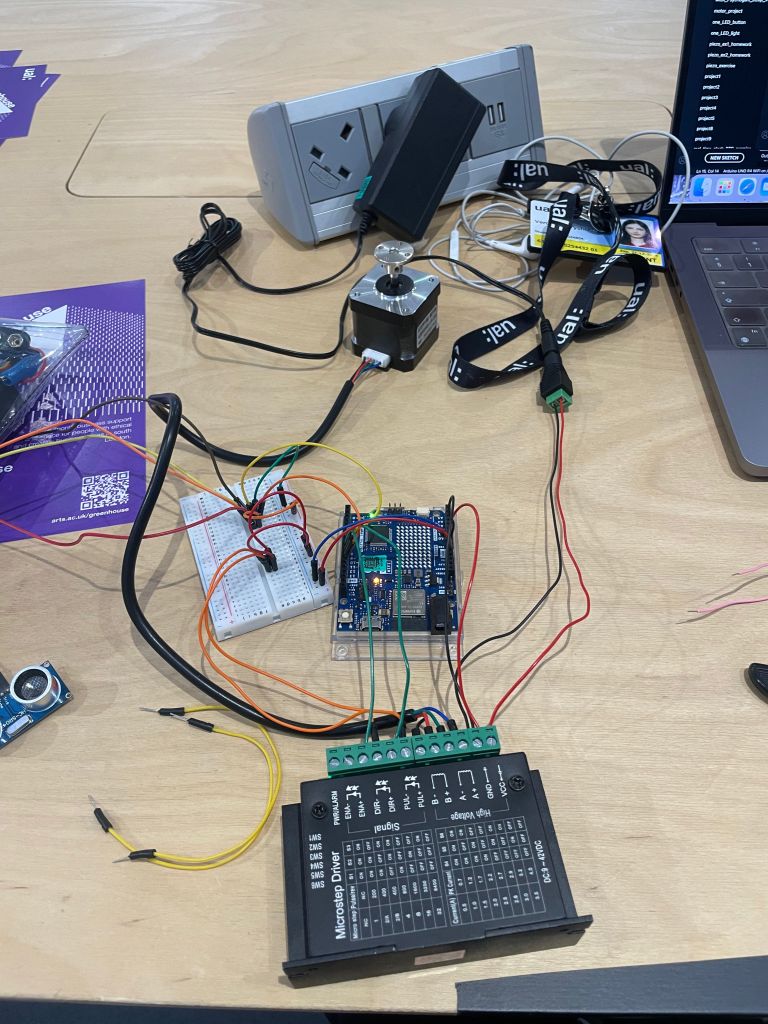
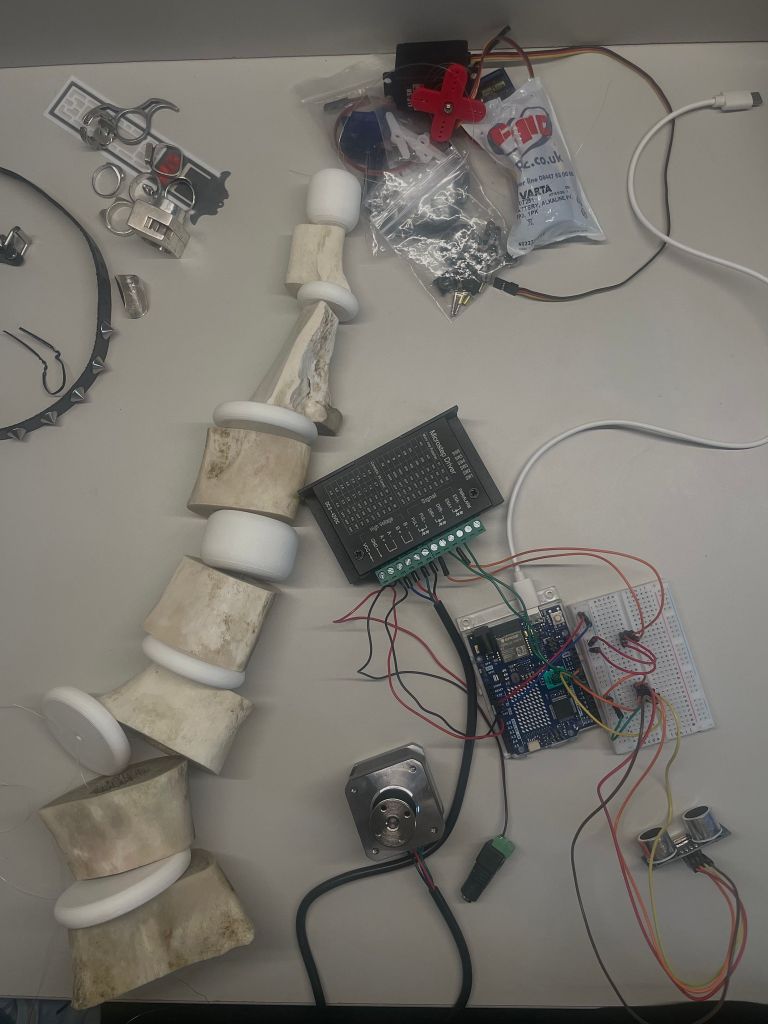
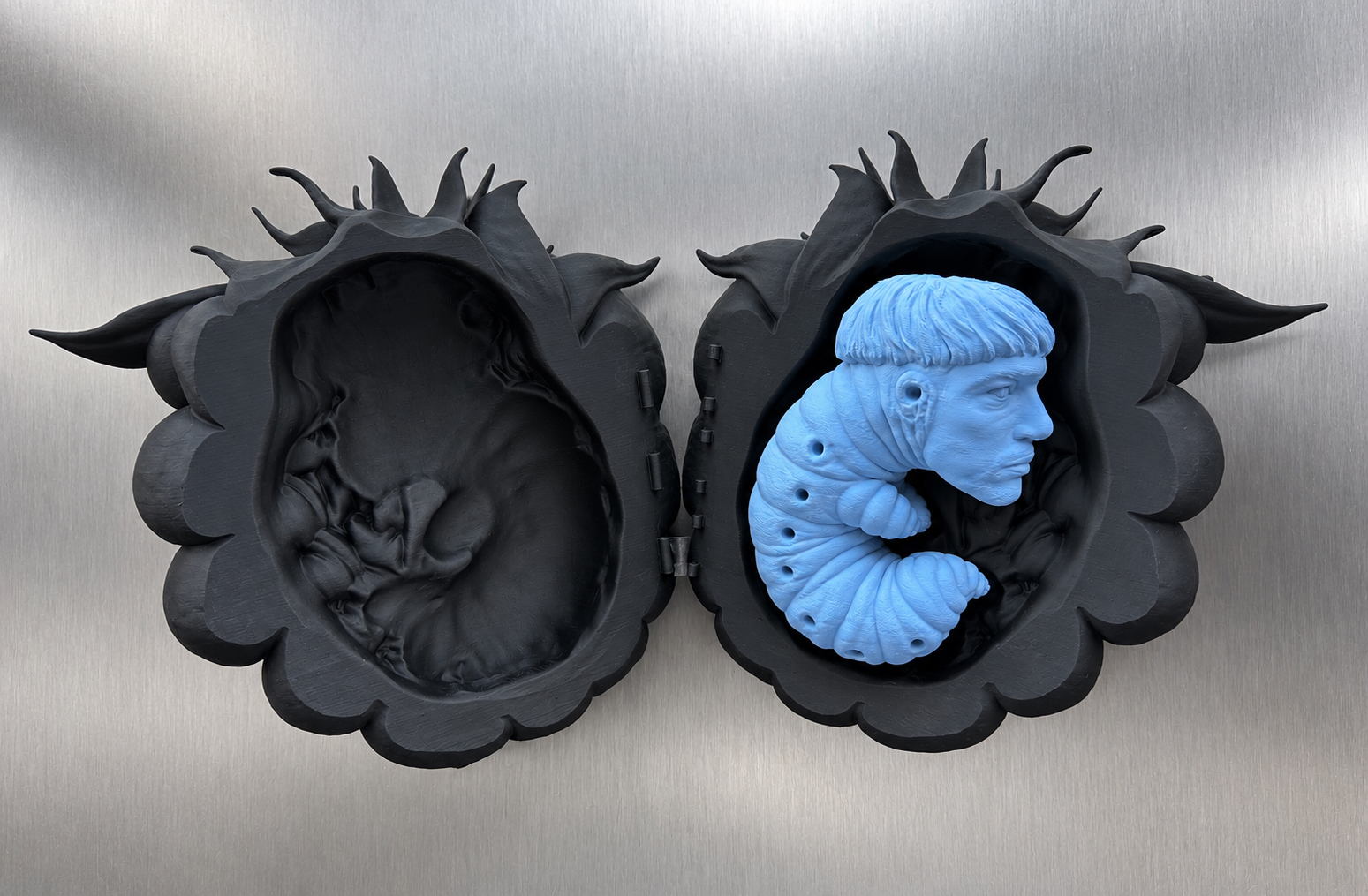
Working with bones for the kinetic sculpture, and with plants for my biodata sonification project, taught me about their unpredictability, which is very different from that of industrial or designed materials. You can’t really control a bone; you have to bake it, cut it, and then work around its given structure. The form emerges through negotiation with existing conditions rather thanimposition. Most tech-based work goes in the opposite direction. With enough skill and resources, you can make almost anything you want using very few variables. Meanwhile, working with natural matter or organisms creates limitations that can direct your work into paths and forms that might not have happened otherwise. When I worked with plants and their electrical signals, I had to learn how they behave and what conditions make them more or less active before I could translate those signals into sound. I was learning from and adapting to the plants, not the other way around. Working with materials that have their own logic creates a humble relationship and opens up new possibilities for technology to act as a mediator.
You cite Ursula K. Le Guin’s idea of technology as the human interface with the material world, and say you want to become that interface yourself. What does that look like in practice, and how do you translate signals, soil or bones into something an audience can sense and respond to?
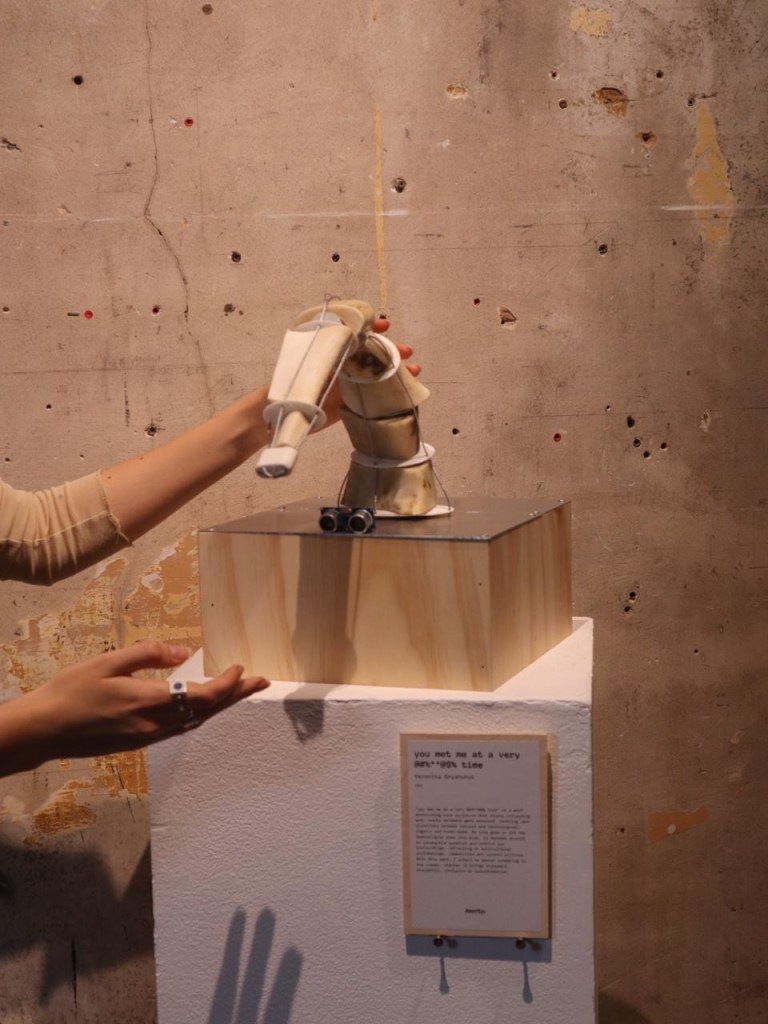
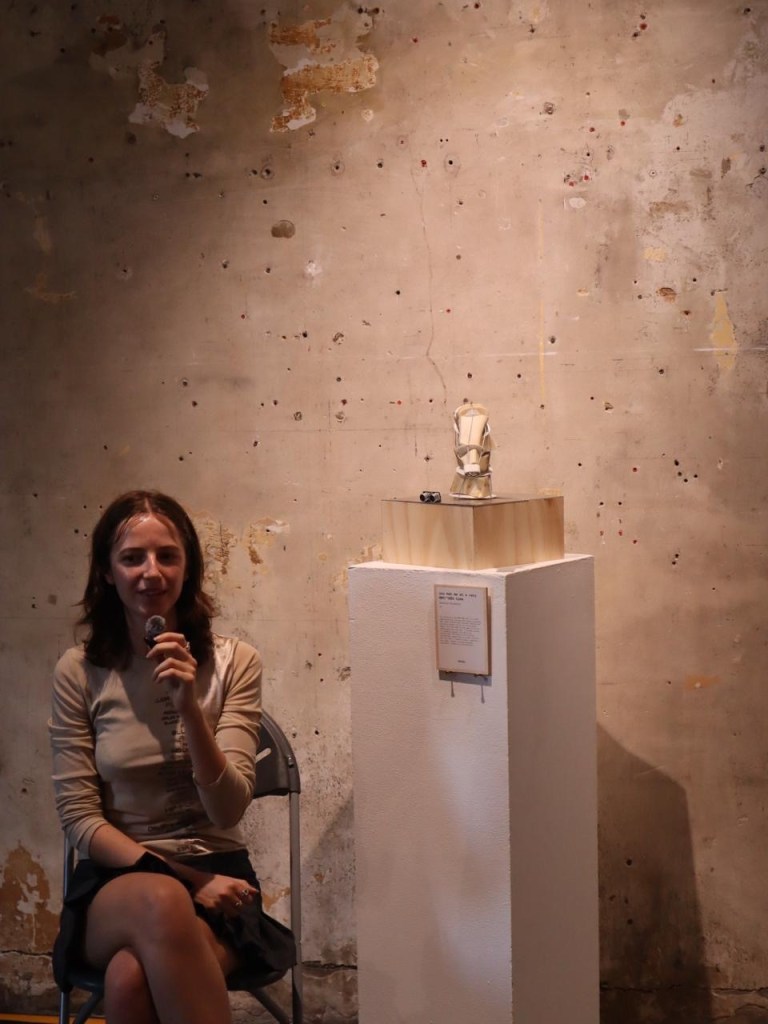
Ursula K. Le Guin understands technology as how humans actively engage with different sorts of materials to interfere with given physical/digital environments. Under each material lies a process in a state of constant becoming: melting, softening, and readapting based on the given condition. That same state of becoming is what makes us humans, what makes us alive. I am thinking about Laura Tripaldi here and her idea that matter itself has a sort of intelligence with a capacity to respond and adapt. Engaging with natural elements such as bones and plants makes me feel excited, but also slightly intimidated. I get involved with something designed by nature, not by humans. I get a chance to learn and observe how these materials interact with technological systems and how their essence takes a new meaning, the meaning of human intervention in their essence and their surroundings. Investigating the surrounding reality requires not only an act of faith, but also a reflexive response to openings, and glimpses into the other-than-oneself, more-than-human. When I made my bone sculpture piece, I think visually it was very striking and bizarre, so it naturally invited people to come closer to explore it. When someone moved close enough to the sculpture, the sensor detected their presence, causing the underneath bone mechanism to slowly collapse. It would rise again when no one was nearby. The idea was to create an embodied conversation between two beings.
You ask whether paying attention to matter like bones, signals, sensors
and soil is itself a political act. What do you hope changes in someone after spending time with your work, and what would it mean for people to take the perspective of non-human systems seriously?
My main aspiration is to convey, through my work, the sense that we are not alone here as a species, and that placing too much importance on ourselves can lead to unreasonable harm. There is a vast number of living and non-living beings that see, feel, and perceive life in dimensions completely different from ours. By paying attention to them, we can learn, find inspiration, and develop alternative ways of thinking about technology, which is often understood today as a primary resource of capital. What I hope to change is the idea that everything is defined and fully formed. With the creative use of the tools around us, we can also foster communities, share knowledge, and foremost create possibilities for other realities that can serve as an act of refusal against extractive methods of technology and cultivate a diversity of technological thought.
What do you think is the primary idea or goal of art in general? If there is a specific goal, what would it be?
I don’t remember where I read those things, but it was said that art is an exploratory space where different disciplines meet and expand. Through art, people can explore and express things that may be too complex to be expressed by words, or that do not yet have words, connecting previously unrelated ideas. It’s a place where people can take refuge — a place of challenge, confession, and community. I believe artistic and creative communities can collectively foster care that builds strength within us. I guess I might sound too positive about that, but that’s how I want to see art. I would like to end with a few lines from my favourite poem “The Great Wagon” by Rumi translated by Coleman Barks, that might better explain how I feel about artistic practice: Out beyond ideas of wrongdoing and rightdoing,there is a field. I’ll meet you there. When the soul lies down in that grass, the world is too full to talk about. Ideas, language, even the phrase each other doesn’t make any sense.
All rights to the images belong to the artist. No part of this publication may be reproduced, stored in a retrieval system, or transmitted in any form, electronic, mechanical, photocopying, recording or otherwise, without the prior permission of PAI32 Platform.

ARTIST OF THE MONTH
Interview, Online Exhibition
#artist of the month
PAI32 EDITION’26
Reprogramming Identity Through Art, Play and Participation

